Discover historical illustrations by subject, artist and book.
Creation and rebellion in Blake’s illuminated plates.
Norwegian fairy tales illustrated by Kay Nielsen.
Four colour drawings from a 1908 Gnostic text.
From the dark wood to Paradise with Gustave Doré.
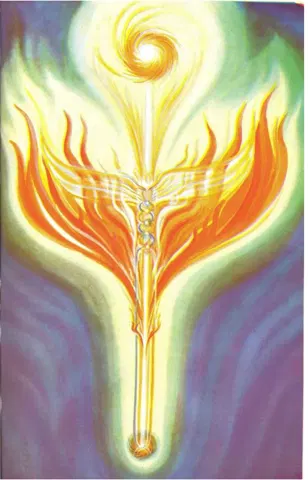
Ethelwynne Quail’s visions of the spirit world.
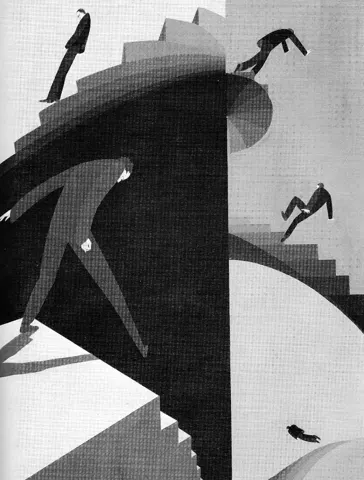
Art Deco studies of fear by John Vassos.
34 illustrations
A pale world map carries modern continental outlines together with larger red boundaries.
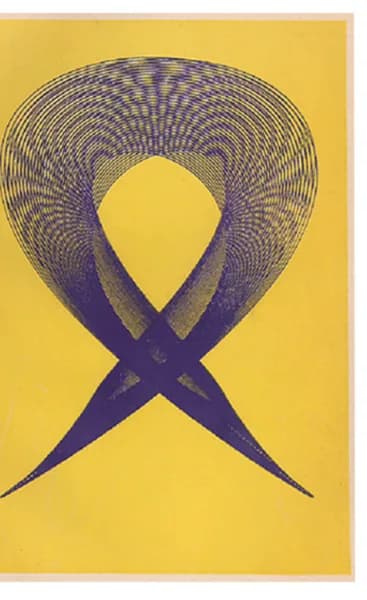
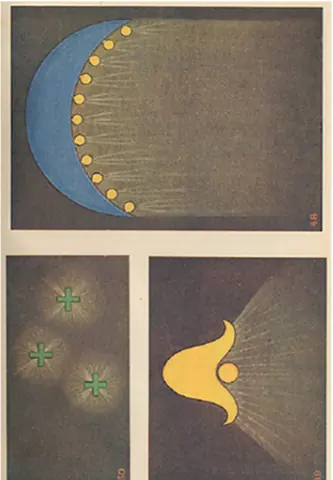
Figure 38 represents, in Besant and Leadbeater's account, a meditator's wish to embrace all humanity and draw it toward a higher ideal.
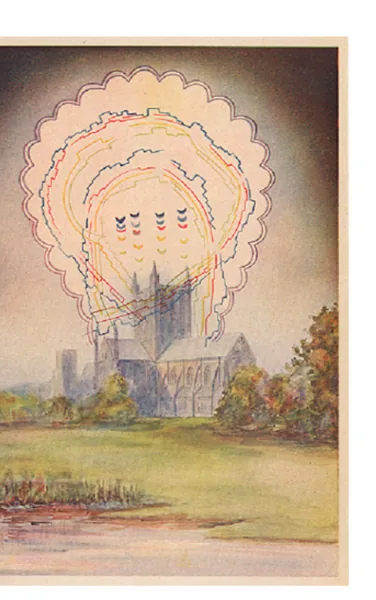
A scalloped outline encloses coloured lines and small floating crescents above a church.
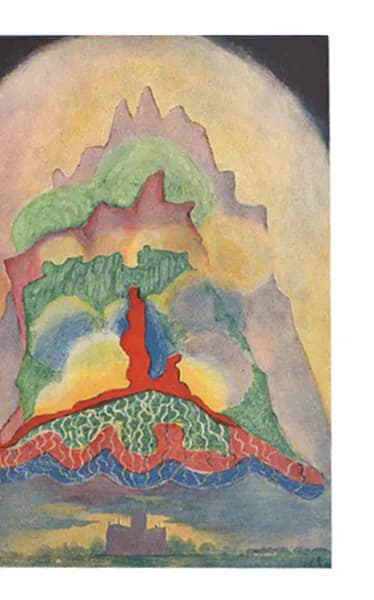
Successive peaks of blue, green, red and gold rise above a tiny church.
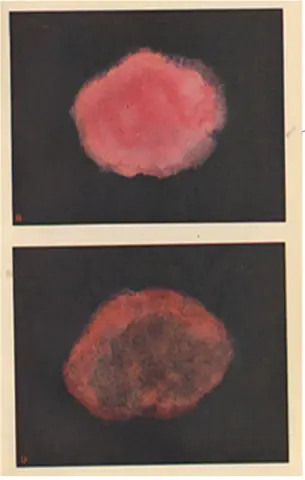
Two rose-coloured clouds appear against separate dark panels.
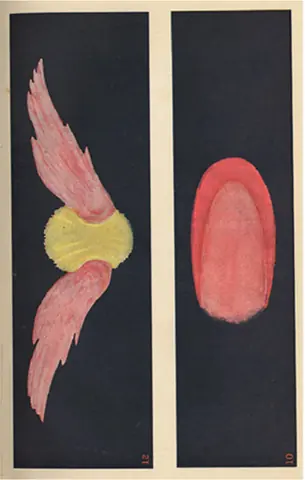
A rose-coloured wing-form with a yellow centre stands beside a concentrated rose oval.
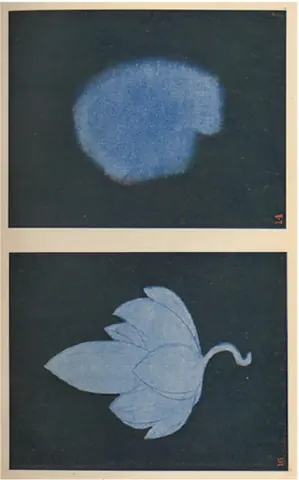
A loose blue cloud occupies one panel, while a pale blue bud-like form fills the other.
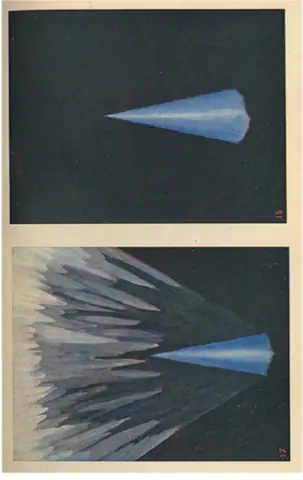
A sharply pointed blue form is paired with a broad fan of light spreading from a blue base.
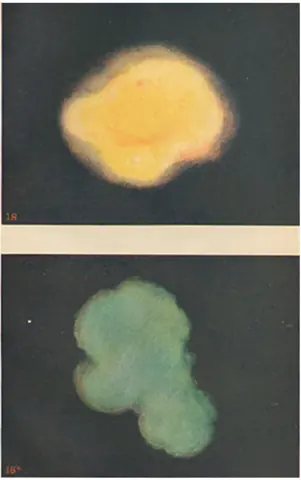
A yellow cloud and a green cloud appear in separate dark panels.
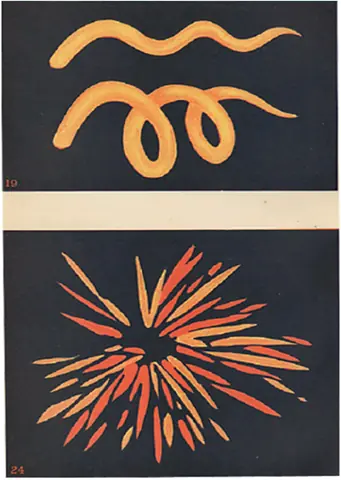
A curling orange form fills the upper panel while a jagged red-orange burst occupies the lower one.
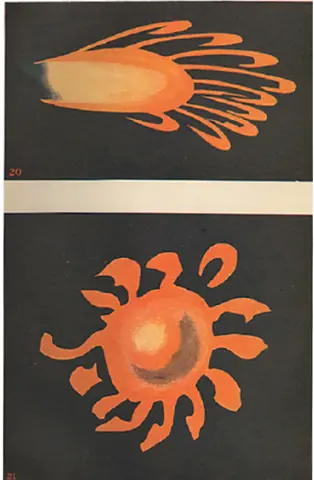
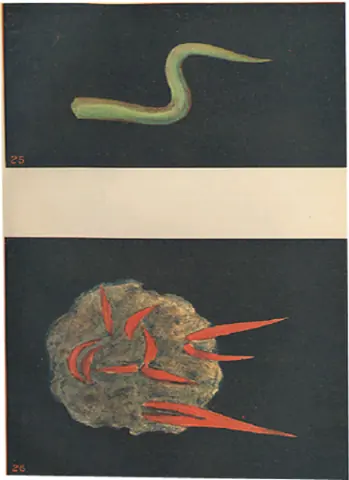
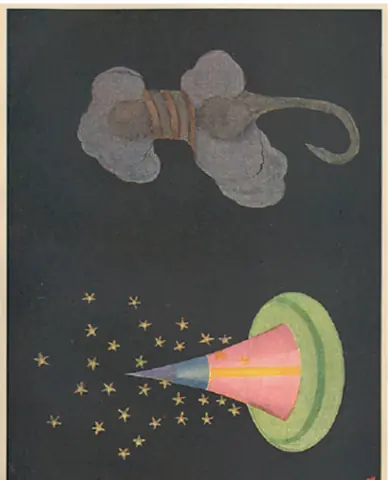
One orange form streams forward with finger-like extensions, while the other turns its curling arms around a central mass.
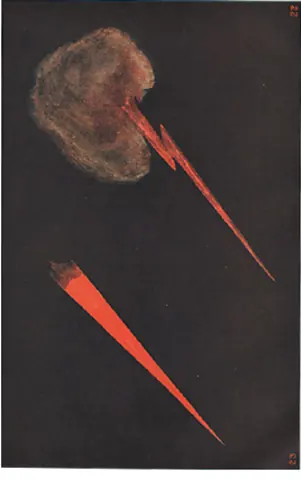
Red lightning and a narrow, dagger-like shape give anger two different durations in this paired plate.
Two contrasting shapes give jealousy a watchful and an angry form in Besant and Leadbeater's visual vocabulary.
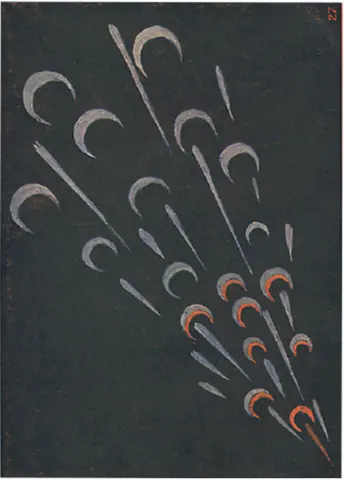
A diagonal succession of grey crescents turns a moment of fright into a sequence rather than a single emblem.
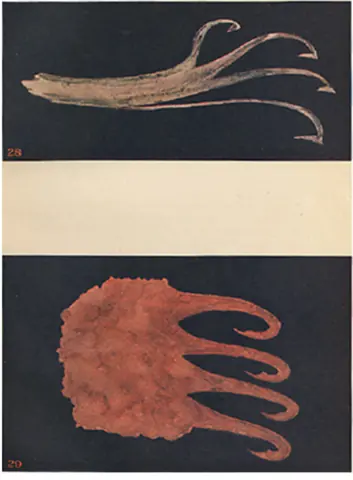
A grasping brown projection and a cloud of inward hooks show two forms of desire in the authors' moral scheme.
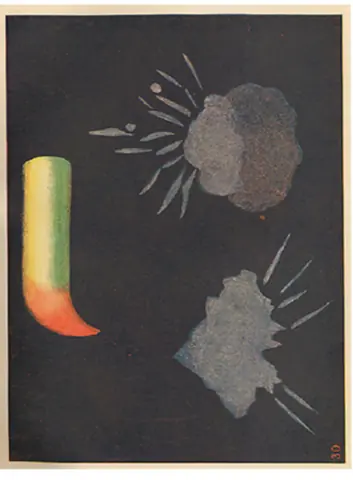
Three shapes compare responses to the same imagined or reported shipwreck rather than depicting the wreck itself.
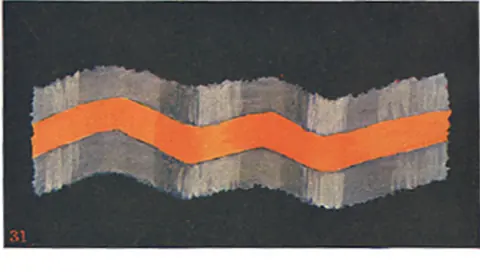
A narrow orange zigzag struggles for prominence between broad wavering grey bands in this compact horizontal plate.
Two contrasting forms accompany the authors' account of gamblers at Monte Carlo.
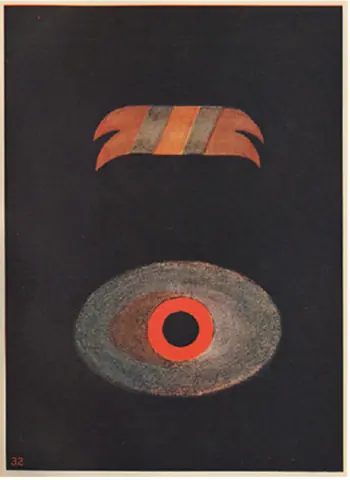
A firm oval and a looser cloud use similar colours to distinguish two spectators' reactions to a street accident.
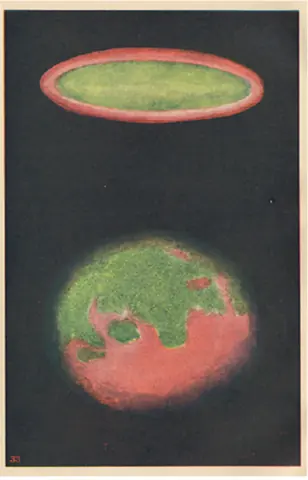
Two forms compare mourners whom the authors describe as equally close to the deceased but differently prepared to understand death.
Art appreciation and reunion appear together on this paired plate, although their figure numbers run in reverse order.
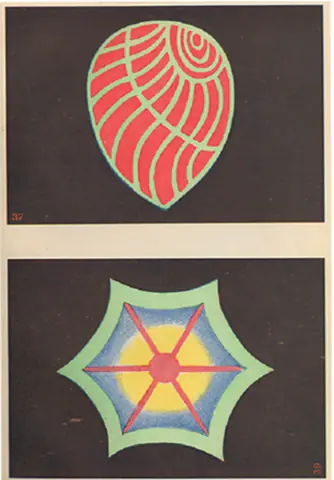
A leaf-like form and a six-armed star illustrate attempts to direct benevolent thought beyond a single person.
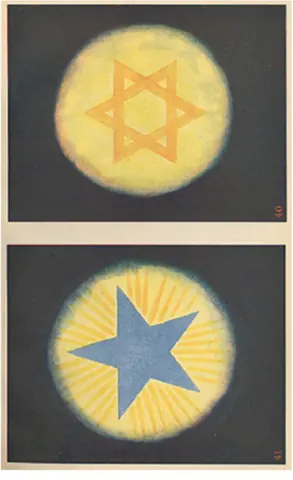
Interlaced triangles and a five-pointed star give two different conceptions of divine order a geometric form.
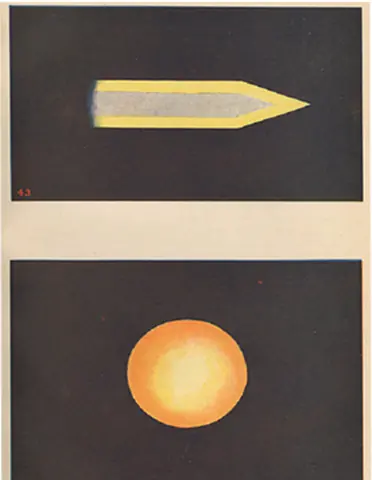
A pointed violet form edged with yellow rises above a radiant golden sphere in this paired plate.
Three numbered designs belong to the book's account of one person sending helpful thoughts to another at appointed times.
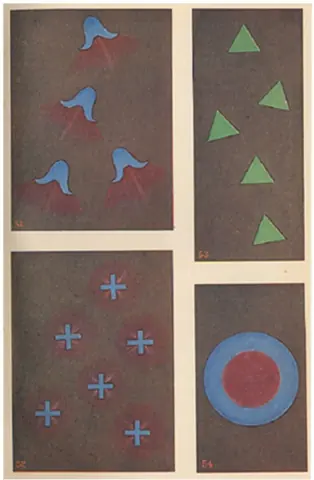
Four dark panels contain blue curved forms with red trails, green triangles, blue crosses and a blue ring around a red centre.
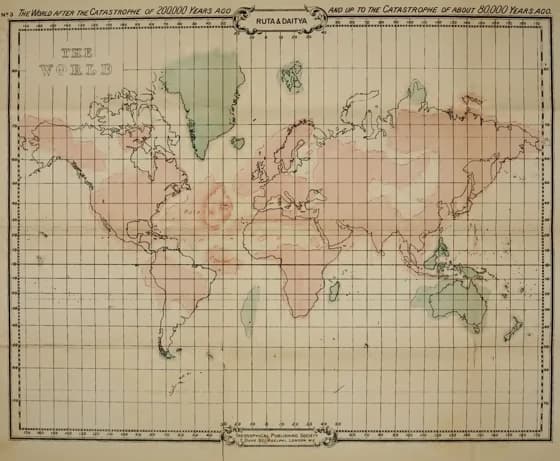
Coloured land outlines and fine grid lines cover a world map labelled Ruta and Daitya.
The familiar outlines of the continents surround a small coloured island in the Atlantic.
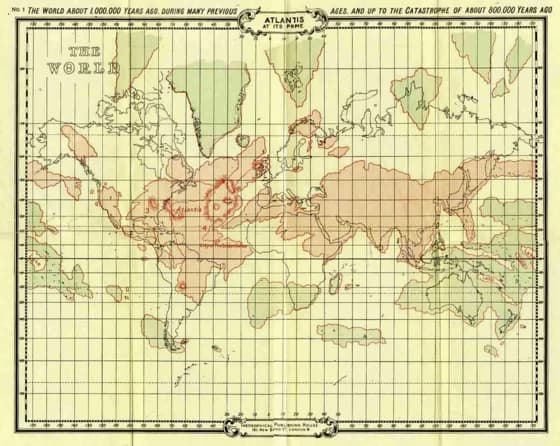
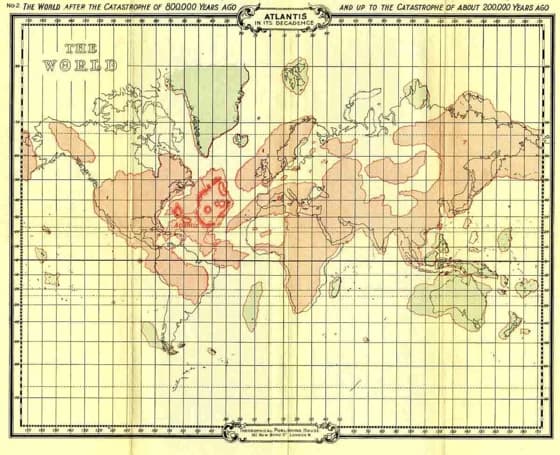
A wide world map combines shaded land areas, a latitude-longitude grid and the heading Atlantis at Its Prime.
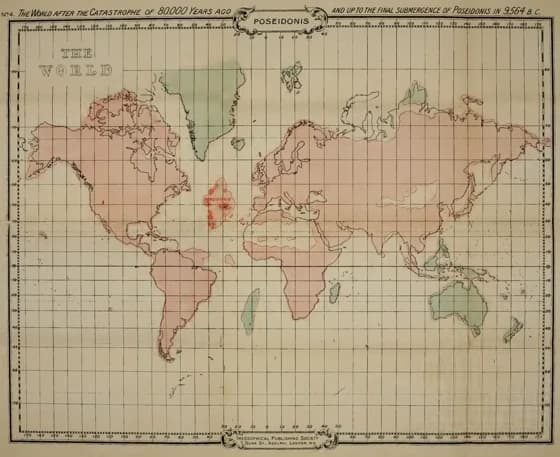
Broad tinted land masses extend across an evenly ruled world map.
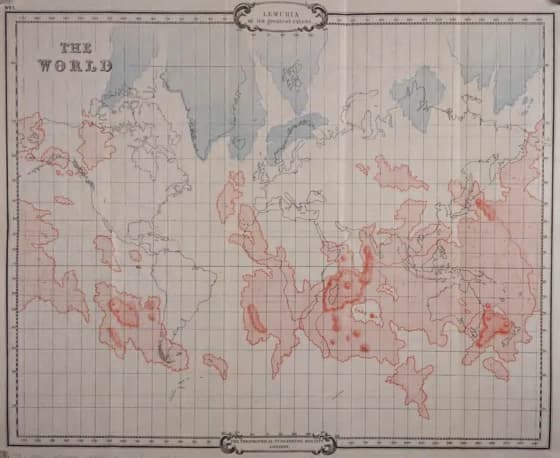
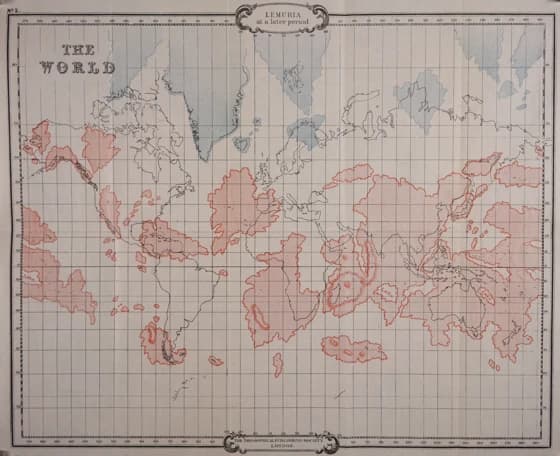
Red outlines cross the Pacific and neighbouring regions over a gridded world map.
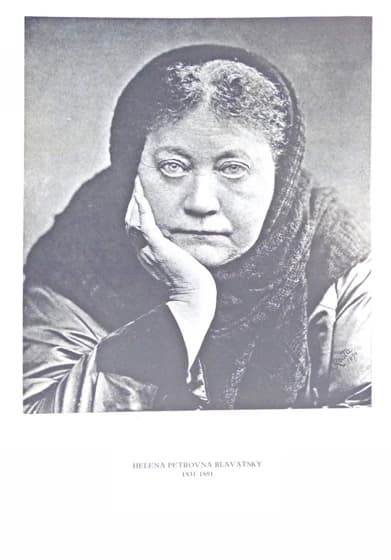
Helena Petrovna Blavatsky rests her cheek against one hand, with a dark covering framing her face.
A low hut is covered with placards advertising extravagant occult services.
A woman looks directly towards the viewer beneath a dark hood with one hand supporting her cheek.
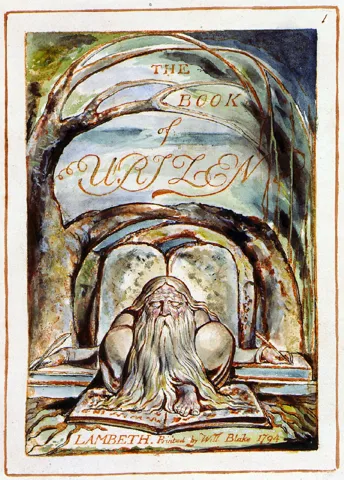 27 plates
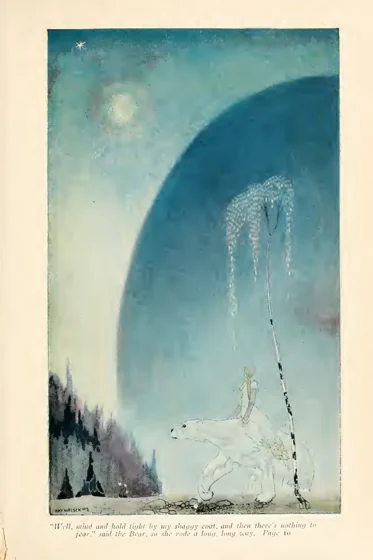 22 plates
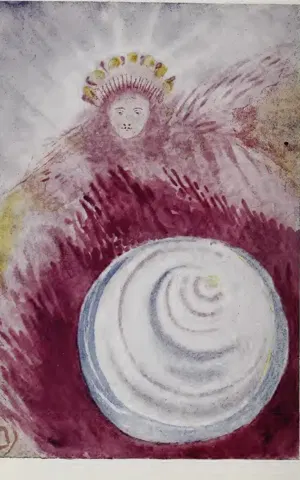 4 plates
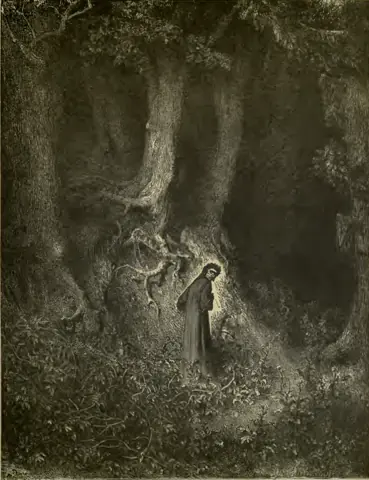 24 plates
 10 plates
 10 plates