Xuanzang
Xuanzang travelled from Tang China to India and returned with Buddhist texts. His pilgrimage later inspired stories of dragons, spirits and the Monkey King.
In this article
Who was Xuanzang?
Xuanzang was a seventh-century Chinese Buddhist monk. He travelled through Central Asia to India, returned with scriptures and translated Buddhist works from Sanskrit into Chinese. Later stories kept the search for texts at the centre of his journey and gave him companions with supernatural powers. [3][1][2][6][8]
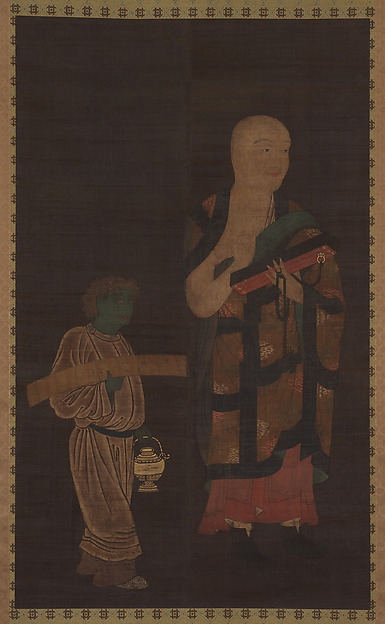
A fourteenth-century Japanese portrait honours Xuanzang, called Genjō in Japan. The attendant recalls his travels in India.
Kasuga Motomitsu. Portrait of Xuanzang (Genjō) with Attendant. 14th century. The Metropolitan Museum of Art. H. O. Havemeyer Collection, Gift of Horace Havemeyer, 1929. Public Domain. · Image source ↗ · Public Domain
In The Chinese Fairy Book
In Richard Wilhelm’s The Chinese Fairy Book, translated by Frederick H. Martens, the monk is Huan Dschuang. An emperor has to answer an underworld grievance involving a dragon. The solution proposed there includes asking a holy priest to fetch scriptures from the Western Heavens. The tale gives Xuanzang this task after recounting how he came to be raised in a monastery. [4][5]
The tale says the monk returns after seventeen years with three collections of texts, identified in the note as the Tripitaka. The Monkey King’s story picks up the other side of the journey. Sun Wukong is freed from a mountain to help the monk fetch the writings. [6][7][8]
How the journey survives in writing and art
The Great Tang Dynasty Record of the Western Regions, compiled by Bianji from records of Xuanzang’s travels and translated by Li Rongxi, sets out places across Central Asia and India. Wilhelm’s tale begins with a dragon’s grievance and a hearing in the underworld. The itinerary records where the monk went. The tale gives the journey a cause of its own. [1][4][6]
A Japanese portrait pairs Xuanzang with an Indian attendant. The Met identifies him as a patriarch honoured in the Hossō school. The painting and the Library tale both picture the monk with a companion, with the portrait marking a line of transmission and the tale giving his journey an extraordinary helper. [3][8]
In the library
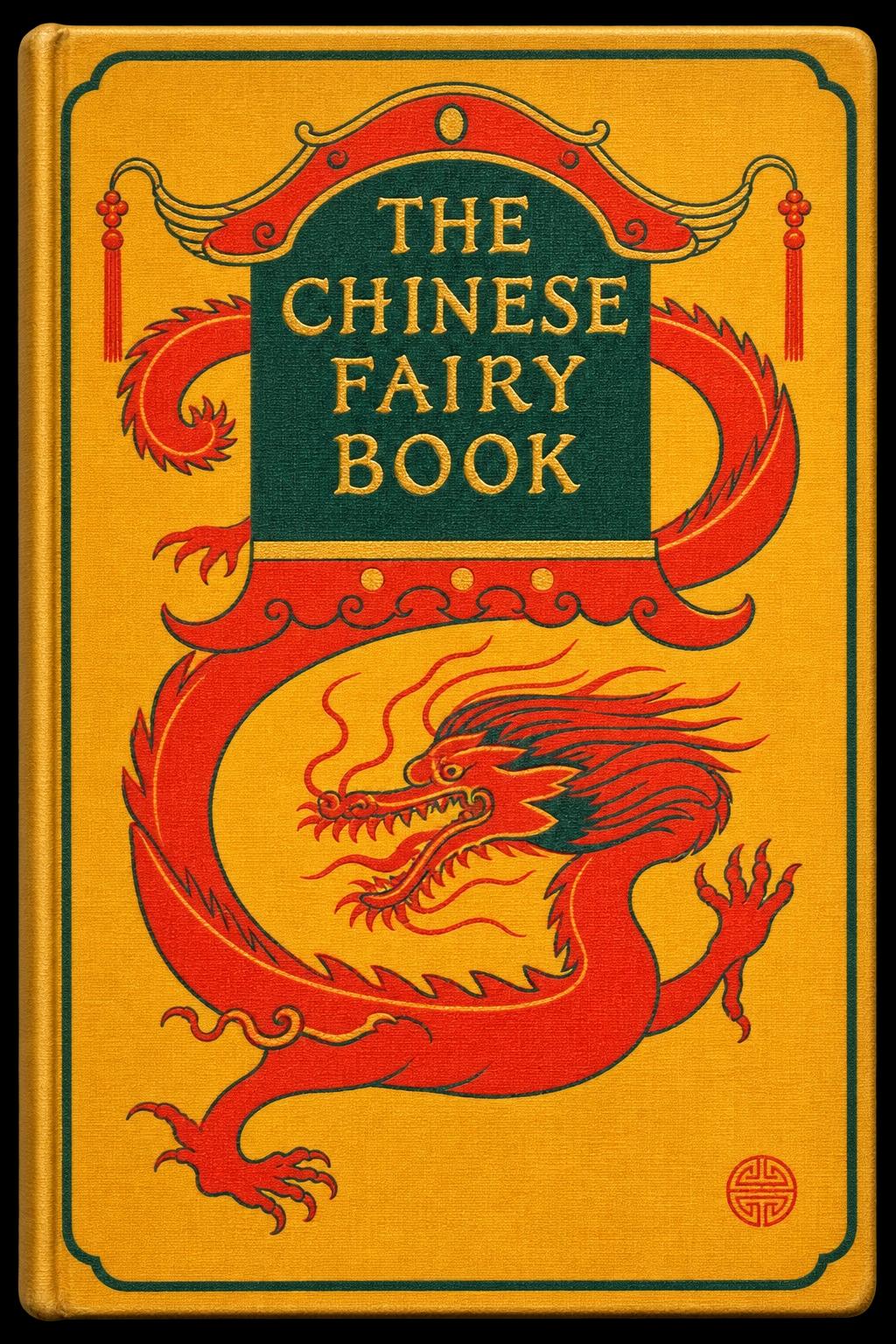
The Chinese Fairy Book
Reading note
Read how the monk is chosen for the journey, and how the Monkey King is freed to travel with him.
Sources
See references (8)
- The Great Tang Dynasty Record of the Western Regions, translated by Li Rongxi ↗BDK America
- The Monkey King opera figure ↗Ashmolean Museum
- Portrait of Xuanzang (Genjō) with Attendant ↗Kasuga Motomitsu. Portrait of Xuanzang (Genjō) with Attendant. 14th century. The Metropolitan Museum of Art. H. O. Havemeyer Collection, Gift of Horace Havemeyer, 1929. Public Domain.
- The Chinese Fairy Book, Library Reader page 269Richard Wilhelm, editor. Frederick H. Martens, translator. The Chinese Fairy Book. Frederick A. Stokes Company, New York, 1921. Lumitheca Library edition IMJ-0478-E002.Read this page in The Chinese Fairy Book ↗
- The Chinese Fairy Book, Library Reader page 271Richard Wilhelm, editor. Frederick H. Martens, translator. The Chinese Fairy Book. Frederick A. Stokes Company, New York, 1921. Lumitheca Library edition IMJ-0478-E002.Read this page in The Chinese Fairy Book ↗
- The Chinese Fairy Book, Library Reader page 272Richard Wilhelm, editor. Frederick H. Martens, translator. The Chinese Fairy Book. Frederick A. Stokes Company, New York, 1921. Lumitheca Library edition IMJ-0478-E002.Read this page in The Chinese Fairy Book ↗
- The Chinese Fairy Book, Library Reader page 273Richard Wilhelm, editor. Frederick H. Martens, translator. The Chinese Fairy Book. Frederick A. Stokes Company, New York, 1921. Lumitheca Library edition IMJ-0478-E002.Read this page in The Chinese Fairy Book ↗
- The Chinese Fairy Book, Library Reader page 350Richard Wilhelm, editor. Frederick H. Martens, translator. The Chinese Fairy Book. Frederick A. Stokes Company, New York, 1921. Lumitheca Library edition IMJ-0478-E002.Read this page in The Chinese Fairy Book ↗