Universal Mind
What is Universal Mind? Explore Walter Russell’s idea of one thinking substance and how it differs from Spinoza’s account of God and nature.
In this article
One substance beneath changing forms
Universal Mind is the idea that an underlying reality common to all things has the character of mind. Walter Russell treats Mind as a single substance. The material world is the changing appearance that substance takes through its activity. [3][4][5]
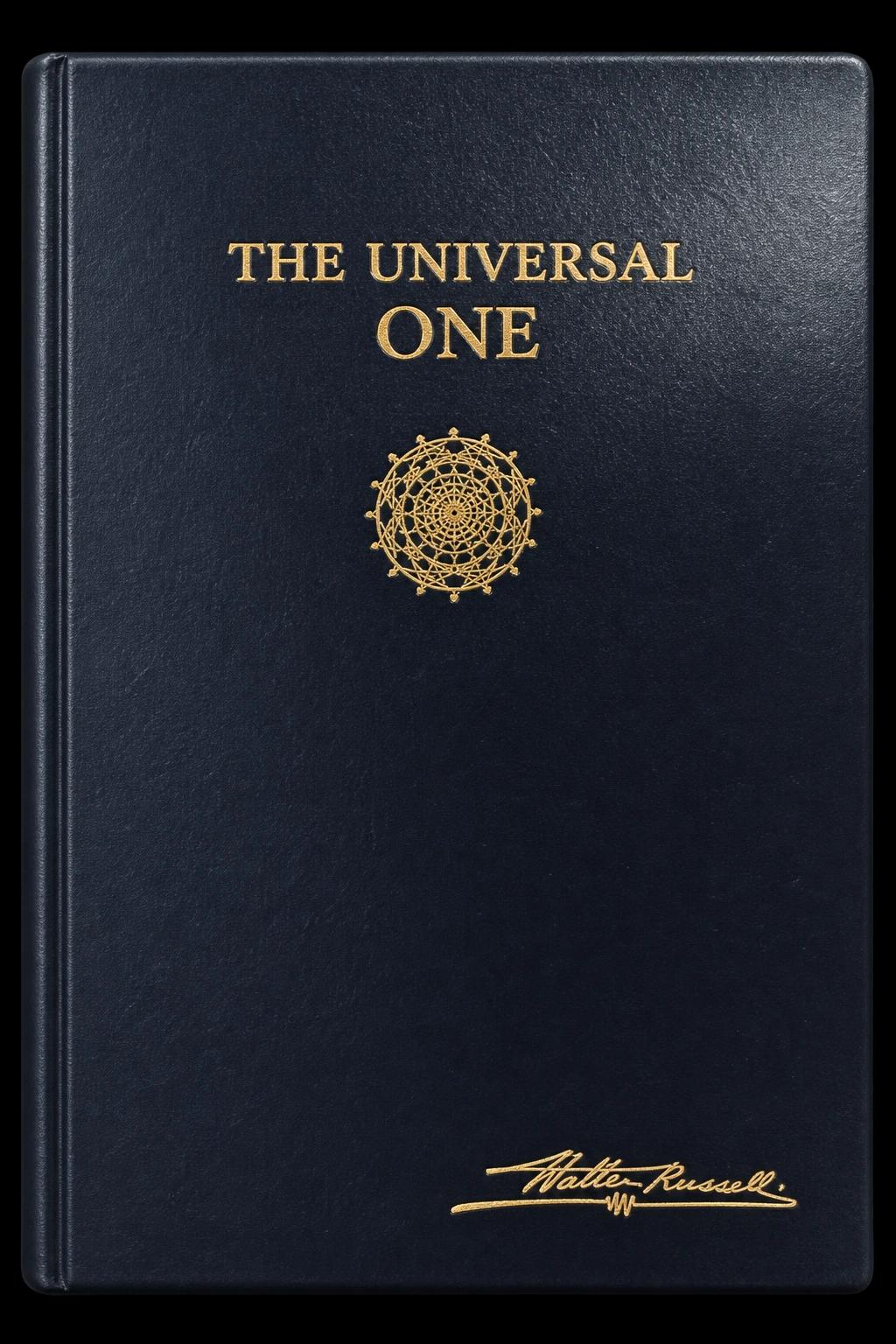
The Universal One by Walter Russell
In The Universal One, Walter Russell identifies God with the universe and names their common substance Mind. He calls it material and also calls it light. In this usage, light is the underlying substance of both spirit and matter. [3][4][6][7][5]
Russell uses a seed to explain how one substance can hold the potential for many forms. Changes in the activity of Mind bring those forms into view while the substance remains the same. This is a form of monism, the view that reality has one underlying substance. [6][8][5]
See references (6)
Ethics by Benedict de Spinoza
In Part I of the Ethics, Benedict de Spinoza defines God as absolutely infinite substance. Propositions 14 and 15 argue that no other substance can exist or be conceived and that everything that exists is in God. [2]
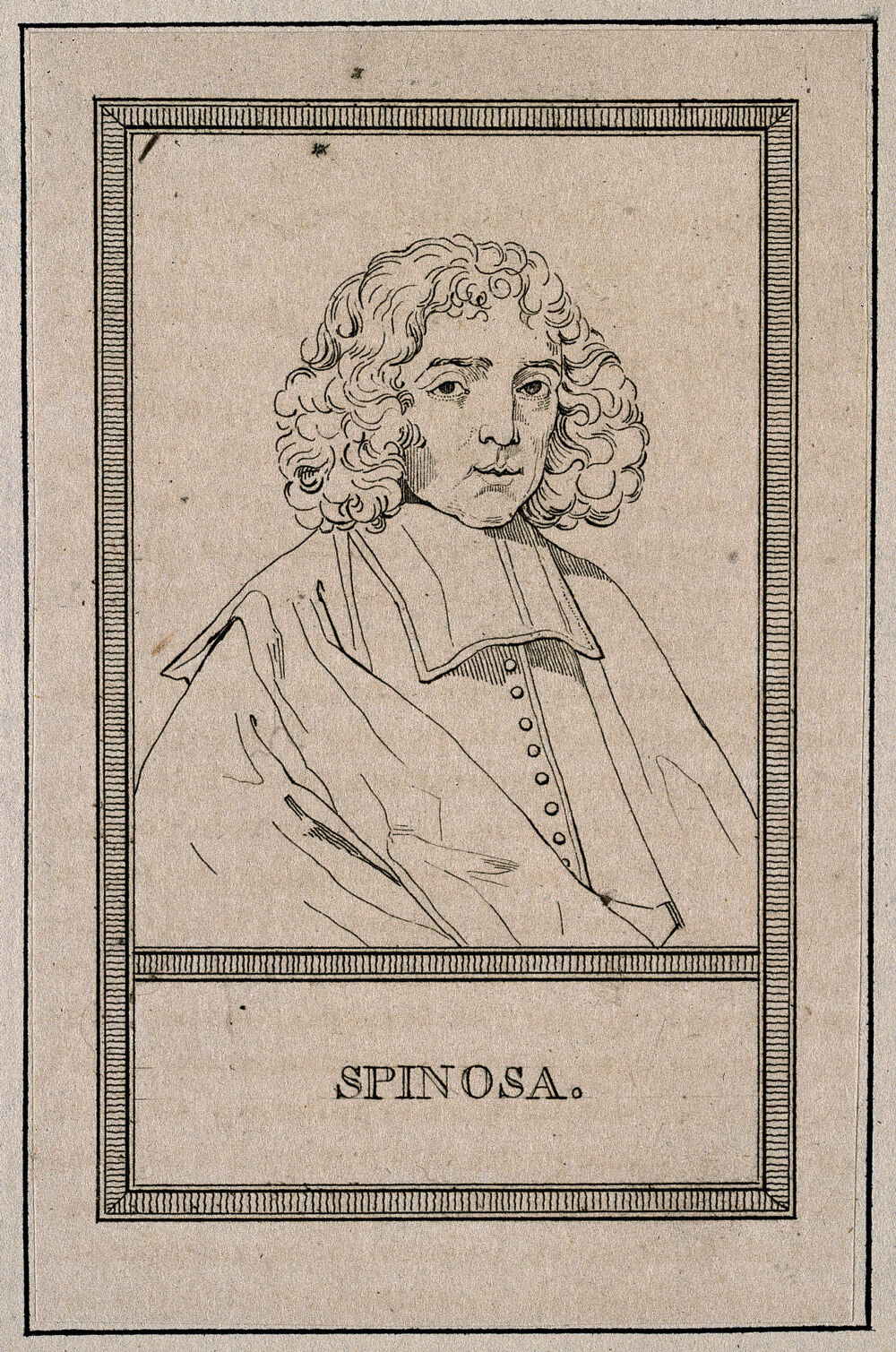
An engraved portrait of Benedict de Spinoza, whose Ethics argues for one absolutely infinite substance.
Wellcome Collection, 8923i. Public Domain Mark. Engraver and date not established in the catalogue record. · Image source ↗ · Public Domain
What it means for the one to be infinite
Spinoza calls the one substance absolutely infinite. Russell distinguishes freedom from spatial limits from limits on what Mind can express. Each begins with one substance and makes a different claim about its reach. [6][9][2]
In the library
The Universal One
Reading note
The separately titled account draws on exact passages in the consulted Library edition.
Sources
See references (9)
- Benedictus (Baruch) Spinoza: line engraving, Wellcome 8923i ↗Wellcome Collection, 8923i. Public Domain Mark. Engraver and date not established in the catalogue record.
- Ethics, part I, definition 6 and propositions 14 and 15 ↗Benedict de Spinoza, Ethics, part I, translated by R. H. M. Elwes.
- The Universal One, printed p. 8, Reader page 7Walter Russell, The Universal One, edited by Louise Russell, University of Science and Philosophy, Limited Edition De Luxe. Lumitheca Library edition IMJ-0605-E001.Read this page in The Universal One ↗
- The Universal One, printed p. 18, Reader page 17Walter Russell, The Universal One, edited by Louise Russell, University of Science and Philosophy, Limited Edition De Luxe. Lumitheca Library edition IMJ-0605-E001.Read this page in The Universal One ↗
- The Universal One, printed p. 27, Reader page 26Walter Russell, The Universal One, edited by Louise Russell, University of Science and Philosophy, Limited Edition De Luxe. Lumitheca Library edition IMJ-0605-E001.Read this page in The Universal One ↗
- The Universal One, printed p. 19, Reader page 18Walter Russell, The Universal One, edited by Louise Russell, University of Science and Philosophy, Limited Edition De Luxe. Lumitheca Library edition IMJ-0605-E001.Read this page in The Universal One ↗
- The Universal One, printed p. 20, Reader page 19Walter Russell, The Universal One, edited by Louise Russell, University of Science and Philosophy, Limited Edition De Luxe. Lumitheca Library edition IMJ-0605-E001.Read this page in The Universal One ↗
- The Universal One, printed p. 26, Reader page 25Walter Russell, The Universal One, edited by Louise Russell, University of Science and Philosophy, Limited Edition De Luxe. Lumitheca Library edition IMJ-0605-E001.Read this page in The Universal One ↗
- The Universal One, printed p. 57, Reader page 56Walter Russell, The Universal One, edited by Louise Russell, University of Science and Philosophy, Limited Edition De Luxe. Lumitheca Library edition IMJ-0605-E001.Read this page in The Universal One ↗