The Three Pure Ones
The Three Pure Ones are the highest triad in Daoism. A Yuan painting places them among attendants, while Chinese tales show how other immortals greet them.
In this article
Who are the Three Pure Ones?
The Three Pure Ones, or Sanqing, are the highest triad in Daoism. They are Yuanshi Tianzun, the Celestial Worthy of Primordial Beginning, Lingbao Tianzun, the Celestial Worthy of Numinous Treasure, and Daode Tianzun, the Celestial Worthy of the Way and Its Power. The third is associated with the deified Laozi. [3][1][2]
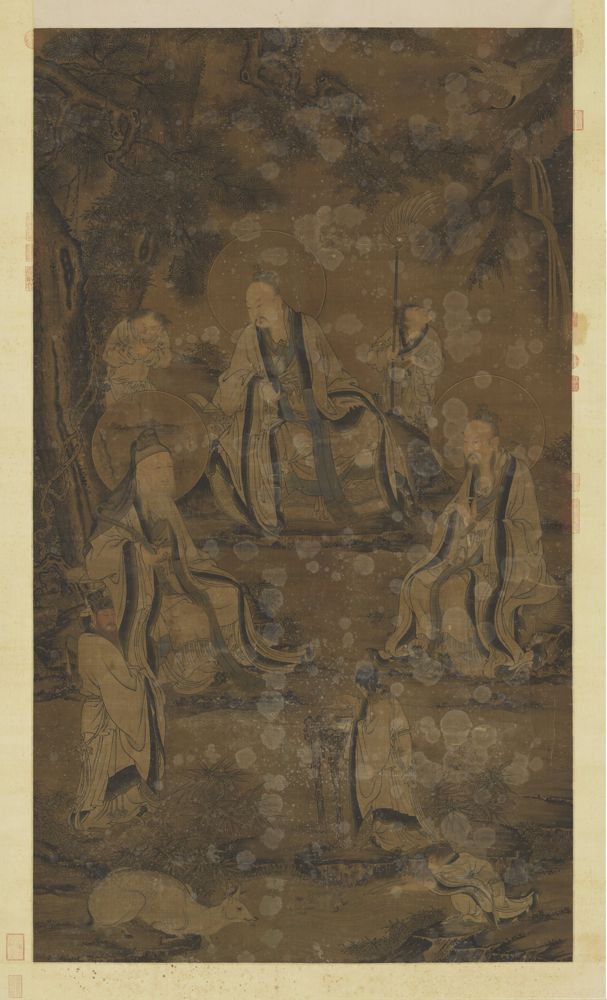
A Yuan painting groups the Three Pure Ones with attendants. The National Palace Museum identifies the upper figure as Yuanshi Tianzun.
Unidentified Chinese painter. The Three Purities. Yuan dynasty. The National Palace Museum, Taipei. The National Palace Museum, Taipei, CC BY 4.0 @ www.npm.gov.tw. CC BY 4.0. · Image source ↗ · CC BY 4.0
In The Chinese Fairy Book
In Richard Wilhelm’s The Chinese Fairy Book, translated by Frederick H. Martens, Dschang Liang interprets a song as a clue to the order in which an immortal approaches Heaven. The traveller first greets the Golden Mother and bows before the King Father of the East, then rises to the Three Pure Ones. The book gives the triad a place in the journey toward the highest presence. [4]
When the Monkey King is allowed to call on the gods, he shows respect to the Three Pure Ones and Four Rulers. He is more familiar with the star officials. You can tell whom he takes seriously by how he greets them. [5]
Reading a painting of the Three Purities
In the Yuan painting, Yuanshi Tianzun sits above the other two. Attendants and animals also occupy the scene. The view gives the three a place in an inhabited celestial world, much as the book has a traveller meet different hosts on the climb towards Heaven. [3][4][5]
In the library
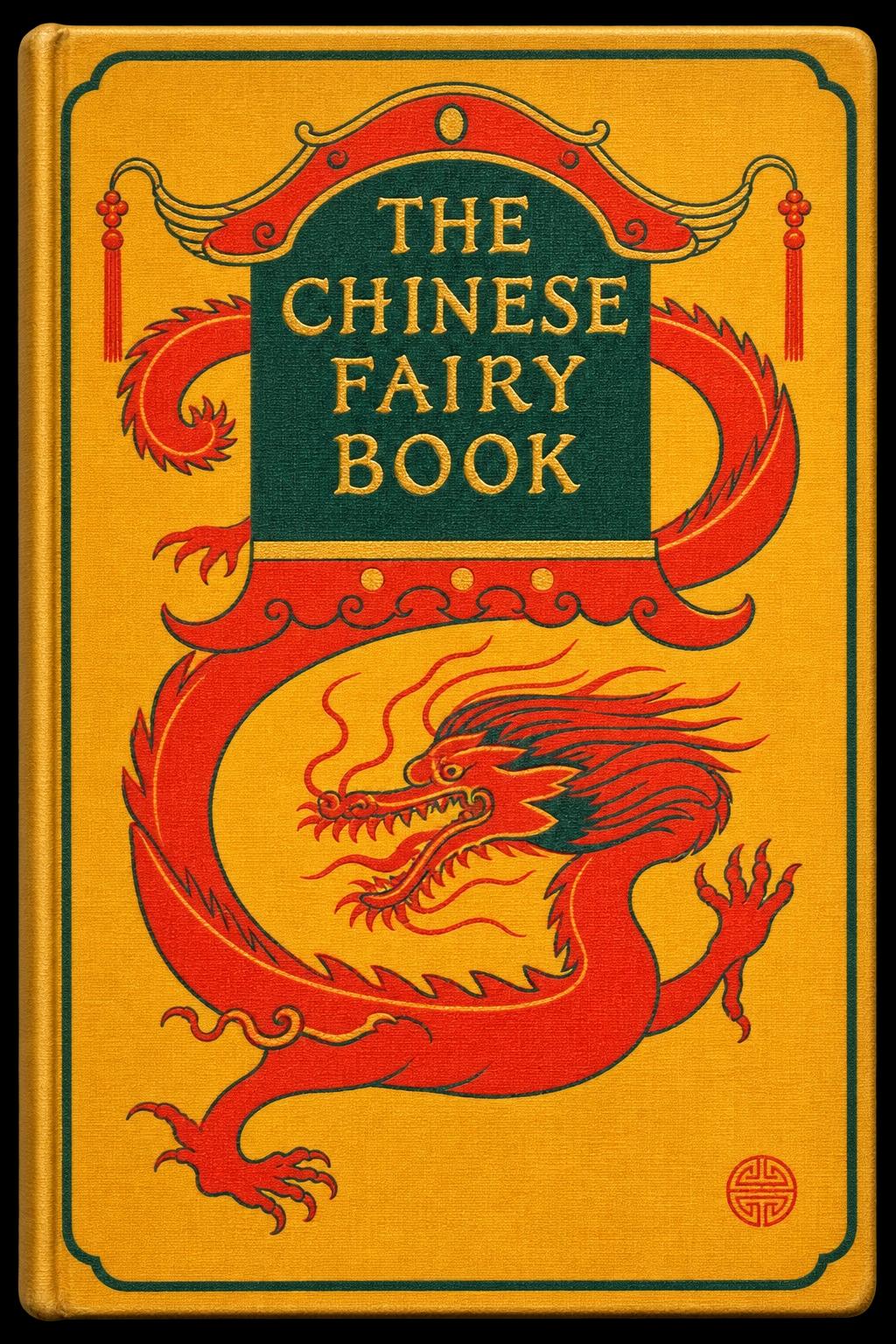
The Chinese Fairy Book
Reading note
Compare the order of the greetings in Dschang Liang’s tale with the Monkey King’s visits to the gods.
Sources
See references (5)
- Three Purities, Taoism and the Arts of China ↗Art Institute of Chicago
- Celestial Worthy of Primordial Beginning ↗Art Institute of Chicago
- The Three Purities ↗Unidentified Chinese painter. The Three Purities. Yuan dynasty. The National Palace Museum, Taipei. The National Palace Museum, Taipei, CC BY 4.0 @ www.npm.gov.tw. CC BY 4.0.
- The Chinese Fairy Book, Library Reader page 242Richard Wilhelm, editor. Frederick H. Martens, translator. The Chinese Fairy Book. Frederick A. Stokes Company, New York, 1921. Lumitheca Library edition IMJ-0478-E002.Read this page in The Chinese Fairy Book ↗
- The Chinese Fairy Book, Library Reader page 338Richard Wilhelm, editor. Frederick H. Martens, translator. The Chinese Fairy Book. Frederick A. Stokes Company, New York, 1921. Lumitheca Library edition IMJ-0478-E002.Read this page in The Chinese Fairy Book ↗