The Three Officials
The Three Officials preside over heaven, earth and water in Daoism. A Chinese folktale explains why the water official gets the middle seat.
In this article
Who are the Three Officials?
The Three Officials, or Sanguan, are Daoist gods who preside over heaven, earth and water. At a shrine you may find them seated together. A story preserved in The Chinese Fairy Book turns their choice of seats into a quarrel among brothers. [1][2]
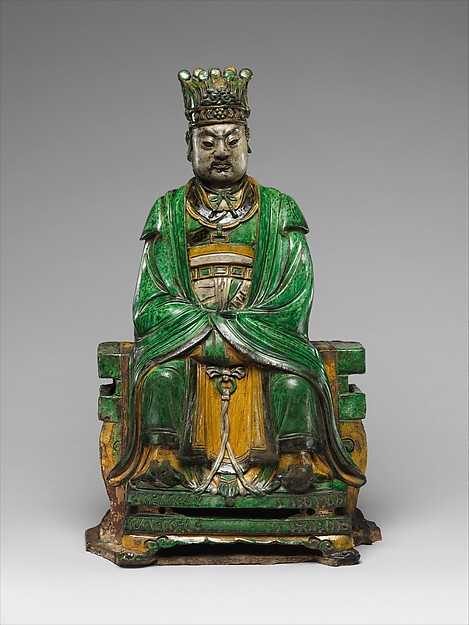
This glazed sculpture from 1482 was commissioned for a set of the Three Officials. The Met leaves its individual office unidentified.
Qiao Bin. Daoist divine official. dated 1482. The Metropolitan Museum of Art. Bequest of Harrison Cady, 1970. Public Domain. · Image source ↗ · Public Domain
See references (2)
In The Chinese Fairy Book
In Richard Wilhelm’s The Chinese Fairy Book, translated by Frederick H. Martens, the three brothers meditate on an island without moving. Birds nest in their hair and spiders weave webs across their faces. After years of stillness the brothers acquire hidden wisdom and become gods. [2][3]
The tale explains why their temple images sit together and why the figure at the right looks angry. The brothers agree to give the centre seat to the first to arrive. The youngest claims it and becomes the ruler of water. The middle brother sits to the left as ruler of heaven, leaving the eldest the seat to the right and the rule of earth. His anger gives the artist a face to paint or sculpt. [3][4]
What a Ming inscription can tell us
An inscription on Qiao Bin’s glazed figure says it was made for a Daoist monastery in Shanxi in 1482 as part of a set of Three Officials. Its robe and posture show a divine official. The Met leaves open which of the three offices this figure held. [1][3][4]
In the library
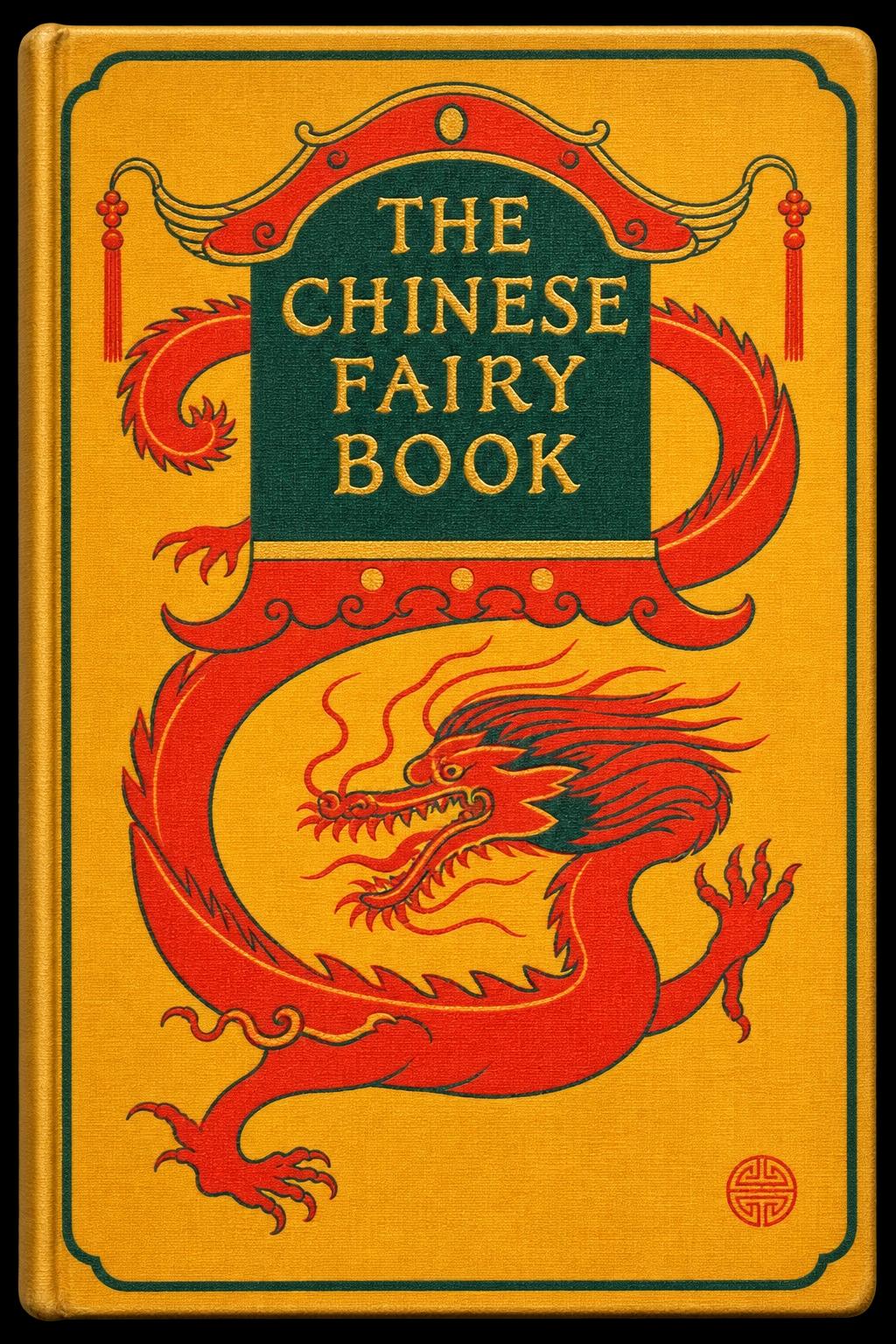
The Chinese Fairy Book
Reading note
Read how the brothers become gods and how the youngest claims the middle seat.
Sources
See references (4)
- Daoist divine official ↗Qiao Bin. Daoist divine official. dated 1482. The Metropolitan Museum of Art. Bequest of Harrison Cady, 1970. Public Domain.
- The Chinese Fairy Book, Library Reader page 76Richard Wilhelm, editor. Frederick H. Martens, translator. The Chinese Fairy Book. Frederick A. Stokes Company, New York, 1921. Lumitheca Library edition IMJ-0478-E002.Read this page in The Chinese Fairy Book ↗
- The Chinese Fairy Book, Library Reader page 77Richard Wilhelm, editor. Frederick H. Martens, translator. The Chinese Fairy Book. Frederick A. Stokes Company, New York, 1921. Lumitheca Library edition IMJ-0478-E002.Read this page in The Chinese Fairy Book ↗
- The Chinese Fairy Book, Library Reader page 78Richard Wilhelm, editor. Frederick H. Martens, translator. The Chinese Fairy Book. Frederick A. Stokes Company, New York, 1921. Lumitheca Library edition IMJ-0478-E002.Read this page in The Chinese Fairy Book ↗