The Ten Kings of the Chinese Underworld
In Chinese Buddhist tradition, the Ten Kings judge the dead before rebirth. Stories give their courts registers and hear appeals, even from Sun Wukong.
In this article
Who are the Ten Kings of the Chinese underworld?
The Ten Kings preside over courts that judge the dead before rebirth in Chinese Buddhist tradition. The courts have familiar offices. A king hears the case, a scribe keeps the record and officials carry out decisions. The Song scroll below shows one of the judges. Other paintings in the series would have shown the remaining courts. [1]
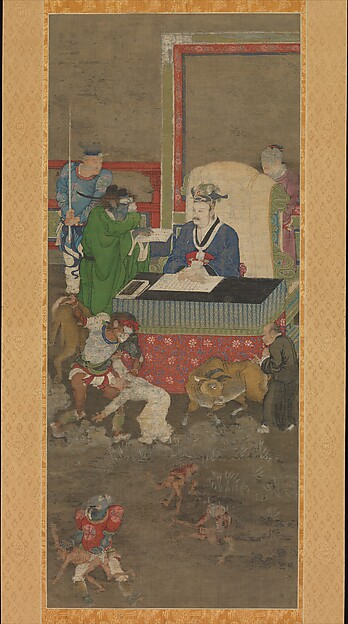
A scroll made before 1195 in the studio of Jin Chushi shows one of the Ten Kings presiding with a scribe and other officials.
Jin Chushi. Ten Kings of Hell. before 1195. The Metropolitan Museum of Art. Rogers Fund, 1930. Public Domain. · Image source ↗ · Public Domain
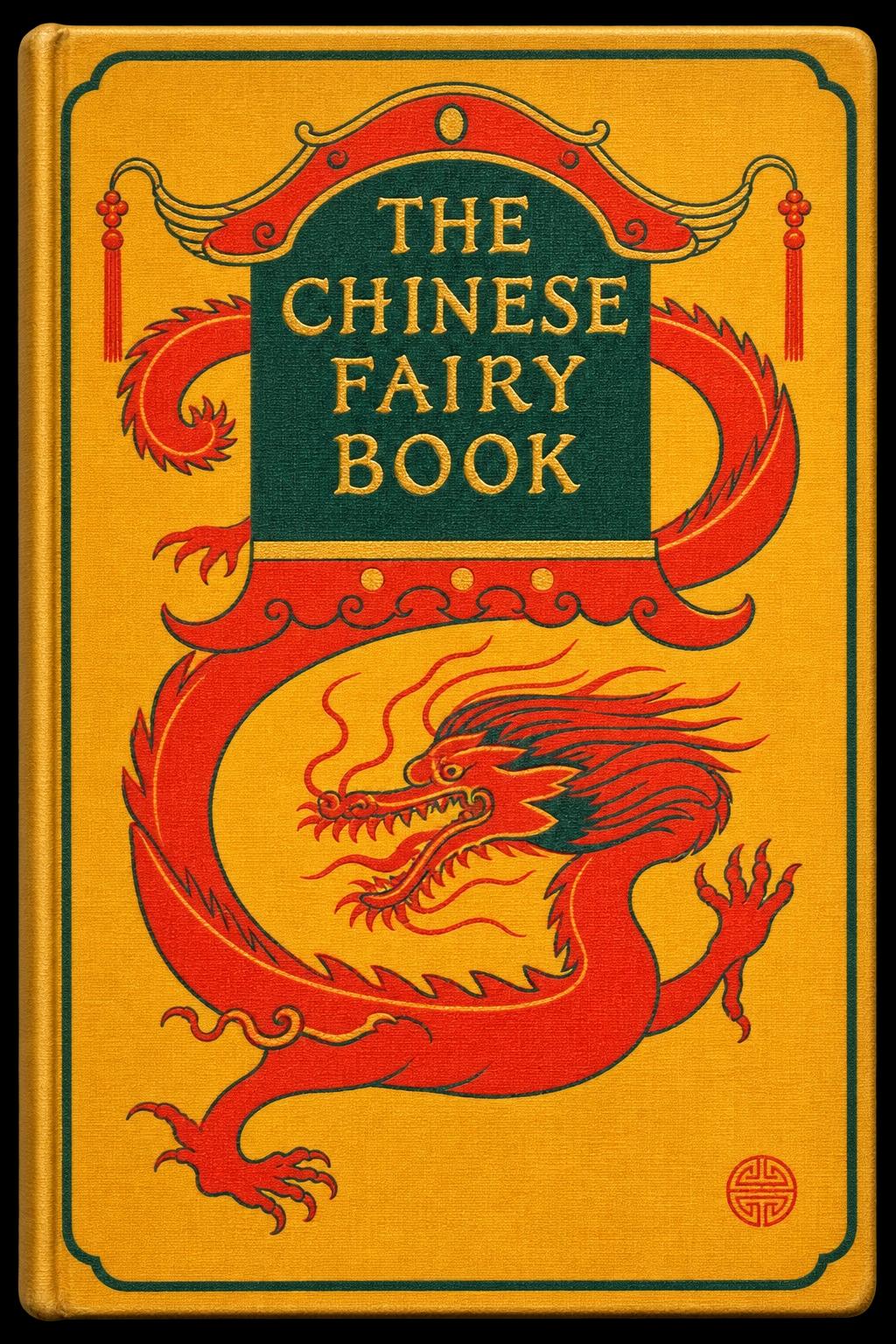
In The Chinese Fairy Book
In Richard Wilhelm’s The Chinese Fairy Book, translated by Frederick H. Martens, the notes to two ghost tales place the Lord of Mount Tai above other authorities associated with the dead. The note to The Dangerous Reward calls him the overlord of the ten princes. The note to The Constable distinguishes his rank from that of Yan Wang, the God of Death. These are the book’s accounts of how the offices fit together. [2][3]
When an emperor is summoned to answer a rain dragon’s complaint, the Lord of the Mountain sits with the ten princes. Their meeting leads to a decision to seek Buddhist scriptures from the West. The tale uses the court to explain why a religious journey begins. [4][5]
Sun Wukong and the Book of Life
In the Monkey King’s tale, officials bring Sun Wukong’s spirit to the underworld. The register gives the age at which he is due to die. He strikes out the entries for the whole ape family. The story says the apes on his mountain cease to die. [6][7]
The records of the dead
In the Song painting, papers pass through an orderly court. In Wilhelm’s collection, a rain dragon gets a hearing, while the Monkey King forces his way to the register. A document can uphold mortality or give an unruly visitor something to cross out. [1][4][5][6][7]
In the library
The Chinese Fairy Book
Reading note
Read the judgment involving a rain dragon and compare it with the Monkey King’s visit to the register of the dead.
Sources
See references (7)
- Ten Kings of Hell ↗Jin Chushi. Ten Kings of Hell. before 1195. The Metropolitan Museum of Art. Rogers Fund, 1930. Public Domain.
- The Chinese Fairy Book, Library Reader page 194Richard Wilhelm, editor. Frederick H. Martens, translator. The Chinese Fairy Book. Frederick A. Stokes Company, New York, 1921. Lumitheca Library edition IMJ-0478-E002.Read this page in The Chinese Fairy Book ↗
- The Chinese Fairy Book, Library Reader page 197Richard Wilhelm, editor. Frederick H. Martens, translator. The Chinese Fairy Book. Frederick A. Stokes Company, New York, 1921. Lumitheca Library edition IMJ-0478-E002.Read this page in The Chinese Fairy Book ↗
- The Chinese Fairy Book, Library Reader page 268Richard Wilhelm, editor. Frederick H. Martens, translator. The Chinese Fairy Book. Frederick A. Stokes Company, New York, 1921. Lumitheca Library edition IMJ-0478-E002.Read this page in The Chinese Fairy Book ↗
- The Chinese Fairy Book, Library Reader page 269Richard Wilhelm, editor. Frederick H. Martens, translator. The Chinese Fairy Book. Frederick A. Stokes Company, New York, 1921. Lumitheca Library edition IMJ-0478-E002.Read this page in The Chinese Fairy Book ↗
- The Chinese Fairy Book, Library Reader page 331Richard Wilhelm, editor. Frederick H. Martens, translator. The Chinese Fairy Book. Frederick A. Stokes Company, New York, 1921. Lumitheca Library edition IMJ-0478-E002.Read this page in The Chinese Fairy Book ↗
- The Chinese Fairy Book, Library Reader page 332Richard Wilhelm, editor. Frederick H. Martens, translator. The Chinese Fairy Book. Frederick A. Stokes Company, New York, 1921. Lumitheca Library edition IMJ-0478-E002.Read this page in The Chinese Fairy Book ↗