Substitute Ghosts
In some Chinese tales, a ghost must find a replacement to go free. One serves a tiger as its decoy, while another is thwarted by a soldier.
In this article
What is a substitute ghost?
In some Chinese ghost stories, the dead cannot leave a place or end a service until someone else takes their place. In “The Tiger’s Decoy,” each new victim inherits the work of luring the next. In “The Ghost Who Was Foiled,” a soldier intervenes before the intended substitute dies. [2][3][4][5][6]
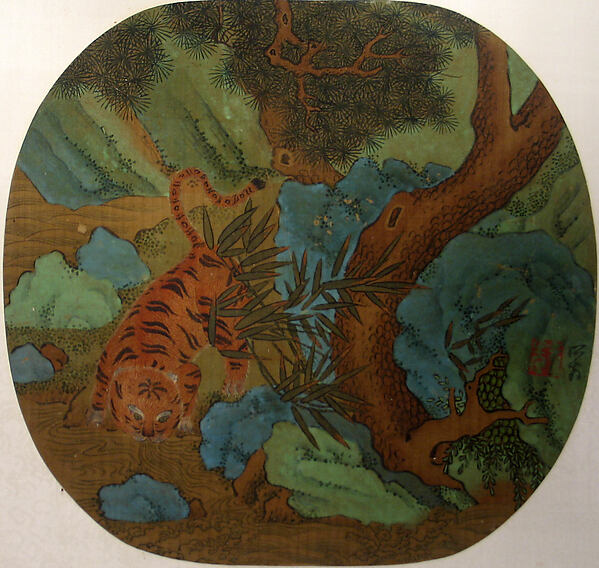
Tiger Drinking from a Stream, a Qing fan painting, shows the animal that Chinese tales recast as the master of a captive decoy.
Unidentified artist. Tiger Drinking from a Stream. The Metropolitan Museum of Art. John Stewart Kennedy Fund, 1913. Public Domain. · Image source ↗ · Public Domain
In The Chinese Fairy Book
In The Chinese Fairy Book, edited by Richard Wilhelm and translated by Frederick H. Martens, “The Tiger’s Decoy” tells of a tiger forcing a victim’s spirit to go ahead and draw travellers into a gorge. The ghost can appear as a person or as something valuable, such as gold or silk. When the tiger takes another victim, the newcomer serves as the decoy and the previous ghost goes free. The narrator extends the comparison to people compelled to help someone powerful harm others. [2][3]
“The Ghost Who Was Foiled” gives a wandering spirit another reason to seek a substitute. In the logic of the story, replacement allows the ghost to enter the underworld and pass back into the cycle of rebirth. A soldier intervenes to save the intended victim and refuses to return what the ghost left behind. The villagers come out to thank him at dawn, when the private encounter becomes known to the community. [4][5][6]
How the cycle can end
Each victim frees a decoy and gives the tiger a new helper. The second tale shows where the exchange can fail. Once the soldier saves the intended victim, he refuses to give the ghost back what it left behind. [3][5][6]
The tiger also has a distinct role in the fable immediately before “The Tiger’s Decoy.” There a fox borrows the tiger’s frightening presence to make itself seem powerful. Read together, the two tales move from a trick played on the predator to a system of deception the predator benefits from. [2][3]
In the library
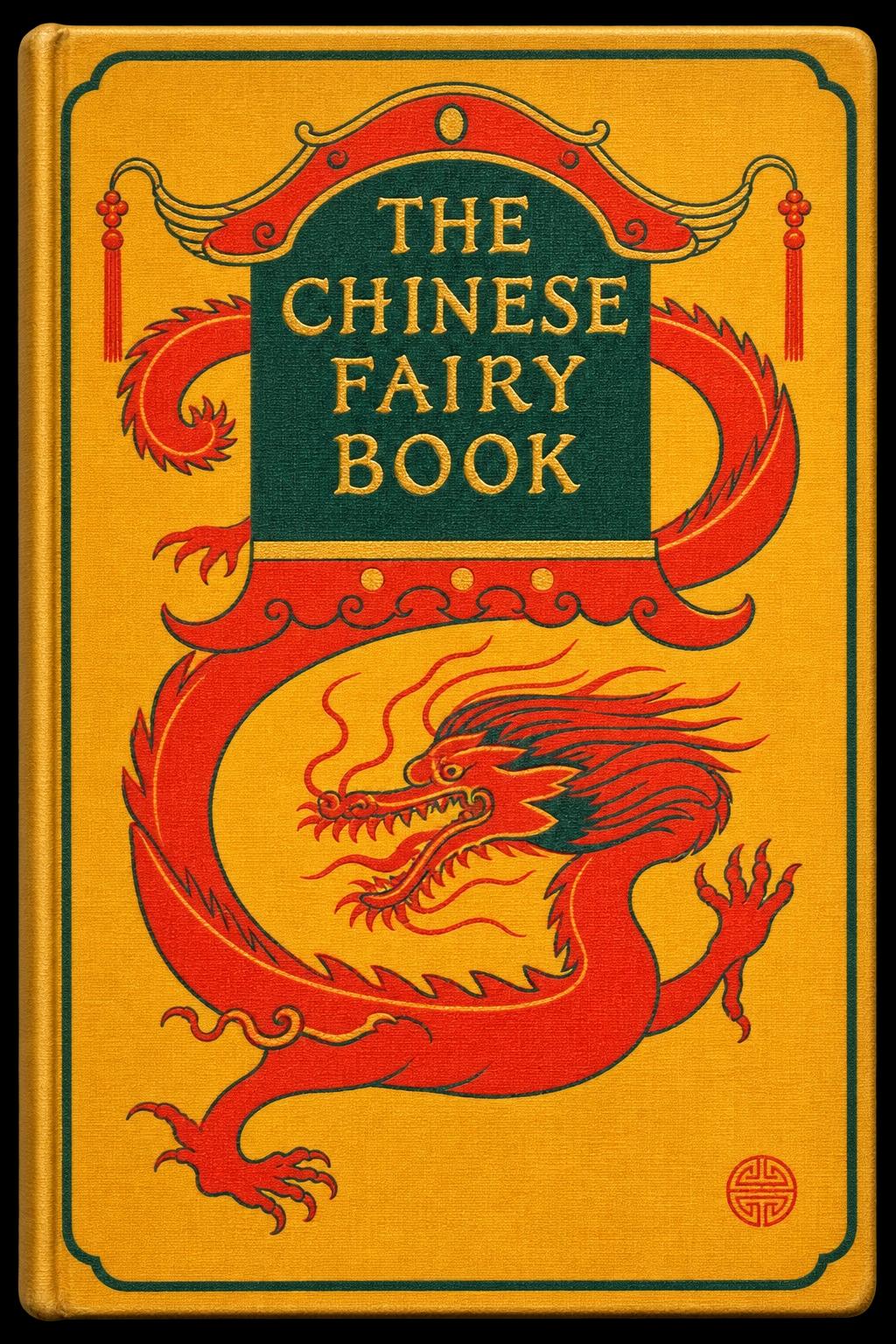
The Chinese Fairy Book
Reading note
Read “The Tiger’s Decoy” and “The Ghost Who Was Foiled” for two endings to the search for a substitute.
Sources
See references (6)
- Tiger Drinking from a Stream ↗Unidentified artist. Tiger Drinking from a Stream. The Metropolitan Museum of Art. John Stewart Kennedy Fund, 1913. Public Domain.
- The Chinese Fairy Book, Library Reader page 40Richard Wilhelm, editor. Frederick H. Martens, translator. The Chinese Fairy Book. Frederick A. Stokes Company, New York, 1921. Lumitheca Library edition IMJ-0478-E002.Read this page in The Chinese Fairy Book ↗
- The Chinese Fairy Book, Library Reader page 41Richard Wilhelm, editor. Frederick H. Martens, translator. The Chinese Fairy Book. Frederick A. Stokes Company, New York, 1921. Lumitheca Library edition IMJ-0478-E002.Read this page in The Chinese Fairy Book ↗
- The Chinese Fairy Book, Library Reader page 200Richard Wilhelm, editor. Frederick H. Martens, translator. The Chinese Fairy Book. Frederick A. Stokes Company, New York, 1921. Lumitheca Library edition IMJ-0478-E002.Read this page in The Chinese Fairy Book ↗
- The Chinese Fairy Book, Library Reader page 203Richard Wilhelm, editor. Frederick H. Martens, translator. The Chinese Fairy Book. Frederick A. Stokes Company, New York, 1921. Lumitheca Library edition IMJ-0478-E002.Read this page in The Chinese Fairy Book ↗
- The Chinese Fairy Book, Library Reader page 204Richard Wilhelm, editor. Frederick H. Martens, translator. The Chinese Fairy Book. Frederick A. Stokes Company, New York, 1921. Lumitheca Library edition IMJ-0478-E002.Read this page in The Chinese Fairy Book ↗