The atmosphere of a place
The atmosphere of a place is the mood felt there. Explore how Dion Fortune connects it with memory, repetition and the way a place is used.
In this article
Why can a place feel charged?
A place’s atmosphere is the mood it seems to bring on when you enter it. Light, sound and layout can shape the feeling. So can something you remember about the place that another visitor may never have heard. [1][3][4]
Some occult writers use spiritual or psychic atmosphere for the impression they believe repeated actions leave behind. Dion Fortune asks what happens to such an impression when the people using the place change. [3][5][6][7][4]
Using a place in The Goat-Foot God
In Dion Fortune’s The Goat-Foot God, Jelkes thinks earlier worship at Monks Farm has built up a psychic atmosphere. He expects that Hugh will have to clear the place before it can take on a different use. [8][3][9]
Later Jelkes gives Hugh a less mysterious example. Customers used to come to his shop expecting to dispose of stolen goods. When he turned them away, they stopped coming for that purpose. What people were accustomed to doing there had changed. [7][4]
Place and recollection in Lyrical Ballads
In “Lines Written a Few Miles above Tintern Abbey,” William Wordsworth recalls how the Wye landscape returned to him during his years away. Back beside the river, he describes a presence he feels through natural things and the mind that perceives them. [1]
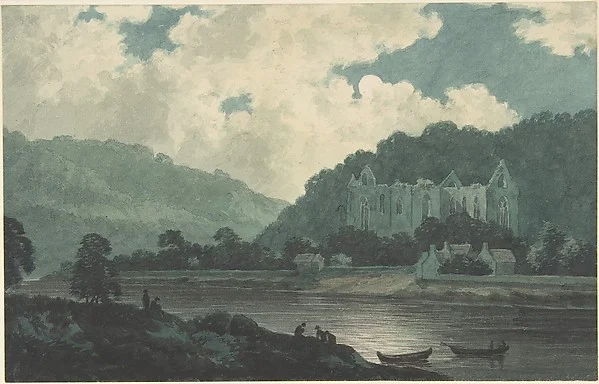
John “Warwick” Smith drew Tintern Abbey from across the river by moonlight. Wordsworth’s poem takes place a few miles upstream.
John "Warwick" Smith. The Metropolitan Museum of Art. Purchase, Malcolm Hewitt Wiener Foundation and Jill Newhouse Gifts, 2003. 2003.118. · Image source ↗ · CC0
What a person brings and takes away
Wordsworth can carry the effect of the Wye landscape with him when he leaves. Jelkes can change what people expect from a shop by changing what happens there. Between them, the examples give a place’s atmosphere both a history and a visitor who responds to it. [1][3][7][4]
Read further in the library
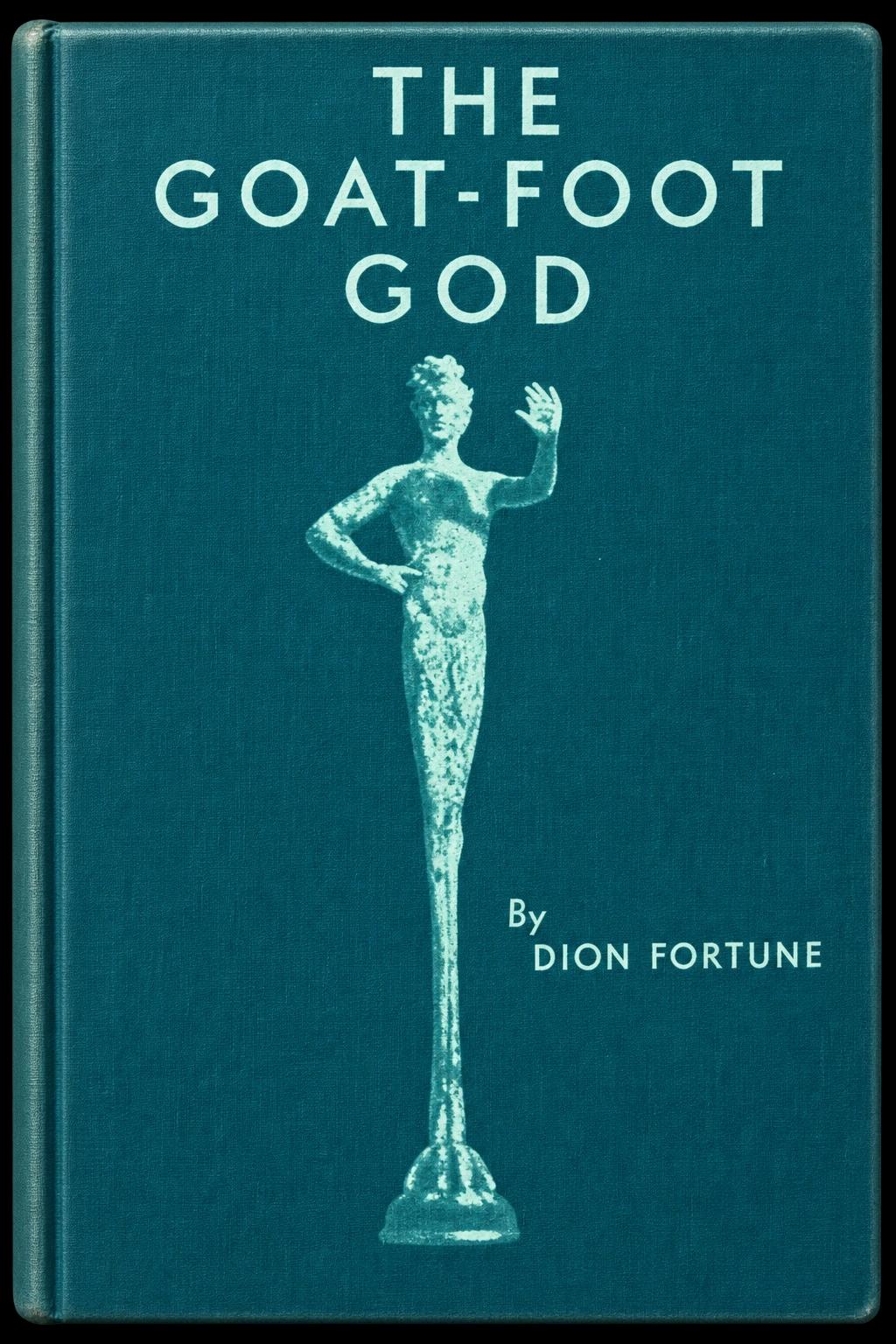
The Goat-Foot God
Reading note
The separately titled account draws on exact passages in the consulted Library edition.
Sources
See references (9)
- William Wordsworth, Lyrical Ballads, “Lines written a few miles above Tintern Abbey” ↗William Wordsworth, Lyrical Ballads (1798), “Lines written a few miles above Tintern Abbey,” opening and the stanza on a felt presence.Return to text ↑
- Tintern Abbey by moonlight ↗John "Warwick" Smith. The Metropolitan Museum of Art. Purchase, Malcolm Hewitt Wiener Foundation and Jill Newhouse Gifts, 2003. 2003.118.
- The Goat-Foot God, Reader page 106Dion Fortune, The Goat-Foot God. Undated digital Library edition IMJ-0643-E001. Numbered references use the Library Reader sequence.Read this page in The Goat-Foot God ↗Return to text ↑
- The Goat-Foot God, Reader page 339Dion Fortune, The Goat-Foot God. Undated digital Library edition IMJ-0643-E001. Numbered references use the Library Reader sequence.Read this page in The Goat-Foot God ↗Return to text ↑
- The Goat-Foot God, Reader page 177Dion Fortune, The Goat-Foot God. Undated digital Library edition IMJ-0643-E001. Numbered references use the Library Reader sequence.Read this page in The Goat-Foot God ↗Return to text ↑
- The Goat-Foot God, Reader page 178Dion Fortune, The Goat-Foot God. Undated digital Library edition IMJ-0643-E001. Numbered references use the Library Reader sequence.Read this page in The Goat-Foot God ↗Return to text ↑
- The Goat-Foot God, Reader page 338Dion Fortune, The Goat-Foot God. Undated digital Library edition IMJ-0643-E001. Numbered references use the Library Reader sequence.Read this page in The Goat-Foot God ↗Return to text ↑
- The Goat-Foot God, Reader page 105Dion Fortune, The Goat-Foot God. Undated digital Library edition IMJ-0643-E001. Numbered references use the Library Reader sequence.Read this page in The Goat-Foot God ↗Return to text ↑
- The Goat-Foot God, Reader page 107Dion Fortune, The Goat-Foot God. Undated digital Library edition IMJ-0643-E001. Numbered references use the Library Reader sequence.Read this page in The Goat-Foot God ↗Return to text ↑