The Angels’ Diary and Celestion Study of Man
A 1903 Spiritualist book presents a sister and brother speaking from heaven. Its diary describes ordinary days there, and its lessons explain how the soul might live them.
In this article
Who wrote the diary?
The 1903 title page names Effie M. Shirey and her brother Charles Samson as the authors, writing from the celestial sphere. Their mother, J. A. Seeds Samson Lender, says in her acknowledgment that the children communicated through Elizabeth Maud Weatherhead, who wrote down their messages. [1][2]
The dedication turns a family gift into an invitation to other bereaved households. The preface addresses a mother who has lost a child and asks her to imagine meeting that child years later, grown under the care of guardian angels. That promise gives the diary’s later visit to the children’s homes a particular audience and purpose. [3][4]
An education after death
Continuing education. The narrator can choose a field and improve by applying herself. Music and art attract her, but she also attends science lectures. Death leaves room for the pleasure of being a beginner. [5]
Heavenly time. In the diary there is no night and no need for sleep. The narrator can spend a whole day in study and still visit her parents, husband and children. [5]
Children’s homes. Infants who died before opening their eyes on earth grow up together in marble homes. The description speaks to a bereaved parent’s question about who will care for a child. [5]
Spiritual perception. The narrator says some experiences exceed what a material mind can grasp. Her reception, with guests, music and robes, gives readers a familiar scene through which to approach that limit. [6]
See references (2)
Summerland and the angelic assembly
Summerland. A visitor can walk through a river and emerge strengthened. Mountains, boats and coloured sand make the landscape recognisable even as the water acquires a spiritual property. [7]
Heavenly homes. Flower-covered cottages share this world with grander dwellings. The narrator singles out differences between homes, preserving something of individual taste after death. [7]
Temple of Light. Angels enter through apparently closed walls. At the assembly every participant can see, however many arrive. Architecture here removes the ordinary disadvantage of standing at the back of a crowd. [8]
Angelic music. Thousands of voices blend without a discordant note. The narrator attributes the sound of the instruments to vibration and imagines a gathering in which each added voice contributes to harmony. [8]
See references (2)
A spiritual account of nature
Divine centre. The text places the source of divine life in a central paradise. Force travels from this centre through the heavens and material nature. Location gives the reader a way to picture dependence on God. [9]
Circulation of divine force. The flow also returns from nature to its source. The return journey explains within this cosmology how creation can continually receive life without exhausting the giver. [9]
Colour vibration. The author assigns colours to the forces of nature and says the spiritual eye can distinguish them. The underlying claim concerns a faculty of perception available to the developed soul. [10]
Colour and musical pitch. The piano supplies a domestic illustration. Each tone is said to carry a colour, with delicate tints assigned to minor tones. Readers of Thought-Forms will recognise the question of how an audible event might also have a visible aspect. [10]
See references (2)
Body, soul and attachment
Dissolution of the body. Once the soul leaves, the author expects the body’s particles to rejoin nature. Its former intimacy with the person gives way to a material cycle shared with the rest of creation. [11]
Unfoldment of the soul. A twig cut in winter conceals leaves and flower buds. The author asks the reader to peel back its covering to picture abilities that can exist before they become apparent. [12]
Spiritual affinity. The account describes a woman whose companion belongs to the celestial world. Their relationship remains private even among friends who find her remarkable. Affinity can thus cross the boundary of death in the book’s conception of love. [13]
See references (3)
What thought is said to make
Spirit writing. Writing in the air is presented as an effect of thought acting on matter. The hand disappears from the account of authorship while intention and the visible sign remain. [14]
Spirit rapping. The author also attributes unexplained knocks to vibratory thought. A common Spiritualist sign thus receives the same explanation as writing or forming an image. [14]
Projection of the spiritual body. The text extends the capacity to project an image to the capacity to project oneself. It places this journey at an advanced stage of spiritual development. [14]
The enduring ego. In a description of bodily dispersal, the ego remains as a divine centre. That surviving centre is what allows the spiritual being to gather its particles and resume a recognisable form. [14]
Living molecules. The closing discussion treats the molecule as a union of positive and negative forces. Calling force itself life allows the author to carry a single spiritual principle from the human soul down to the smallest imagined constituent of matter. [15]
See references (2)
In the library
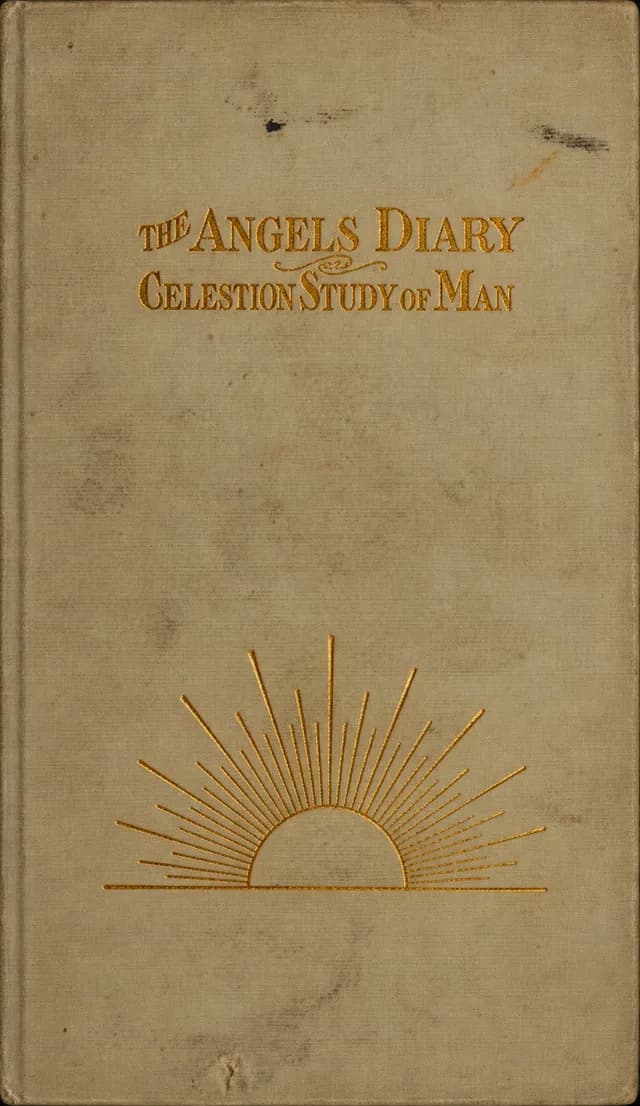
The Angels’ Diary and Celestion Study of Man
Reading note
Start with the mother’s acknowledgment, then follow the diary from a day of study to the visit to Summerland.
Sources
See references (15)
- Title page of the 1903 editionThe Angels’ Diary and Celestion Study of ManRead this page in The Angels’ Diary and Celestion Study of Man ↗
- The mother’s acknowledgment of Elizabeth Maud WeatherheadJ. A. Seeds Samson LenderRead this page in The Angels’ Diary and Celestion Study of Man ↗
- Dedication to the authors’ motherThe Angels’ Diary and Celestion Study of ManRead this page in The Angels’ Diary and Celestion Study of Man ↗
- Preface on bereavement and guardian angelsThe Angels’ Diary and Celestion Study of ManRead this page in The Angels’ Diary and Celestion Study of Man ↗
- Continuing educationEffie M. Shirey and Charles SamsonRead this page in The Angels’ Diary and Celestion Study of Man ↗
- Spiritual perceptionEffie M. Shirey and Charles SamsonRead this page in The Angels’ Diary and Celestion Study of Man ↗
- SummerlandEffie M. Shirey and Charles SamsonRead this page in The Angels’ Diary and Celestion Study of Man ↗
- Temple of LightEffie M. Shirey and Charles SamsonRead this page in The Angels’ Diary and Celestion Study of Man ↗
- Divine centreEffie M. Shirey and Charles SamsonRead this page in The Angels’ Diary and Celestion Study of Man ↗
- Colour vibrationEffie M. Shirey and Charles SamsonRead this page in The Angels’ Diary and Celestion Study of Man ↗
- Dissolution of the bodyEffie M. Shirey and Charles SamsonRead this page in The Angels’ Diary and Celestion Study of Man ↗
- Unfoldment of the soulEffie M. Shirey and Charles SamsonRead this page in The Angels’ Diary and Celestion Study of Man ↗
- Spiritual affinityEffie M. Shirey and Charles SamsonRead this page in The Angels’ Diary and Celestion Study of Man ↗
- Spirit writingEffie M. Shirey and Charles SamsonRead this page in The Angels’ Diary and Celestion Study of Man ↗
- Living moleculesEffie M. Shirey and Charles SamsonRead this page in The Angels’ Diary and Celestion Study of Man ↗