Sortes Virgilianae
Virgilian lots use a passage from Virgil as an oracle. Read the story of Charles I and Lord Falkland alongside the original scenes in the Aeneid.
In this article
What are the Virgilian lots?
Sortes Virgilianae, or Virgilian lots, is a form of divination using Virgil’s poetry. In the best-known kind of story, someone opens a volume of Virgil without choosing a passage beforehand and reads the words they encounter as a message about their own circumstances. [4][5]
See references (2)
The Other World, edited by Frederick George Lee
In The Other World, Frederick George Lee tells of Charles I and Lord Falkland visiting the public library at Oxford before the Battle of Newbury. Shown a finely printed Virgil, the king is urged to open it and try his fortune. [4]
Charles comes upon Dido’s curse against Aeneas. In the lines Lee quotes from John Dryden, Dido wishes defeat, separation and untimely death upon Aeneas. The king reportedly takes the passage to heart. [4]
Falkland tries the same thing to reassure the king, hoping to find something irrelevant. Instead, according to Lee’s story, he reads Evander’s lament for his son Pallas. The narrator presents the second passage as a warning for Falkland himself. [4][5]
See references (2)
The passages in Virgil’s Aeneid
In Book IV, Dido sees Aeneas’s fleet leaving Carthage and calls on divine powers against him. What the king reads as a warning is originally a wish voiced by a character watching another depart. [1]
In Book XI, Evander speaks after Pallas’s body has been brought home. His lament recalls the caution he had urged on his son. Reading those words as an oracle turns a father’s grief after a death into an apparent warning before one. [2]
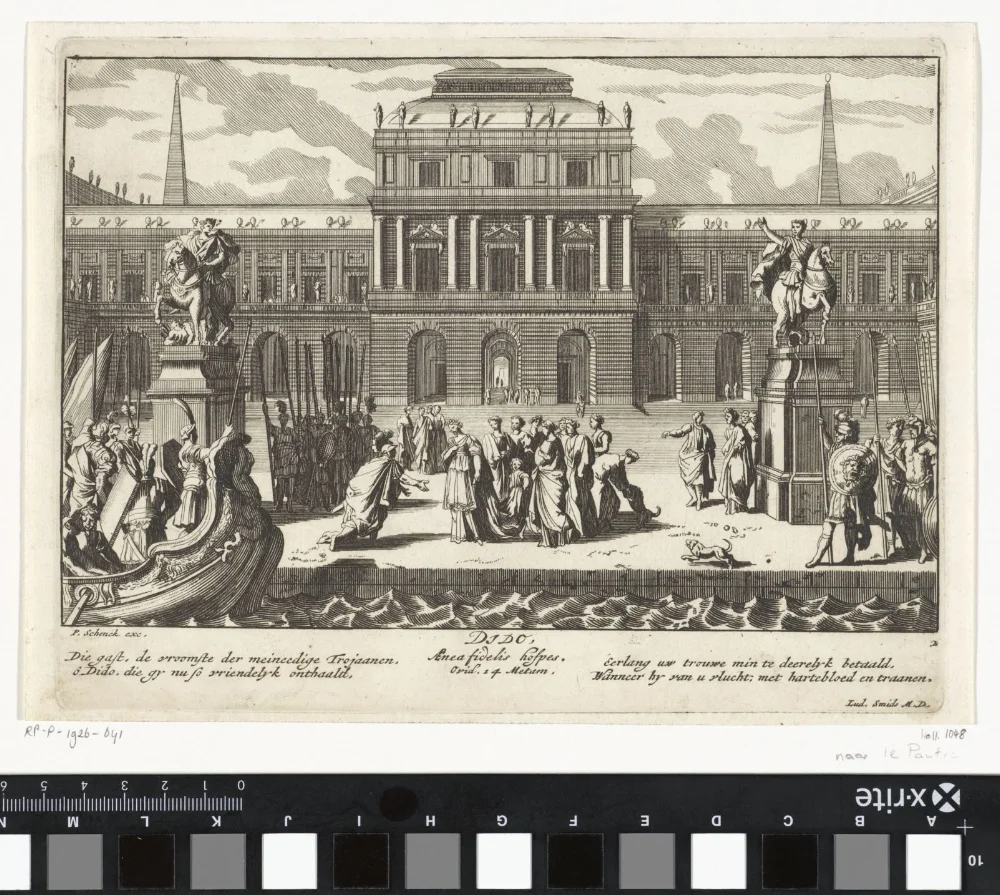
Dido en Aeneas, anonymous after Jean Lepautre, 1675–1711. The print’s inscription refers to Ovid’s Metamorphoses. It supplies context for the literary characters, rather than illustrating Dido’s curse or a consultation of Virgil.
Rijksmuseum, RP-P-1926-641. Published by Pieter Schenk (I), Amsterdam. Public domain. · Image source ↗ · Public Domain
Distinctions and comparisons
Falkland’s second reading was meant to undo the effect of the first. Both readings become ominous through the connections made to the readers’ lives. The poem preserves what each character was speaking about, while Lee’s story preserves how the passages were applied to new circumstances. [4][5][1][2]
Read further in the library
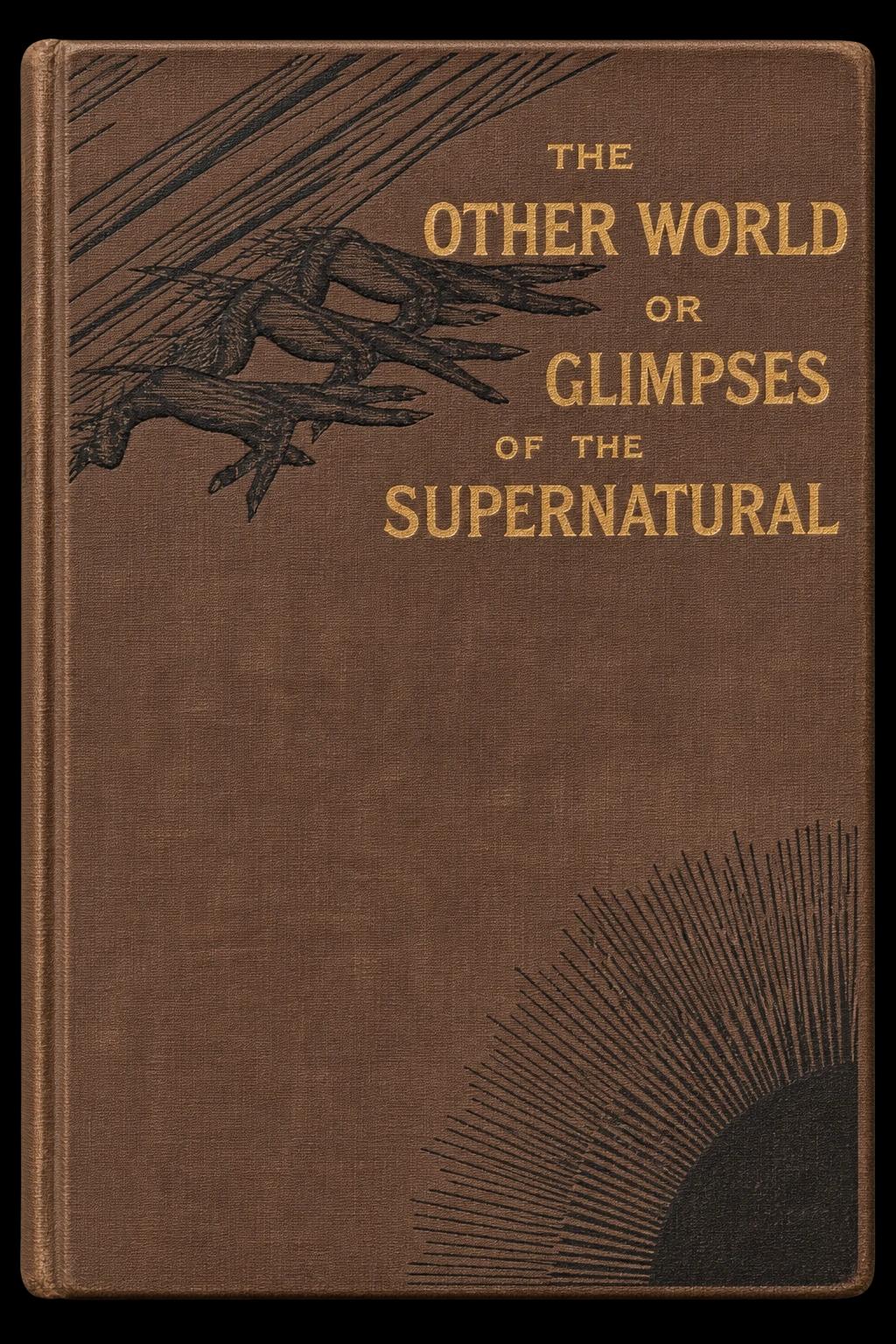
The Other World
Reading note
The separately titled account draws on exact passages in the consulted Library edition.
Sources
See references (5)
- Virgil, Aeneid IV, John Dryden’s translation, lines 880–895 ↗Primary poem in John Dryden’s translation, consulted in the Wikisource transcription of The Works of Virgil. Line references identify Dryden’s English verse, not the Latin numbering. The original verse is independently consulted; the royal anecdote is not thereby authenticated.Return to text ↑
- Virgil, Aeneid XI, John Dryden’s translation, lines 209–239 ↗Primary poem in John Dryden’s translation, consulted in the Wikisource transcription of The Works of Virgil. Evander’s lament begins at English line 230. This identifies the passage Lee quotes, not a witnessed prediction.Return to text ↑
- Dido en Aeneas, anonymous after Jean Lepautre, 1675–1711, Rijksmuseum RP-P-1926-641 ↗Rijksmuseum’s own object catalogue. Etching and engraving published by Pieter Schenk (I); identifies a reference to Ovid’s Metamorphoses beneath the scene. Public domain. Used as visual context for the literary characters, not as a depiction of consulting Virgil.
- The Other World, Reader page 276Frederick George Lee, editor, The Other World; or, Glimpses of the Supernatural, two volumes, Henry S. King and Co., London, 1875. Exact consulted Library edition IMJ-0657-E001. Narratives and embedded quotations are attributed to this compilation; an original author is not represented as independently consulted merely because Lee quotes them. Reader positions are verified separately from printed pagination.Read this page in The Other World ↗Return to text ↑
- The Other World, Reader page 277Frederick George Lee, editor, The Other World; or, Glimpses of the Supernatural, two volumes, Henry S. King and Co., London, 1875. Exact consulted Library edition IMJ-0657-E001. Narratives and embedded quotations are attributed to this compilation; an original author is not represented as independently consulted merely because Lee quotes them. Reader positions are verified separately from printed pagination.Read this page in The Other World ↗Return to text ↑