Solar Devas in Theosophy
What is a solar deva in Theosophy? Read how H. K. Challoner’s poem gives the Sun’s power an intermediary who helps build and dissolve forms.
In this article
A mediator of the spiritual Sun
A solar deva is a being said to convey the power of the spiritual Sun. In H. K. Challoner’s Theosophical poem, the deva describes itself as a ray from a greater source. Its work brings that source’s influence into forms and lets it pass onward. [5][6][7]
Watchers of the Seven Spheres by H. K. Challoner
In The Solar Deva, a poem in H. K. Challoner’s Watchers of the Seven Spheres, the speaker sounds a note that draws particles of energy together. When it withdraws the impulse, the rhythm fades and the form dissolves. The energy can then enter another form. [5][6]
The poem also describes spirits conveying a tempered reflection of the Spiritual Sun to people able to receive it. The deva serves that source while taking part in the formation and release of individual things. [6][7]
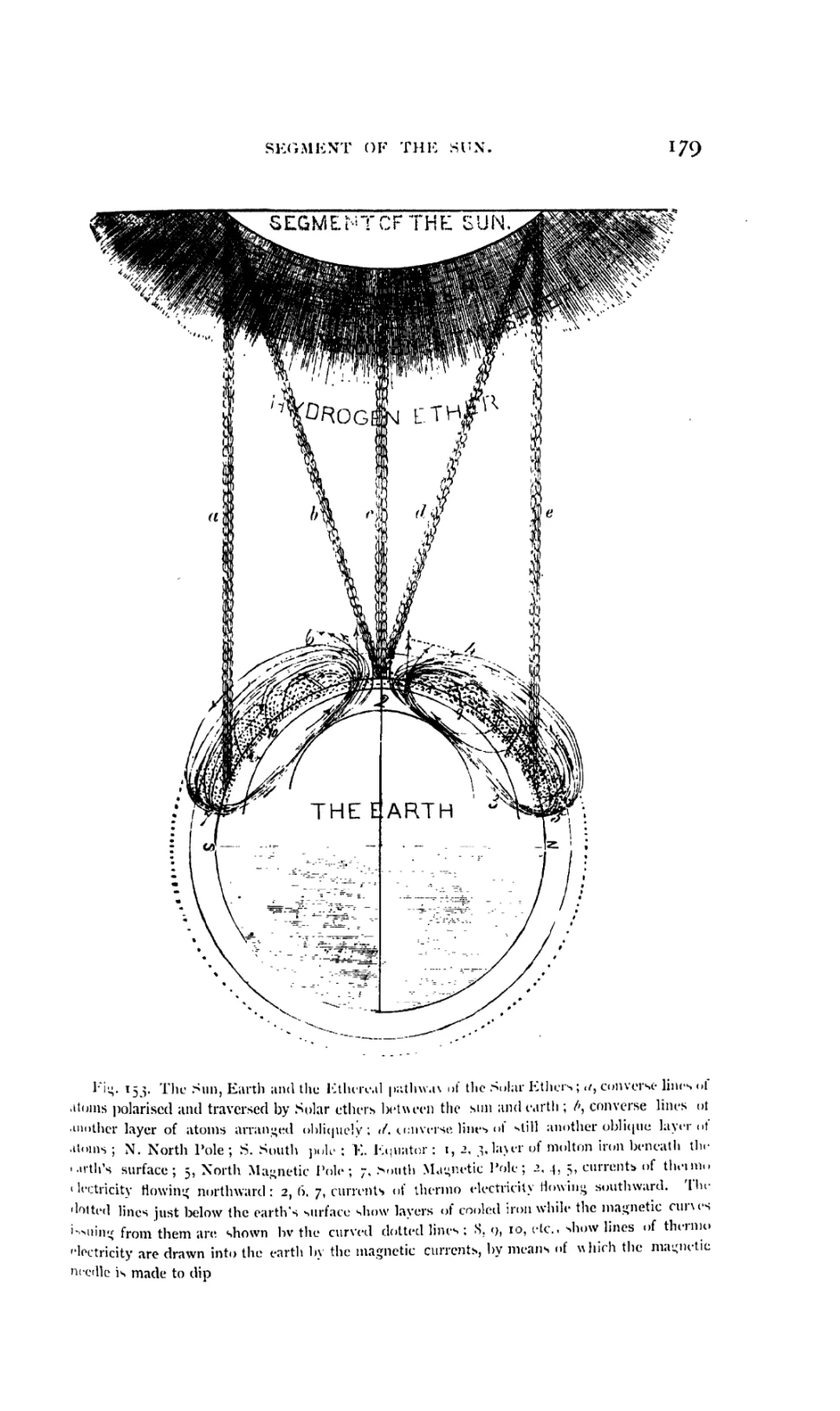
Edwin D. Babbitt drew streams between Sun and Earth in his nineteenth-century theory of light. Challoner’s poem also imagines an influence travelling from the Sun, carried by a speaking deva.
Edwin D. Babbitt, The Principles of Light and Color, second edition, 1896. Lumitheca Library facsimile. · Image source ↗ · Public Domain
The Kingdom of the Gods by Geoffrey Hodson
In The Kingdom of the Gods, Geoffrey Hodson likens the Logos to a musician. Angelic hosts receive and echo the Word, and archetypes relay the influence through successive levels until matter takes on form. [2][3][4]
One speaker and several orders
Challoner gives formation and dissolution to one speaking figure. Hodson describes the creative Word passing through a series of levels and assigns the work to several orders. [5][6][7][2][3][4]
In the library
The Principles of Light and Color
Reading note
Separately attributed primary Library account, cited on exact verified Reader leaves.
The Kingdom of the Gods
Reading note
Separately attributed primary Library account, cited on exact verified Reader leaves.
Watchers of the Seven Spheres
Reading note
The separately titled account draws on exact passages in the consulted Library edition.
Sources
See references (7)
- Figure 153, Babbitt’s proposed pathway of solar ethers, printed p. 179, Reader page 186Edwin D. Babbitt, The Principles of Light and Color, second edition, 1896. Lumitheca Library facsimile.Read this page in The Principles of Light and Color ↗
- The Kingdom of the Gods, Reader page 11Geoffrey Hodson, The Kingdom of the Gods, Theosophical Publishing House, first published 1952, thirteenth reprint 2007. Lumitheca Library edition IMJ-0606-E001.Read this page in The Kingdom of the Gods ↗
- The Kingdom of the Gods, Reader page 31Geoffrey Hodson, The Kingdom of the Gods, Theosophical Publishing House, first published 1952, thirteenth reprint 2007. Lumitheca Library edition IMJ-0606-E001.Read this page in The Kingdom of the Gods ↗
- The Kingdom of the Gods, Reader page 33Geoffrey Hodson, The Kingdom of the Gods, Theosophical Publishing House, first published 1952, thirteenth reprint 2007. Lumitheca Library edition IMJ-0606-E001.Read this page in The Kingdom of the Gods ↗
- Watchers of the Seven Spheres, Reader page 27H. K. Challoner, Watchers of the Seven Spheres, London, George Routledge & Sons, 1933. Lumitheca Library edition IMJ-0604-E001.Read this page in Watchers of the Seven Spheres ↗
- Watchers of the Seven Spheres, Reader page 28H. K. Challoner, Watchers of the Seven Spheres, London, George Routledge & Sons, 1933. Lumitheca Library edition IMJ-0604-E001.Read this page in Watchers of the Seven Spheres ↗
- Watchers of the Seven Spheres, Reader page 29H. K. Challoner, Watchers of the Seven Spheres, London, George Routledge & Sons, 1933. Lumitheca Library edition IMJ-0604-E001.Read this page in Watchers of the Seven Spheres ↗