The Silver Cord
Explore the silver cord as an image of the bond between soul and body, from Ecclesiastes to Andrew Jackson Davis and Manly P. Hall.
In this article
A thread between body and spirit
The silver cord is an image of the bond between the physical body and a soul or subtle body. Some Spiritualist accounts use it to distinguish a temporary departure from death. The phrase also appears among the images of mortality in Ecclesiastes. [2][4][5][6]
In Ecclesiastes
Ecclesiastes places the severed silver cord alongside a broken bowl, pitcher and wheel. The passage then pictures dust returning to earth and the spirit returning to God. [2]
The Great Harmonia by Andrew Jackson Davis
In an excerpt reprinted by The Frontier Guardian in 1851, Andrew Jackson Davis describes a bright connection remaining briefly between the two bodies. He compares it to an umbilical cord and uses the comparison to explain why he understands death as birth into another condition. [3]
Man the Grand Symbol of the Mysteries by Manly P. Hall
In Man the Grand Symbol of the Mysteries, Manly P. Hall recounts Andrew Jackson Davis’s report of a spiritual form taking shape above a body. A luminous current connects the feet of the emerging form with the head below. Hall draws attention to the analogy with an umbilical cord. [4][5]
Hall uses the thread to distinguish a connection that persists during a temporary departure from a thread broken at death. He places the account within his explanation of the etheric body. [5][6]
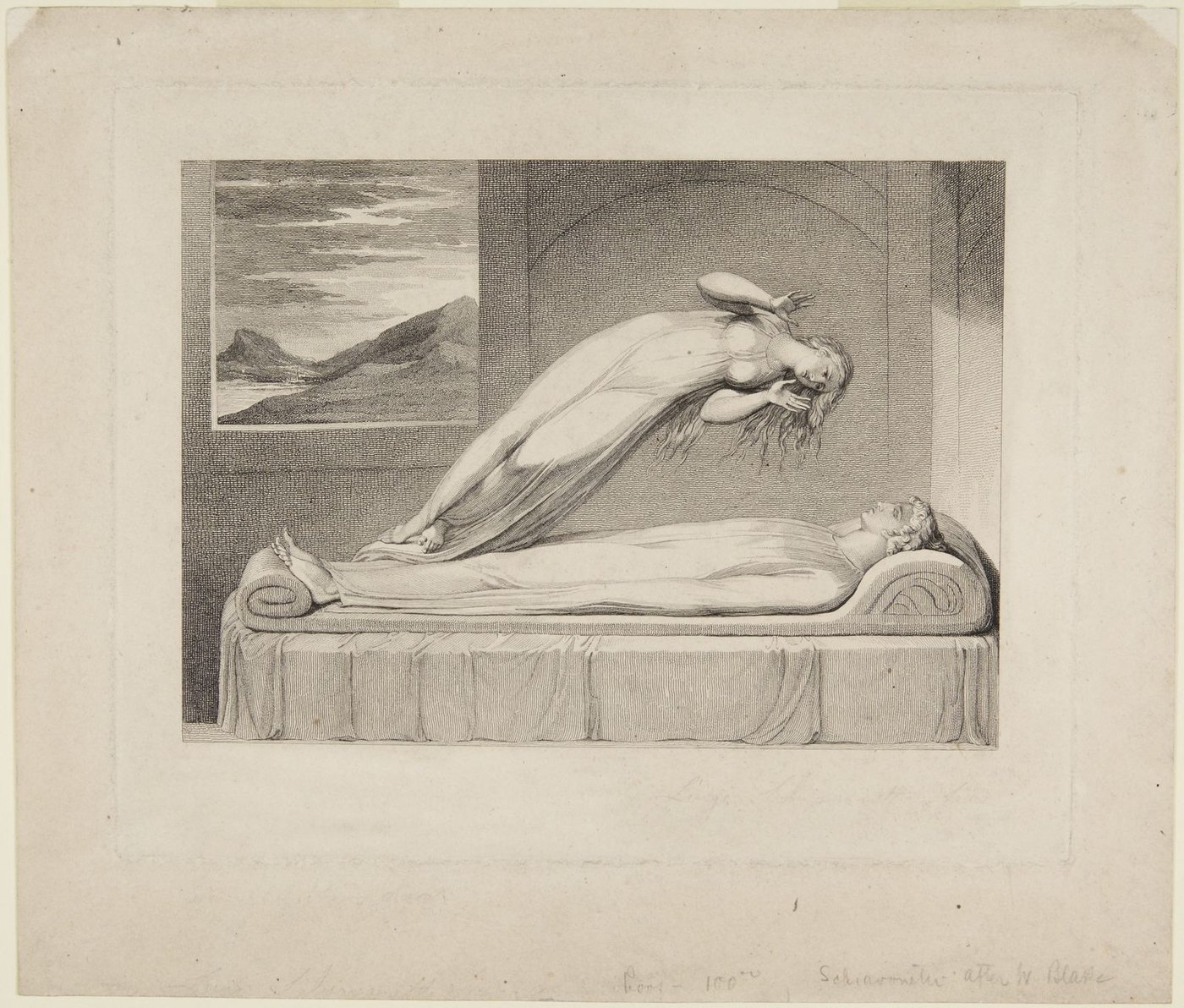
Schiavonetti’s engraving after William Blake shows a soul hovering over its body. The image illustrates Robert Blair’s poem The Grave.
Princeton University Art Museum. Gift of Frank Jewett Mather Jr., x1947-85. Public Domain. · Image source ↗ · Public Domain
How the image changes across sources
Ecclesiastes gives the broken cord a place within a poem about mortality. Davis gives his reported connection a position and a duration. Hall reads that report through a theory of the etheric body. [2][3][4][5][6]
See references (5)
- Ecclesiastes 12:6 to 7
- Jackson Davis on Death, The Frontier Guardian, January 22, 1851, printed p. 1, cols. 5–6
- Man the Grand Symbol of the Mysteries, printed p. 193, Reader page 190
- Man the Grand Symbol of the Mysteries, printed p. 194, Reader page 191
- Man the Grand Symbol of the Mysteries, printed p. 195, Reader page 192
In the library
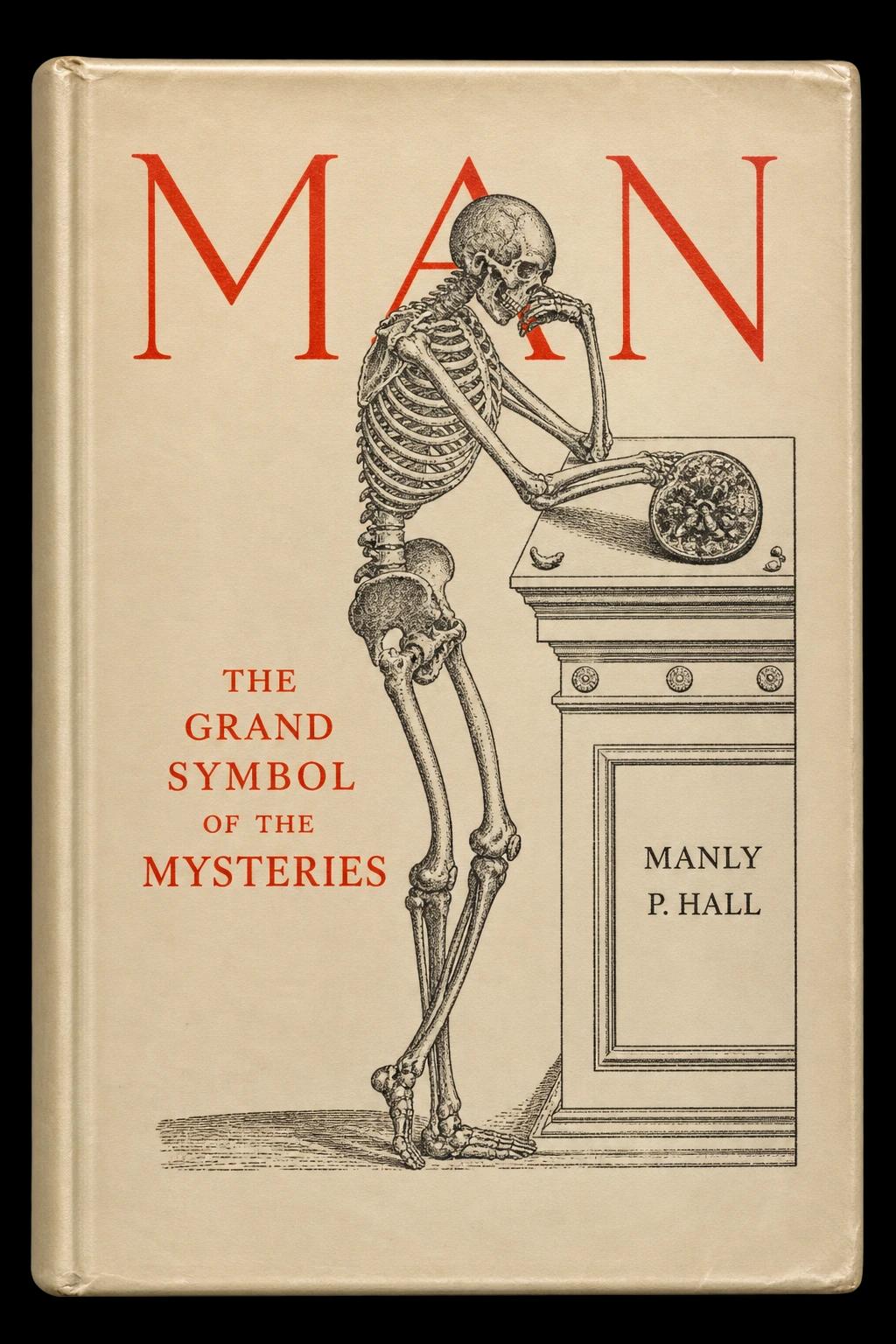
Man the Grand Symbol of the Mysteries
Reading note
The separately titled account draws on exact passages in the consulted Library edition.
Sources
See references (6)
- Luigi Schiavonetti after William Blake, The Soul Hovering over the Body Reluctantly Parting with Life, 1805–08. ↗Princeton University Art Museum. Gift of Frank Jewett Mather Jr., x1947-85. Public Domain.
- Ecclesiastes 12:6 to 7 ↗Ecclesiastes 12:6 to 7, Authorized King James Version.
- Jackson Davis on Death, The Frontier Guardian, January 22, 1851, printed p. 1, cols. 5–6 ↗Andrew Jackson Davis, extract from The Great Harmonia. The Frontier Guardian 2(26), p. 1 cols. 4 to 6 and p. 2 col. 1. BYU Studies transcription.
- Man the Grand Symbol of the Mysteries, printed p. 193, Reader page 190Manly P. Hall, Man the Grand Symbol of the Mysteries, Fourth Edition, The Philosophers Press, Los Angeles, 1937. Lumitheca Library edition IMJ-0603-E001.Read this page in Man the Grand Symbol of the Mysteries ↗
- Man the Grand Symbol of the Mysteries, printed p. 194, Reader page 191Manly P. Hall, Man the Grand Symbol of the Mysteries, Fourth Edition, The Philosophers Press, Los Angeles, 1937. Lumitheca Library edition IMJ-0603-E001.Read this page in Man the Grand Symbol of the Mysteries ↗
- Man the Grand Symbol of the Mysteries, printed p. 195, Reader page 192Manly P. Hall, Man the Grand Symbol of the Mysteries, Fourth Edition, The Philosophers Press, Los Angeles, 1937. Lumitheca Library edition IMJ-0603-E001.Read this page in Man the Grand Symbol of the Mysteries ↗