Siddhis
Siddhis are accomplishments or extraordinary powers described in yoga. Compare Patañjali’s distinction between powers and samādhi with Crowley’s account.
In this article
What are siddhis?
Siddhis are accomplishments. Yoga texts often use the term for unusual powers said to arise during practice. Patañjali’s Yoga Sūtras ask how such powers relate to samādhi, a state of absorption. The answer depends on what the practitioner is trying to attain. [1][3][4]
Raja-Yoga by Swami Vivekananda, the chapter on powers
In Raja-Yoga, Swami Vivekananda translates aphorisms that describe extraordinary kinds of sensory knowledge. His commentary explains how these can count as powers in ordinary experience and as obstacles to absorption. Discernment and freedom give the practitioner a different measure of progress. [1]
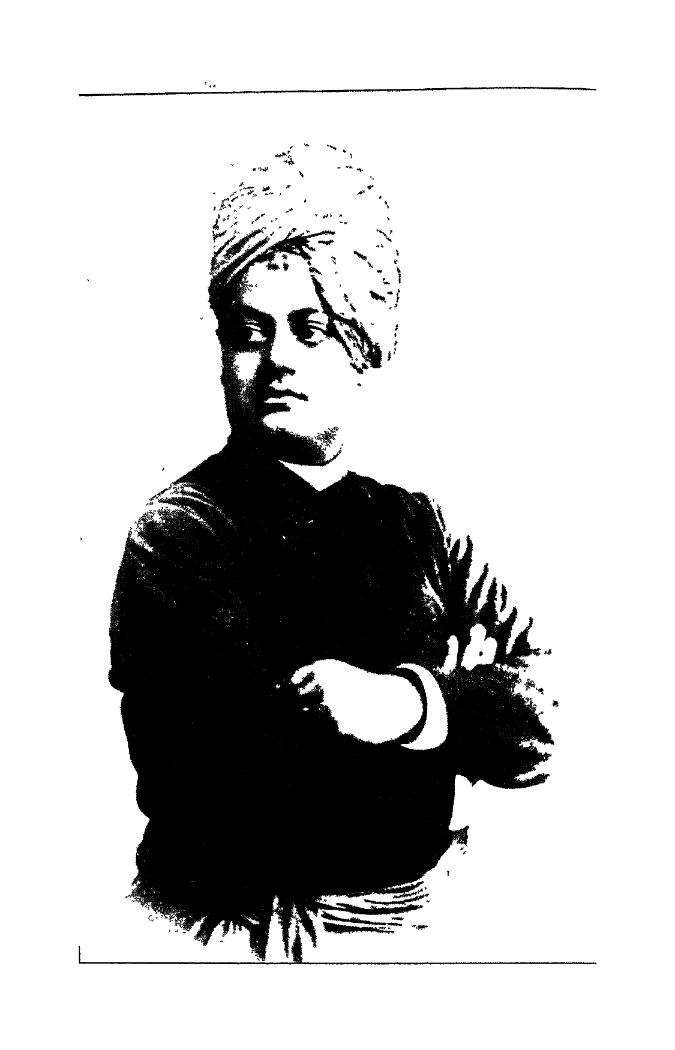
Swami Vivekananda’s commentary on Patañjali distinguishes remarkable powers from the aim of concentration. This portrait is reproduced in another Library volume of his writing.
Thomas Harrison, 1893; historical reproduction in Karma-Yoga & Bhakti-Yoga (1939), Library Reader page 2. · Image source ↗ · Public Domain
Magick Without Tears by Aleister Crowley
In Magick Without Tears, Aleister Crowley tells of a yogin who spends years learning to cross a river in an extraordinary way. A raft can carry other people across. Crowley uses the story to ask whether an achievement is worth the effort given what it actually accomplishes. [3][4]
Crowley accepts that abilities he considers unusual can arise as by-products of the work. He says he recognised some as useful only after they appeared. The presence of a power by itself gives him little reason to think the person has made progress towards the Great Work. [4]
What makes a power worth having?
Vivekananda asks whether a power helps or hinders absorption and freedom. Crowley uses a raft to ask whether an extraordinary ability is of practical use to the work. Both make the purpose the measure of the accomplishment. [1][3][4]
Read further in the library
Karma Yoga
Reading note
Separately attributed primary Library account, cited on exact verified Reader leaves.

Magick Without Tears
Reading note
The separately titled account draws on exact passages in the consulted Library edition.
Sources
See references (4)
- Raja-Yoga, “Powers”, aphorisms 37–38 in Vivekananda’s numbering ↗Swami Vivekananda, translation and commentary on Patañjali’s Yoga Aphorisms, chapter III.Return to text ↑
- Swami Vivekananda portrait, Karma-Yoga & Bhakti-Yoga, Reader page 2Historical portrait reproduced in the consulted 1939 combined volume. The Library page records this particular reproduction; photograph provenance is documented separately.Read this page in Karma Yoga ↗
- Magick Without Tears, Reader page 262Aleister Crowley, Magick Without Tears, undated digital Library edition IMJ-0641-E001. Links use the current Library Reader sequence.Read this page in Magick Without Tears ↗Return to text ↑
- Magick Without Tears, Reader page 263Aleister Crowley, Magick Without Tears, undated digital Library edition IMJ-0641-E001. Links use the current Library Reader sequence.Read this page in Magick Without Tears ↗Return to text ↑