Sennin
A sennin is an immortal or extraordinary recluse in Japanese folklore, drawing on Chinese traditions about Daoist adepts.
In this article
What is a sennin?
A sennin is an immortal or extraordinary recluse in Japanese lore. The figure draws on Chinese traditions of Daoist immortals and appears in Japanese stories as a mountain hermit or a person with unusual powers. Healing, transformation and long life can suggest who the stranger is. [1][2][3][8]
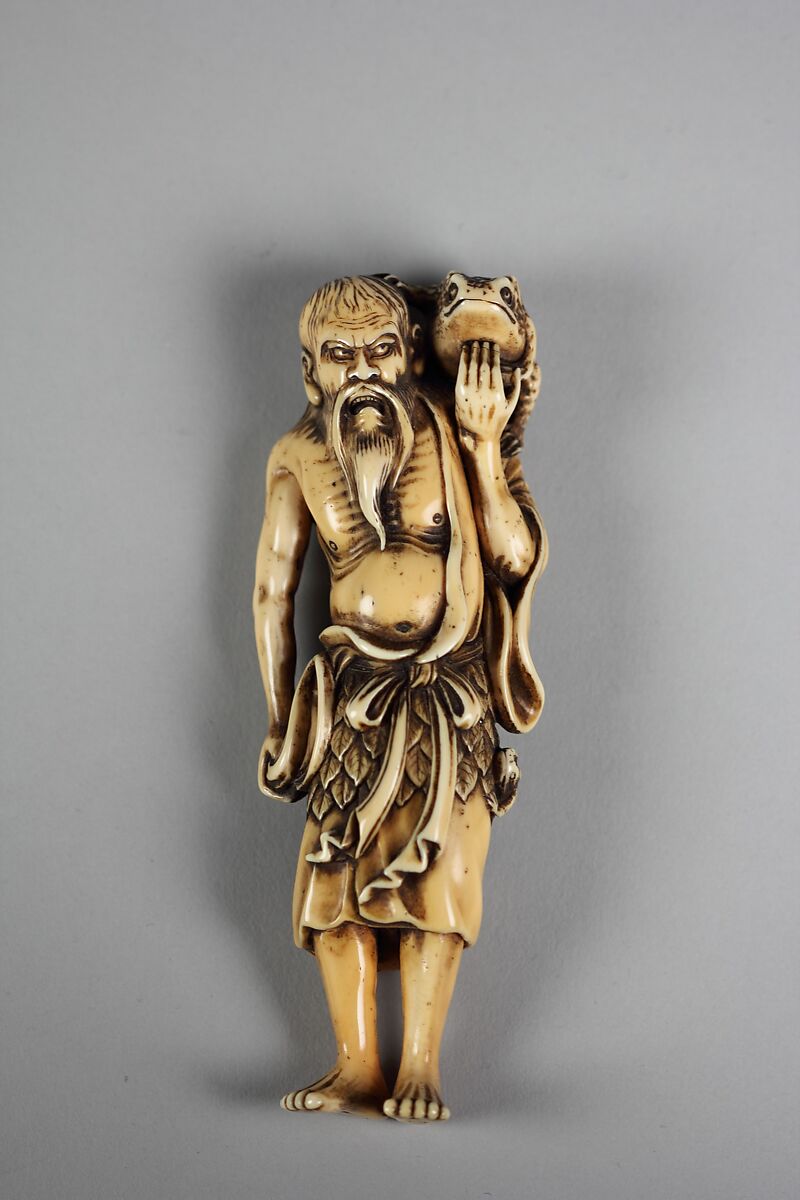
A toad identifies Gama Sennin in this carved netsuke by Shūzan.
Shūzan, Gama Sennin, late 18th or early 19th century. The Metropolitan Museum of Art. Public domain. · Image source ↗ · Public Domain
In Ancient Tales and Folk-lore of Japan
In Richard Gordon Smith’s The Hermit’s Cave, an old man’s cures make the villagers wonder whether he is a sennin. Someone recalls the Buddhist priest Kūkai’s healing powers. When the old man changes stones into birds and later appears on a cloud, the villagers recognise him as a famous hermit and build a small temple in the cave. [2][3][4]
In Smith’s The Perpetual Life-Giving Wine, Okureha receives a drink that can preserve youth for centuries. The gift gives long life a different role. The cave hermit’s powers help the villagers identify him, while the wine can be passed on. [5][6][7]
See references (6)
- Ancient Tales and Folklore of Japan, printed p. 186, Reader page 266
- Ancient Tales and Folklore of Japan, printed p. 187, Reader page 267
- Ancient Tales and Folklore of Japan, printed p. 188, Reader page 268
- Ancient Tales and Folklore of Japan, printed p. 180, Reader page 256
- Ancient Tales and Folklore of Japan, printed p. 181, Reader page 257
- Ancient Tales and Folklore of Japan, printed p. 182, Reader page 258
Two ways to recognise an immortal
In Shūzan’s carving, a toad identifies the immortal Gama Sennin. The Met connects him with magical medicine and the ability to turn into a toad. The carving gives a named figure a lasting visual clue, while Smith’s villagers recognise their hermit through his acts. [2][3][1][8]
In the library
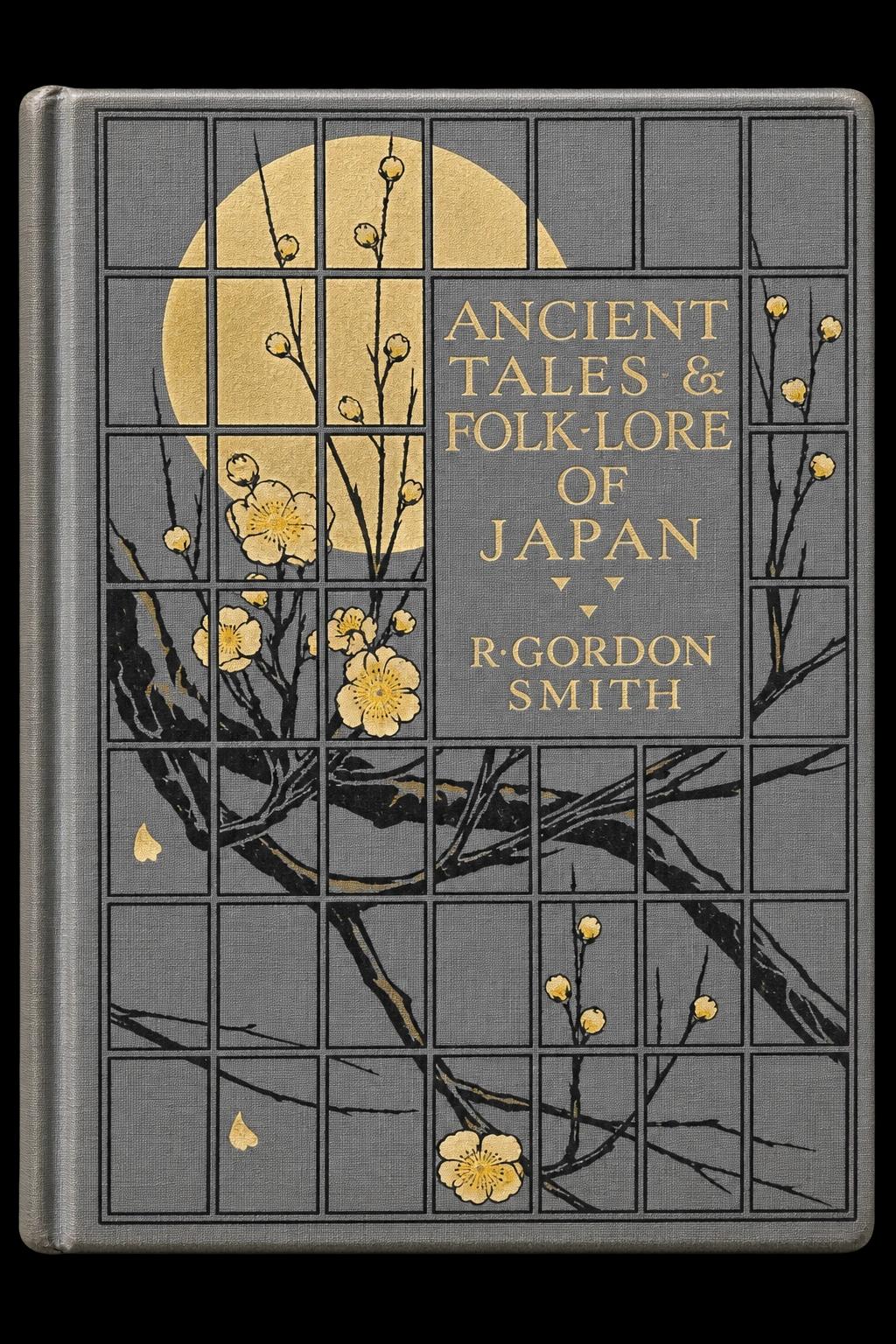
Ancient Tales and Folk-lore of Japan
Reading note
Read Richard Gordon Smith’s account in the verified 1908 Library edition.
Sources
See references (8)
- Netsuke, Metropolitan Museum of Art Bulletin, 1980 ↗The Metropolitan Museum of Art
- Ancient Tales and Folklore of Japan, printed p. 186, Reader page 266Richard Gordon Smith, Ancient Tales and Folklore of Japan. A. & C. Black, London, 1908. Lumitheca Library edition IMJ-0588-E001.Read this page in Ancient Tales and Folk-lore of Japan ↗
- Ancient Tales and Folklore of Japan, printed p. 187, Reader page 267Richard Gordon Smith, Ancient Tales and Folklore of Japan. A. & C. Black, London, 1908. Lumitheca Library edition IMJ-0588-E001.Read this page in Ancient Tales and Folk-lore of Japan ↗
- Ancient Tales and Folklore of Japan, printed p. 188, Reader page 268Richard Gordon Smith, Ancient Tales and Folklore of Japan. A. & C. Black, London, 1908. Lumitheca Library edition IMJ-0588-E001.Read this page in Ancient Tales and Folk-lore of Japan ↗
- Ancient Tales and Folklore of Japan, printed p. 180, Reader page 256Richard Gordon Smith, Ancient Tales and Folklore of Japan. A. & C. Black, London, 1908. Lumitheca Library edition IMJ-0588-E001.Read this page in Ancient Tales and Folk-lore of Japan ↗
- Ancient Tales and Folklore of Japan, printed p. 181, Reader page 257Richard Gordon Smith, Ancient Tales and Folklore of Japan. A. & C. Black, London, 1908. Lumitheca Library edition IMJ-0588-E001.Read this page in Ancient Tales and Folk-lore of Japan ↗
- Ancient Tales and Folklore of Japan, printed p. 182, Reader page 258Richard Gordon Smith, Ancient Tales and Folklore of Japan. A. & C. Black, London, 1908. Lumitheca Library edition IMJ-0588-E001.Read this page in Ancient Tales and Folk-lore of Japan ↗
- Gama Sennin ↗Shūzan, Gama Sennin, late 18th or early 19th century. The Metropolitan Museum of Art. Public domain.