The Secret of the Golden Flower
The Secret of the Golden Flower is a Daoist work on turning the light inward. Explore Richard Wilhelm’s translation and C. G. Jung’s commentary.
In this article
What is The Secret of the Golden Flower?
The Secret of the Golden Flower (Taiyi Jinhua Zongzhi) is a Daoist work about gathering and turning back the light of awareness. The tradition attributes it to Lü Dongbin. Danke Zhang traces its transmission through Qing-dynasty Daoist spirit-writing. [4][5][6][10]
What is in the Wilhelm and Baynes edition?
Richard Wilhelm translated the work into German in 1929. Cary F. Baynes translated Wilhelm’s edition into English. In her preface, Baynes explains the order of the volume: the Chinese work in translation, C. G. Jung’s commentary and memorial address for Wilhelm, and her own summaries. [1][2][3]
The translated treatise calls the Golden Flower light. It then describes how light, usually directed outward, is brought into inward circulation. One chapter pictures the formation of a seed pearl as the light gathers. The other entries on the Heavenly Heart, the circulation of the light and the Far Journey trace how the text develops that process. [6][7]
In his commentary, C. G. Jung calls the Golden Flower a mandala symbol and compares it with centred drawings he saw in his practice. His chapter gives the English edition a second voice, a psychologist interpreting the images of a Daoist work. [8][9]
See references (7)
- The Secret of the Golden Flower, Reader page 4
- The Secret of the Golden Flower, Reader page 7
- The Secret of the Golden Flower, Reader page 9
- The Secret of the Golden Flower, Reader page 30
- The Secret of the Golden Flower, Reader page 39
- The Secret of the Golden Flower, Reader page 95
- The Secret of the Golden Flower, Reader page 97
Two historical contexts for the imagery
The Daoist woodcut pictures a seated practitioner gathering the alchemical medicine. The Tibetan painting sets a deity at the centre of a palace. These works give the edition’s imagery two points of comparison: one for the language of cultivation and one for the mandala Jung uses to interpret it. [11][12][7][9][10]
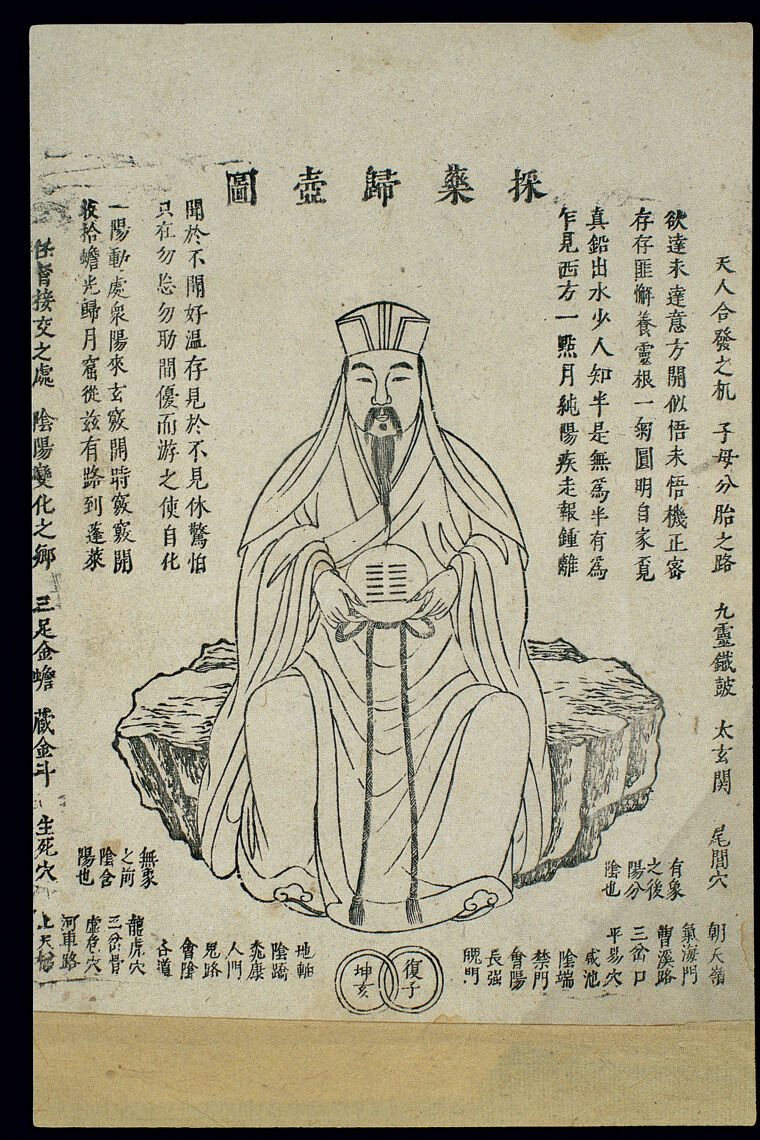
Collecting Medicine to Bring Back to the Jar, from Xingming guizhi, published in 1615. This separate work illustrates the imagery of inner alchemy.
Wellcome Collection, Chinese woodcut: Daoist internal alchemy (6). Public Domain Mark. · Image source ↗ · Public Domain
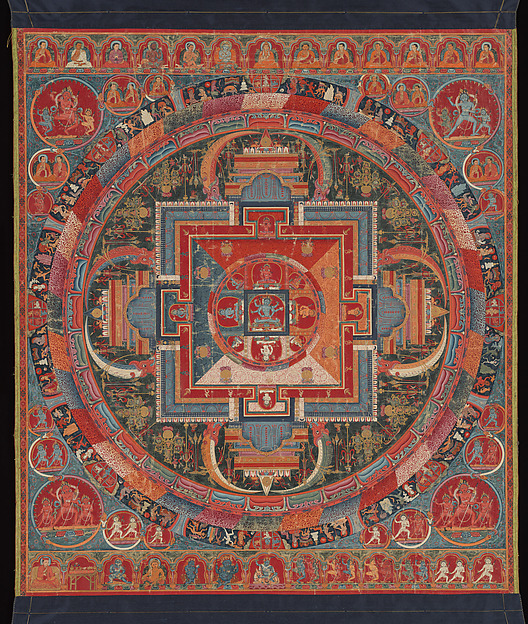
Mandala of Jnanadakini, late 14th century, Tibet. This ritual design provides context for one of the kinds of image Jung compares with the Golden Flower.
The Metropolitan Museum of Art, Purchase, Lita Annenberg Hazen Charitable Trust Gift, 1987. Public domain. · Image source ↗ · CC0
Read further in the library
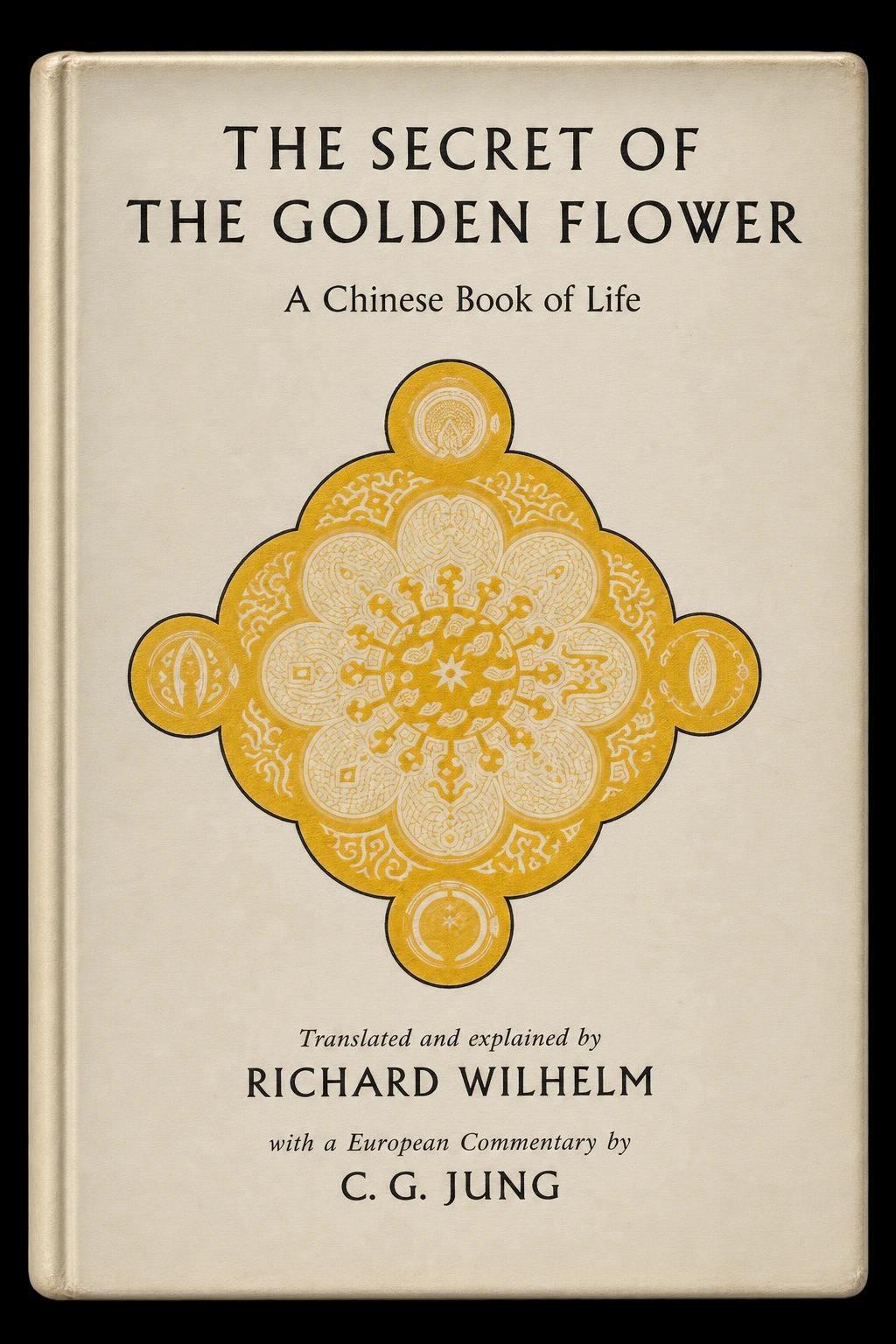
The Secret of the Golden Flower
Reading note
Read the account of The Secret of the Golden Flower in the Wilhelm and Baynes edition.
Sources
See references (12)
- The Secret of the Golden Flower, Reader page 4The Secret of the Golden Flower: A Chinese Book of Life. Chinese text translated and explained by Richard Wilhelm, English translation by Cary F. Baynes, with separate commentary by C. G. Jung. London, Kegan Paul, Trench, Trubner & Co. Lumitheca Library edition IMJ-0596-E001.Read this page in The Secret of the Golden Flower ↗Return to text ↑
- The Secret of the Golden Flower, Reader page 7The Secret of the Golden Flower: A Chinese Book of Life. Chinese text translated and explained by Richard Wilhelm, English translation by Cary F. Baynes, with separate commentary by C. G. Jung. London, Kegan Paul, Trench, Trubner & Co. Lumitheca Library edition IMJ-0596-E001.Read this page in The Secret of the Golden Flower ↗Return to text ↑
- The Secret of the Golden Flower, Reader page 9The Secret of the Golden Flower: A Chinese Book of Life. Chinese text translated and explained by Richard Wilhelm, English translation by Cary F. Baynes, with separate commentary by C. G. Jung. London, Kegan Paul, Trench, Trubner & Co. Lumitheca Library edition IMJ-0596-E001.Read this page in The Secret of the Golden Flower ↗Return to text ↑
- The Secret of the Golden Flower, Reader page 11The Secret of the Golden Flower: A Chinese Book of Life. Chinese text translated and explained by Richard Wilhelm, English translation by Cary F. Baynes, with separate commentary by C. G. Jung. London, Kegan Paul, Trench, Trubner & Co. Lumitheca Library edition IMJ-0596-E001.Read this page in The Secret of the Golden Flower ↗Return to text ↑
- The Secret of the Golden Flower, Reader page 14The Secret of the Golden Flower: A Chinese Book of Life. Chinese text translated and explained by Richard Wilhelm, English translation by Cary F. Baynes, with separate commentary by C. G. Jung. London, Kegan Paul, Trench, Trubner & Co. Lumitheca Library edition IMJ-0596-E001.Read this page in The Secret of the Golden Flower ↗Return to text ↑
- The Secret of the Golden Flower, Reader page 30The Secret of the Golden Flower: A Chinese Book of Life. Chinese text translated and explained by Richard Wilhelm, English translation by Cary F. Baynes, with separate commentary by C. G. Jung. London, Kegan Paul, Trench, Trubner & Co. Lumitheca Library edition IMJ-0596-E001.Read this page in The Secret of the Golden Flower ↗Return to text ↑
- The Secret of the Golden Flower, Reader page 39The Secret of the Golden Flower: A Chinese Book of Life. Chinese text translated and explained by Richard Wilhelm, English translation by Cary F. Baynes, with separate commentary by C. G. Jung. London, Kegan Paul, Trench, Trubner & Co. Lumitheca Library edition IMJ-0596-E001.Read this page in The Secret of the Golden Flower ↗Return to text ↑
- The Secret of the Golden Flower, Reader page 95The Secret of the Golden Flower: A Chinese Book of Life. Chinese text translated and explained by Richard Wilhelm, English translation by Cary F. Baynes, with separate commentary by C. G. Jung. London, Kegan Paul, Trench, Trubner & Co. Lumitheca Library edition IMJ-0596-E001.Read this page in The Secret of the Golden Flower ↗Return to text ↑
- The Secret of the Golden Flower, Reader page 97The Secret of the Golden Flower: A Chinese Book of Life. Chinese text translated and explained by Richard Wilhelm, English translation by Cary F. Baynes, with separate commentary by C. G. Jung. London, Kegan Paul, Trench, Trubner & Co. Lumitheca Library edition IMJ-0596-E001.Read this page in The Secret of the Golden Flower ↗Return to text ↑
- Symbolic Transfigurations of Jinhua in The Secret of the Golden Flower, introduction ↗Danke Zhang, Religions 17(1), 113 (2026).Return to text ↑
- Collecting Medicine to Bring Back to the Jar ↗Wellcome Collection, Chinese woodcut: Daoist internal alchemy (6). Public Domain Mark.Return to text ↑
- Mandala of Jnanadakini ↗The Metropolitan Museum of Art, Purchase, Lita Annenberg Hazen Charitable Trust Gift, 1987. Public domain.Return to text ↑