Quickening
What did quickening mean in historical obstetrics and esotericism? Compare the first felt fetal movement with Manly P. Hall’s account of ensoulment.
In this article
When movement is first felt
Quickening is the first time a pregnant person feels fetal movement. The nineteenth-century physician Charles D. Meigs describes it as a change in what can be felt. Some esoteric writers also used the word when discussing ensoulment, the belief that a soul comes to inhabit a body. [3][4][5][2]
See references (4)
Obstetrics: The Science and the Art by Charles D. Meigs
In Obstetrics: The Science and the Art, Charles D. Meigs distinguishes the first perceptible movement from the earlier motions he says are too slight to be felt. Quickening names the change from movement that goes unnoticed to movement a pregnant person can feel. [2]
Man the Grand Symbol of the Mysteries by Manly P. Hall
In Man the Grand Symbol of the Mysteries, Manly P. Hall distinguishes the life of a developing body from the individual soul’s arrival. To picture that arrival, he recounts Hildegard of Bingen’s vision of a fiery sphere spreading through the developing body. [6][7][3][4][8]
In a later chapter, Hall uses quickening for a stage when the incoming life is said to begin shaping the body from within. He pictures this as a gradual taking hold. [5][9]
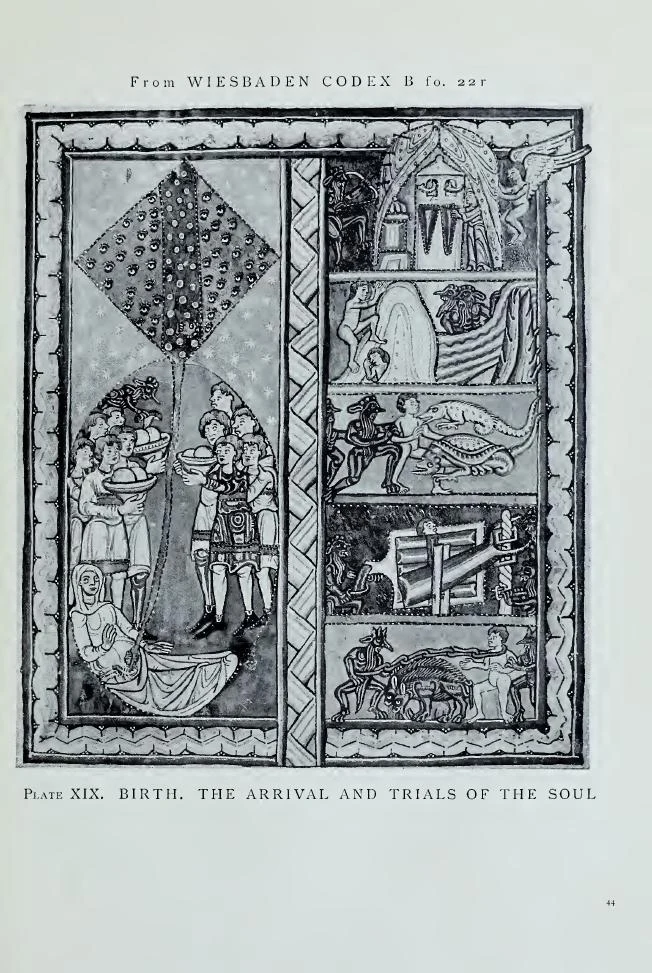
This facsimile of Hildegard of Bingen’s Scivias depicts a vision of the soul’s arrival. Hall quotes this vision in his account of ensoulment.
Hildegard of Bingen, Scivias, Wiesbaden Codex B, fol. 22r, reproduced in Charles Singer, Studies in the History and Method of Science, 1917, plate XIX. Public domain. · Image source ↗ · Public Domain
See references (7)
- Man the Grand Symbol of the Mysteries, printed p. 138, Reader page 136
- Man the Grand Symbol of the Mysteries, printed p. 139, Reader page 137
- Man the Grand Symbol of the Mysteries, printed p. 185, Reader page 182
- Man the Grand Symbol of the Mysteries, printed p. 136, Reader page 134
- Man the Grand Symbol of the Mysteries, printed p. 137, Reader page 135
- Man the Grand Symbol of the Mysteries, printed p. 140, Reader page 138
- Man the Grand Symbol of the Mysteries, printed p. 186, Reader page 183
Perception and ensoulment
Meigs examines why a movement first becomes noticeable. Hall uses quickening to explore when a soul is believed to take up residence in a body. The two accounts show how the same word carried both an obstetric and an esoteric meaning. [3][4][5][2]
See references (4)
In the library
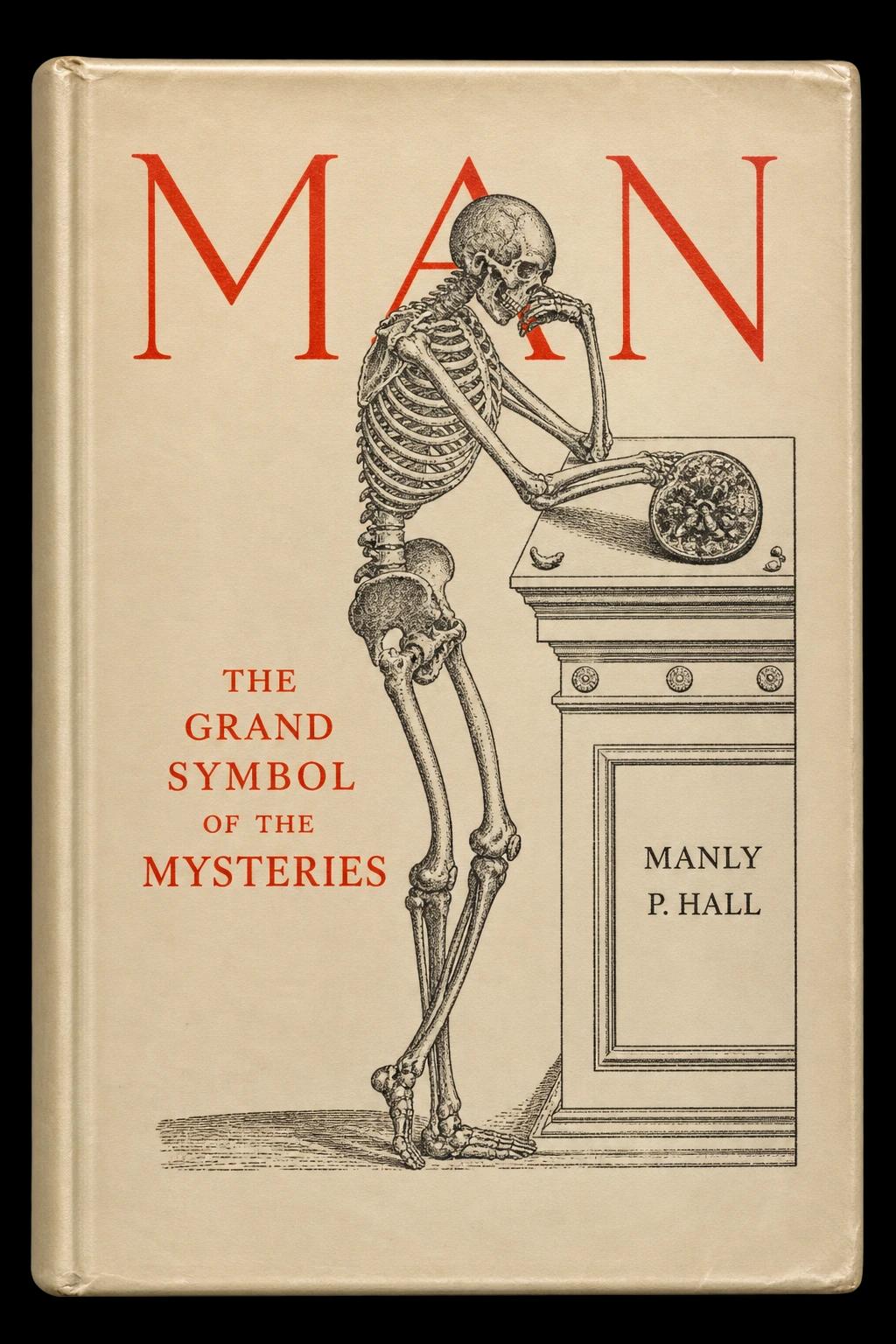
Man the Grand Symbol of the Mysteries
Reading note
The separately titled account draws on exact passages in the consulted Library edition.
Sources
See references (9)
- Birth. The Arrival and Trials of the Soul ↗Hildegard of Bingen, Scivias, Wiesbaden Codex B, fol. 22r, reproduced in Charles Singer, Studies in the History and Method of Science, 1917, plate XIX. Public domain.
- Obstetrics: The Science and the Art, 2nd ed. (1852), printed pp. 194–195 ↗Charles D. Meigs, Obstetrics: The Science and the Art, revised second edition, Philadelphia, 1852, pp. 194–195.
- Man the Grand Symbol of the Mysteries, printed p. 138, Reader page 136Manly P. Hall, Man the Grand Symbol of the Mysteries, Fourth Edition, The Philosophers Press, Los Angeles, 1937. Lumitheca Library edition IMJ-0603-E001.Read this page in Man the Grand Symbol of the Mysteries ↗
- Man the Grand Symbol of the Mysteries, printed p. 139, Reader page 137Manly P. Hall, Man the Grand Symbol of the Mysteries, Fourth Edition, The Philosophers Press, Los Angeles, 1937. Lumitheca Library edition IMJ-0603-E001.Read this page in Man the Grand Symbol of the Mysteries ↗
- Man the Grand Symbol of the Mysteries, printed p. 185, Reader page 182Manly P. Hall, Man the Grand Symbol of the Mysteries, Fourth Edition, The Philosophers Press, Los Angeles, 1937. Lumitheca Library edition IMJ-0603-E001.Read this page in Man the Grand Symbol of the Mysteries ↗
- Man the Grand Symbol of the Mysteries, printed p. 136, Reader page 134Manly P. Hall, Man the Grand Symbol of the Mysteries, Fourth Edition, The Philosophers Press, Los Angeles, 1937. Lumitheca Library edition IMJ-0603-E001.Read this page in Man the Grand Symbol of the Mysteries ↗
- Man the Grand Symbol of the Mysteries, printed p. 137, Reader page 135Manly P. Hall, Man the Grand Symbol of the Mysteries, Fourth Edition, The Philosophers Press, Los Angeles, 1937. Lumitheca Library edition IMJ-0603-E001.Read this page in Man the Grand Symbol of the Mysteries ↗
- Man the Grand Symbol of the Mysteries, printed p. 140, Reader page 138Manly P. Hall, Man the Grand Symbol of the Mysteries, Fourth Edition, The Philosophers Press, Los Angeles, 1937. Lumitheca Library edition IMJ-0603-E001.Read this page in Man the Grand Symbol of the Mysteries ↗
- Man the Grand Symbol of the Mysteries, printed p. 186, Reader page 183Manly P. Hall, Man the Grand Symbol of the Mysteries, Fourth Edition, The Philosophers Press, Los Angeles, 1937. Lumitheca Library edition IMJ-0603-E001.Read this page in Man the Grand Symbol of the Mysteries ↗