Queen Mother of the West
The Queen Mother of the West, or Xiwangmu, is a Chinese goddess associated with Mount Kunlun, the peaches of immortality and a palace in the far west.
In this article
Who is the Queen Mother of the West?
The Queen Mother of the West, or Xiwangmu, is a Chinese goddess who can bestow long life. Her western home is associated with Mount Kunlun, and the fruit of her orchard gives the immortals one of their reasons to visit. [1][2][4]
In a fifteenth-century fan painting, three Daoist immortals come to celebrate her birthday. They stand on an ornate terrace as visitors paying their respects. [3]
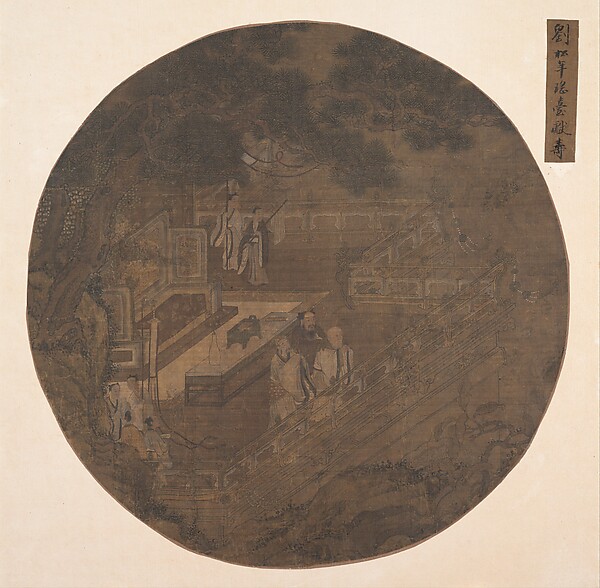
Lü Dongbin, Han Zhongli and Zhang Guolao pay their respects at Xiwangmu’s birthday. Chinese fan painting, fifteenth century.
Unidentified artist. Paying homage to Xiwangmu, the Queen Mother of the West. 15th century. The Metropolitan Museum of Art. Rogers Fund, 1923. Public domain. · Image source ↗ · Public Domain
In The Chinese Fairy Book
In The Chinese Fairy Book, edited by Richard Wilhelm and translated by Frederick H. Martens, King Mu crosses the Weak River on a bridge formed by water creatures. The Queen Mother receives him at the Springs of Jade and shares the knowledge of long life. The story also describes immortals travelling in dragon-drawn carriages to taste her peaches. [4]
The creation story identifies her as the Mother of Metals and places her in the west. The collection also calls her the Golden Mother in the tale of Dschang Liang. There she is paired with the King Father of the East before the narrative mentions the Three Pure Ones. In the Monkey King’s tale the court puts Sun Wukong in charge of her orchard, and he consumes the prized peaches before her banquet. [5][6][7][8]
Two visitors to the western paradise
King Mu is welcomed into her palace and taught a formula for long life. Sun Wukong eats the fruit he has been put in charge of guarding. The birthday painting shows a third kind of encounter, with immortals who come to honour their host. [4][8][3]
In the library
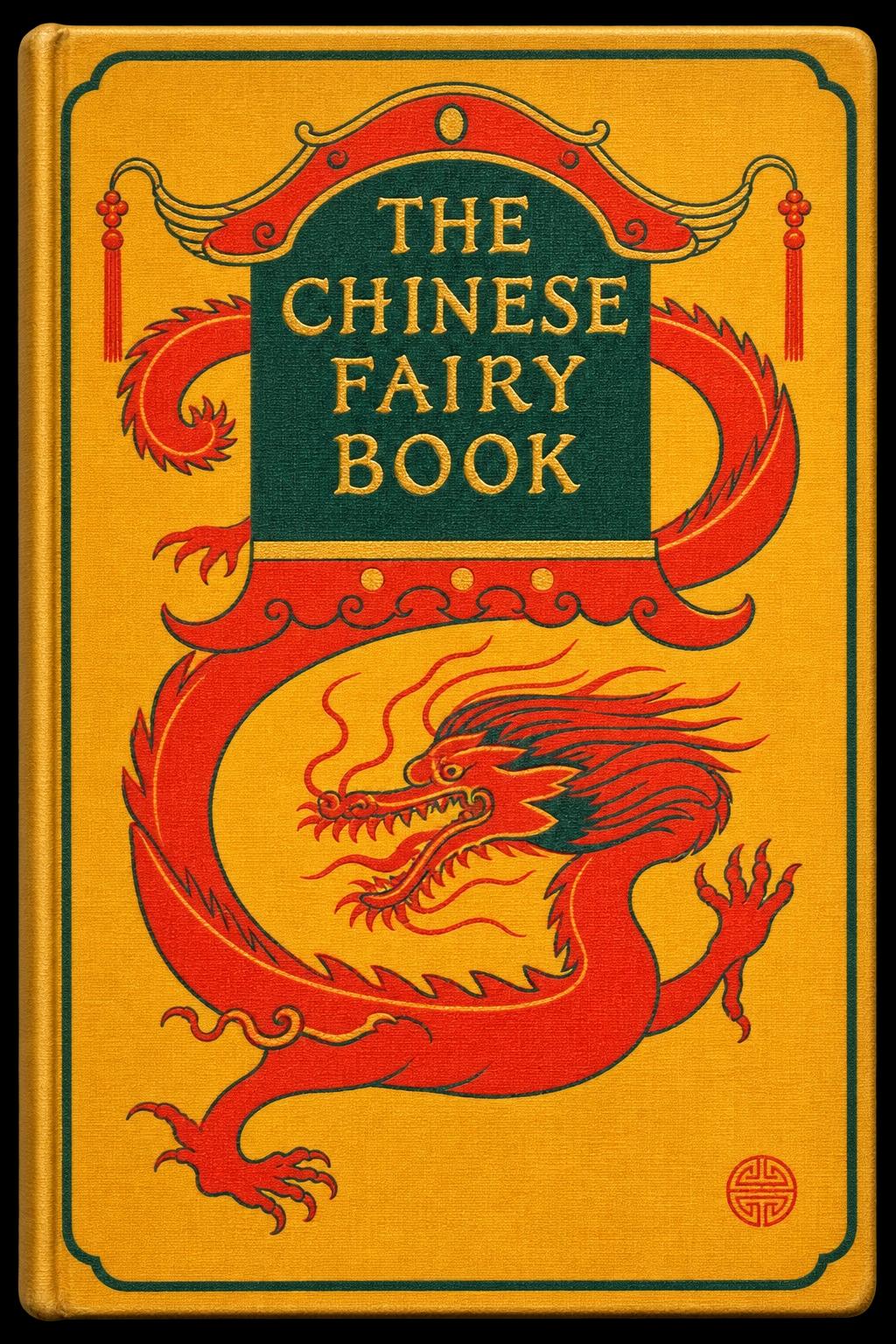
The Chinese Fairy Book
Reading note
Read King Mu’s crossing of the Weak River and compare the visit with Sun Wukong’s time in the orchard.
Sources
See references (8)
- Queen Mother of the West by Kano Osanobu ↗The Metropolitan Museum of Art
- Longevity in Chinese Art ↗The Metropolitan Museum of Art
- Paying homage to Xiwangmu, the Queen Mother of the West ↗Unidentified artist. Paying homage to Xiwangmu, the Queen Mother of the West. 15th century. The Metropolitan Museum of Art. Rogers Fund, 1923. Public domain.
- The Chinese Fairy Book, Library Reader page 114Richard Wilhelm, editor. Frederick H. Martens, translator. The Chinese Fairy Book. Frederick A. Stokes Company, New York, 1921. Lumitheca Library edition IMJ-0478-E002.Read this page in The Chinese Fairy Book ↗
- The Chinese Fairy Book, Library Reader page 48Richard Wilhelm, editor. Frederick H. Martens, translator. The Chinese Fairy Book. Frederick A. Stokes Company, New York, 1921. Lumitheca Library edition IMJ-0478-E002.Read this page in The Chinese Fairy Book ↗
- The Chinese Fairy Book, Library Reader page 242Richard Wilhelm, editor. Frederick H. Martens, translator. The Chinese Fairy Book. Frederick A. Stokes Company, New York, 1921. Lumitheca Library edition IMJ-0478-E002.Read this page in The Chinese Fairy Book ↗
- The Chinese Fairy Book, Library Reader page 338Richard Wilhelm, editor. Frederick H. Martens, translator. The Chinese Fairy Book. Frederick A. Stokes Company, New York, 1921. Lumitheca Library edition IMJ-0478-E002.Read this page in The Chinese Fairy Book ↗
- The Chinese Fairy Book, Library Reader page 339Richard Wilhelm, editor. Frederick H. Martens, translator. The Chinese Fairy Book. Frederick A. Stokes Company, New York, 1921. Lumitheca Library edition IMJ-0478-E002.Read this page in The Chinese Fairy Book ↗