Qliphoth (Kelippot)
What are the Qliphoth or kelippot? Compare the husks in Hayyim Vital, Mathers’s classes of shells, and Geoffrey Hodson’s account of material resistance.
In this article
What are the shells?
Qliphoth, also written kelippot, means shells or husks. In Hayyim Vital’s Kabbalistic account the husks are bound up with fragments that hold sparks of holiness. Later Western occult writers also use the term for classes of beings connected with the lowest world. [4][2][3]
Sefer Etz Chaim by Hayyim Vital
In Etz Chaim, Hayyim Vital describes lights withdrawing as vessels break. Some holy sparks remain and fall with the fragments, which form the root of the kelippot. The passage goes on to connect the raising of sparks with prayer and righteous acts. [2]
The Kabbalah Unveiled by S. L. MacGregor Mathers
In his introduction to The Kabbalah Unveiled, S. L. MacGregor Mathers places the shells in the lowest, material world. He also divides the spirits he calls shells into ten classes. The classification belongs to his explanation of the four worlds. [3]
The Kingdom of the Gods by Geoffrey Hodson
In The Kingdom of the Gods, Geoffrey Hodson connects the Qliphoth with descent into material form. He draws on a list of inverse correspondences from A. E. Waite, then takes some inverse sefirot as personifications of the resistance matter offers to shaping. [5][6][4][7]
Hodson uses embodiment to explain why he gives some of these powers a constructive function. A form can limit what a being can do and also make the development of a capacity possible. He lets the effects of that resistance vary with its place in the process. [6][8][7][9]
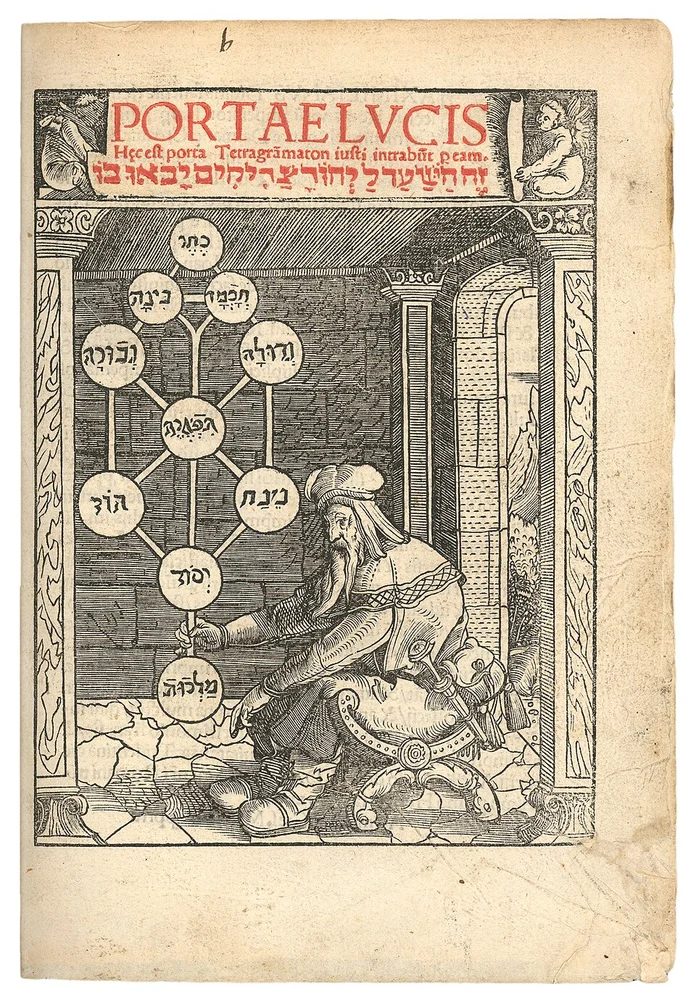
The title page of Porta Lucis shows a historical arrangement of the ten sefirot. Hodson’s inverse correspondences refer to positions on the Tree of Life.
Joseph Gikatilla, Porta Lucis, abridged Latin translation by Paulus Ricius (Johann Miller, Augsburg, 1516). University Library of Nijmegen, via Wikimedia Commons. · Image source ↗ · Public Domain
Sparks, classes and resistance
Vital asks how holy sparks remain in fallen fragments and how they might be raised. Mathers uses shells to classify beings in a particular world. Hodson gives inverse powers a place in an account of how embodiment limits a being and can help it develop. [5][8][4][9][2][3]
In the library
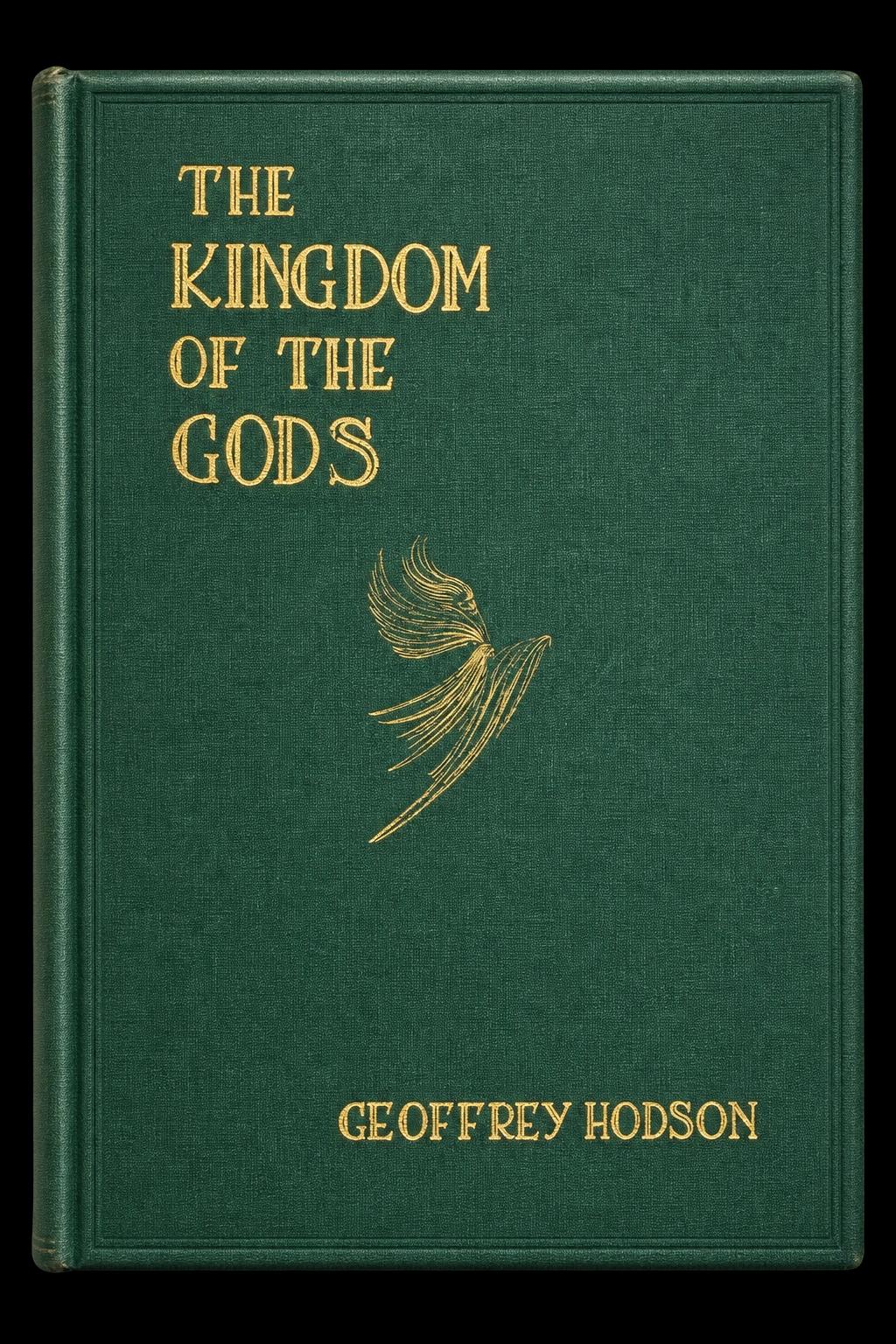
The Kingdom of the Gods
Reading note
The separately titled account draws on exact passages in the consulted Library edition.
Sources
See references (9)
- Tree of the sefirot on the title page of Porta Lucis ↗Joseph Gikatilla, Porta Lucis, abridged Latin translation by Paulus Ricius (Johann Miller, Augsburg, 1516). University Library of Nijmegen, via Wikimedia Commons.
- Etz Chaim, Shaar HaKlalim, chapter 1 (Hebrew) ↗Hayyim Vital. Hebrew text with annotations.
- The Kabbalah Unveiled, introduction, §60 ↗S. L. MacGregor Mathers, The Kabbalah Unveiled, introduction §60, Internet Sacred Text Archive transcription.
- The Kingdom of the Gods, Reader page 148Geoffrey Hodson, The Kingdom of the Gods, Theosophical Publishing House, first published 1952, thirteenth reprint 2007. Lumitheca Library edition IMJ-0606-E001.Read this page in The Kingdom of the Gods ↗
- The Kingdom of the Gods, Reader page 144Geoffrey Hodson, The Kingdom of the Gods, Theosophical Publishing House, first published 1952, thirteenth reprint 2007. Lumitheca Library edition IMJ-0606-E001.Read this page in The Kingdom of the Gods ↗
- The Kingdom of the Gods, Reader page 146Geoffrey Hodson, The Kingdom of the Gods, Theosophical Publishing House, first published 1952, thirteenth reprint 2007. Lumitheca Library edition IMJ-0606-E001.Read this page in The Kingdom of the Gods ↗
- The Kingdom of the Gods, Reader page 150Geoffrey Hodson, The Kingdom of the Gods, Theosophical Publishing House, first published 1952, thirteenth reprint 2007. Lumitheca Library edition IMJ-0606-E001.Read this page in The Kingdom of the Gods ↗
- The Kingdom of the Gods, Reader page 147Geoffrey Hodson, The Kingdom of the Gods, Theosophical Publishing House, first published 1952, thirteenth reprint 2007. Lumitheca Library edition IMJ-0606-E001.Read this page in The Kingdom of the Gods ↗
- The Kingdom of the Gods, Reader page 151Geoffrey Hodson, The Kingdom of the Gods, Theosophical Publishing House, first published 1952, thirteenth reprint 2007. Lumitheca Library edition IMJ-0606-E001.Read this page in The Kingdom of the Gods ↗