Qilin
The qilin is an auspicious creature in Chinese legend. It foretells the coming of Confucius, and a giraffe arriving at the Ming court recalled it.
In this article
What is a qilin?
A qilin is an auspicious creature in Chinese legend and art. Some have horns or scales, and artists vary the shape of its body. Its appearance is often taken as a sign of good fortune or of the arrival of a person of exceptional virtue. [1][3][4]
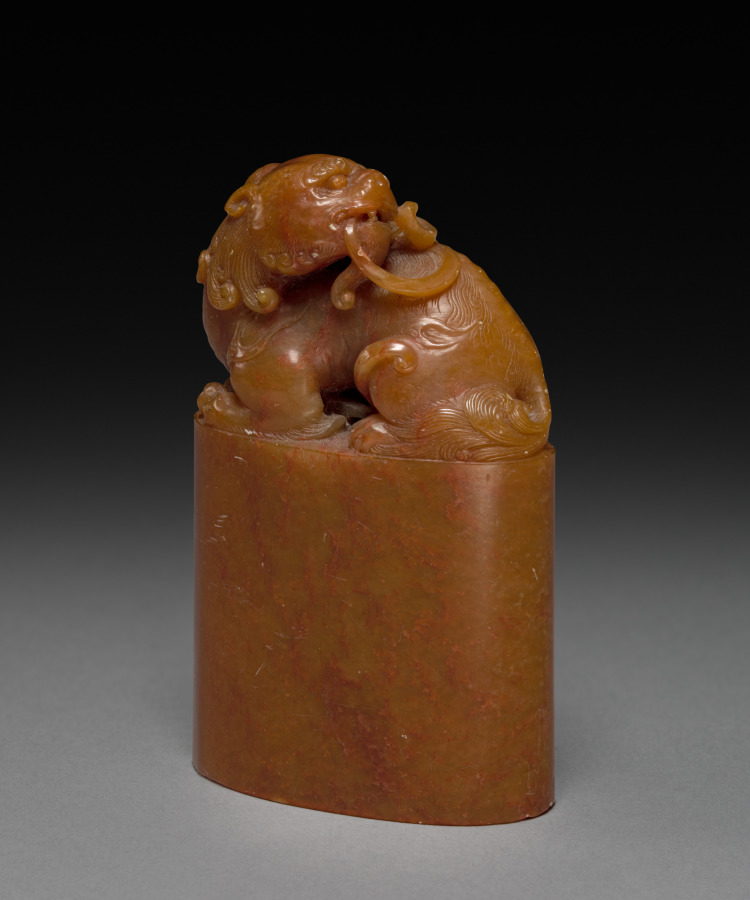
A Qing Tianhuang-stone seal carries a reclining qilin above the studio inscription on its base.
Unidentified Chinese artist. Seal with Reclining Qilin. 1736–95. Cleveland Museum of Art. Anonymous Gift. CC0. · Image source ↗ · CC0
In The Chinese Fairy Book
In Richard Wilhelm’s The Chinese Fairy Book, translated by Frederick H. Martens, a qilin appears when Confucius comes into the world. It brings an inscribed object that predicts he will be an uncrowned king. The tale connects the greatness it predicts with his learning and moral authority as a teacher. [4]
The same tale later has an emperor open Confucius’s grave and find a prediction of his own death. The qilin belongs to the earlier scene. Its message concerns the child who has just come into the world, and the kind of authority he will have. [5]
Why did a giraffe remind people of the qilin?
When a giraffe from Bengal reached the Yongle court in 1414, observers associated it with the qilin. Its arrival could be read as a favourable sign for the ruler. The small stone seal pictured here carries the same auspicious creature into a more personal setting. [2][3][4]
In the library
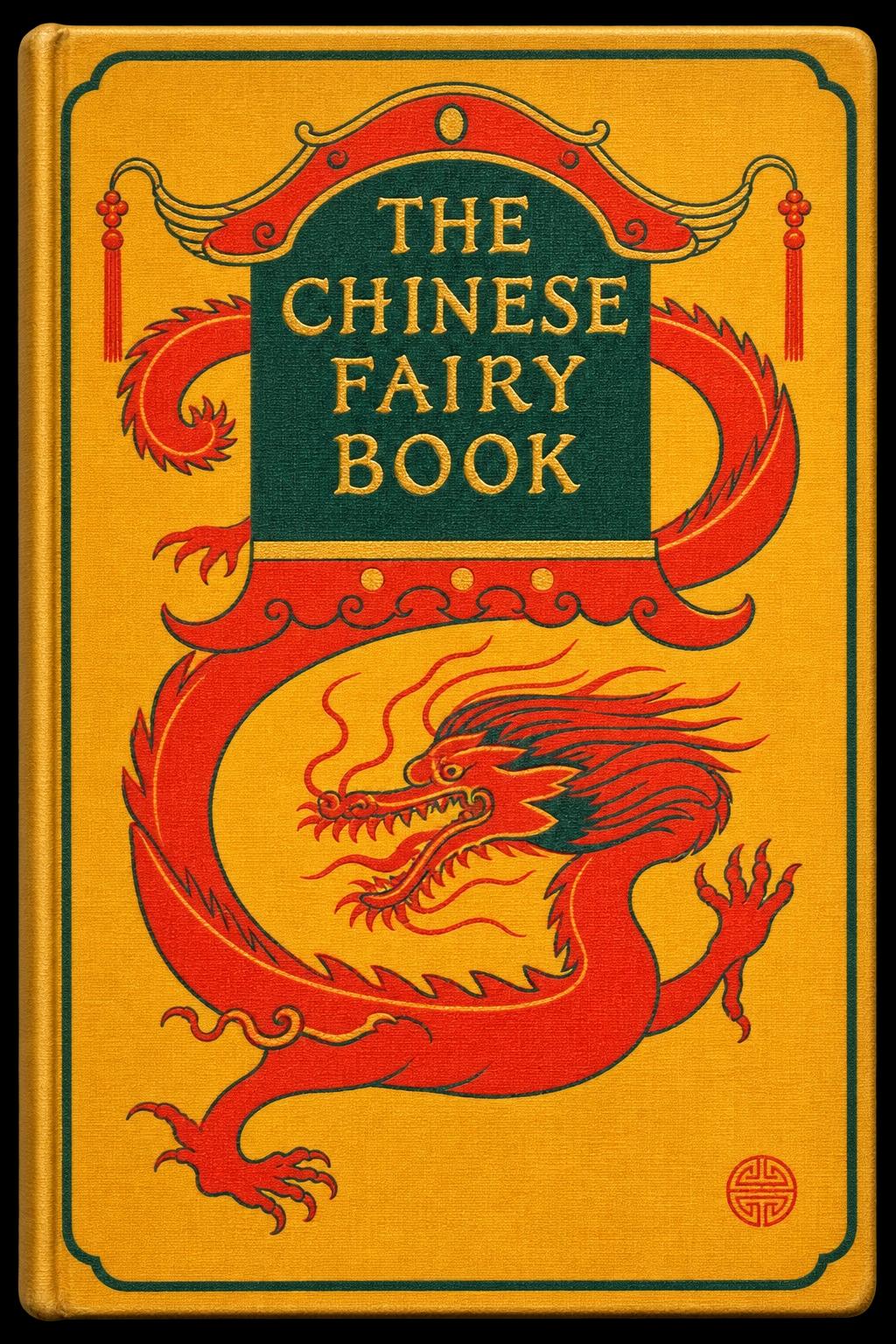
The Chinese Fairy Book
Reading note
Read the sign that greets Confucius’s birth and the prediction an emperor later finds in his grave.
Sources
See references (5)
- Fantastic Beasts in Chinese Culture and Where to Find Them ↗Cleveland Museum of Art
- Giraffe with Two Keepers ↗The Metropolitan Museum of Art
- Seal with Reclining Qilin ↗Unidentified Chinese artist. Seal with Reclining Qilin. 1736–95. Cleveland Museum of Art. Anonymous Gift. CC0.
- The Chinese Fairy Book, Library Reader page 78Richard Wilhelm, editor. Frederick H. Martens, translator. The Chinese Fairy Book. Frederick A. Stokes Company, New York, 1921. Lumitheca Library edition IMJ-0478-E002.Read this page in The Chinese Fairy Book ↗
- The Chinese Fairy Book, Library Reader page 79Richard Wilhelm, editor. Frederick H. Martens, translator. The Chinese Fairy Book. Frederick A. Stokes Company, New York, 1921. Lumitheca Library edition IMJ-0478-E002.Read this page in The Chinese Fairy Book ↗