Poliʻahu
Poliʻahu is the Hawaiian akua of snow on Maunakea. Follow the snow and sun mantles through S. N. Haleʻole’s story and Kalākaua’s edition.
In this article
Poliʻahu and the snow on Maunakea
Poliʻahu is a Hawaiian akua of snow on Maunakea. In the story of ʻAiwohikūpua, she wears a mantle of snow. When the bridal party approaches, she and her companions can spread or draw back the snow around them. [1][2][5]
The 1888 account names mountain companions including Lilinoe and Kahoupokane. Poliʻahu later sends both cold and heat against her rival Hinaikamalama. [5][6][3]
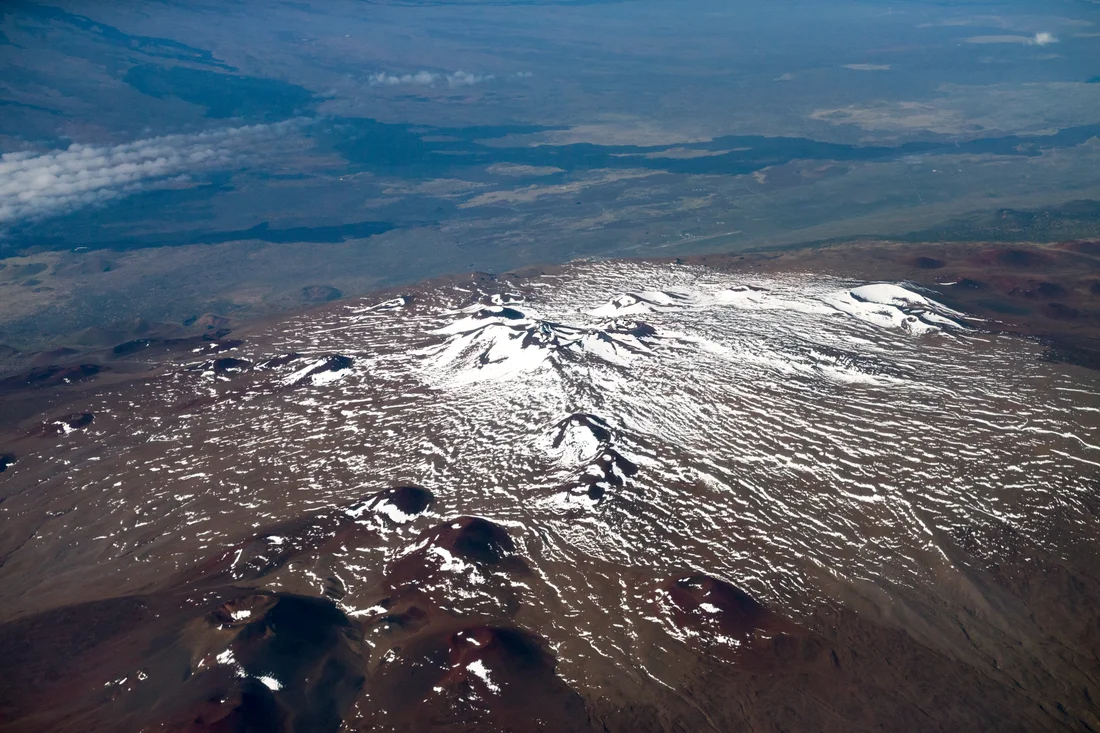
Snow on Maunakea in March 2015. Poliʻahu’s snow mantle is associated with this mountain in Hawaiian tradition.
International Gemini Observatory/NSF’s NOIRLab/AURA/J. Pollard. Resized and converted to WebP. · Image source ↗ · CC BY 4.0
Poliʻahu in The Hawaiian Romance of Laieikawai by S. N. Haleʻole
In chapter XVIII of The Hawaiian Romance of Laieikawai, by S. N. Haleʻole and translated by Martha Warren Beckwith, snow descending towards Waiulaula signals the approach of the bridal party. The wedding party cannot proceed until the cold is relieved. [2]
In chapter XIX, Hinaikamalama sings about feeling cold in her feet and heart. When Poliʻahu changes from her snow mantle to one associated with the sun, Hinaikamalama sings again, this time describing the heat. [3]
The Legends and Myths of Hawaii by David Kalākaua
The chapter on Lāʻieikawai in David Kalākaua’s volume condenses Haleʻole’s longer narrative. ʻAiwohikūpua meets Poliʻahu in a white mantle above the Hāmākua coast. She asks about his vows and exchanges mantles with him as a pledge. Snow signals the approach of their wedding. [7][8][5]
Poliʻahu and her companions remove their snow mantles when the bridal party struggles with the cold. Later she sends cold against Hinaikamalama, then heat. Hinaikamalama leaves for Hāna. [5][6][9]
What the songs add to the rivalry
Both versions use snow and heat to show Poliʻahu acting across a distance. Haleʻole gives Hinaikamalama songs for both sensations. The songs let the reader hear what the changes feel like to the person caught in them. [5][6][9][2][3]
Read further in the library
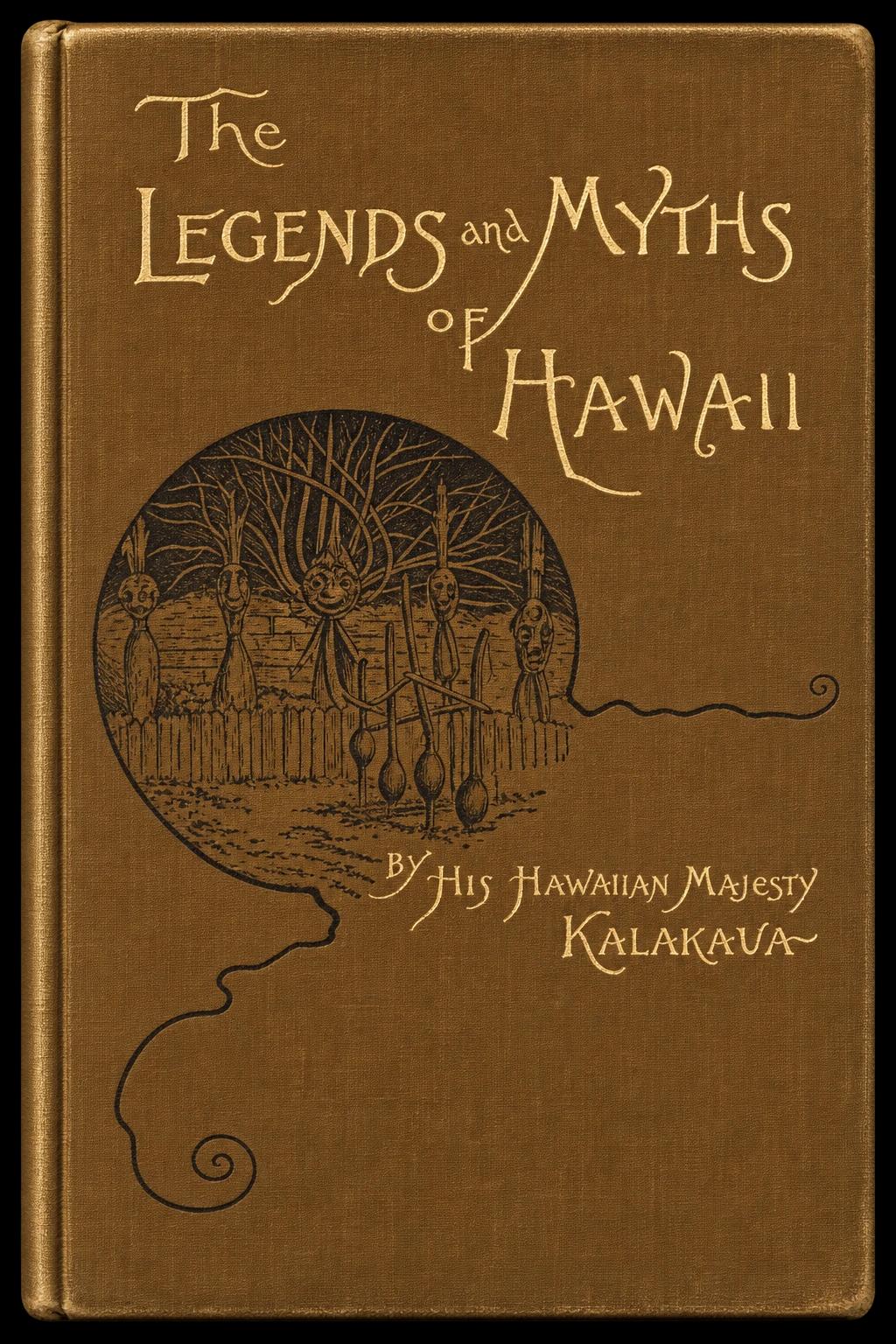
The Legends and Myths of Hawaii
Reading note
The separately titled account draws on exact passages in the consulted Library edition.
Sources
See references (9)
- Poliʻahu ↗Kahoʻiwai, University of Hawaiʻi, bilingual entry for Poliʻahu.Return to text ↑
- The Hawaiian Romance of Laieikawai, chapter XVIII, printed pp. 195–197 ↗S. N. Haleʻole, The Hawaiian Romance of Laieikawai, translated by Martha Warren Beckwith, Government Printing Office, 1918, chapter XVIII, the wedding at Waiulaula.Return to text ↑
- The Hawaiian Romance of Laieikawai, chapter XIX, printed p. 201 ↗S. N. Haleʻole, The Hawaiian Romance of Laieikawai, translated by Martha Warren Beckwith, Government Printing Office, 1918, chapter XIX, Hinaikamalama’s songs of cold and heat.Return to text ↑
- Maunakea summit in snow, 2015 ↗International Gemini Observatory/NSF’s NOIRLab/AURA/J. Pollard. Resized and converted to WebP.
- The Legends and Myths of Hawaii, Reader page 471David Kalākaua, The Legends and Myths of Hawaii, edited with an introduction by Rollin Mallory Daggett, Charles L. Webster & Company, 1888. Exact Library edition IMJ-0646-E001. When the introduction or a signed editorial passage is used, its author is identified in the article.Read this page in The Legends and Myths of Hawaii ↗Return to text ↑
- The Legends and Myths of Hawaii, Reader page 472David Kalākaua, The Legends and Myths of Hawaii, edited with an introduction by Rollin Mallory Daggett, Charles L. Webster & Company, 1888. Exact Library edition IMJ-0646-E001. When the introduction or a signed editorial passage is used, its author is identified in the article.Read this page in The Legends and Myths of Hawaii ↗Return to text ↑
- The Legends and Myths of Hawaii, Reader page 457David Kalākaua, The Legends and Myths of Hawaii, edited with an introduction by Rollin Mallory Daggett, Charles L. Webster & Company, 1888. Exact Library edition IMJ-0646-E001. When the introduction or a signed editorial passage is used, its author is identified in the article.Read this page in The Legends and Myths of Hawaii ↗Return to text ↑
- The Legends and Myths of Hawaii, Reader page 466David Kalākaua, The Legends and Myths of Hawaii, edited with an introduction by Rollin Mallory Daggett, Charles L. Webster & Company, 1888. Exact Library edition IMJ-0646-E001. When the introduction or a signed editorial passage is used, its author is identified in the article.Read this page in The Legends and Myths of Hawaii ↗Return to text ↑
- The Legends and Myths of Hawaii, Reader page 473David Kalākaua, The Legends and Myths of Hawaii, edited with an introduction by Rollin Mallory Daggett, Charles L. Webster & Company, 1888. Exact Library edition IMJ-0646-E001. When the introduction or a signed editorial passage is used, its author is identified in the article.Read this page in The Legends and Myths of Hawaii ↗Return to text ↑