The Planetary Logos in Theosophy
What is a Planetary Logos? Compare Challoner’s Earth as a living body with Arthur E. Powell’s account of the seven Planetary Chain Logoi.
In this article
A life greater than its parts
A Planetary Logos is a divine intelligence that Theosophical writers say expresses itself through a planet or a wider planetary scheme. H. K. Challoner uses the image of a living body to explain the relation. Beings and nations act as parts of a life greater than their own. [3][4][5][6][2]
Watchers of the Seven Spheres by H. K. Challoner
In The Earth Spirit, a poem in H. K. Challoner’s Watchers of the Seven Spheres, the speaker calls the inhabitants of Earth cells of the Planetary Logos. The Builders of the New Age uses a similar image for worlds as the bodies of planetary lords. [3][6]
The International Deva calls the Planetary Lord the Silent Watcher. It compares nations to limbs and describes war between them as discord in the whole body. The mountain poem places teachers and their deva intermediaries within the same planetary order. [4][5][7]
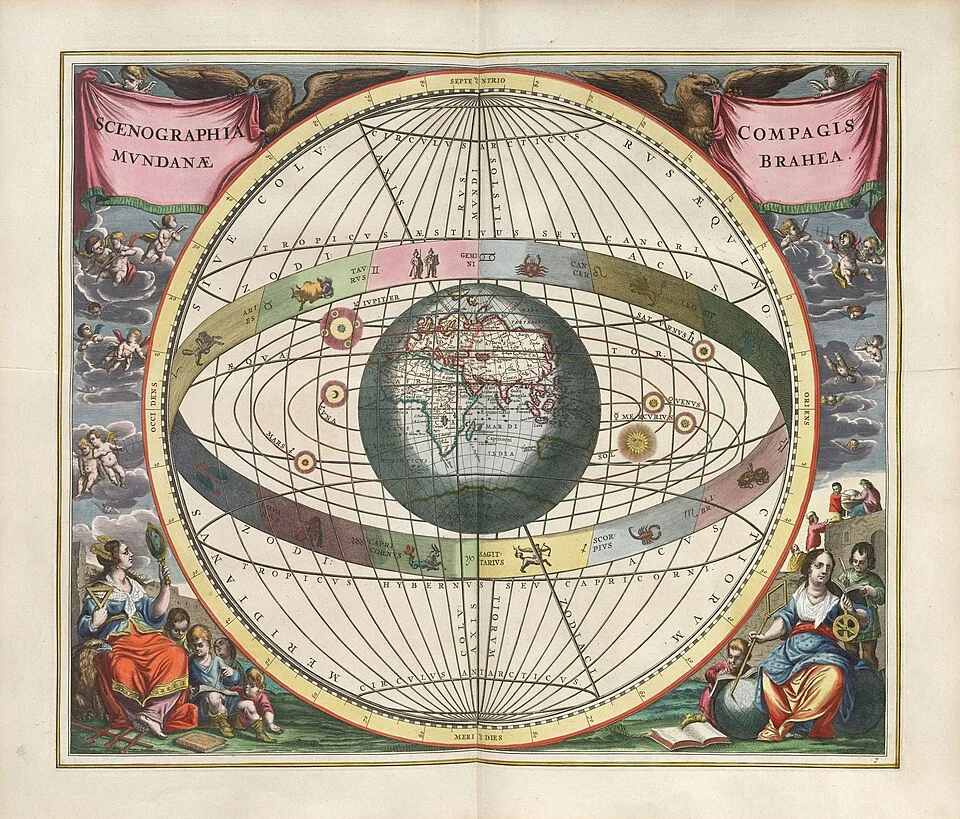
Andreas Cellarius draws interlocking circles around Earth. Challoner’s account uses a different image of relation, with beings and nations pictured as parts of a living body.
Andreas Cellarius, Scenographia Compagis Mundanae Brahea, Harmonia macrocosmica, 1660. Via Wikimedia Commons. · Image source ↗ · Public Domain
The Solar System by Arthur E. Powell
In The Solar System, Arthur E. Powell places seven Planetary Chain Logoi within the Solar Logos. Each is a centre through which its force flows and has a department of the system to administer. [2]
Cosmic administration and shared life
Powell gives the logoi distinct parts of a system to direct. Challoner uses the body to emphasise dependence between its parts. Her comparison of nations with limbs gives conflict consequences for the entire planetary life. [3][4][5][6][7][2]
See references (6)
In the library
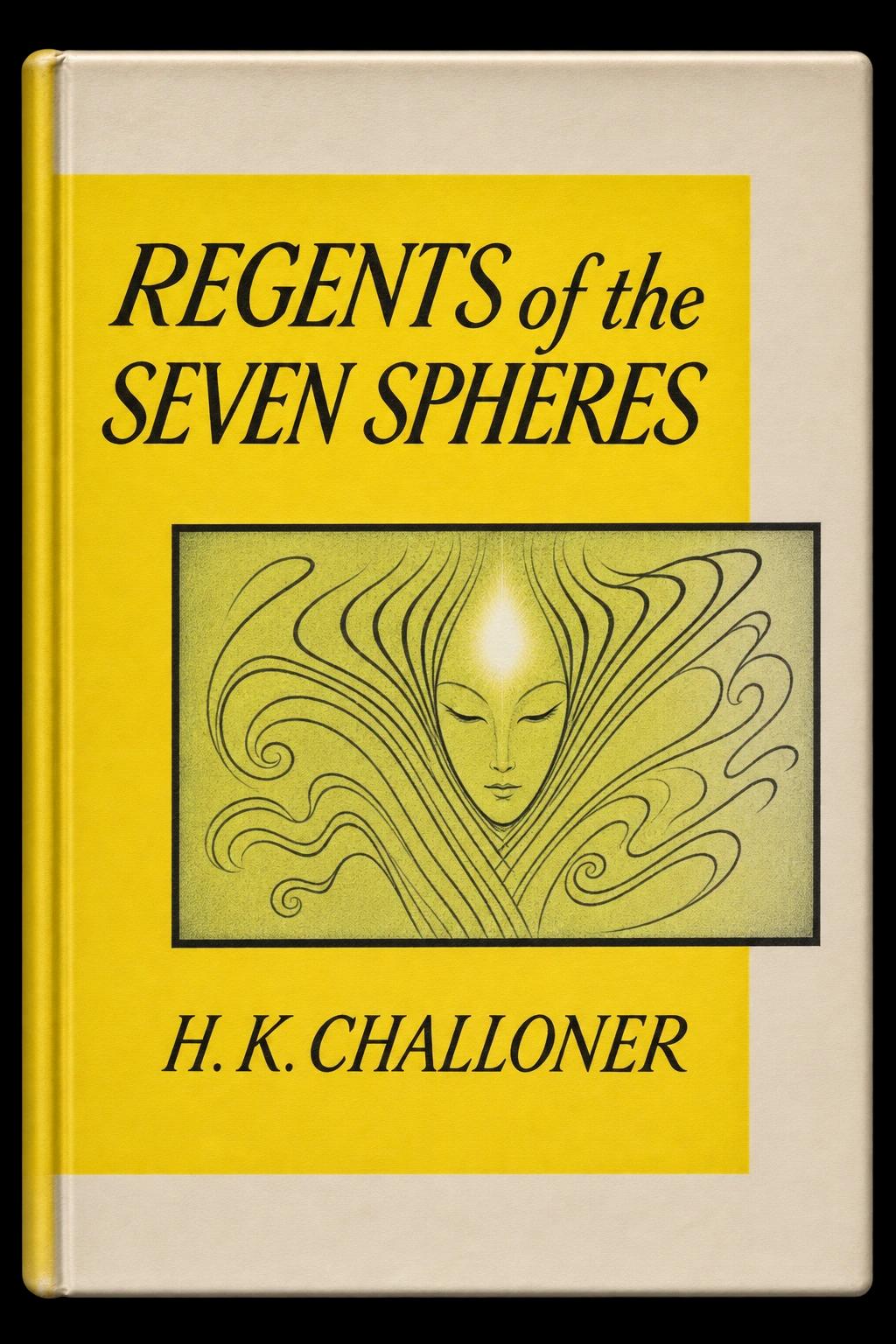
Watchers of the Seven Spheres
Reading note
The separately titled account draws on exact passages in the consulted Library edition.
Sources
See references (7)
- The Tychonic system in Harmonia macrocosmica ↗Andreas Cellarius, Scenographia Compagis Mundanae Brahea, Harmonia macrocosmica, 1660. Via Wikimedia Commons.
- The Solar System, chapters VII and XVI ↗Arthur E. Powell, The Solar System, chapters VII and XVI, pp. 32–33 and 79–80 in the hosted edition.
- Watchers of the Seven Spheres, Reader page 33H. K. Challoner, Watchers of the Seven Spheres, London, George Routledge & Sons, 1933. Lumitheca Library edition IMJ-0604-E001.Read this page in Watchers of the Seven Spheres ↗
- Watchers of the Seven Spheres, Reader page 51H. K. Challoner, Watchers of the Seven Spheres, London, George Routledge & Sons, 1933. Lumitheca Library edition IMJ-0604-E001.Read this page in Watchers of the Seven Spheres ↗
- Watchers of the Seven Spheres, printed p. 55, Reader page 53H. K. Challoner, Watchers of the Seven Spheres, London, George Routledge & Sons, 1933. Lumitheca Library edition IMJ-0604-E001.Read this page in Watchers of the Seven Spheres ↗
- Watchers of the Seven Spheres, Reader page 66H. K. Challoner, Watchers of the Seven Spheres, London, George Routledge & Sons, 1933. Lumitheca Library edition IMJ-0604-E001.Read this page in Watchers of the Seven Spheres ↗
- Watchers of the Seven Spheres, printed p. 79, Reader page 78H. K. Challoner, Watchers of the Seven Spheres, London, George Routledge & Sons, 1933. Lumitheca Library edition IMJ-0604-E001.Read this page in Watchers of the Seven Spheres ↗