Planchette
A writing planchette carries a pencil across paper. See how it differs from an Ouija pointer, and compare its use in historical Library accounts.
In this article
Writing and talking devices
What is a planchette?
A writing planchette is a small board that carries a pencil and moves over paper under resting hands. Two wheels and the pencil support the historical form. A talking-board pointer also moves under the hands, but indicates letters printed on a board. Both devices have been called planchettes. [4][5][1][2]
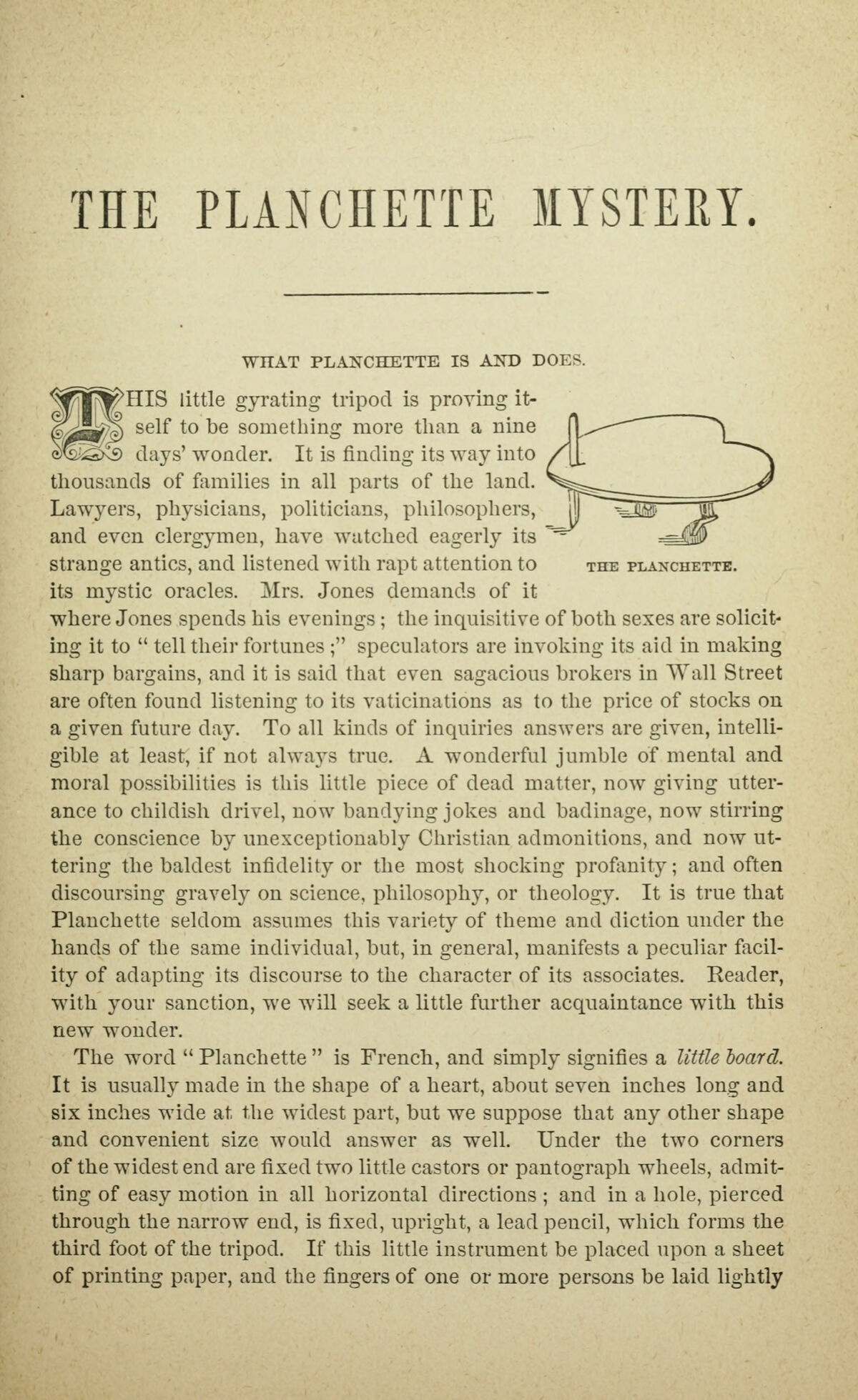
A drawing of a writing planchette from “The Planchette Mystery” (1886). The pencil travels with the board.
Brandeis University Libraries, Medical Heritage Library, via Wellcome Collection. 1886. Public Domain Mark. · Image source ↗ · Public Domain
A talking-board patent: Elijah J. Bond
Elijah J. Bond’s 1891 patent shows a lettered board and a small movable table with a pointed extension. The drawings show the pointer separately and in use on the board. It indicates existing characters without writing them. [2][18]
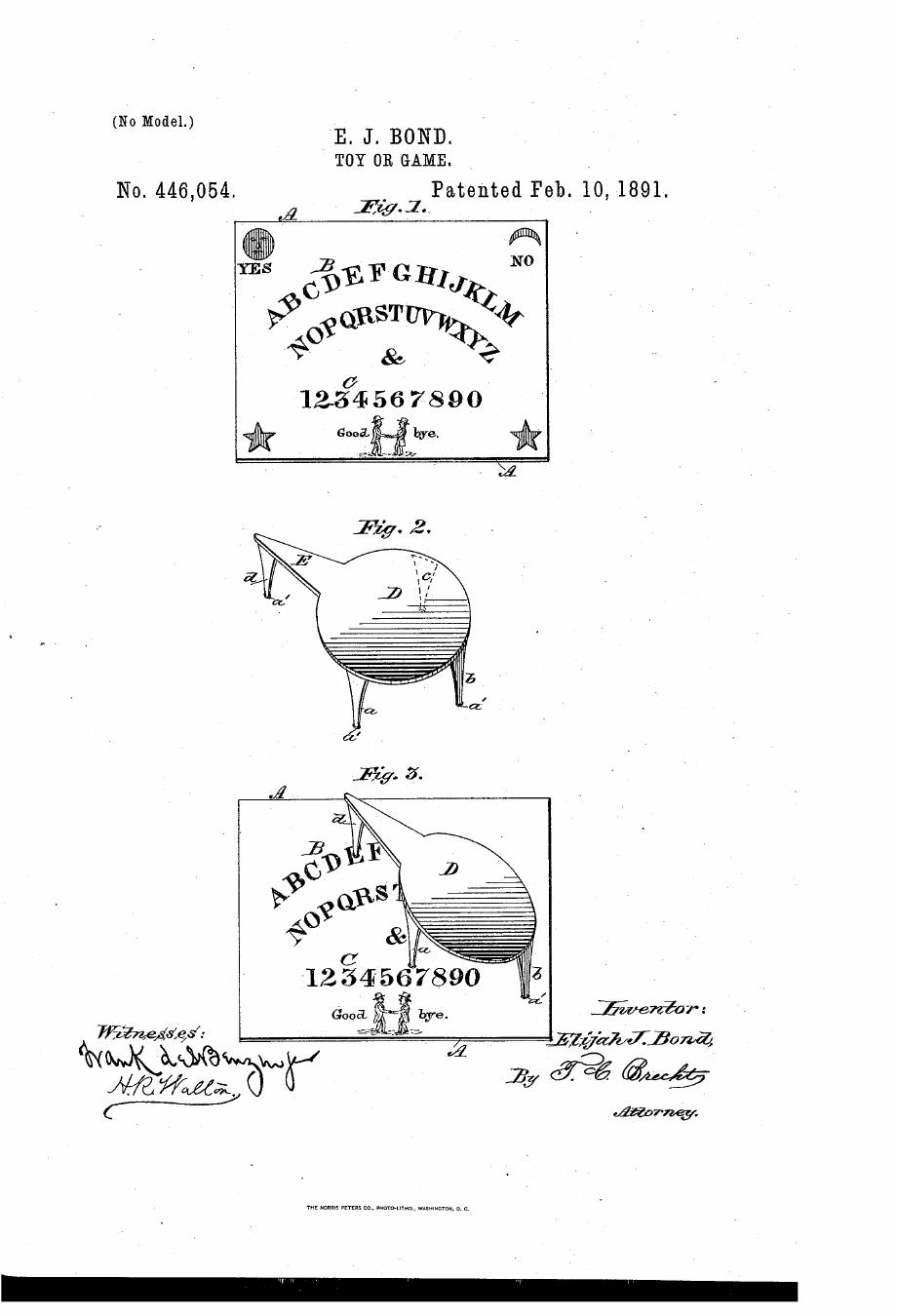
Elijah J. Bond’s 1891 patent drawing. The upper figure shows the printed board; the other figures show the pointer and how it sits on the board.
Elijah J. Bond, United States Patent Office, US446054A. · Image source ↗ · Public Domain
Accounts of planchette writing
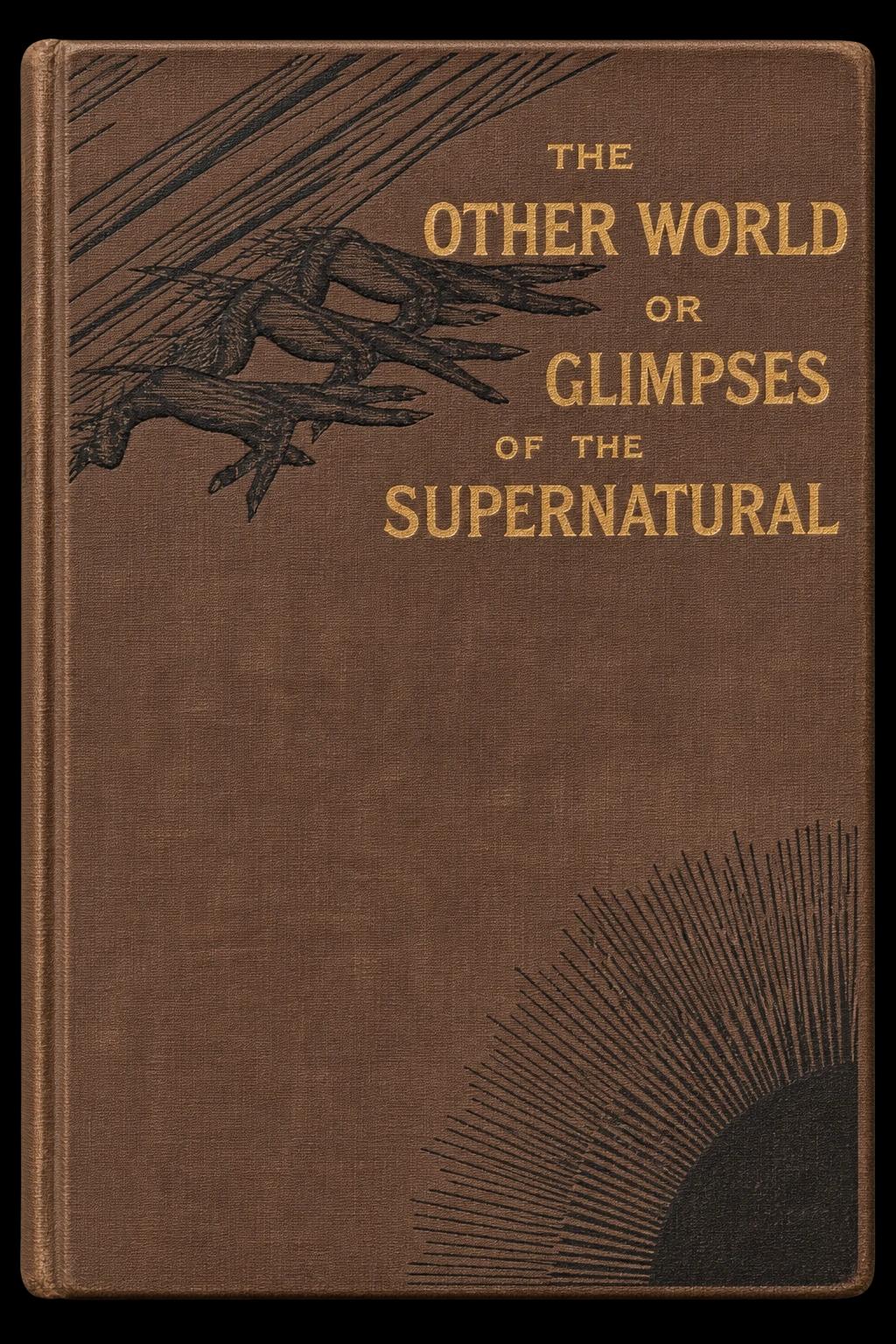
The Other World, edited by Frederick George Lee
In The Other World, Frederick George Lee introduces a wheeled heart-shaped writing board alongside a report of an instrument held above sand in China. He connects them through the claim that a spirit can direct writing. The instruments make their marks in different ways. [6][4][5]
In Lee’s English example, a group asks the device about a house in an unnamed London square. It gives brief replies about a supposed murder, but the personal names are recorded as unintelligible. [4][5][7]
The questions then turn to the communicator’s character and whether it is right to consult it. Lee says the sitters come to condemn the practice and throw the planchette into the Thames. His Christian criticism of divination gives the story its framing. [7][4][5]
Life Here and Hereafter: Charlotte E. Dresser and Fred Rafferty
In Life Here and Hereafter, Fred Rafferty and Charlotte E. Dresser move from table-tipping and an Ouija board to automatic writing. Rafferty says he needs Dresser’s hand touching his when he writes and allows that the medium’s subconscious can produce or alter apparent spirit messages. [8][9]
Moonchild by Aleister Crowley
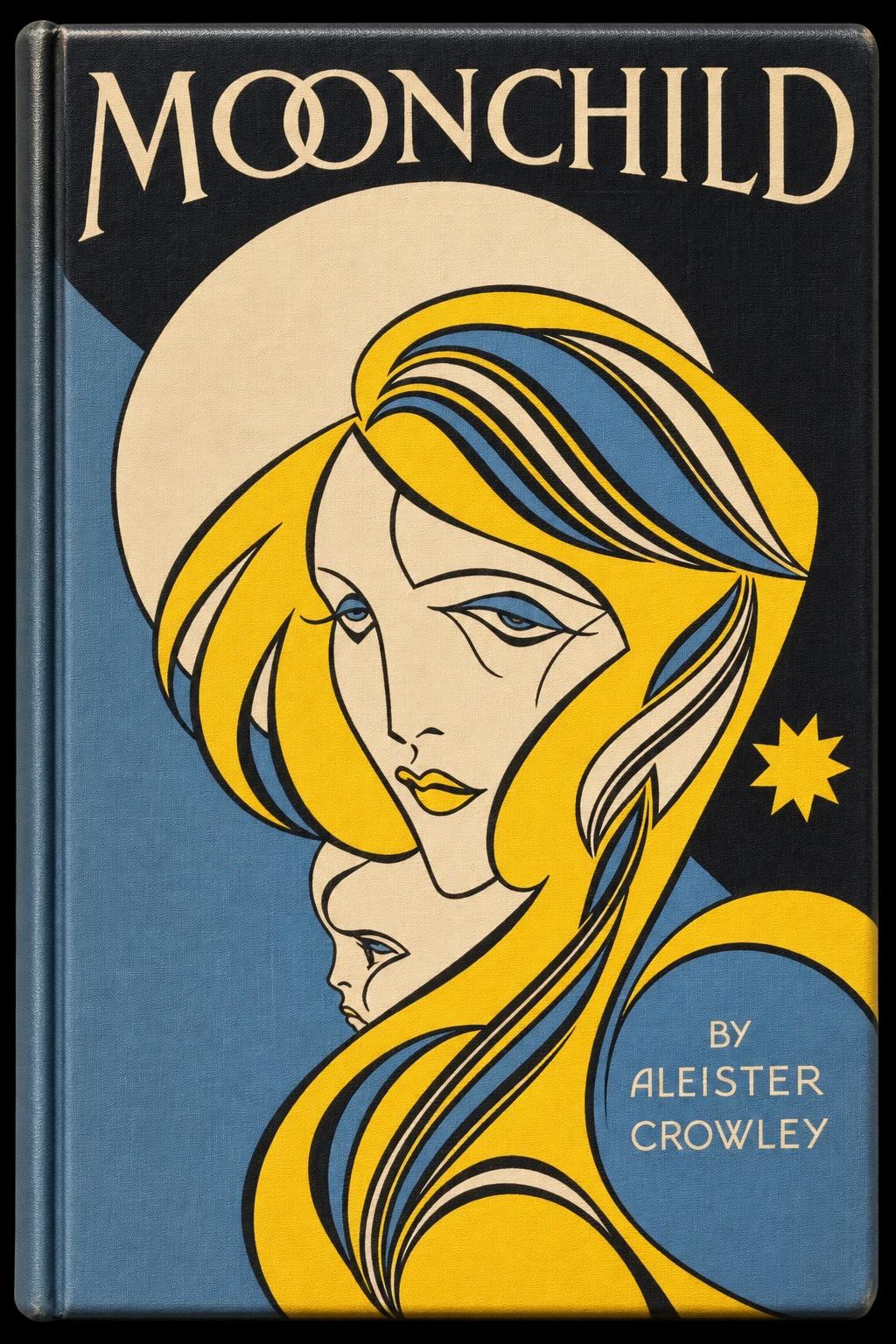
In Moonchild, Aleister Crowley has Lord Antony Bowling investigate a story about a supposed poltergeist. A planchette predicts the arrival of game, and a quail appears at dinner. Bowling traces it to a poultry seller who recognises the medium. [10][11][12][13][14]
A hint about fish leads Bowling to search before dinner, and he finds prawns on the lampshade. The planchette’s writing is legible. The question the episode pursues is who arranged what happened next. [15][16][17][11][12][14][4][5][7]
See references (11)
- The Other World, Reader page 520
- The Other World, Reader page 521
- The Other World, Reader page 522
- Moonchild, Reader page 100
- Moonchild, Reader page 101
- Moonchild, Reader page 102
- Moonchild, Reader page 103
- Moonchild, Reader page 104
- Moonchild, Reader page 105
- Moonchild, Reader page 106
- Moonchild, Reader page 107
Making a mark, choosing a letter and identifying a speaker
Lee’s planchette makes marks on paper. Bond’s pointer selects existing letters. Rafferty describes writing by hand after earlier talking-board use. Recognising the mechanism tells us how a reply became readable. Its authorship is a separate question in each account. [4][5][7][8][9]
Read further in the library
The Other World
Reading note
The separately titled account draws on exact passages in the consulted Library edition.

Life Here and Hereafter
Reading note
Separately attributed comparison with exact previously researched Library passages.
Moonchild
Reading note
The separately titled account draws on exact passages in the consulted Library edition.
Sources
See references (18)
- SFO Museum, A Mysterious Talking Board: Ouija and Beyond, exhibition gallery ↗SFO Museum’s own exhibition catalogue, 2016–2017. Scientific Planchette, about 1880, Selchow and Righter, New York; collection of Eugene Orlando, Museum of Talking Boards. Descriptive catalogue consulted; museum photographs are not reused.Return to text ↑
- Elijah J. Bond, US patent 446054, Toy or Game, patented 10 February 1891 ↗Original United States patent, including the board and movable pointer description. Consulted as a technical document, not evidence for a spirit source.Return to text ↑
- The Planchette Mystery: opening illustrated page, 1886 compilation, digital canvas 69 ↗Brandeis University Libraries, Medical Heritage Library, via Wellcome Collection. 1886. Public Domain Mark.
- The Other World, Reader page 520Frederick George Lee, editor, The Other World; or, Glimpses of the Supernatural, two volumes, Henry S. King and Co., London, 1875. Exact consulted Library edition IMJ-0657-E001. Narratives and embedded quotations are attributed to this compilation; an original author is not represented as independently consulted merely because Lee quotes them. Reader positions are verified separately from printed pagination.Read this page in The Other World ↗Return to text ↑
- The Other World, Reader page 521Frederick George Lee, editor, The Other World; or, Glimpses of the Supernatural, two volumes, Henry S. King and Co., London, 1875. Exact consulted Library edition IMJ-0657-E001. Narratives and embedded quotations are attributed to this compilation; an original author is not represented as independently consulted merely because Lee quotes them. Reader positions are verified separately from printed pagination.Read this page in The Other World ↗Return to text ↑
- The Other World, Reader page 519Frederick George Lee, editor, The Other World; or, Glimpses of the Supernatural, two volumes, Henry S. King and Co., London, 1875. Exact consulted Library edition IMJ-0657-E001. Narratives and embedded quotations are attributed to this compilation; an original author is not represented as independently consulted merely because Lee quotes them. Reader positions are verified separately from printed pagination.Read this page in The Other World ↗Return to text ↑
- The Other World, Reader page 522Frederick George Lee, editor, The Other World; or, Glimpses of the Supernatural, two volumes, Henry S. King and Co., London, 1875. Exact consulted Library edition IMJ-0657-E001. Narratives and embedded quotations are attributed to this compilation; an original author is not represented as independently consulted merely because Lee quotes them. Reader positions are verified separately from printed pagination.Read this page in The Other World ↗Return to text ↑
- Life Here and Hereafter, Reader page 10Charlotte E. Dresser and Fred Rafferty, Life Here and Hereafter, edited by Fred Rafferty. Modern transcription reproducing the Author’s Edition, San Jose, California, 1927. Exact selected Library edition IMJ-0447-E001; original PageIDs and current Reader positions verified. Communications and their claimed spiritual origins remain attributed to this source.Read this page in Life Here and Hereafter ↗Return to text ↑
- Life Here and Hereafter, Reader page 11Charlotte E. Dresser and Fred Rafferty, Life Here and Hereafter, edited by Fred Rafferty. Modern transcription reproducing the Author’s Edition, San Jose, California, 1927. Exact selected Library edition IMJ-0447-E001; original PageIDs and current Reader positions verified. Communications and their claimed spiritual origins remain attributed to this source.Read this page in Life Here and Hereafter ↗Return to text ↑
- Moonchild, Reader page 100Aleister Crowley, Moonchild (Liber LXXXI, The Butterfly Net), Library digital transcription IMJ-0629-E001.Read this page in Moonchild ↗Return to text ↑
- Moonchild, Reader page 101Aleister Crowley, Moonchild (Liber LXXXI, The Butterfly Net), Library digital transcription IMJ-0629-E001.Read this page in Moonchild ↗Return to text ↑
- Moonchild, Reader page 102Aleister Crowley, Moonchild (Liber LXXXI, The Butterfly Net), Library digital transcription IMJ-0629-E001.Read this page in Moonchild ↗Return to text ↑
- Moonchild, Reader page 103Aleister Crowley, Moonchild (Liber LXXXI, The Butterfly Net), Library digital transcription IMJ-0629-E001.Read this page in Moonchild ↗Return to text ↑
- Moonchild, Reader page 104Aleister Crowley, Moonchild (Liber LXXXI, The Butterfly Net), Library digital transcription IMJ-0629-E001.Read this page in Moonchild ↗Return to text ↑
- Moonchild, Reader page 105Aleister Crowley, Moonchild (Liber LXXXI, The Butterfly Net), Library digital transcription IMJ-0629-E001.Read this page in Moonchild ↗Return to text ↑
- Moonchild, Reader page 106Aleister Crowley, Moonchild (Liber LXXXI, The Butterfly Net), Library digital transcription IMJ-0629-E001.Read this page in Moonchild ↗Return to text ↑
- Moonchild, Reader page 107Aleister Crowley, Moonchild (Liber LXXXI, The Butterfly Net), Library digital transcription IMJ-0629-E001.Read this page in Moonchild ↗Return to text ↑
- Elijah J. Bond, Toy or Game, US Patent 446,054, drawing sheet, 10 February 1891 ↗Elijah J. Bond, United States Patent Office, US446054A.Return to text ↑