Photographic enchantment
Photographic enchantment treats a portrait as a magical link to its subject. Compare Magica Sexualis with Nadar’s account of Balzac’s daguerreotype.
In this article
Understanding photographic enchantment
Photographic enchantment is the belief that acting on a photograph can affect the person in it. A writer may treat the picture as a stand-in for its subject or say it retains some part of the person. In either case, the photograph is already a likeness. In spirit photography, the image is offered as a record of something otherwise unseen. [4][5][6][7][8][1]
Quand j’étais photographe by Nadar
In Quand j’étais photographe, Nadar recalls Balzac’s theory that bodies consist of superposed spectral layers. Balzac reportedly thought a photographic exposure took one layer away and kept it. Nadar leaves open how seriously Balzac meant the idea and records that it did not stop him from sitting for a daguerreotype. [1][9]
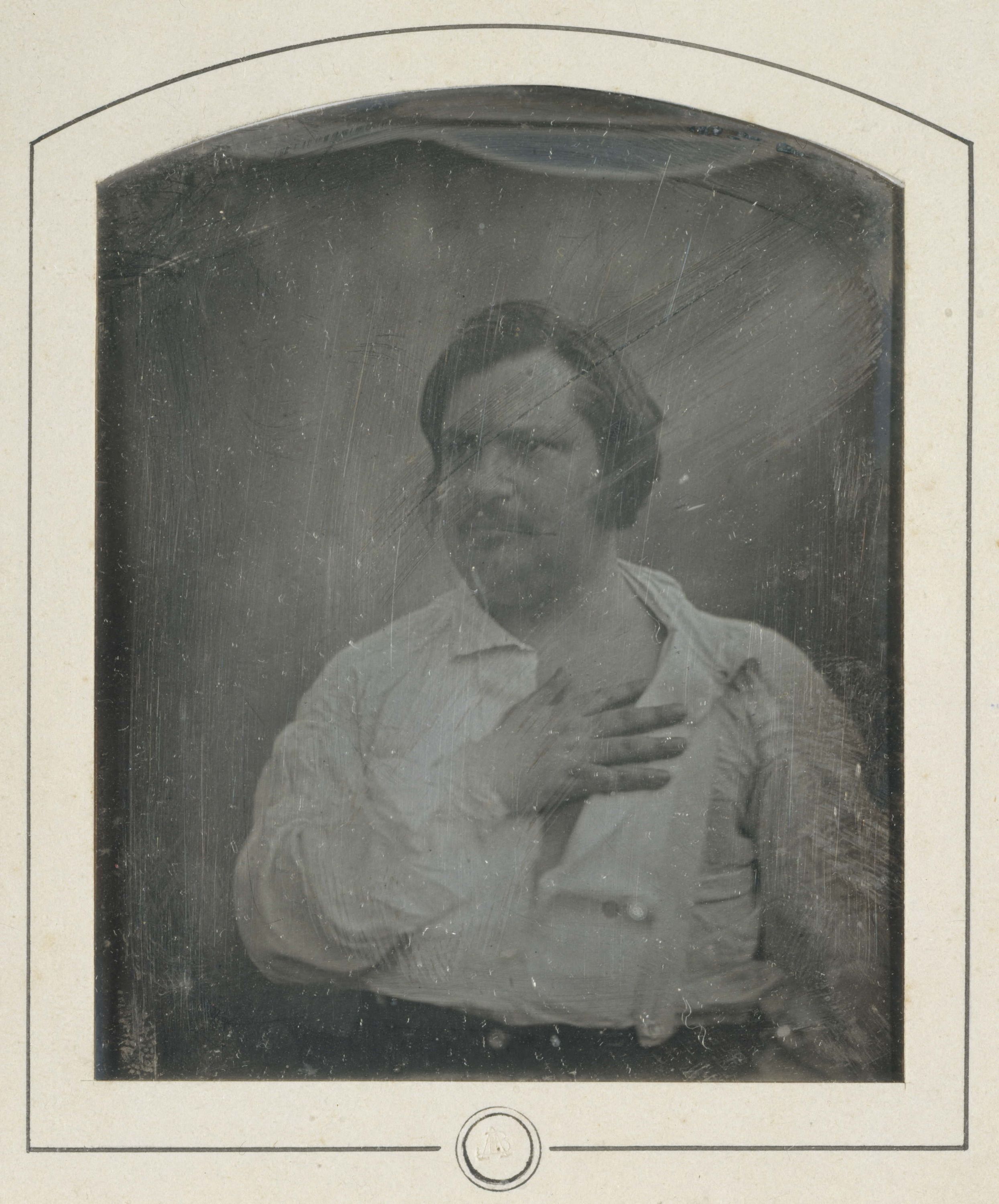
Louis-Auguste Bisson, Balzac (1842). The portrait provides a surviving example of the medium Nadar writes about.
Louis-Auguste Bisson. CC0 Paris Musées / Maison de Balzac. · Image source ↗ · CC0
Magica Sexualis by Émile Laurent and Paul Nagour
In Magica Sexualis, Émile Laurent and Paul Nagour describe a ready-made photograph replacing a likeness fashioned by hand. Circulating portraits of performers, writers and artists make a likeness available even to a stranger. [6][7][8]
The compilers attribute an older theory of images to Paracelsus and bring it into contact with ideas associated with Rochas and Jules Lermina. They point to Lermina’s novel L’Envoûteur for the hypothesis that something of the photographer’s subject remains in the plate. [7]
The chronological limit
The Metropolitan Museum dates the public disclosure of Daguerre’s process to 1839. The woodcut of Paracelsus is dated 1538. The order of those dates helps locate the compilers’ argument: they apply a claim about older images to a nineteenth-century medium. [2][3]
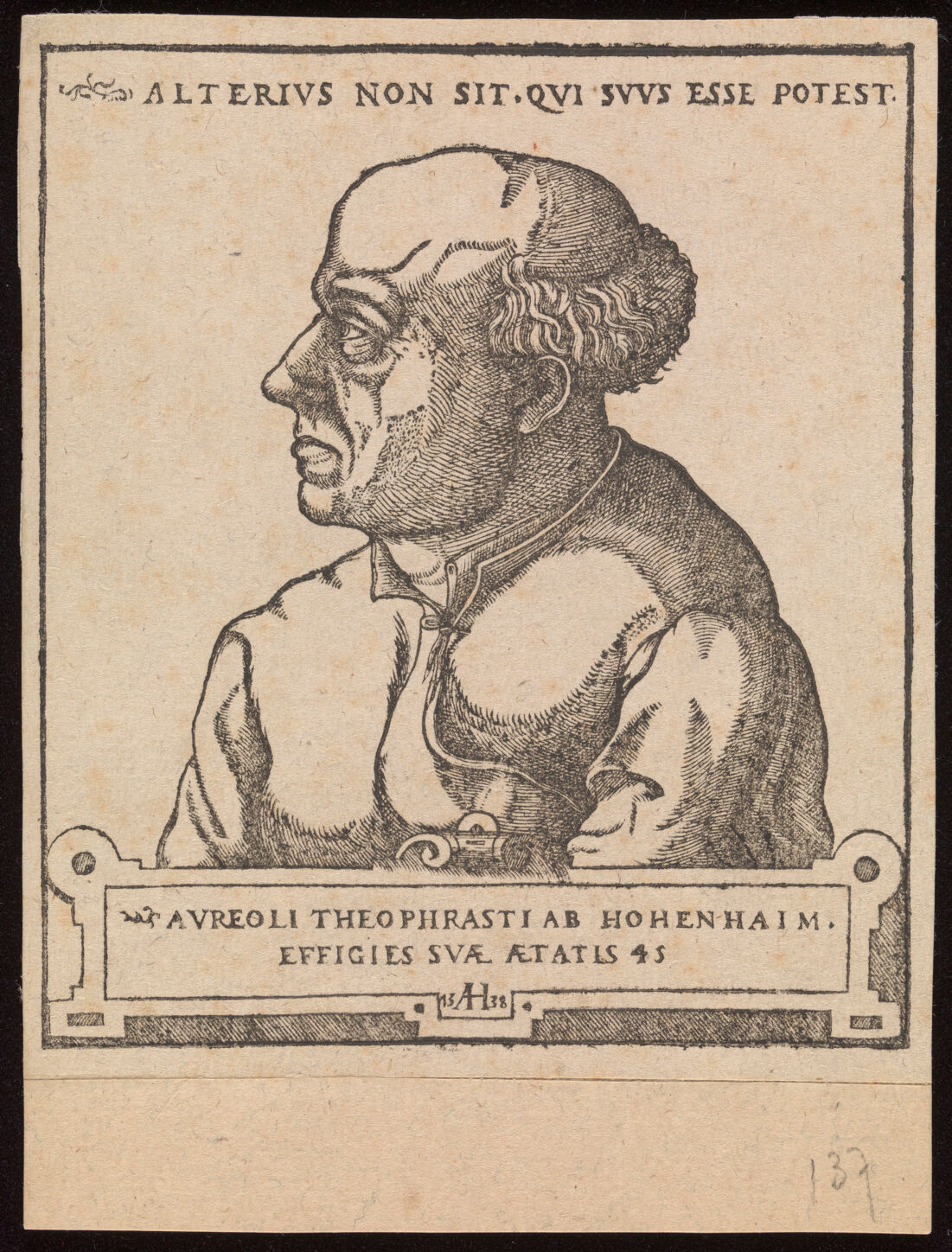
Woodcut of Paracelsus dated 1538 in the Wellcome Collection.
Wellcome Collection, 2200305i, image L0078809. Public Domain. · Image source ↗ · Public Domain
A trace taken at exposure and a link used later
Nadar recalls a theory of something being lost at the moment of exposure. Laurent and Nagour explore what a person might later do with the picture. Loss at the sitting and a continuing link to the sitter are two distinct claims. [7][1]
Read further in the library
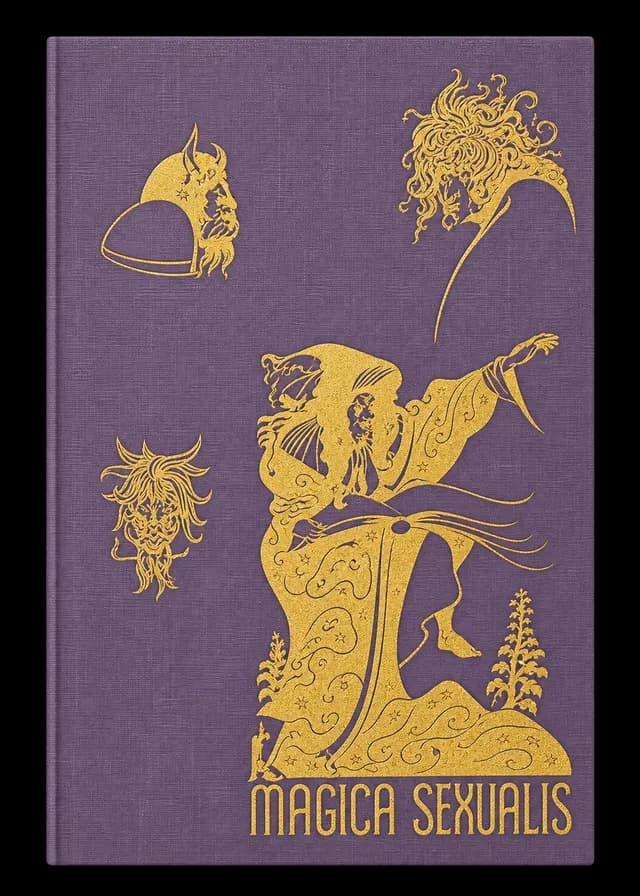
Magica Sexualis
Reading note
The separately titled account draws on exact passages in the consulted Library edition.
Sources
See references (9)
- Nadar, Quand j’étais photographe, Balzac et le daguerréotype, printed pages 6–7 ↗Nadar, Quand j’étais photographe, Paris: Ernest Flammarion, 1900. The chapter Balzac et le daguerréotype directly read in the French Wikisource transcription, with retained page-boundary spans identifying printed6–7. Own paraphrase. No Library reader equivalence, original Balzac text or new facsimile-image verification claimed. Nadar leaves the sincerity of Balzac’s fear open.Return to text ↑
- Malcolm Daniel, Daguerre and the Invention of Photography, Metropolitan Museum of Art ↗Malcolm Daniel, Department of Photographs, The Metropolitan Museum of Art, October 2004. Directly consulted museum account: demonstrations in January 1839 and process explained publicly in August 1839. Does not support assigning photographic procedures to a sixteenth-century writer.Return to text ↑
- Wellcome Collection: Paracelsus, woodcut by A. Hirschvogel, 1538 ↗Wellcome API request for legacy identifier xdha4ax4 resolves to canonical work fdnjrmkz. A. Hirschvogel, woodcut of Paracelsus, 1538; reference 2200305i, image L0078809. DigitalLocation explicitly Public Domain Mark. Actual derivative inspected, including 1538 inscription.Return to text ↑
- Magica Sexualis, printed p. 102, Reader page 110Émile Laurent and Paul Nagour, Magica Sexualis, privately printed by Falstaff Press Inc., New York, undated inspected edition. Exact original Library edition IMJ-0105-E001. The work is a historical compilation; its quoted fiction, trial allegations and medical interpretations are not treated as independently verified facts. Current Reader positions are mapped separately from printed pagination.Read this page in Magica Sexualis ↗Return to text ↑
- Magica Sexualis, printed p. 103, Reader page 111Émile Laurent and Paul Nagour, Magica Sexualis, privately printed by Falstaff Press Inc., New York, undated inspected edition. Exact original Library edition IMJ-0105-E001. The work is a historical compilation; its quoted fiction, trial allegations and medical interpretations are not treated as independently verified facts. Current Reader positions are mapped separately from printed pagination.Read this page in Magica Sexualis ↗Return to text ↑
- Magica Sexualis, Reader page 115Émile Laurent and Paul Nagour, Magica Sexualis, privately printed by Falstaff Press Inc., New York, undated inspected edition. Exact original Library edition IMJ-0105-E001. The work is a historical compilation; its quoted fiction, trial allegations and medical interpretations are not treated as independently verified facts. Current Reader positions are mapped separately from printed pagination.Read this page in Magica Sexualis ↗Return to text ↑
- Magica Sexualis, Reader page 117Émile Laurent and Paul Nagour, Magica Sexualis, privately printed by Falstaff Press Inc., New York, undated inspected edition. Exact original Library edition IMJ-0105-E001. The work is a historical compilation; its quoted fiction, trial allegations and medical interpretations are not treated as independently verified facts. Current Reader positions are mapped separately from printed pagination.Read this page in Magica Sexualis ↗Return to text ↑
- Magica Sexualis, Reader page 118Émile Laurent and Paul Nagour, Magica Sexualis, privately printed by Falstaff Press Inc., New York, undated inspected edition. Exact original Library edition IMJ-0105-E001. The work is a historical compilation; its quoted fiction, trial allegations and medical interpretations are not treated as independently verified facts. Current Reader positions are mapped separately from printed pagination.Read this page in Magica Sexualis ↗Return to text ↑
- Louis-Auguste Bisson, Balzac, daguerreotype, 1842, Paris Musées / Maison de Balzac ↗Louis-Auguste Bisson. CC0 Paris Musées / Maison de Balzac.Return to text ↑