Peaches of Immortality
In Chinese mythology, peaches from the Queen Mother of the West’s orchard confer long life. Sun Wukong is put in charge of the trees and eats the best fruit.
In this article
What are the peaches of immortality?
The peaches of immortality grow in the orchard of Xiwangmu, the Queen Mother of the West. They are gifts of long life in Chinese mythology. A peach can express the same wish in art and at a birthday celebration, where it evokes the power associated with her orchard. [1][2][3]
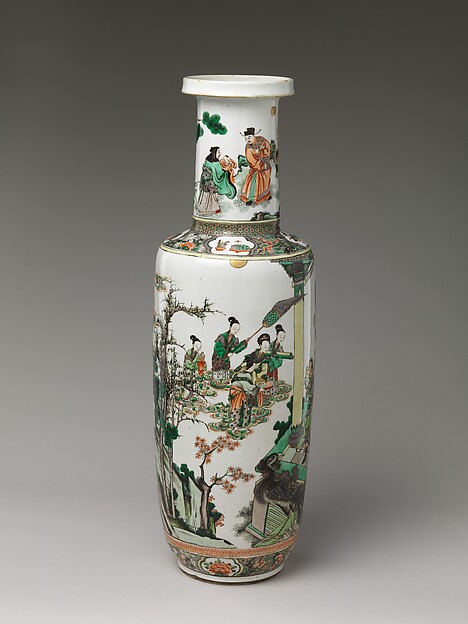
On this Qing vase an attendant offers a bowl of peaches as Xiwangmu arrives with her entourage. The subject suited a birthday celebration.
Vase with Immortals Offering the Peaches of Longevity. Qing dynasty (1644–1911), Kangxi period (1662–1722). The Metropolitan Museum of Art. Bequest of Benjamin Altman, 1913. Public domain. · Image source ↗ · Public Domain
In The Chinese Fairy Book
In Richard Wilhelm’s The Chinese Fairy Book, translated by Frederick H. Martens, the Queen Mother shares her peaches with immortals who arrive in dragon-drawn carriages. She serves King Mu rock marrow and fruit from jade trees, and teaches him a formula for long life. [3]
The orchard has three crops. The peaches that ripen in three thousand years give health, those that take six thousand years preserve youth, and those that take nine thousand years grant a life as long as Heaven itself. When the fairies come to pick the fruit for a banquet, they find only one half-ripe peach in the last row. [4][5]
Sun Wukong also drinks the banquet’s nectar and consumes Laotzse’s pills of life. The retelling later presents the effects together, as the heavenly court finds itself unable to punish him in the usual way. [6][7]
A gift of long life
On the Qing vase, an attendant lifts a bowl of peaches as Xiwangmu and her entourage arrive. A vessel like this was suited to a birthday reception. The image offers long life as a wish for the guest, drawing on the same orchard where Sun Wukong helps himself to it. [2][3][4][5]
In the library
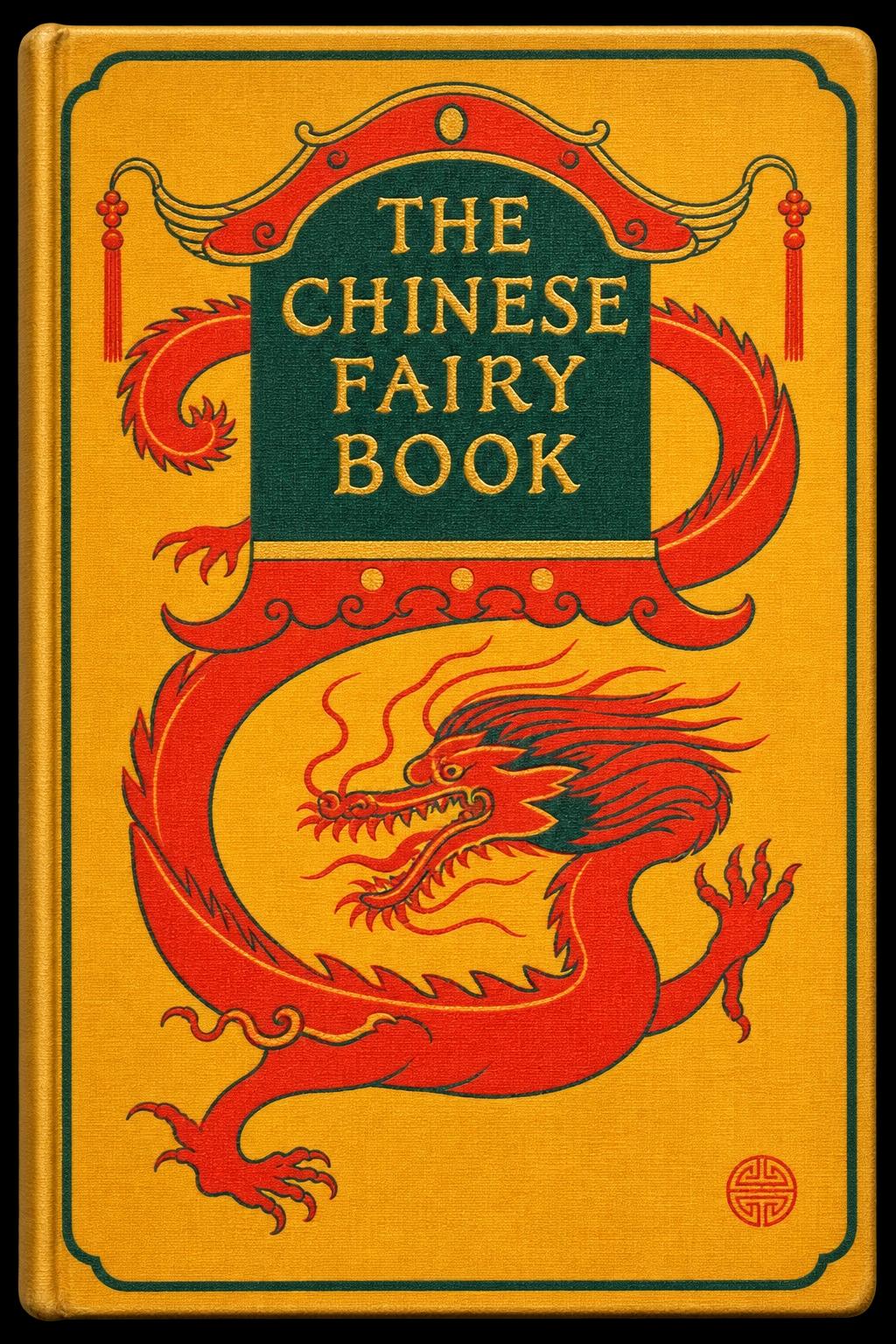
The Chinese Fairy Book
Reading note
Compare the fruit shared at the Queen Mother’s palace with the three crops the Monkey King finds in her orchard.
Sources
See references (7)
- Longevity in Chinese Art ↗The Metropolitan Museum of Art
- Vase with Immortals Offering the Peaches of Longevity ↗Vase with Immortals Offering the Peaches of Longevity. Qing dynasty (1644–1911), Kangxi period (1662–1722). The Metropolitan Museum of Art. Bequest of Benjamin Altman, 1913. Public domain.
- The Chinese Fairy Book, Library Reader page 114Richard Wilhelm, editor. Frederick H. Martens, translator. The Chinese Fairy Book. Frederick A. Stokes Company, New York, 1921. Lumitheca Library edition IMJ-0478-E002.Read this page in The Chinese Fairy Book ↗
- The Chinese Fairy Book, Library Reader page 339Richard Wilhelm, editor. Frederick H. Martens, translator. The Chinese Fairy Book. Frederick A. Stokes Company, New York, 1921. Lumitheca Library edition IMJ-0478-E002.Read this page in The Chinese Fairy Book ↗
- The Chinese Fairy Book, Library Reader page 340Richard Wilhelm, editor. Frederick H. Martens, translator. The Chinese Fairy Book. Frederick A. Stokes Company, New York, 1921. Lumitheca Library edition IMJ-0478-E002.Read this page in The Chinese Fairy Book ↗
- The Chinese Fairy Book, Library Reader page 341Richard Wilhelm, editor. Frederick H. Martens, translator. The Chinese Fairy Book. Frederick A. Stokes Company, New York, 1921. Lumitheca Library edition IMJ-0478-E002.Read this page in The Chinese Fairy Book ↗
- The Chinese Fairy Book, Library Reader page 347Richard Wilhelm, editor. Frederick H. Martens, translator. The Chinese Fairy Book. Frederick A. Stokes Company, New York, 1921. Lumitheca Library edition IMJ-0478-E002.Read this page in The Chinese Fairy Book ↗