The Nine-Headed Bird
In a Chinese fairy tale, a bird with nine heads holds a princess in a cliffside cave. Its missing tenth head gives her a chance to help her rescuer.
In this article
What is the Nine-Headed Bird?
The Nine-Headed Bird keeps a princess captive in a cliffside cave in a Chinese fairy tale. It once had ten heads. The princess has to tend the injury where one was bitten off. She waits with her rescuer until the other heads fall asleep. [3][4]
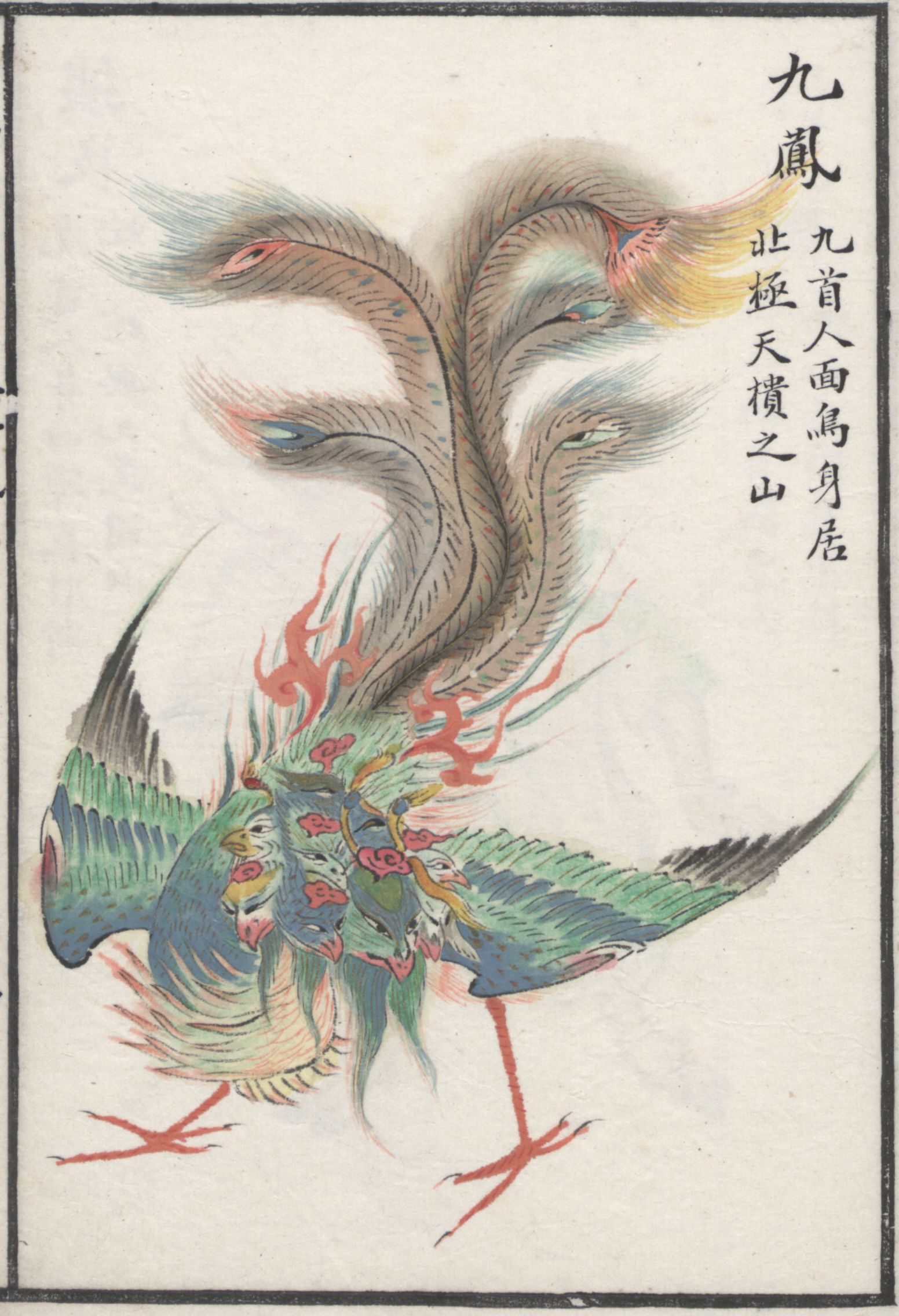
The Qing image depicts Jiufeng from the Classic of Mountains and Seas, a comparison for the fairy tale’s cave-dwelling bird.
Unidentified artist. Jiu feng (Nine-Headed Phoenix), detail. Qing dynasty. Library of Congress, World Digital Library. Cropped reproduction via Wikimedia Commons. Public Domain. · Image source ↗ · Public Domain
In The Chinese Fairy Book
In The Chinese Fairy Book, edited by Richard Wilhelm and translated by Frederick H. Martens, the hound of heaven has bitten off the bird’s tenth head. As the princess tends the wound, the remaining heads fall asleep one by one. The young man hiding inside the cave kills the bird. Before she goes back up in the basket, the princess splits her hairpin and silk kerchief so that they can recognise one another later. [3]
His companions leave him in the cave. After freeing the dragon king’s son, he reaches the dragon palace with a pearl that parts the sea and returns to the city with a wish-granting gourd. The princess spots the half-kerchief he carries. She proves who he is by fitting the two pieces of her hairpin together. [4][5][6]
How the cave bird compares with Jiufeng
The Northern Classic of the Great Wilderness places Jiufeng, a bird with nine human faces, on a mountain in the far north. A Qing illustration makes the nine faces visible. The fairy tale gives the number a different role. One head is gone, and the princess knows what the remaining heads do while she dresses the wound. [1][2][3]
In the library
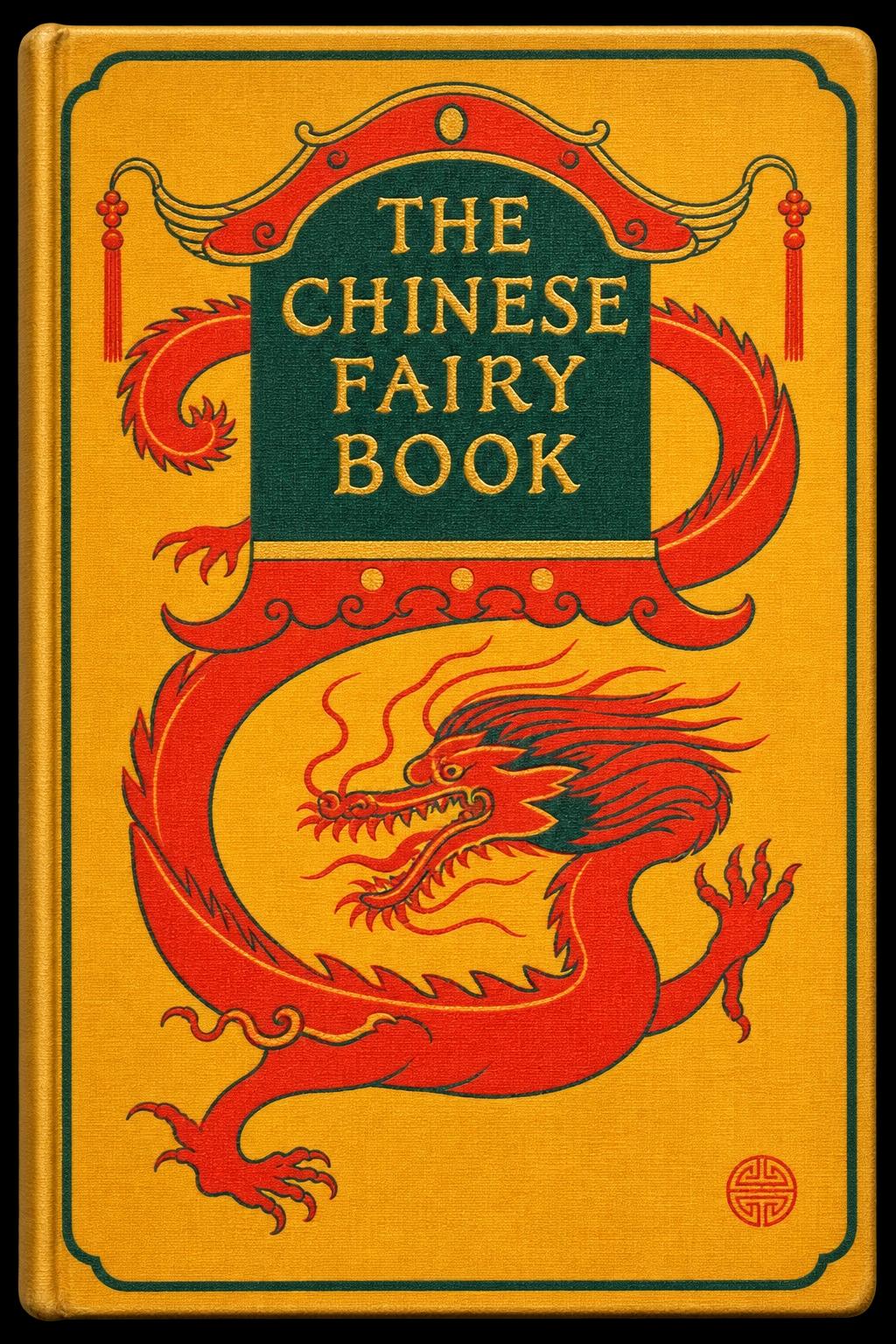
The Chinese Fairy Book
Reading note
Follow the broken hairpin from the cave to the princess’s recognition of her rescuer.
Sources
See references (6)
- Northern Classic of the Great Wilderness, Jiufeng passage ↗Chinese Text Project
- Jiu feng (Nine-Headed Phoenix), detail ↗Unidentified artist. Jiu feng (Nine-Headed Phoenix), detail. Qing dynasty. Library of Congress, World Digital Library. Cropped reproduction via Wikimedia Commons. Public Domain.
- The Chinese Fairy Book, Library Reader page 26Richard Wilhelm, editor. Frederick H. Martens, translator. The Chinese Fairy Book. Frederick A. Stokes Company, New York, 1921. Lumitheca Library edition IMJ-0478-E002.Read this page in The Chinese Fairy Book ↗
- The Chinese Fairy Book, Library Reader page 27Richard Wilhelm, editor. Frederick H. Martens, translator. The Chinese Fairy Book. Frederick A. Stokes Company, New York, 1921. Lumitheca Library edition IMJ-0478-E002.Read this page in The Chinese Fairy Book ↗
- The Chinese Fairy Book, Library Reader page 28Richard Wilhelm, editor. Frederick H. Martens, translator. The Chinese Fairy Book. Frederick A. Stokes Company, New York, 1921. Lumitheca Library edition IMJ-0478-E002.Read this page in The Chinese Fairy Book ↗
- The Chinese Fairy Book, Library Reader page 29Richard Wilhelm, editor. Frederick H. Martens, translator. The Chinese Fairy Book. Frederick A. Stokes Company, New York, 1921. Lumitheca Library edition IMJ-0478-E002.Read this page in The Chinese Fairy Book ↗