Mystical marriage
Mystical marriage describes the soul’s enduring union with God. Read Teresa of Ávila’s distinction between spiritual betrothal and marriage.
In this article
Understanding mystical marriage
Mystical marriage is a way of describing the soul’s union with God through the language of marriage. Teresa of Ávila uses the image for an enduring relationship in the innermost part of the soul. Its language can also describe a vision or an experience of divine presence, depending on the writer. [1]
Teresa and other accounts
The Interior Castle by Teresa of Avila
In The Interior Castle, Seventh Mansions, chapter 2, Teresa of Ávila distinguishes spiritual marriage from betrothal and passing union. Two candles can share a flame and later be separated. Rain falling into a river expresses the more lasting union she means by marriage. She places that union in the soul’s innermost centre. [1]
Teresa also says a person can still suffer and struggle outside that centre. The peace she describes does not guarantee salvation or remove the possibility of offending God. [1]
A different saint in the marriage image
Giovanni di Paolo depicts a different saint in The Mystic Marriage of Saint Catherine of Siena. Catherine kneels before Christ among a heavenly company. The painting shows how the marriage analogy could be made visible. [2]
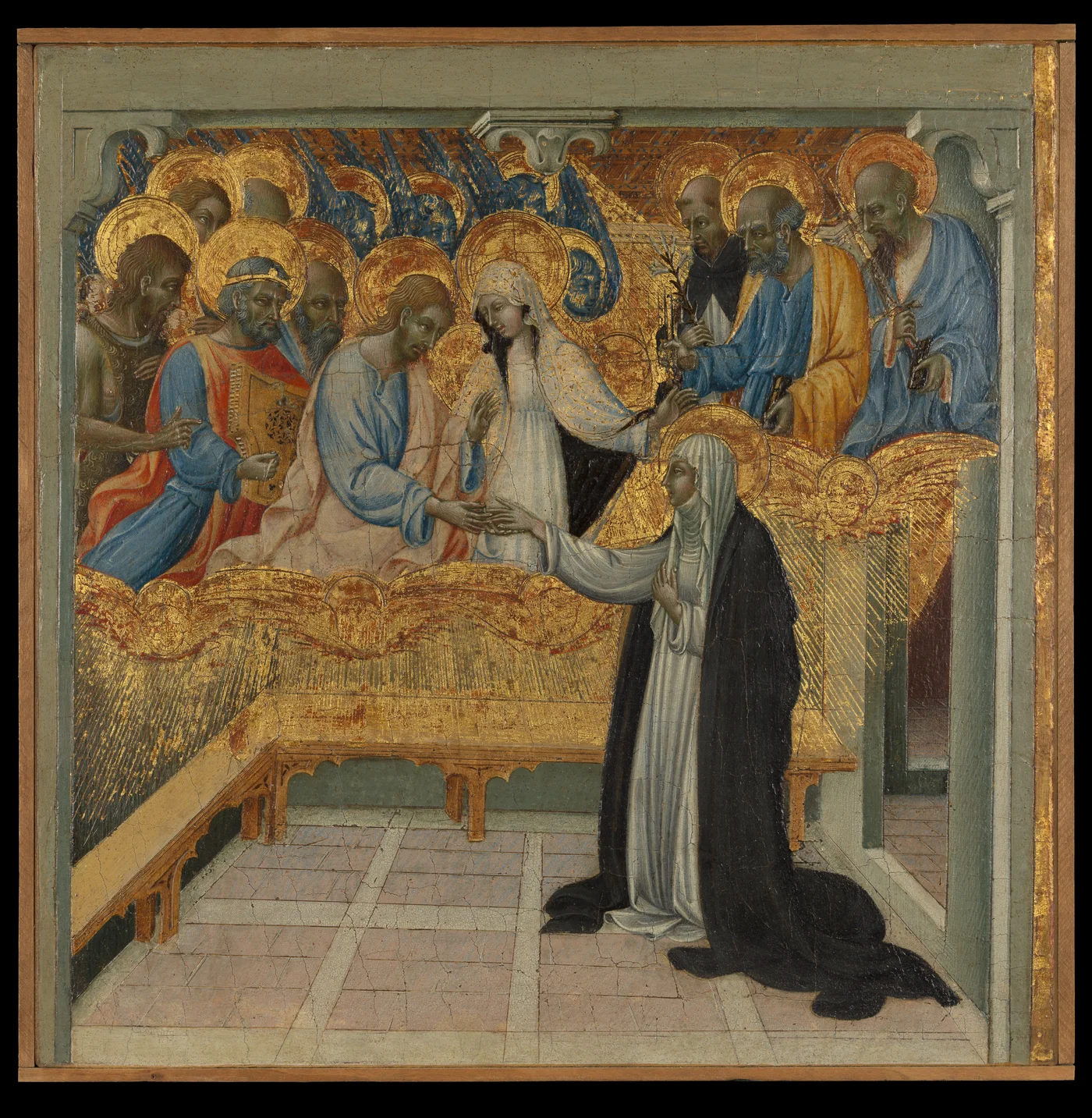
Giovanni di Paolo, The Mystic Marriage of Saint Catherine of Siena. Catherine kneels before Christ.
The Metropolitan Museum of Art, 1997.117.2. Bequest of Lore Heinemann, in memory of her husband, Dr. Rudolf J. Heinemann, 1996. CC0. · Image source ↗ · CC0
Magica Sexualis by Émile Laurent and Paul Nagour
In Magica Sexualis, Émile Laurent and Paul Nagour collect references to spiritual lovers, wounds of love and marriage to the Holy Lamb. They read these alongside Bernini’s sculpture of Teresa through a theory that links religious ecstasy with sexual excitation. The sculpture and the stories are evidence for the compilers’ selection and interpretation. [3][4][5]
Teresa’s analogy and the later reading of ecstasy
Teresa uses marriage to describe a lasting inward union and explicitly separates it from bodily partnership. Laurent and Nagour group accounts of rapture through the bodily explanation they favour. Teresa’s distinction between betrothal and marriage makes clear that her explanation concerns more than the strength of a moment’s feeling. [3][4][1][5]
Read further in the library
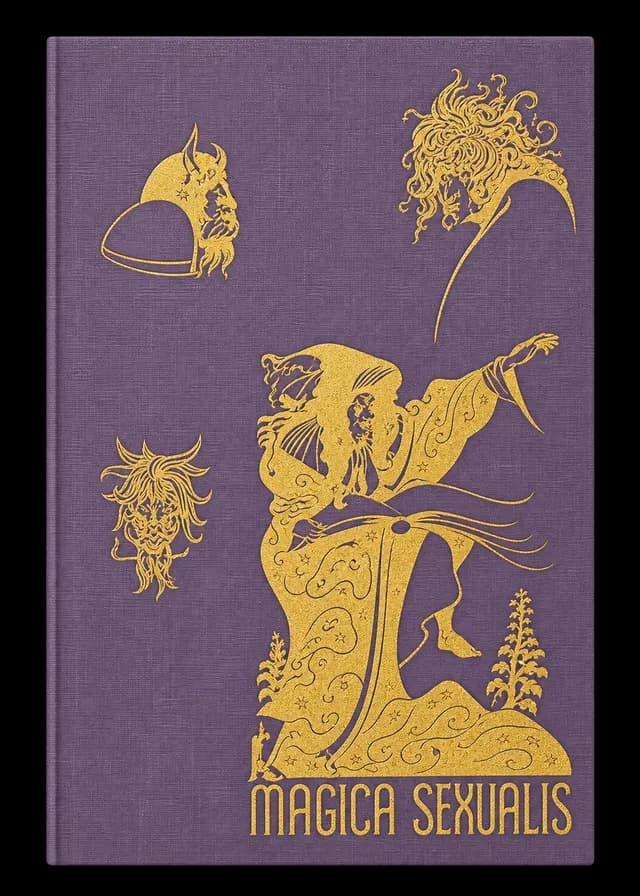
Magica Sexualis
Reading note
The separately titled account draws on exact passages in the consulted Library edition.
Sources
See references (5)
- Teresa of Ávila, The Interior Castle, Seventh Mansions, ch. 2, §§ 1–5 and 12–15, Benedictines of Stanbrook trans., 3rd ed. (1921) ↗Translated by the Benedictines of Stanbrook, revised by Benedict Zimmerman, 1921 third edition. Christian Classics Ethereal Library.Return to text ↑
- The Metropolitan Museum of Art: The Mystic Marriage of Saint Catherine of Siena ↗Giovanni di Paolo, The Mystic Marriage of Saint Catherine of Siena, tempera and gold on wood, accession 1997.117.2. Bequest of Lore Heinemann, in memory of her husband, Dr. Rudolf J. Heinemann, 1996. Official museum API isPublicDomain true. Actual image inspected. It depicts Catherine of Siena, not Teresa of Avila, and is not an illustration of Teresa’s exact account.Return to text ↑
- Magica Sexualis, Reader page 234Émile Laurent and Paul Nagour, Magica Sexualis, privately printed by Falstaff Press Inc., New York, undated inspected edition. Exact original Library edition IMJ-0105-E001. The work is a historical compilation; its quoted fiction, trial allegations and medical interpretations are not treated as independently verified facts. Current Reader positions are mapped separately from printed pagination.Read this page in Magica Sexualis ↗Return to text ↑
- Magica Sexualis, Reader page 235Émile Laurent and Paul Nagour, Magica Sexualis, privately printed by Falstaff Press Inc., New York, undated inspected edition. Exact original Library edition IMJ-0105-E001. The work is a historical compilation; its quoted fiction, trial allegations and medical interpretations are not treated as independently verified facts. Current Reader positions are mapped separately from printed pagination.Read this page in Magica Sexualis ↗Return to text ↑
- Magica Sexualis, Reader page 236Émile Laurent and Paul Nagour, Magica Sexualis, privately printed by Falstaff Press Inc., New York, undated inspected edition. Exact original Library edition IMJ-0105-E001. The work is a historical compilation; its quoted fiction, trial allegations and medical interpretations are not treated as independently verified facts. Current Reader positions are mapped separately from printed pagination.Read this page in Magica Sexualis ↗Return to text ↑