Mount Kunlun
In Chinese mythology, Mount Kunlun lies in the far west. King Mu reaches its summit before crossing the Weak River to visit the Queen Mother of the West.
In this article
What is mythical Mount Kunlun?
Mount Kunlun is a mountain in the mythical west of Chinese tradition. It is associated with the Queen Mother of the West and the search for long life. In King Mu’s tale, the mountain lets the traveller see what lies farther along the route. [1][4][5]
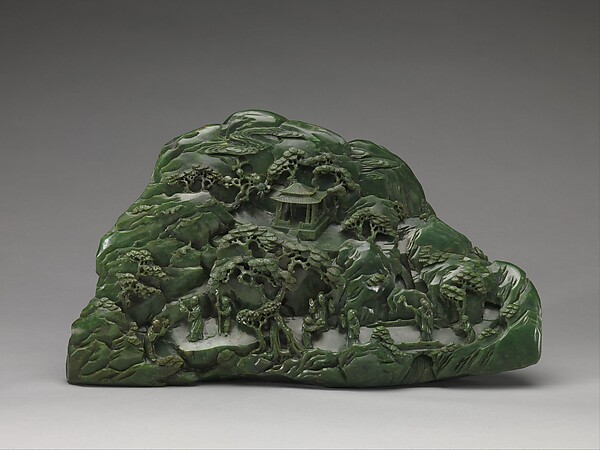
A Qing jade boulder presents a Daoist mountain paradise. The scene offers a visual comparison with the book’s western landscape.
Boulder with Daoist paradise. 18th century. The Metropolitan Museum of Art. Gift of Heber R. Bishop, 1902. Public Domain. · Image source ↗ · Public Domain
In The Chinese Fairy Book
In Richard Wilhelm’s The Chinese Fairy Book, translated by Frederick H. Martens, King Mu first travels with a magician and sees a palace high above the clouds. When he returns to his own hall, his food is still warm. The magician describes that journey as travel in spirit. The king later sets out with a team of horses and camps on the slope of Kunlun. [3][4]
From the summit, King Mu can see the castle of the Lord of the Yellow Earth. The route to the Queen Mother takes him across the Weak River, where boats sink. Fish and other creatures come together to form a bridge. He crosses to the Springs of Jade, where the Queen Mother welcomes him. [4][5]
How art makes a paradise visible
On the Qing jade boulder, figures pass among pines, a pavilion and mountain peaks. The Met identifies the scene as a Daoist paradise. The carving lets the eye pass through the landscape at its own pace, much as King Mu’s story follows the discoveries he makes as he goes. [2][4][5]
In the library
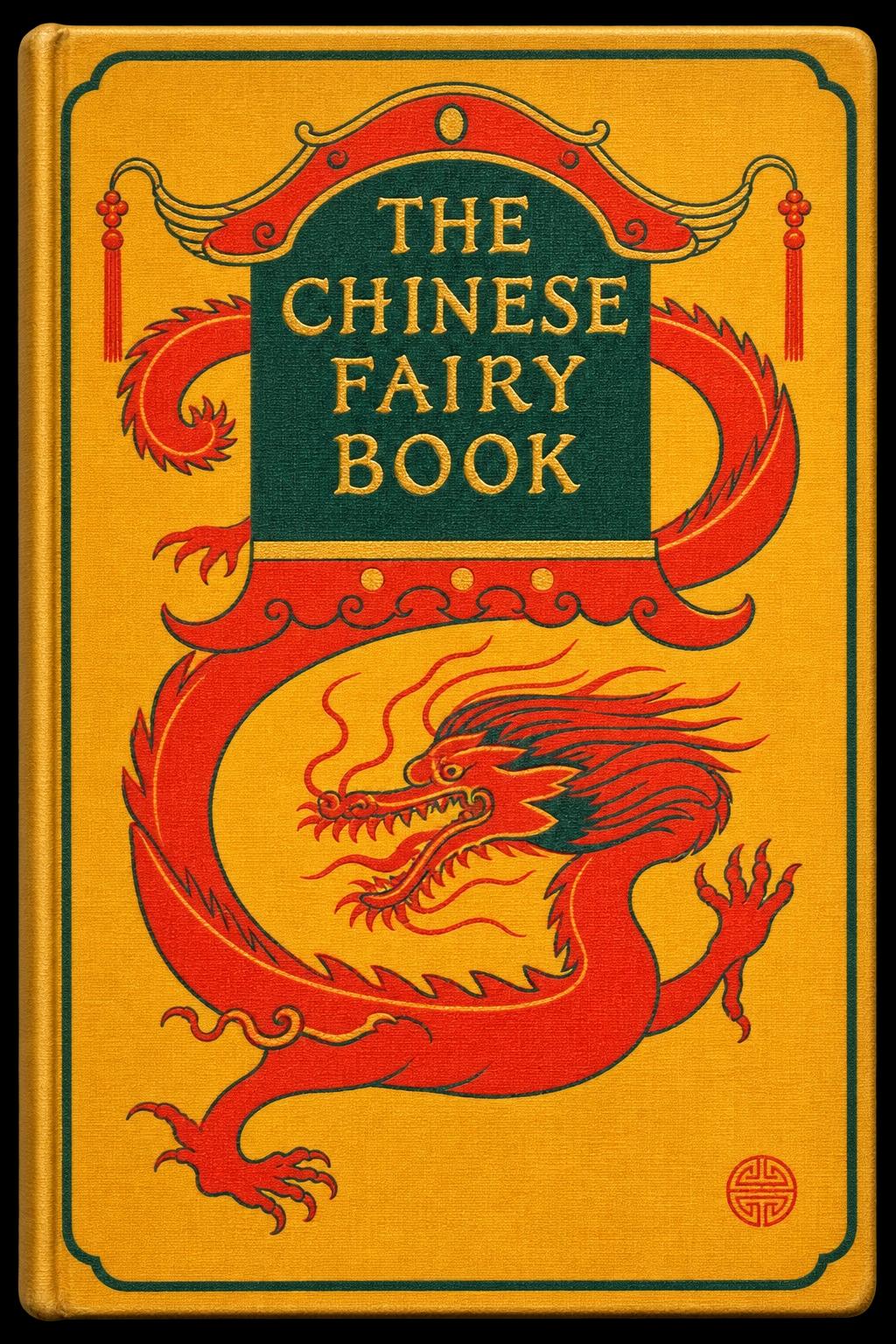
The Chinese Fairy Book
Reading note
Follow King Mu from his camp on Kunlun to the bridge across the Weak River.
Sources
See references (5)
- Queen Mother of the West ↗The Metropolitan Museum of Art
- Boulder with Daoist paradise ↗Boulder with Daoist paradise. 18th century. The Metropolitan Museum of Art. Gift of Heber R. Bishop, 1902. Public Domain.
- The Chinese Fairy Book, Library Reader page 112Richard Wilhelm, editor. Frederick H. Martens, translator. The Chinese Fairy Book. Frederick A. Stokes Company, New York, 1921. Lumitheca Library edition IMJ-0478-E002.Read this page in The Chinese Fairy Book ↗
- The Chinese Fairy Book, Library Reader page 113Richard Wilhelm, editor. Frederick H. Martens, translator. The Chinese Fairy Book. Frederick A. Stokes Company, New York, 1921. Lumitheca Library edition IMJ-0478-E002.Read this page in The Chinese Fairy Book ↗
- The Chinese Fairy Book, Library Reader page 114Richard Wilhelm, editor. Frederick H. Martens, translator. The Chinese Fairy Book. Frederick A. Stokes Company, New York, 1921. Lumitheca Library edition IMJ-0478-E002.Read this page in The Chinese Fairy Book ↗