The Moon Rabbit
In Chinese stories, the moon rabbit grinds herbs beside Chang’e’s palace. In a Buddhist birth story, a hare’s generosity earns its image a place on the moon.
In this article
What is the Chinese moon rabbit?
The moon rabbit, also called the Jade Rabbit, is a hare or rabbit pictured on the moon with the goddess Chang’e. In Chinese art it often works at a mortar. The Met describes its task as preparing ingredients for the elixir of immortality. [2][3][4]
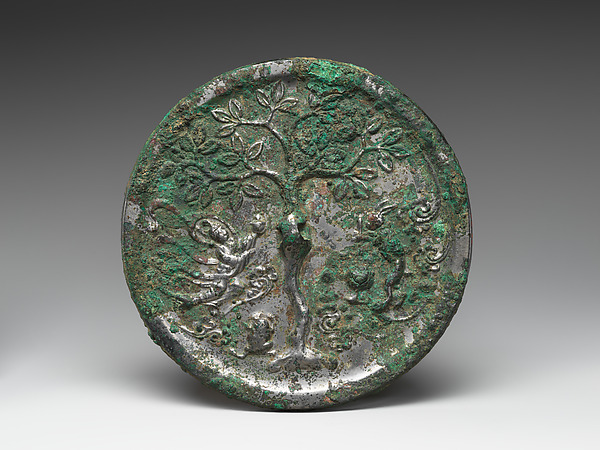
The reverse of a Tang mirror pictures the lunar rabbit with its mortar alongside Chang’e and the toad.
Mirror with moon goddess and rabbit. 8th–9th century. The Metropolitan Museum of Art. Rogers Fund, 1925. Public Domain. · Image source ↗ · Public Domain
In The Chinese Fairy Book
In Richard Wilhelm’s The Chinese Fairy Book, translated by Frederick H. Martens, a Tang emperor visits the lunar palace in mid-autumn. Beneath a cassia tree, he finds a jasper rabbit already at work, grinding herbs in a white marble mortar. [3]
The note gives two possibilities for what the hare grinds. It could be grains associated with ripeness, or the herbs that go into the elixir of life. [4]
In the Sasa Jātaka
In the Sasa Jātaka, translated by H. T. Francis and R. A. Neil, a hare offers itself as food for a hungry guest. The guest is Sakka in disguise. He marks the moon with the hare’s likeness in recognition of its generosity. The Buddha identifies the hare as one of his former lives. Here the mark commemorates a deed. In the Chinese palace, the rabbit has a job to do. [1][3]
In the library
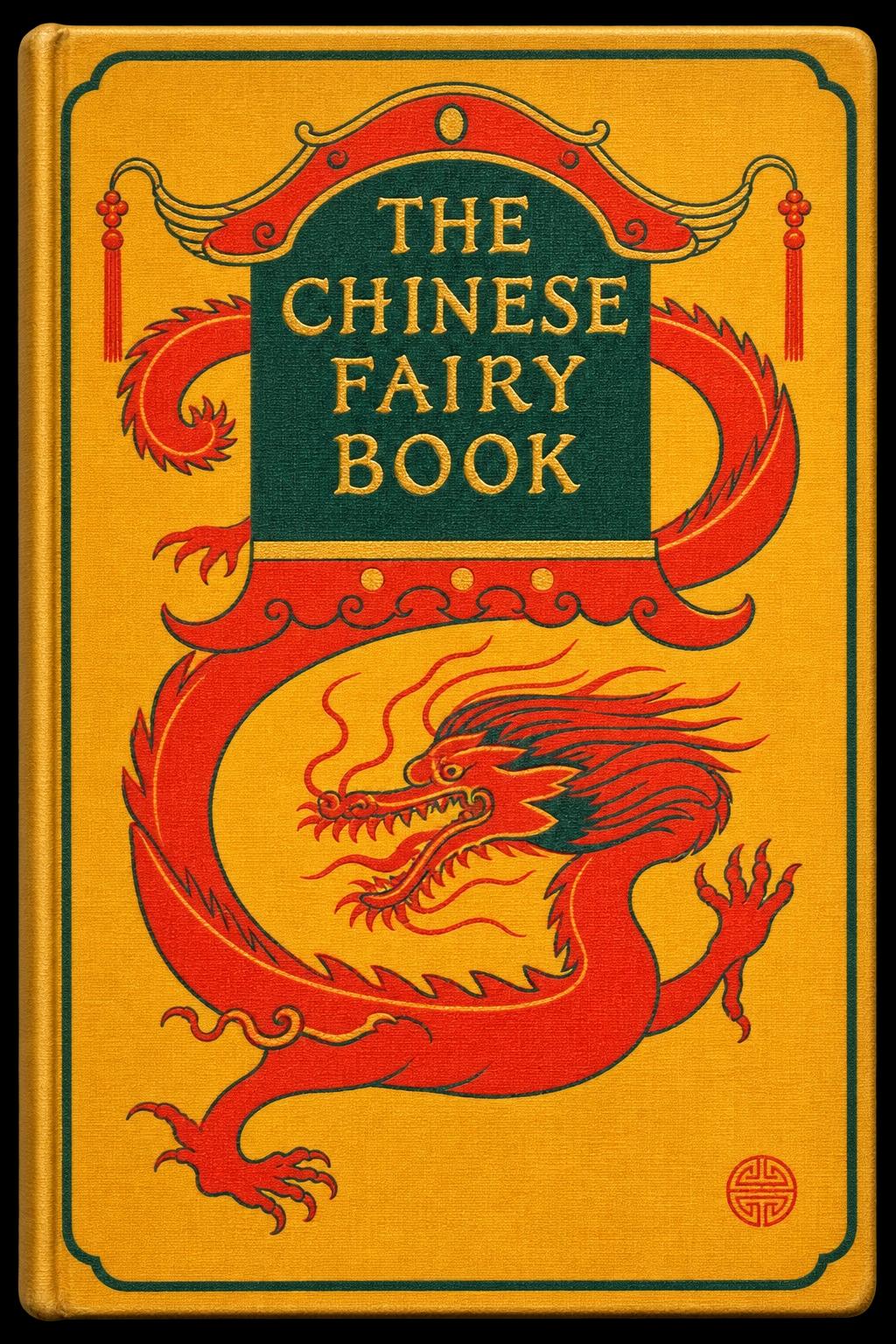
The Chinese Fairy Book
Reading note
Look for the rabbit and its white marble mortar in the emperor’s visit to Chang’e’s palace.
Sources
See references (4)
- Jātaka 316, Sasapaṇḍitajātaka, translated by H. T. Francis and R. A. Neil ↗SuttaCentral
- Mirror with moon goddess and rabbit ↗Mirror with moon goddess and rabbit. 8th–9th century. The Metropolitan Museum of Art. Rogers Fund, 1925. Public Domain.
- The Chinese Fairy Book, Library Reader page 66Richard Wilhelm, editor. Frederick H. Martens, translator. The Chinese Fairy Book. Frederick A. Stokes Company, New York, 1921. Lumitheca Library edition IMJ-0478-E002.Read this page in The Chinese Fairy Book ↗
- The Chinese Fairy Book, Library Reader page 69Richard Wilhelm, editor. Frederick H. Martens, translator. The Chinese Fairy Book. Frederick A. Stokes Company, New York, 1921. Lumitheca Library edition IMJ-0478-E002.Read this page in The Chinese Fairy Book ↗