Moʻo
Moʻo are powerful beings in Hawaiian traditions, often associated with fresh water. Meet Kihawahine of Mokuhinia and the moʻo in Kalākaua’s stories.
In this article
Why are moʻo associated with fresh water?
In Hawaiian moʻolelo, or traditional accounts, a moʻo can be a powerful being in lizard form. Moʻo often appear in connection with pools, streams and ponds. Some guard a particular place or respond to people they know. [1][3][4]
Bishop Museum records that the chiefess Kihawahine was deified after her remains were placed at Mokuhinia, the royal fishpond in Lahaina. On an island in the pond stood Mokuʻula, a residence of ruling chiefs. [1]
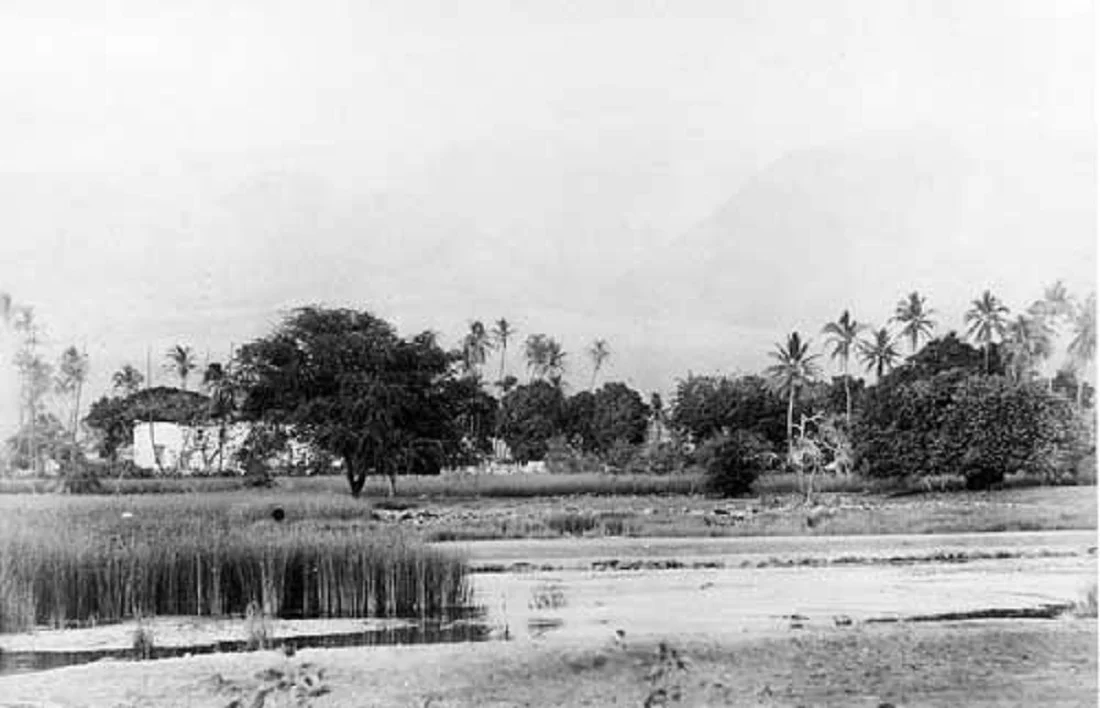
The site of Mokuʻula and Mokuhinia in Lahaina, photographed about 1893. Mokuhinia was the home of the moʻo Kihawahine in the account recorded by Bishop Museum.
Photograph credited to Horner, about 1893. Bernice Pauahi Bishop Museum, via Wikimedia Commons. · Image source ↗ · Public Domain
The Legends and Myths of Hawaii by David Kalākaua
In the Lāʻieikawai chapter of David Kalākaua’s volume, adapted from S. N. Haleʻole, Kahalaomapuana calls on the moʻo Kihanuilulumoku to protect the women at Paliuli. Later he carries her for four months across the water on a search for a husband for Lāʻieikawai. [5][3][6][7][8]
In the Lohiʻau chapter, Hiʻiaka encounters a moʻo whose body blocks a stream. When she reaches Kauaʻi, she learns that two lizard women hold Lohiʻau’s spirit. Each encounter requires her to deal with the beings that control the place she has reached. [4][9][10]
See references (8)
- The Legends and Myths of Hawaii, Reader page 470
- The Legends and Myths of Hawaii, Reader page 491
- The Legends and Myths of Hawaii, Reader page 457
- The Legends and Myths of Hawaii, Reader page 477
- The Legends and Myths of Hawaii, Reader page 479
- The Legends and Myths of Hawaii, Reader page 482
- The Legends and Myths of Hawaii, Reader page 492
- The Legends and Myths of Hawaii, Reader page 493
A guardian of a pond and a protector on a journey
Kihawahine’s story connects a moʻo with a royal fishpond and a chiefly line. In the Lāʻieikawai chapter, Kihanuilulumoku guards the women at Paliuli and then leaves with Kahalaomapuana. The two relationships account for where each moʻo acts. [3][7][1]
Read further in the library
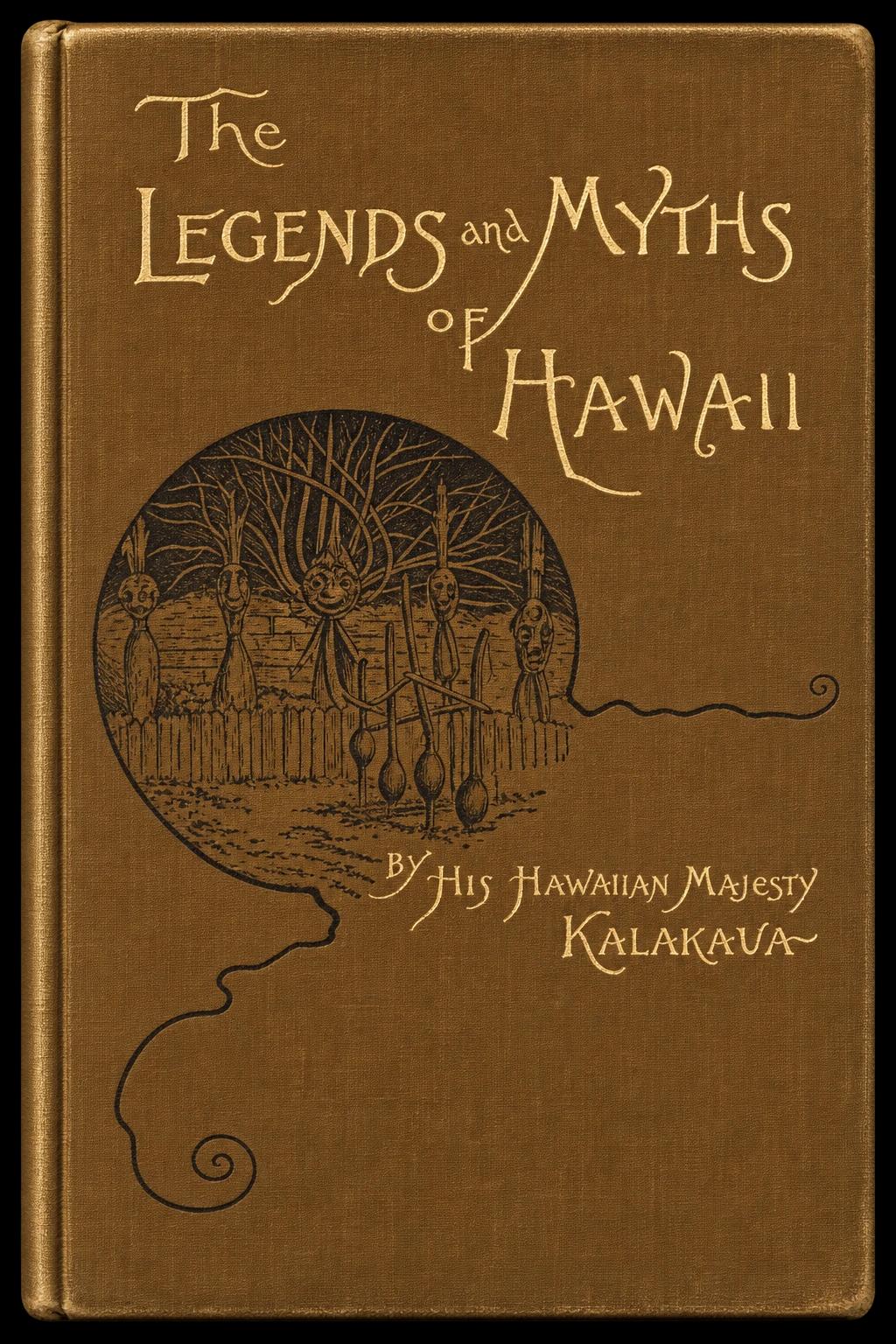
The Legends and Myths of Hawaii
Reading note
The separately titled account draws on exact passages in the consulted Library edition.
Sources
See references (10)
- Kihawahine and Mokuhinia ↗Bishop Museum, Hawaiʻi Alive, account of the chiefess, the moʻo and the royal fishpond.Return to text ↑
- The site of Mokuʻula and Mokuhinia, about 1893 ↗Photograph credited to Horner, about 1893. Bernice Pauahi Bishop Museum, via Wikimedia Commons.
- The Legends and Myths of Hawaii, Reader page 470David Kalākaua, The Legends and Myths of Hawaii, edited with an introduction by Rollin Mallory Daggett, Charles L. Webster & Company, 1888. Exact Library edition IMJ-0646-E001. When the introduction or a signed editorial passage is used, its author is identified in the article.Read this page in The Legends and Myths of Hawaii ↗Return to text ↑
- The Legends and Myths of Hawaii, Reader page 491David Kalākaua, The Legends and Myths of Hawaii, edited with an introduction by Rollin Mallory Daggett, Charles L. Webster & Company, 1888. Exact Library edition IMJ-0646-E001. When the introduction or a signed editorial passage is used, its author is identified in the article.Read this page in The Legends and Myths of Hawaii ↗Return to text ↑
- The Legends and Myths of Hawaii, Reader page 457David Kalākaua, The Legends and Myths of Hawaii, edited with an introduction by Rollin Mallory Daggett, Charles L. Webster & Company, 1888. Exact Library edition IMJ-0646-E001. When the introduction or a signed editorial passage is used, its author is identified in the article.Read this page in The Legends and Myths of Hawaii ↗Return to text ↑
- The Legends and Myths of Hawaii, Reader page 477David Kalākaua, The Legends and Myths of Hawaii, edited with an introduction by Rollin Mallory Daggett, Charles L. Webster & Company, 1888. Exact Library edition IMJ-0646-E001. When the introduction or a signed editorial passage is used, its author is identified in the article.Read this page in The Legends and Myths of Hawaii ↗Return to text ↑
- The Legends and Myths of Hawaii, Reader page 479David Kalākaua, The Legends and Myths of Hawaii, edited with an introduction by Rollin Mallory Daggett, Charles L. Webster & Company, 1888. Exact Library edition IMJ-0646-E001. When the introduction or a signed editorial passage is used, its author is identified in the article.Read this page in The Legends and Myths of Hawaii ↗Return to text ↑
- The Legends and Myths of Hawaii, Reader page 482David Kalākaua, The Legends and Myths of Hawaii, edited with an introduction by Rollin Mallory Daggett, Charles L. Webster & Company, 1888. Exact Library edition IMJ-0646-E001. When the introduction or a signed editorial passage is used, its author is identified in the article.Read this page in The Legends and Myths of Hawaii ↗Return to text ↑
- The Legends and Myths of Hawaii, Reader page 492David Kalākaua, The Legends and Myths of Hawaii, edited with an introduction by Rollin Mallory Daggett, Charles L. Webster & Company, 1888. Exact Library edition IMJ-0646-E001. When the introduction or a signed editorial passage is used, its author is identified in the article.Read this page in The Legends and Myths of Hawaii ↗Return to text ↑
- The Legends and Myths of Hawaii, Reader page 493David Kalākaua, The Legends and Myths of Hawaii, edited with an introduction by Rollin Mallory Daggett, Charles L. Webster & Company, 1888. Exact Library edition IMJ-0646-E001. When the introduction or a signed editorial passage is used, its author is identified in the article.Read this page in The Legends and Myths of Hawaii ↗Return to text ↑