Mermaids
Mermaids are usually pictured as women with fish tails. Read Frank Hamel’s warning-at-sea tale alongside Andersen’s story of a mermaid seeking an immortal soul.
In this article
What is a mermaid?
A mermaid is a water-associated being usually pictured with a woman’s upper body and a fish’s tail. A mermaid can warn humans of danger, draw them into danger or wish to join their world. Her role depends on the story as much as her appearance. [1][2][3]
Mermaids also take different shapes in art. The bronze here gives the figure two curling tails. Andersen’s literary mermaid is more concerned with how changing her body might change the life she can lead. [2][3][4][8][7]
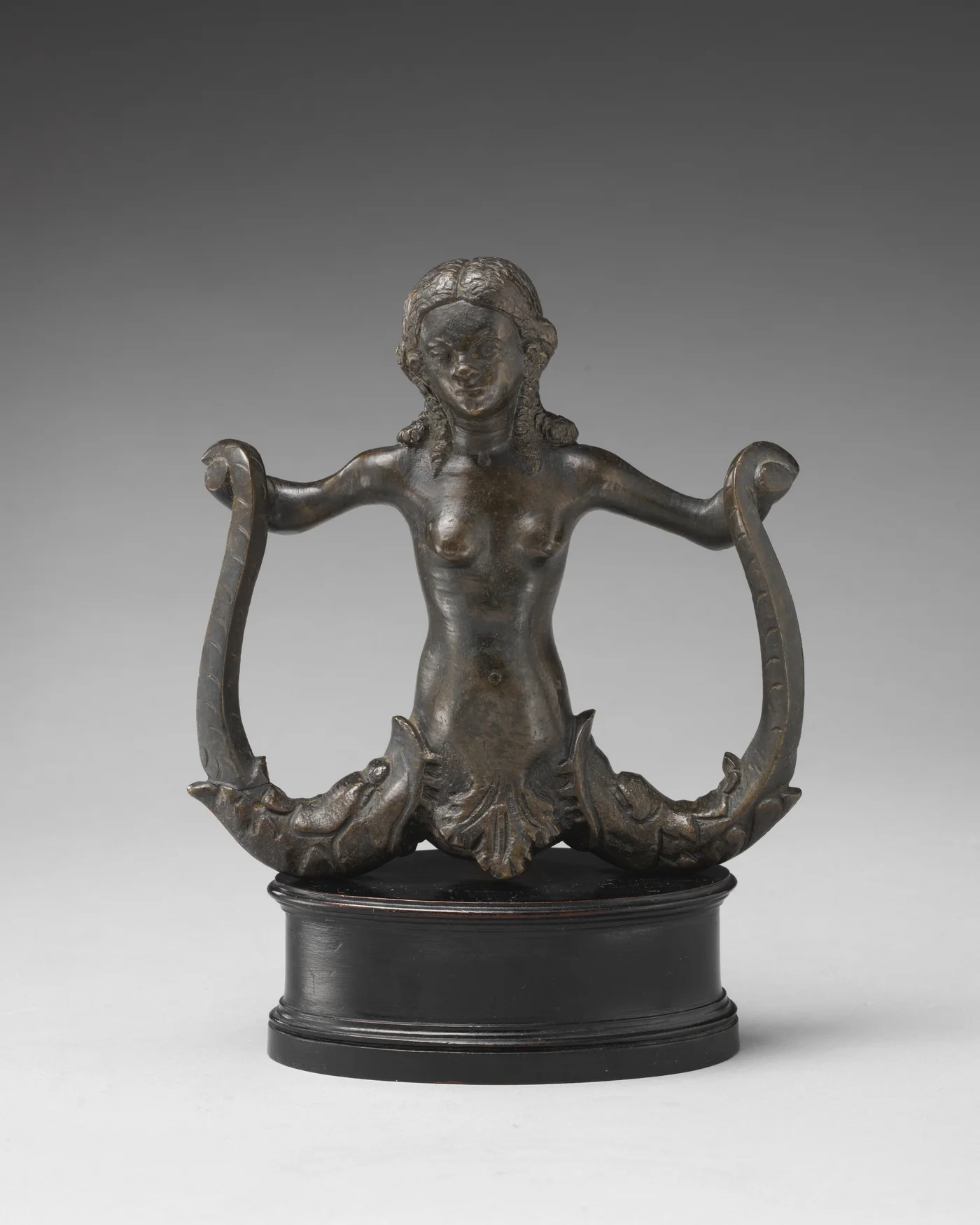
Mermaid, Italian, Padua, first half of the sixteenth century. This bronze uses two curling tails, a different artistic form from the single-tailed mermaid familiar from later pictures.
The Metropolitan Museum of Art. The Friedsam Collection, Bequest of Michael Friedsam, 1931. 32.100.175. Open Access; Public Domain. · Image source ↗ · Public Domain
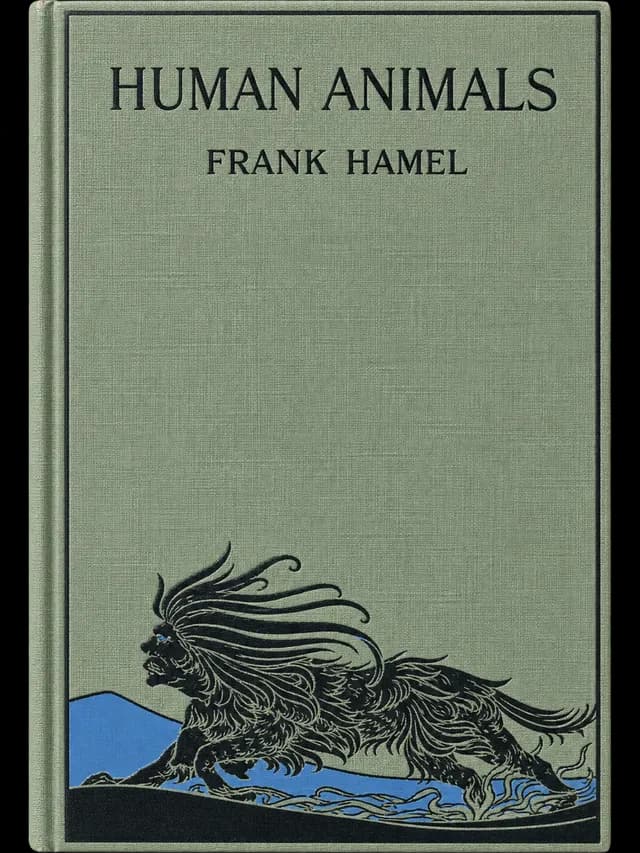
Human Animals by Frank Hamel
Frank Hamel’s Human Animals discusses mermaids among its fish-related transformations. In the Pergrin episode, an act of compassion is repaid with a warning about a storm. The mermaid is a speaking and grateful participant, rather than merely a threatening spectacle. [1][2]
Hamel then retells Hans Christian Andersen’s The Little Mermaid, another story in which the mermaid’s choices matter. Her concern with an immortal soul gives the change of form a purpose as important as her love for the prince. [3][4]
Hamel includes the daughters of the air at the end. This keeps the question of the soul in view after the hoped-for marriage has become impossible. [3][4]
Hans Christian Andersen’s The Little Mermaid
In Hans Christian Andersen’s tale, the mermaid wants to live among humans and gain an immortal soul. The sea witch gives her a human body in exchange for her voice, and every step causes her pain. The prince’s love is meant to be the condition of the new life she seeks. [8]
When the prince marries someone else, the mermaid refuses to kill him to regain her former body. She rises from the foam among the daughters of the air. They tell her she can earn an immortal soul through good deeds. The ending gives her another path towards the life she hoped a marriage would bring. [8]
What changes when the mermaid crosses worlds?
In Hamel’s warning-at-sea tale, the mermaid already has a voice, and the kindness someone shows her changes what she tells them. Andersen’s mermaid loses her voice as part of the price of entering human society. Speech matters in both stories but gives the characters very different choices. [5][6][3][8][1][2]
Hamel places mermaids beside classical and other water-associated figures. A siren, a Nereid and a fish-tailed mermaid have different histories and forms. Their proximity in an early comparative collection is a reason to examine those distinctions, rather than erase them. [1][2]
See references (6)
- Human Animals, printed p. 164, Reader page 173
- Human Animals, printed p. 165, Reader page 174
- Human Animals, printed p. 166, Reader page 175
- Human Animals, printed p. 145, Reader page 154
- Human Animals, printed p. 146, Reader page 155
- Hans Christian Andersen, The Little Mermaid, translated by Jean Hersholt
Read further in the library
Human Animals
Reading note
Frank Hamel collects the particular stories and interpretations discussed here; the account identifies exact printed and Library Reader pages.
Sources
See references (8)
- Human Animals, printed p. 164, Reader page 173Frank Hamel, Human Animals. Frederick A. Stokes Co., New York, undated title page; preface dated London, 1915. Exact printed pages refer to the retained Library scan.Read this page in Human Animals ↗Return to text ↑
- Human Animals, printed p. 165, Reader page 174Frank Hamel, Human Animals. Frederick A. Stokes Co., New York, undated title page; preface dated London, 1915. Exact printed pages refer to the retained Library scan.Read this page in Human Animals ↗Return to text ↑
- Human Animals, printed p. 166, Reader page 175Frank Hamel, Human Animals. Frederick A. Stokes Co., New York, undated title page; preface dated London, 1915. Exact printed pages refer to the retained Library scan.Read this page in Human Animals ↗Return to text ↑
- Human Animals, printed p. 167, Reader page 176Frank Hamel, Human Animals. Frederick A. Stokes Co., New York, undated title page; preface dated London, 1915. Exact printed pages refer to the retained Library scan.Read this page in Human Animals ↗Return to text ↑
- Human Animals, printed p. 145, Reader page 154Frank Hamel, Human Animals. Frederick A. Stokes Co., New York, undated title page; preface dated London, 1915. Exact printed pages refer to the retained Library scan.Read this page in Human Animals ↗Return to text ↑
- Human Animals, printed p. 146, Reader page 155Frank Hamel, Human Animals. Frederick A. Stokes Co., New York, undated title page; preface dated London, 1915. Exact printed pages refer to the retained Library scan.Read this page in Human Animals ↗Return to text ↑
- Mermaid ↗The Metropolitan Museum of Art, 32.100.175. Public-domain image and object metadata. Curatorial attribution retained.Return to text ↑
- Hans Christian Andersen, The Little Mermaid, translated by Jean Hersholt ↗Hans Christian Andersen Centre, University of Southern Denmark.Return to text ↑