Mazu
Mazu is a Chinese sea goddess called upon for protection on the water. In one story, red lights guide a ship away from a whirlpool.
In this article
Who is Mazu?
Mazu is a Chinese sea goddess whom sailors and coastal communities call upon for protection. Tradition remembers her as a woman from Meizhou in Fujian whose care for people at sea continued after her death. She is also known as Tianhou, Queen of Heaven. [1][2][5]
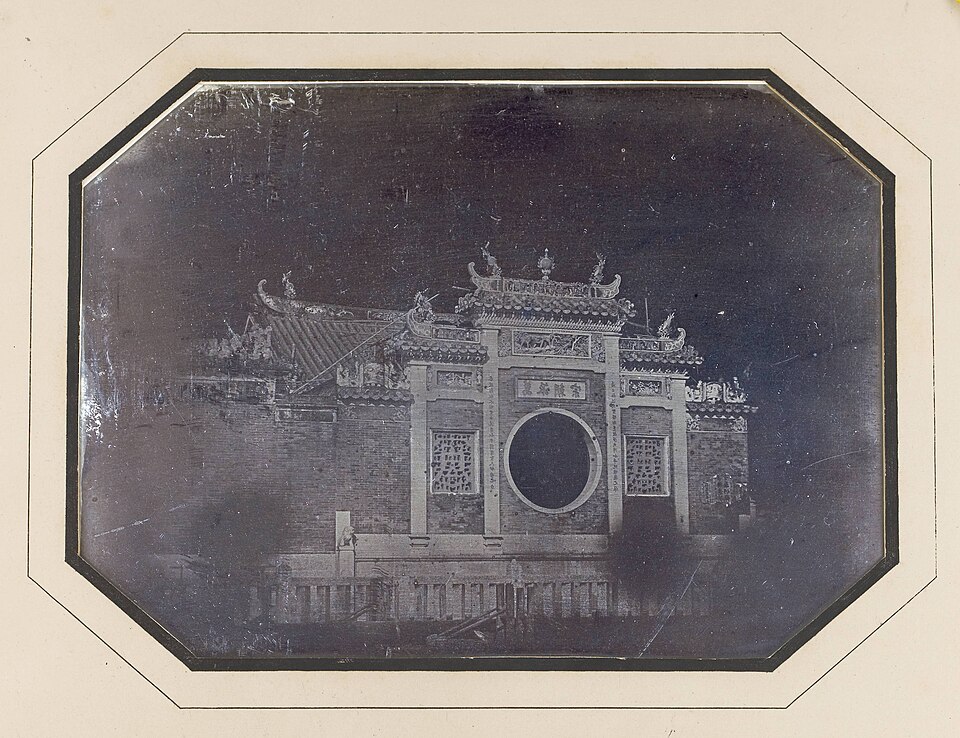
Jules Itier’s 1844 photograph of A-Ma Temple in Macao documents a coastal place of worship associated with Mazu.
Jules Itier. A-Ma Temple, Macao. 1844. Musée français de la Photographie. Daguerreotype reproduction via Wikimedia Commons. Public Domain. · Image source ↗ · Public Domain
In The Chinese Fairy Book
In The Chinese Fairy Book, edited by Richard Wilhelm and translated by Frederick H. Martens, the Queen of Heaven begins life as a young woman of the Lin family in Fujian. The tale places her image in the ship’s cabin and describes three paper images kept on board. They show the goddess in formal regalia, as a young woman in ordinary clothes and as a barefoot figure with a sword. The figures give different appearances to a protector a crew addresses when the sea turns dangerous. [5][6]
One story sends an envoy to the Ryukyu Islands. His ship is driven towards a dark whirlpool. Red lights appear over the water, and a woman with gold earrings quiets the wind and waves. When the envoy returns, he tells the emperor what he saw and asks for temples in her honour. [6][7]
From ship cabins to coastal temples
In the story, a rescue at sea leads to the founding of temples. UNESCO’s record of living Mazu traditions describes offerings in homes and communal observances at temples. Two coastal examples are Quanzhou’s Tianhou Temple and Macao’s A-Ma Temple, photographed here in 1844. [7][1][2][3][4]
In the library
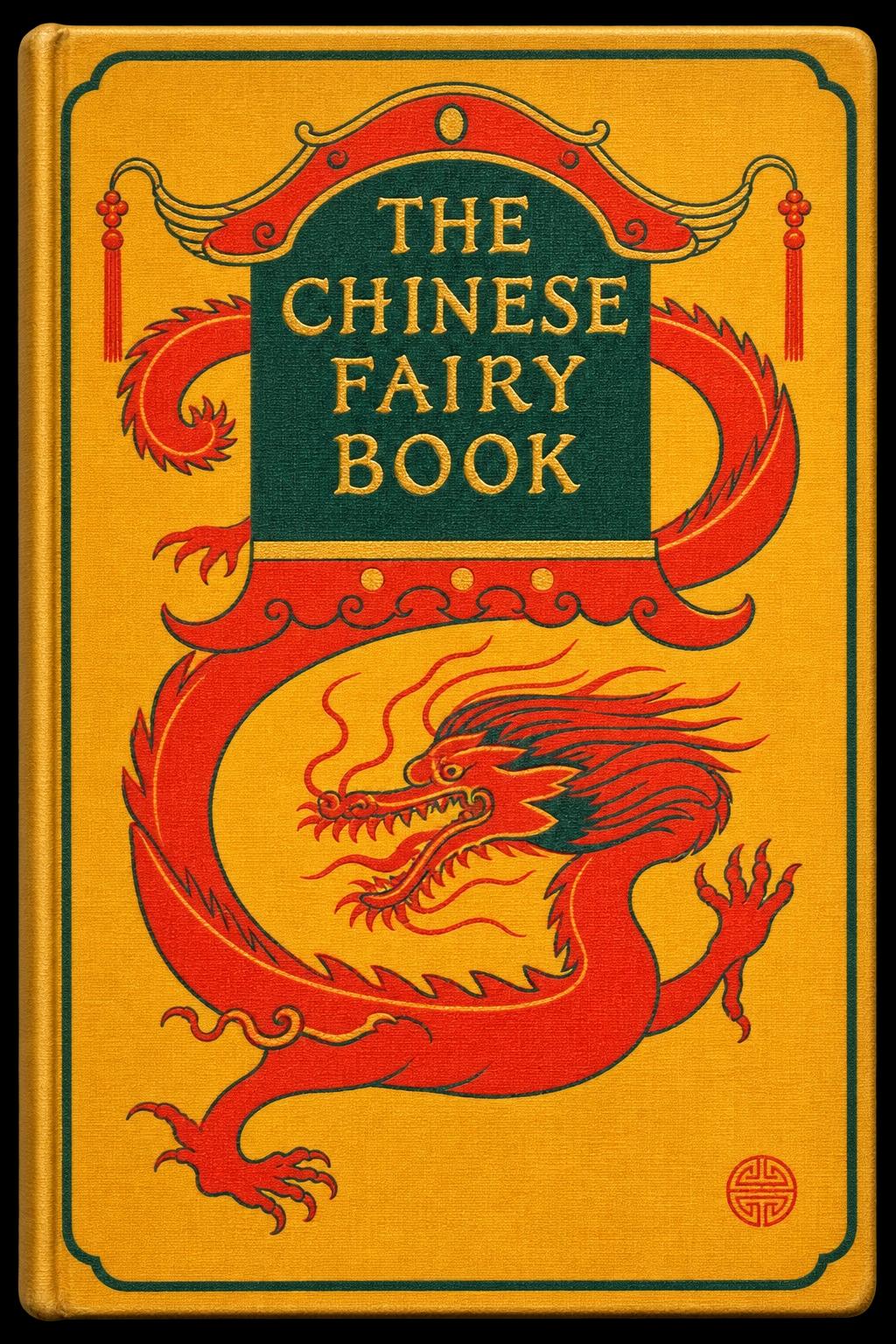
The Chinese Fairy Book
Reading note
Read about the three images carried on ships and the red lights that appear during a storm.
Sources
See references (7)
- Mazu belief and customs ↗UNESCO Intangible Cultural Heritage
- Tianhou Temple ↗Quanzhou Municipal People’s Government
- A-Ma Temple ↗World Heritage in Macao
- A-Ma Temple, Macao ↗Jules Itier. A-Ma Temple, Macao. 1844. Musée français de la Photographie. Daguerreotype reproduction via Wikimedia Commons. Public Domain.
- The Chinese Fairy Book, Library Reader page 72Richard Wilhelm, editor. Frederick H. Martens, translator. The Chinese Fairy Book. Frederick A. Stokes Company, New York, 1921. Lumitheca Library edition IMJ-0478-E002.Read this page in The Chinese Fairy Book ↗
- The Chinese Fairy Book, Library Reader page 73Richard Wilhelm, editor. Frederick H. Martens, translator. The Chinese Fairy Book. Frederick A. Stokes Company, New York, 1921. Lumitheca Library edition IMJ-0478-E002.Read this page in The Chinese Fairy Book ↗
- The Chinese Fairy Book, Library Reader page 74Richard Wilhelm, editor. Frederick H. Martens, translator. The Chinese Fairy Book. Frederick A. Stokes Company, New York, 1921. Lumitheca Library edition IMJ-0478-E002.Read this page in The Chinese Fairy Book ↗