The man in the eye
The person in the eye connects sight, breath, the sun and death in the Śatapatha Brāhmaṇa. Read Eggeling’s translation beside Mackenzie’s retelling.
In this article
Who is the person in the eye?
The Śatapatha Brāhmaṇa describes a person in the right eye who is also present in the sun. The figure is called Death. Inside a living person, his feet are lodged in the heart. When he draws them out and leaves, that person dies. The passage uses the same figure to connect the body, the altar and the sun. [3][1]
The eye, heart and sun in the Śatapatha Brāhmaṇa
In Julius Eggeling’s translation of Śatapatha Brāhmaṇa 10.5.2, the bright orb, a gold plate at the altar and the white of the eye correspond. The dark part of the eye corresponds to a lotus leaf, and the golden figure to the person in the right eye. When a person sleeps, the figures in both eyes descend to the heart. [1]
Paragraphs 13–17 identify the figure with Death and vital breath. Death is one in the sun and many in living beings. Paragraph 23 says the person who understands the correspondence passes into that body at death. [1]
Indian Myth and Legend by Donald A. Mackenzie
In Indian Myth and Legend, Donald A. Mackenzie brings the passage into a chapter on Yama. He suggests that seeing one’s reflection in someone’s pupil gave rise to the idea of a spirit looking out. He quotes Eggeling at printed page 371 of Part IV and uses a severed life-string to explain the phrase about a person being cut off. [3]
The excerpt calls the figure Death. Yama’s titles and powers belong to the chapter that frames it, just as the reflection belongs to Mackenzie’s own explanation. [3]
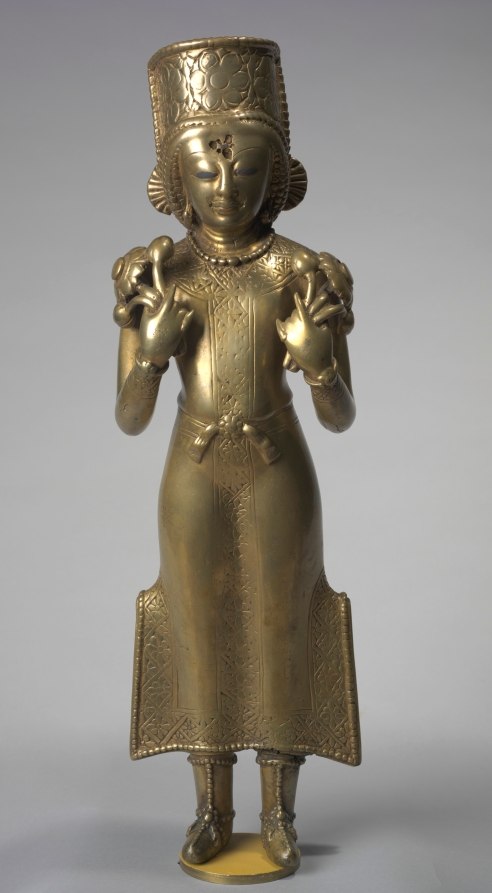
A sculpture of Sūrya, the sun god, from the early eighth century. The passage links a figure in the solar orb with one in the eye.
Cleveland Museum of Art, Gift of Katharine Holden Thayer, 1965.557. CC0. JPEG derivative. · Image source ↗ · CC0
One in the sun and many in living beings
Mackenzie starts with something visible in an eye. The fuller Brāhmaṇa passage asks how one presence can appear in each living person, and ties the answer to the materials and figures of the altar. [3][1]
Read further in the library
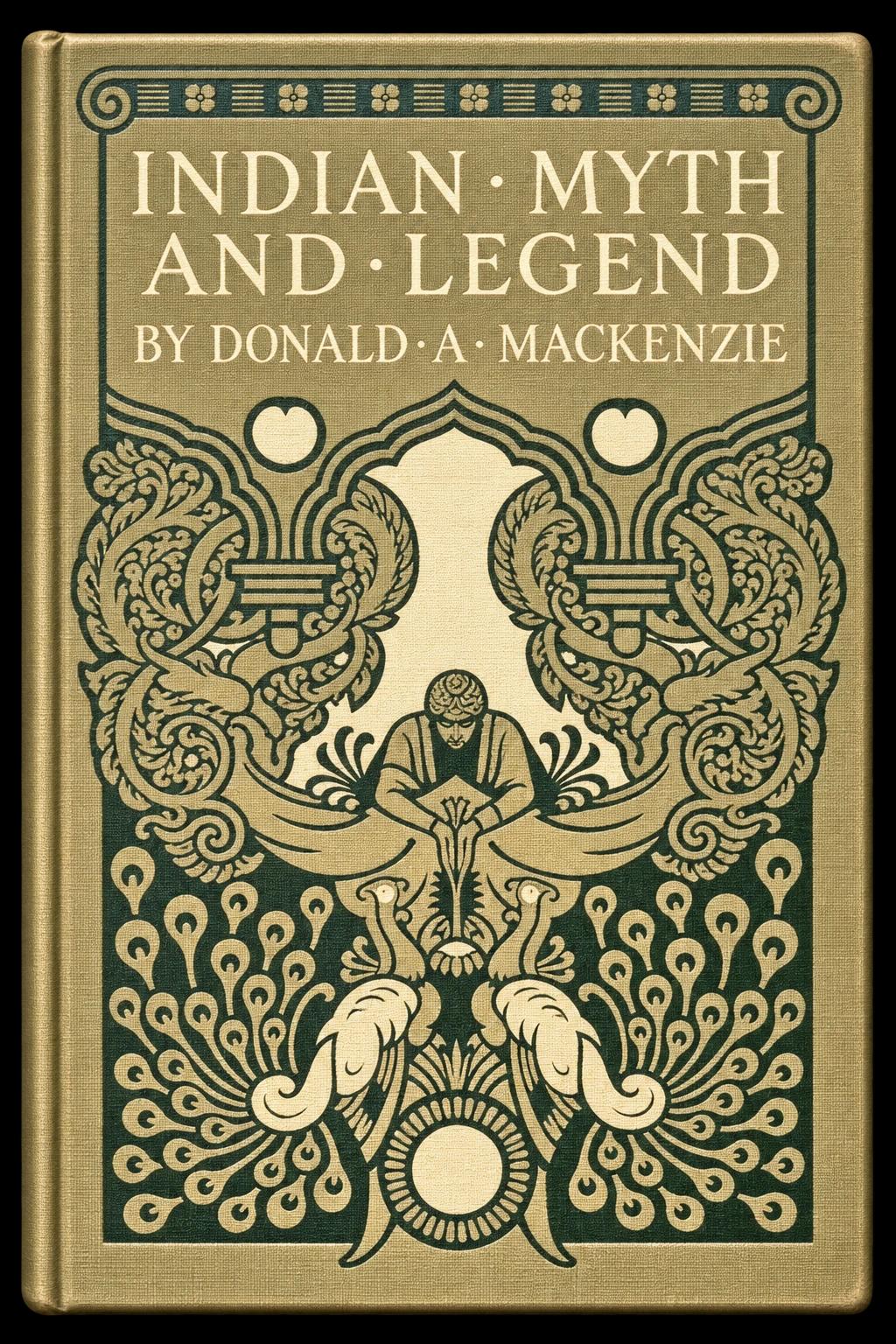
Indian Myth and Legend
Reading note
The separately titled account draws on exact passages in the consulted Library edition.
Sources
See references (3)
- Śatapatha Brāhmaṇa 10.5.2, translated by Julius Eggeling ↗Part IV, Sacred Books of the East 43 (1897). Paragraphs 6–17 and 22–23. The passage quoted by Mackenzie is paragraph 13, printed p. 371.Return to text ↑
- Surya, the Sun God, early 700s ↗Cleveland Museum of Art, Gift of Katharine Holden Thayer, 1965.557. CC0. JPEG derivative.
- Indian Myth and Legend, Reader page 105Donald A. Mackenzie, Indian Myth and Legend, Gresham Publishing Company Limited, London, undated consulted impression. Library edition IMJ-0649-E001. Persistent PageIDs and current Reader positions verified against the supplied PDF and cached Reader manifest. Embedded translations are Mackenzie’s presentation unless a separately consulted primary text is named.Read this page in Indian Myth and Legend ↗Return to text ↑