Lotus Spirits
In Richard Gordon Smith’s Lotus Castle tale, lotuses are said to protect the castle and later appear in childlike form.
In this article
What are the lotus spirits of Lotus Castle?
Lotus spirits appear as childlike figures near a castle moat in Richard Gordon Smith’s tale. The plants first serve as a protective boundary. When the moat is neglected, the spirits draw attention to the living flowers and the care they need. [2][3][4]
In Ancient Tales and Folk-lore of Japan
In The Spirit of the Lotus Lily, Smith describes illness in a castle household. A visitor who resembles a mountain ascetic advises planting lotuses in the moats, saying impurity cannot pass them. The family recovers and the castle comes to be named for its flowers. [2][3][4]
After a successor neglects the plants, a samurai mistakes childlike figures near the moat for kappa. He finds damaged lotus stalks and understands what he has encountered. The tale says the flowers bloom again even after the spirits have stopped appearing. [4][5][6]
See references (5)
- Ancient Tales and Folklore of Japan, printed p. 268, Reader page 370
- Ancient Tales and Folklore of Japan, printed p. 269, Reader page 373
- Ancient Tales and Folklore of Japan, printed p. 270, Reader page 374
- Ancient Tales and Folklore of Japan, printed p. 272, Reader page 376
- Ancient Tales and Folklore of Japan, printed p. 273, Reader page 377
A living boundary and an image of salvation
In Hakuin Ekaku’s Kannon by a Lotus Pond, the flowers accompany the bodhisattva of compassion and are associated with salvation. Smith’s flowers do something different in the story. They guard a place and call attention to the people responsible for its care. [3][5][6][1][7]
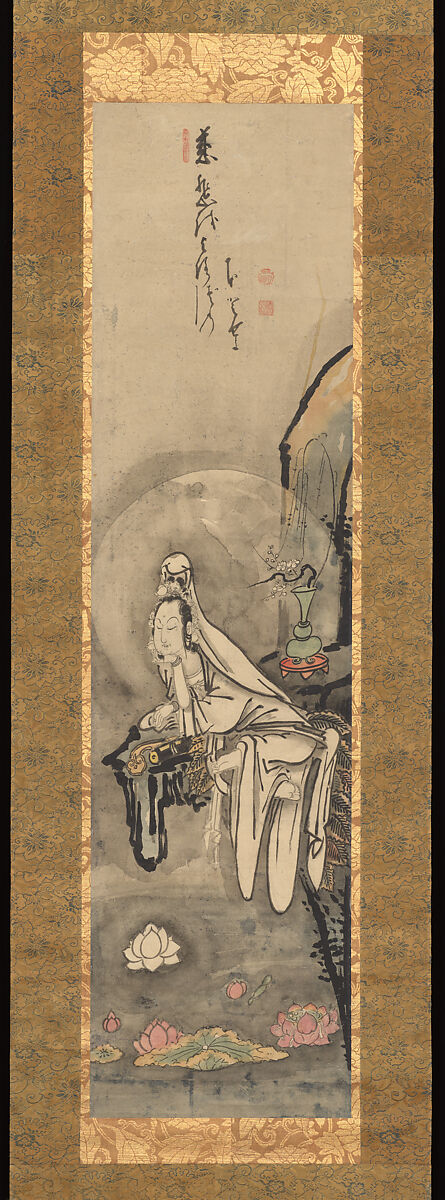
In Hakuin’s devotional image, lotuses accompany Kannon. They appear in a different role from the living plants that guard the castle in Smith’s story.
Hakuin Ekaku, Kannon by a Lotus Pond, 1750s. The Metropolitan Museum of Art. Public domain. · Image source ↗ · Public Domain
In the library
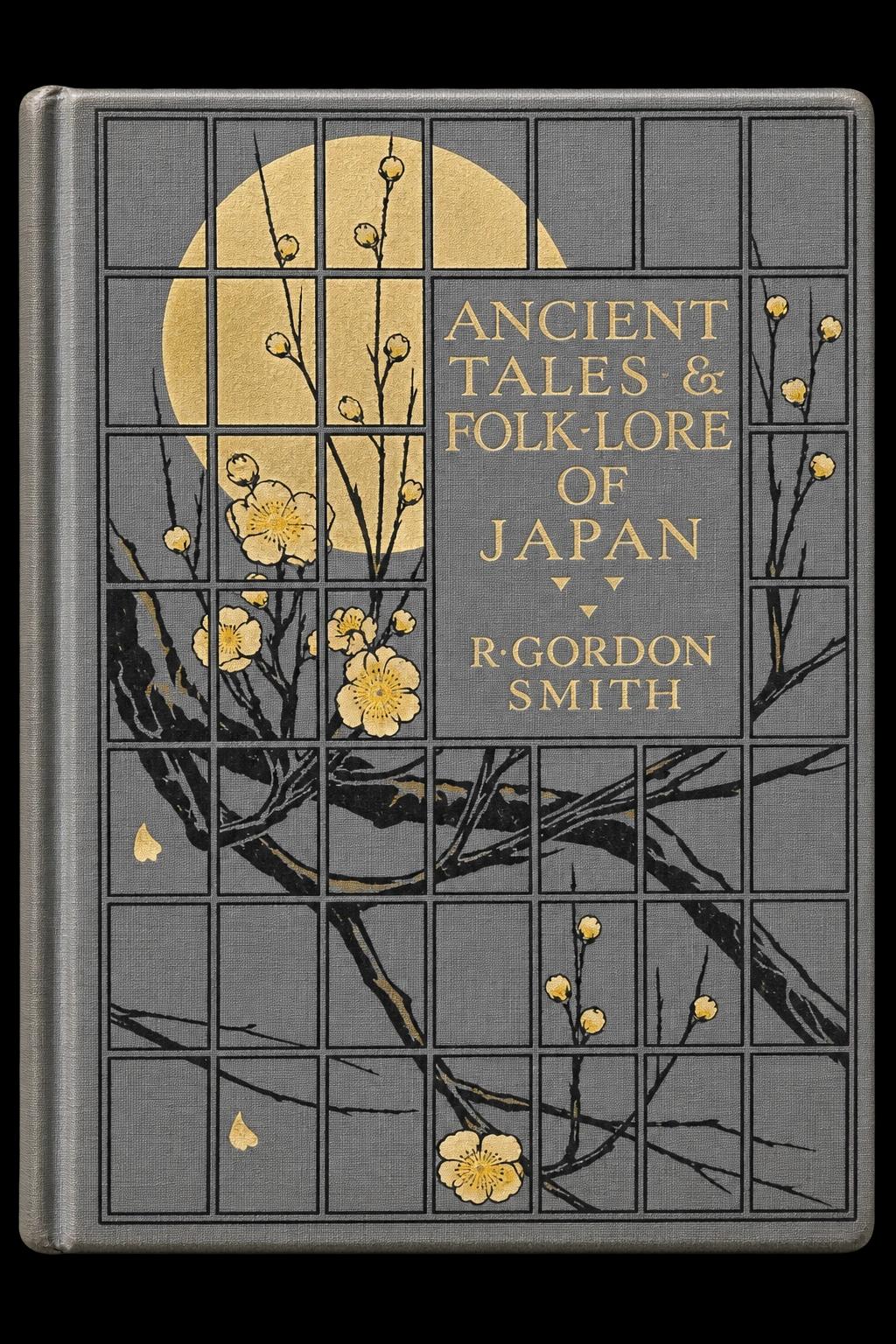
Ancient Tales and Folk-lore of Japan
Reading note
Read Richard Gordon Smith’s account in the verified 1908 Library edition.
Sources
See references (7)
- Kannon by a Lotus Pond ↗The Metropolitan Museum of Art
- Ancient Tales and Folklore of Japan, printed p. 268, Reader page 370Richard Gordon Smith, Ancient Tales and Folklore of Japan. A. & C. Black, London, 1908. Lumitheca Library edition IMJ-0588-E001.Read this page in Ancient Tales and Folk-lore of Japan ↗
- Ancient Tales and Folklore of Japan, printed p. 269, Reader page 373Richard Gordon Smith, Ancient Tales and Folklore of Japan. A. & C. Black, London, 1908. Lumitheca Library edition IMJ-0588-E001.Read this page in Ancient Tales and Folk-lore of Japan ↗
- Ancient Tales and Folklore of Japan, printed p. 270, Reader page 374Richard Gordon Smith, Ancient Tales and Folklore of Japan. A. & C. Black, London, 1908. Lumitheca Library edition IMJ-0588-E001.Read this page in Ancient Tales and Folk-lore of Japan ↗
- Ancient Tales and Folklore of Japan, printed p. 272, Reader page 376Richard Gordon Smith, Ancient Tales and Folklore of Japan. A. & C. Black, London, 1908. Lumitheca Library edition IMJ-0588-E001.Read this page in Ancient Tales and Folk-lore of Japan ↗
- Ancient Tales and Folklore of Japan, printed p. 273, Reader page 377Richard Gordon Smith, Ancient Tales and Folklore of Japan. A. & C. Black, London, 1908. Lumitheca Library edition IMJ-0588-E001.Read this page in Ancient Tales and Folk-lore of Japan ↗
- Kannon by a Lotus Pond ↗Hakuin Ekaku, Kannon by a Lotus Pond, 1750s. The Metropolitan Museum of Art. Public domain.