Laozi
Laozi, the Old Master, is traditionally associated with the Daodejing. Daoist art and stories also picture him as a departing sage and an immortal.
In this article
Who is Laozi?
Laozi, the Old Master, is the figure traditionally associated with the Daodejing. His historical identity is uncertain. In Daoist tradition he is also a divine figure, and artists have pictured him both as a sage leaving China and as an immortal. [1][3][2][4]
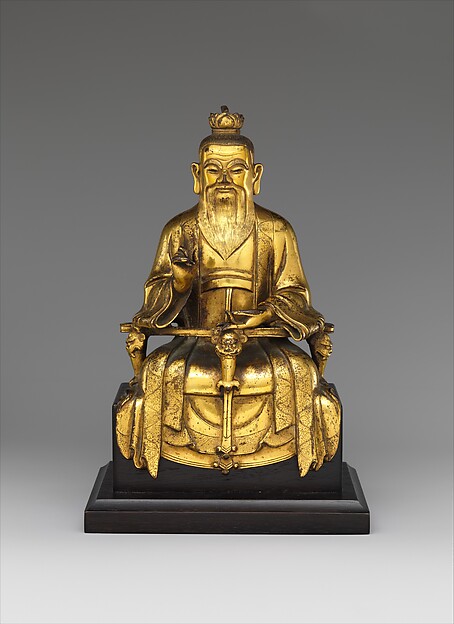
Chen Yanqing’s bronze depicts Laozi as a Daoist immortal.
Chen Yanqing. Daoist immortal Laozi. 1438. The Metropolitan Museum of Art. Purchase, Friends of Asian Art Gifts, 1997. Public Domain. · Image source ↗ · Public Domain
In The Chinese Fairy Book
In Richard Wilhelm’s The Chinese Fairy Book, translated by Frederick H. Martens, Laozi appears as the Yellow Ancient, a being who existed before heaven and earth. His white hair at birth explains why the English retelling calls him the Old Child. In another chapter he rides a dark ox to the western pass, where the guardian sees red clouds and recognises that a holy person is arriving. [5][6]
At the pass a dispute over a servant’s wages interrupts the journey. Laozi takes away a talisman that has been keeping the servant alive, then restores him. The guardian of the pass helps resolve the dispute and asks to learn Laozi’s teachings. The story makes their meeting the occasion on which the Daodejing is written down. [4][7]
In the Monkey King’s story, Laozi has a different role. He prepares pills of life that Sun Wukong consumes and later sets him in an oven. The oven bears the signs of eight elemental forces, one of which provides shelter. This tale gives Laozi a workshop as well as a place in the heavenly court. [8][9]
A teacher at the pass and a divine immortal
Chen Yanqing’s bronze shows Laozi alone as a Daoist immortal. A different bronze in the Met shows him on the ox that carries him through the western pass. The animal identifies a moment in a story. Without it, the first sculpture presents the presence of the immortal himself. [3][1][6][4]
In the library
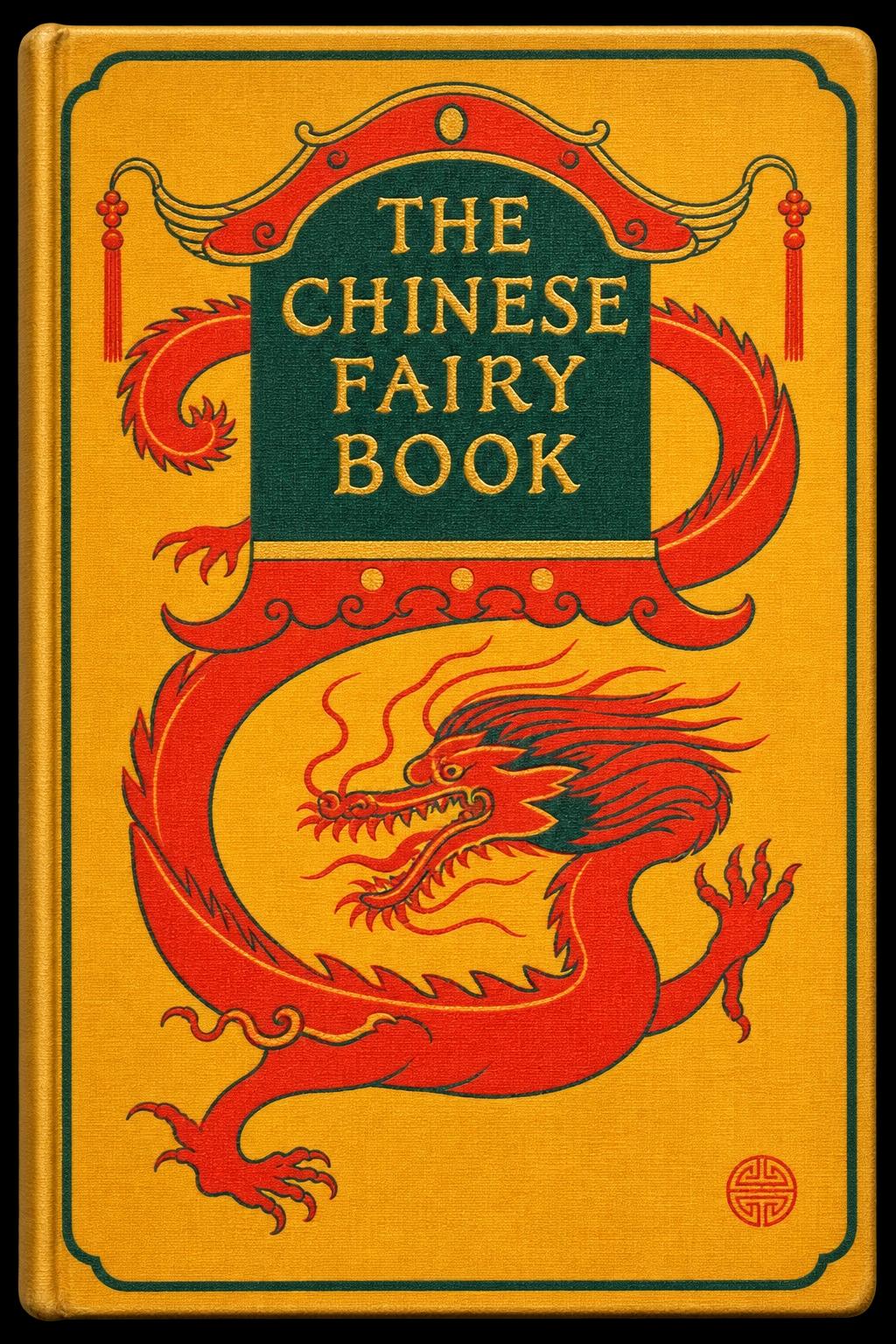
The Chinese Fairy Book
Reading note
Read the story of the western pass, then compare the role Laozi plays in the tale of the Monkey King.
Sources
See references (9)
- Laozi riding an ox ↗The Metropolitan Museum of Art
- The Taoist Church ↗Art Institute of Chicago
- Daoist immortal Laozi ↗Chen Yanqing. Daoist immortal Laozi. 1438. The Metropolitan Museum of Art. Purchase, Friends of Asian Art Gifts, 1997. Public Domain.
- The Chinese Fairy Book, Library Reader page 88Richard Wilhelm, editor. Frederick H. Martens, translator. The Chinese Fairy Book. Frederick A. Stokes Company, New York, 1921. Lumitheca Library edition IMJ-0478-E002.Read this page in The Chinese Fairy Book ↗
- The Chinese Fairy Book, Library Reader page 49Richard Wilhelm, editor. Frederick H. Martens, translator. The Chinese Fairy Book. Frederick A. Stokes Company, New York, 1921. Lumitheca Library edition IMJ-0478-E002.Read this page in The Chinese Fairy Book ↗
- The Chinese Fairy Book, Library Reader page 87Richard Wilhelm, editor. Frederick H. Martens, translator. The Chinese Fairy Book. Frederick A. Stokes Company, New York, 1921. Lumitheca Library edition IMJ-0478-E002.Read this page in The Chinese Fairy Book ↗
- The Chinese Fairy Book, Library Reader page 89Richard Wilhelm, editor. Frederick H. Martens, translator. The Chinese Fairy Book. Frederick A. Stokes Company, New York, 1921. Lumitheca Library edition IMJ-0478-E002.Read this page in The Chinese Fairy Book ↗
- The Chinese Fairy Book, Library Reader page 341Richard Wilhelm, editor. Frederick H. Martens, translator. The Chinese Fairy Book. Frederick A. Stokes Company, New York, 1921. Lumitheca Library edition IMJ-0478-E002.Read this page in The Chinese Fairy Book ↗
- The Chinese Fairy Book, Library Reader page 348Richard Wilhelm, editor. Frederick H. Martens, translator. The Chinese Fairy Book. Frederick A. Stokes Company, New York, 1921. Lumitheca Library edition IMJ-0478-E002.Read this page in The Chinese Fairy Book ↗