Kusanagi no Tsurugi
Kusanagi is the Grass-Cutting Sword of Japanese mythology, found by Susanoo and wielded by Yamato Takeru.
In this article
What is Kusanagi no Tsurugi?
Kusanagi no Tsurugi, the Grass-Cutting Sword, is one of the three objects traditionally named as Japan’s imperial regalia. In myth, Susanoo finds the blade in the tail of the serpent Yamata no Orochi. It later comes into Yamato Takeru’s hands and helps him escape a burning field. [2][5][6][1]
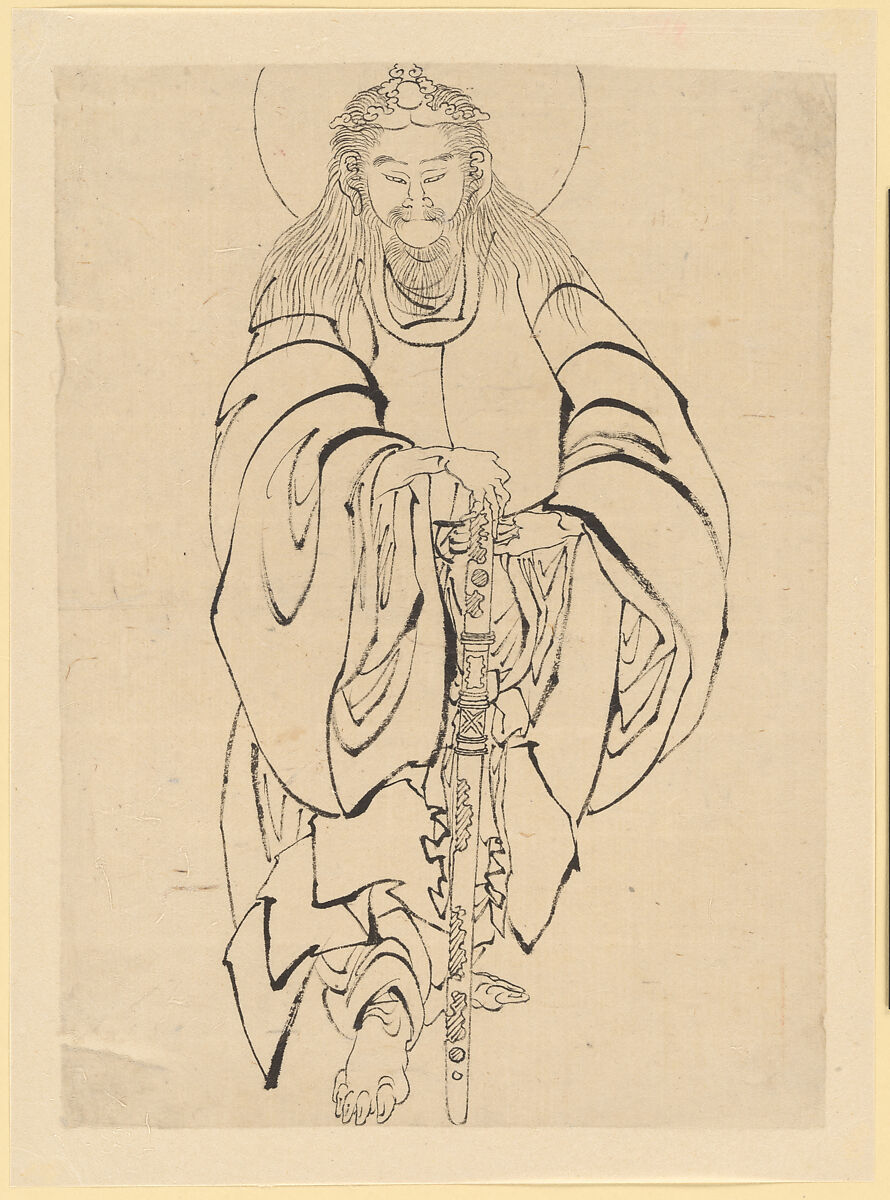
An Edo-period drawing of Yamato Takeru, the prince who wields Kusanagi in the burning-field story.
School of Katsushika Hokusai, Yamato Takeru, 18th or 19th century. The Metropolitan Museum of Art. Public domain. · Image source ↗ · Public Domain
In Ancient Tales and Folk-lore of Japan
In Richard Gordon Smith’s A Miraculous Sword, Yamato Takeru gets the blade from his aunt Yamato-hime. Smith pauses to recount Susanoo’s discovery before following the prince to Suruga. There a guide persuades him to enter tall grass on the pretext of hunting deer. [3][4][5]
When the grass is set alight, the prince cuts it and discovers that the sword can change the wind. The tinderbox his aunt gave him also helps him escape. Smith’s telling makes both gifts part of the prince’s survival. [5][6]
Why is Kusanagi called the Grass-Cutting Sword?
In Basil Hall Chamberlain’s translation of the Kojiki, the ambush takes place in Sagamu and a story about a dangerous deity draws the prince into the field. He cuts the grass and sets a counterfire. The cutting gives the sword its name. Smith’s version changes the setting and the lure and gives the sword power over the wind. [5][6][1]
In the library
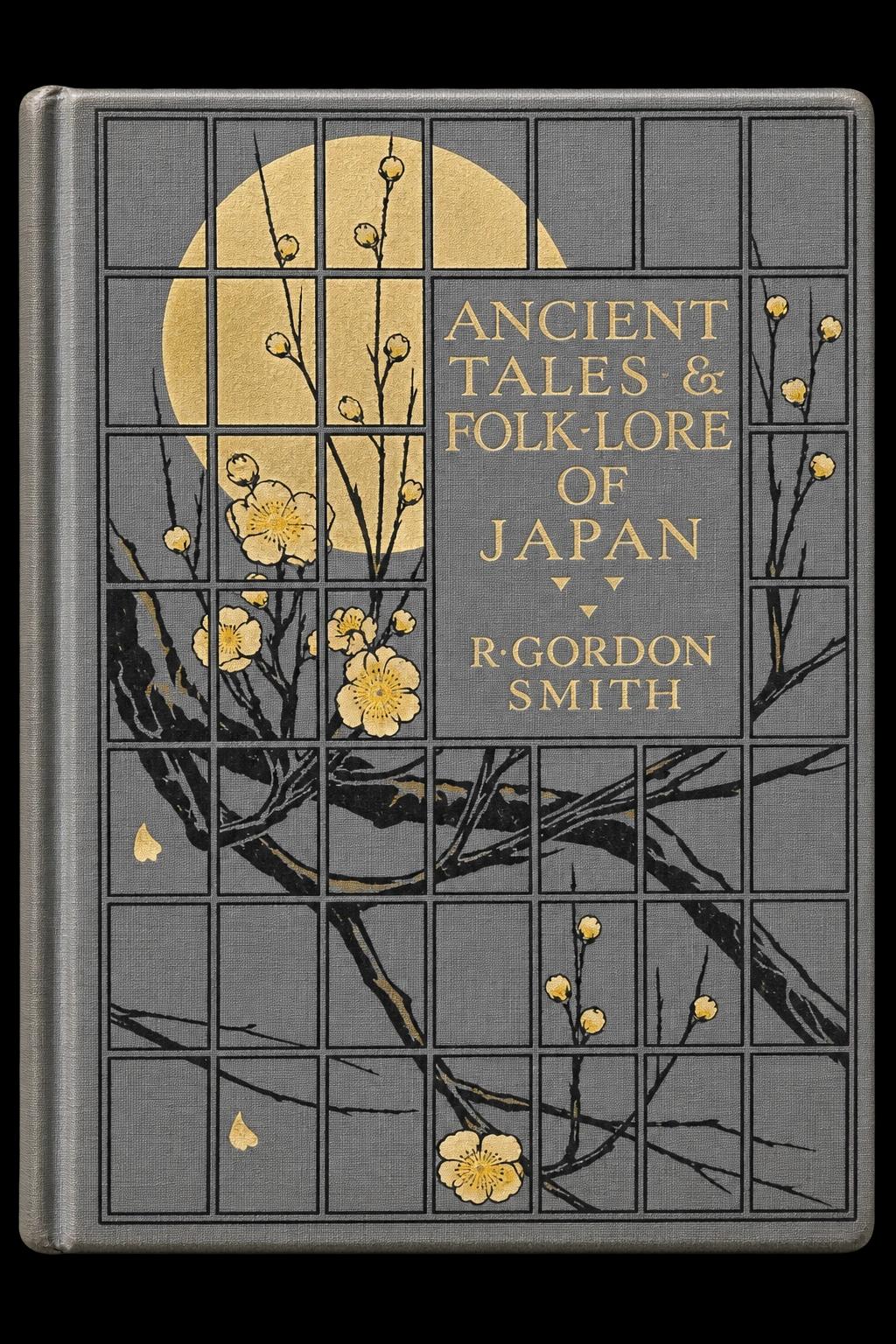
Ancient Tales and Folk-lore of Japan
Reading note
Read Richard Gordon Smith’s account in the verified 1908 Library edition.
Sources
See references (7)
- Kojiki, section 83, translated by Basil Hall Chamberlain (1882) ↗Basil Hall Chamberlain, translator
- Introduction to Atsuta Jingū ↗Atsuta Jingū
- Ancient Tales and Folklore of Japan, printed p. 56, Reader page 88Richard Gordon Smith, Ancient Tales and Folklore of Japan. A. & C. Black, London, 1908. Lumitheca Library edition IMJ-0588-E001.Read this page in Ancient Tales and Folk-lore of Japan ↗
- Ancient Tales and Folklore of Japan, printed p. 57, Reader page 91Richard Gordon Smith, Ancient Tales and Folklore of Japan. A. & C. Black, London, 1908. Lumitheca Library edition IMJ-0588-E001.Read this page in Ancient Tales and Folk-lore of Japan ↗
- Ancient Tales and Folklore of Japan, printed p. 58, Reader page 92Richard Gordon Smith, Ancient Tales and Folklore of Japan. A. & C. Black, London, 1908. Lumitheca Library edition IMJ-0588-E001.Read this page in Ancient Tales and Folk-lore of Japan ↗
- Ancient Tales and Folklore of Japan, printed p. 59, Reader page 93Richard Gordon Smith, Ancient Tales and Folklore of Japan. A. & C. Black, London, 1908. Lumitheca Library edition IMJ-0588-E001.Read this page in Ancient Tales and Folk-lore of Japan ↗
- Yamato Takeru ↗School of Katsushika Hokusai, Yamato Takeru, 18th or 19th century. The Metropolitan Museum of Art. Public domain.