Keaulumoku
Keaulumoku was a Hawaiian poet whose chant Haui ka Lani became associated with Kamehameha’s rise. Explore the poem and its later readings.
In this article
Keaulumoku and the chant Haui ka Lani
Keaulumoku was a Hawaiian poet remembered for chants understood as prophecies. His Haui ka Lani pictures flight, a stricken landscape and deepening darkness. Later accounts connect those images with Kamehameha I’s rise to power. [1][3][4]
The chant survives in versions that let readers follow its images. Stories about its performance describe what particular listeners thought it said about their own struggles. [1][3][4]
Haui ka Lani by Keaulumoku in the Fornander Collection
The Fornander Collection prints Hawaiian and English versions side by side. The opening moves from the flight and exhaustion of people in battle to the mountains and darkness around them. [1]
The Legends and Myths of Hawaii by David Kalākaua
In David Kalākaua’s account, Keaulumoku chants near Halaʻula following a period of silence during the fighting on Hawaiʻi Island. Keʻeaumoku asks to learn the chant and understands it as an answer to a question he had asked earlier at Hāna. [3][4]
A later chant in the chapter concerns the future of chiefs and temples. At the end of the chapter, the narrator lists events from the rise of Kamehameha and afterwards that he reads as the fulfilment of the prophecies. [4][5][6]
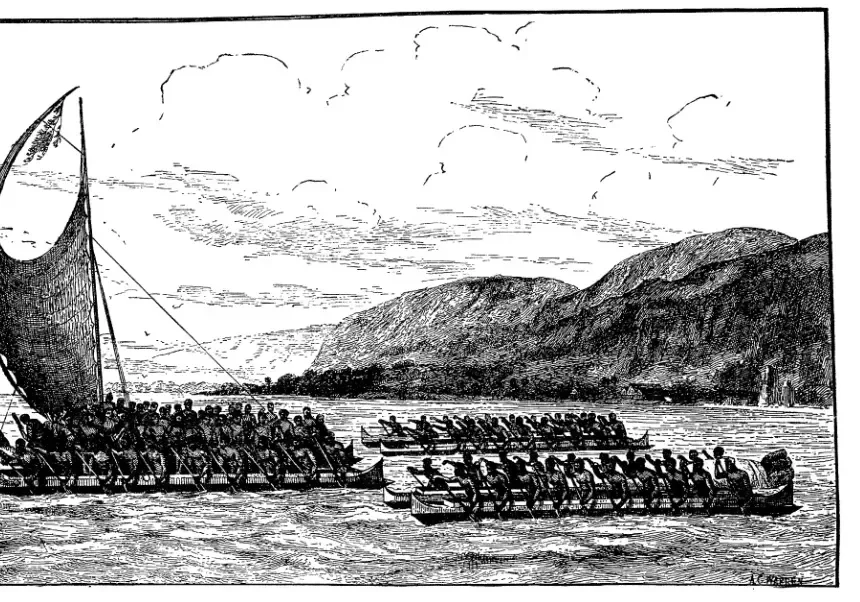
Kalaniʻōpuʻu’s funeral procession in an engraving printed in the Keaulumoku chapter. The chapter situates the poet’s predictions amid the disputes that followed the ruler’s death.
Engraving after a painting in the Royal Palace, as credited in the edition. The Legends and Myths of Hawaii, Charles L. Webster & Company, 1888. Public domain. Cropped from the Library scan. · Image source ↗ · Public Domain
How listeners connect the poem with Kamehameha
The Fornander text gives the poet’s images of retreat, stripped mountains and darkness. Kalākaua gives the names of listeners and the events they had in mind. Keʻeaumoku hears the chant as an answer because he remembers what he asked at Hāna. [3][4][1]
Read further in the library
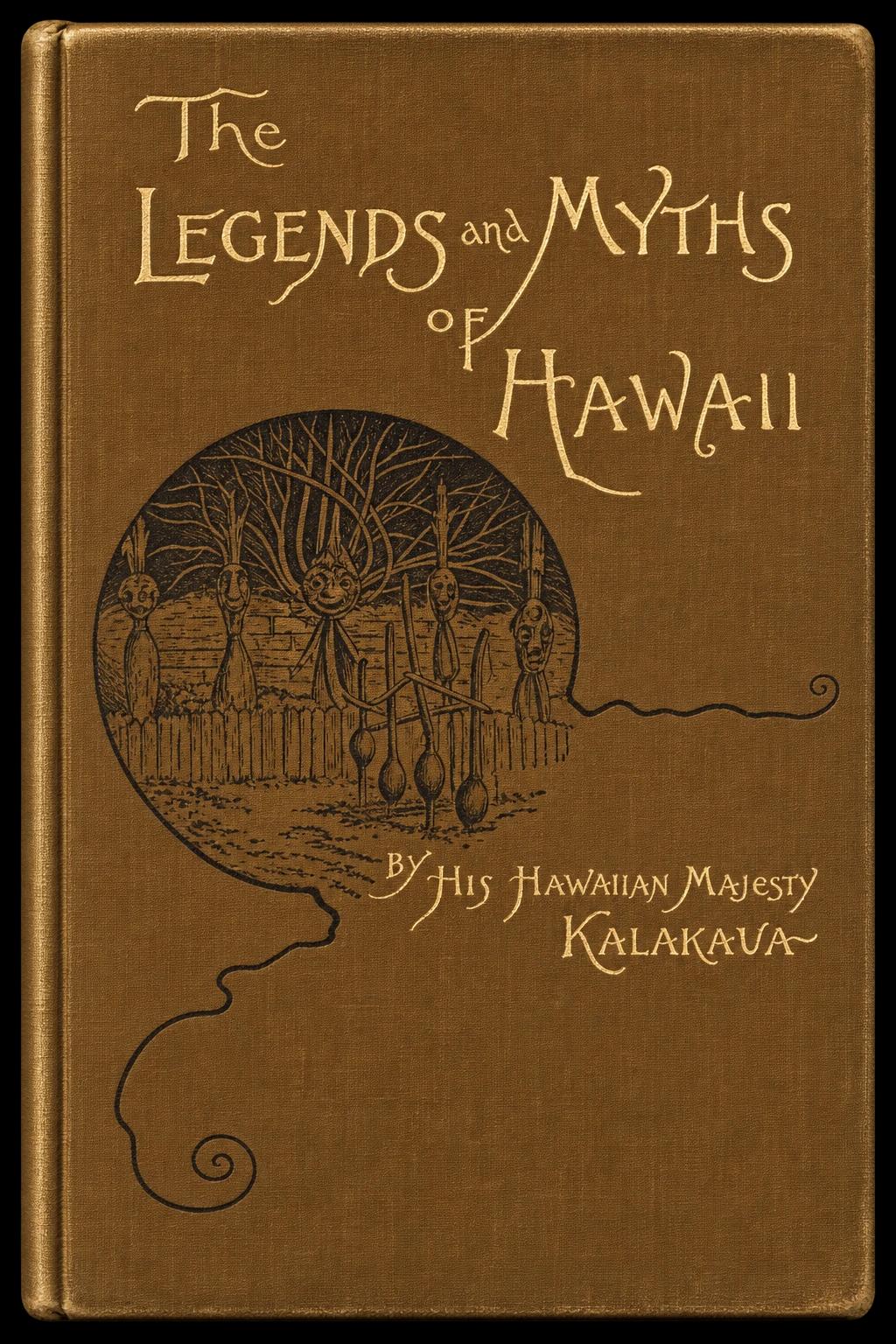
The Legends and Myths of Hawaii
Reading note
The separately titled account draws on exact passages in the consulted Library edition.
Sources
See references (6)
- Haui ka Lani, Fornander Collection vol. III, printed pp. 368–371 ↗Keaulumoku, Haui ka Lani, Hawaiian text and English translation in the Fornander Collection of Hawaiian Antiquities and Folk-Lore, vol. III, Bishop Museum, 1919, opening lines.Return to text ↑
- Conveying the Body of Kalaniopuu to Honaunau ↗Engraving after a painting in the Royal Palace, as credited in the edition. The Legends and Myths of Hawaii, Charles L. Webster & Company, 1888. Public domain. Cropped from the Library scan.
- The Legends and Myths of Hawaii, Reader page 367David Kalākaua, The Legends and Myths of Hawaii, edited with an introduction by Rollin Mallory Daggett, Charles L. Webster & Company, 1888. Exact Library edition IMJ-0646-E001. When the introduction or a signed editorial passage is used, its author is identified in the article.Read this page in The Legends and Myths of Hawaii ↗Return to text ↑
- The Legends and Myths of Hawaii, Reader page 368David Kalākaua, The Legends and Myths of Hawaii, edited with an introduction by Rollin Mallory Daggett, Charles L. Webster & Company, 1888. Exact Library edition IMJ-0646-E001. When the introduction or a signed editorial passage is used, its author is identified in the article.Read this page in The Legends and Myths of Hawaii ↗Return to text ↑
- The Legends and Myths of Hawaii, Reader page 369David Kalākaua, The Legends and Myths of Hawaii, edited with an introduction by Rollin Mallory Daggett, Charles L. Webster & Company, 1888. Exact Library edition IMJ-0646-E001. When the introduction or a signed editorial passage is used, its author is identified in the article.Read this page in The Legends and Myths of Hawaii ↗Return to text ↑
- The Legends and Myths of Hawaii, Reader page 370David Kalākaua, The Legends and Myths of Hawaii, edited with an introduction by Rollin Mallory Daggett, Charles L. Webster & Company, 1888. Exact Library edition IMJ-0646-E001. When the introduction or a signed editorial passage is used, its author is identified in the article.Read this page in The Legends and Myths of Hawaii ↗Return to text ↑