Kāne
Kāne is an akua associated with life and fresh water in Native Hawaiian traditions. Explore his named forms and Kalākaua’s account of Waipiʻo.
In this article
Kāne and life-giving water
Kāne is an akua, or deity, associated with life and fresh water in Native Hawaiian traditions. In stories he finds or brings forth springs. Prayers and chants call on the water that sustains people and the land. [1][3]
One named form, Kāneikawaiola, refers to life-giving water. Some families call on Kāne as an ʻaumakua, or ancestral deity. In other accounts he creates life or travels with Kanaloa in search of water. [1][2][5]
The Legends and Myths of Hawaii by David Kalākaua
In his introduction to David Kalākaua’s 1888 volume, Rollin Mallory Daggett describes Kāne giving life to Kumu-honua. Daggett prints a creation chant that names Kāne, Kū and Lono, and reads the account alongside the book of Genesis. [6][5][7]
The ʻUmi story begins in Waipiʻo Valley. Kāne brings forth springs and reshapes the streambed so more fresh water reaches a great fish off Hāmākua. The narrator identifies the valley’s cascades and marks in the rock as traces of his work. [8]
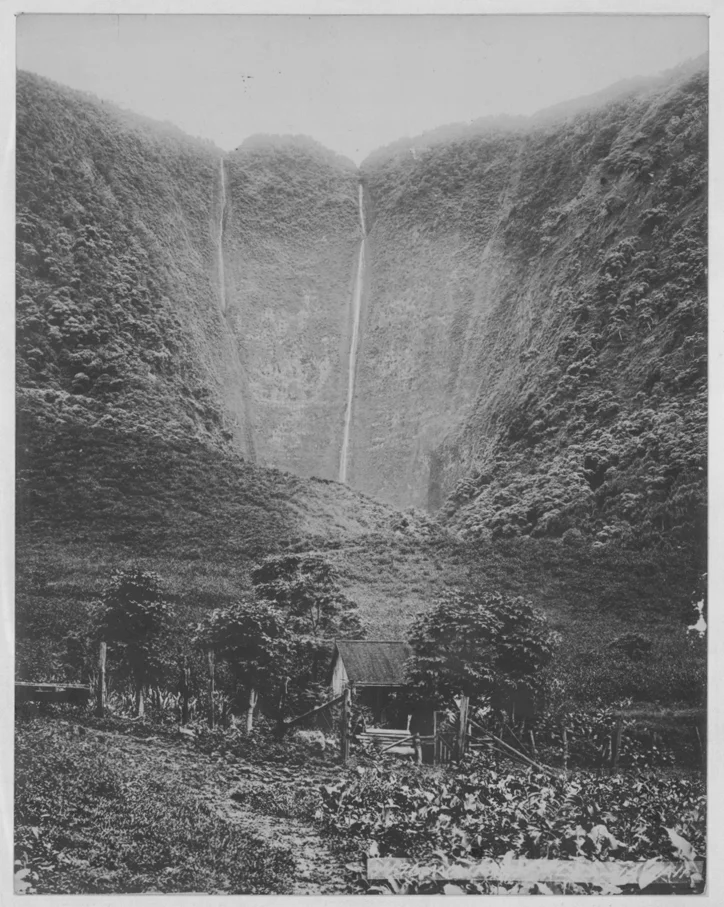
Hiʻilawe Falls in Waipiʻo Valley in 1880. In the ʻUmi story, the valley’s cascades preserve traces of Kāne’s work.
Hawaiʻi State Archives, PP-30-7-020, photographer unrecorded, via Wikimedia Commons. · Image source ↗ · Public Domain
Why Kāne looks for water at Kānewai
In the account shared by the University of Hawaiʻi’s Ka Papa Loʻi o Kānewai, Kāne and Kanaloa need fresh water to prepare ʻawa. The story explains the spring at Kānewai. At Waipiʻo, it is a fish in need of water that prompts Kāne to change the shape of the valley. [8][3]
Read further in the library
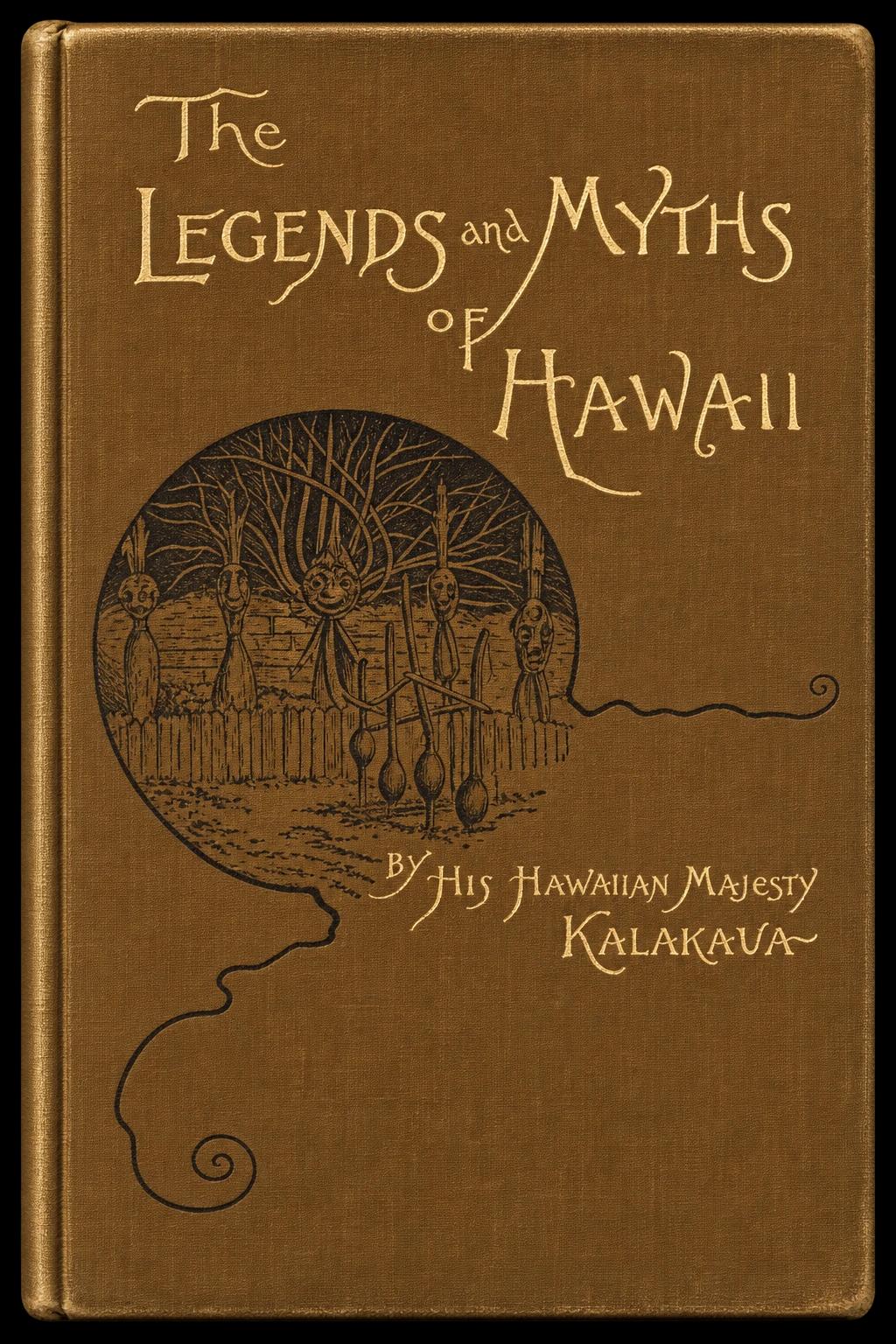
The Legends and Myths of Hawaii
Reading note
The separately titled account draws on exact passages in the consulted Library edition.
Sources
See references (8)
- Kāne in Kahoʻiwai ↗Kahoʻiwai, University of Hawaiʻi, bilingual Hawaiian cultural vocabulary and associated sources.Return to text ↑
- Kanaloa in Kahoʻiwai ↗Kahoʻiwai, University of Hawaiʻi, bilingual Hawaiian cultural vocabulary and associated sources.Return to text ↑
- The history of Ka Papa Loʻi o Kānewai ↗Hawaiʻinuiākea School of Hawaiian Knowledge, University of Hawaiʻi at Mānoa, its account of Kāne and Kanaloa and the history of the loʻi.Return to text ↑
- Hiʻilawe Falls in Waipiʻo Valley, 1880 ↗Hawaiʻi State Archives, PP-30-7-020, photographer unrecorded, via Wikimedia Commons.
- The Legends and Myths of Hawaii, Reader page 37David Kalākaua, The Legends and Myths of Hawaii, edited with an introduction by Rollin Mallory Daggett, Charles L. Webster & Company, 1888. Exact Library edition IMJ-0646-E001. When the introduction or a signed editorial passage is used, its author is identified in the article.Read this page in The Legends and Myths of Hawaii ↗Return to text ↑
- The Legends and Myths of Hawaii, Reader page 36David Kalākaua, The Legends and Myths of Hawaii, edited with an introduction by Rollin Mallory Daggett, Charles L. Webster & Company, 1888. Exact Library edition IMJ-0646-E001. When the introduction or a signed editorial passage is used, its author is identified in the article.Read this page in The Legends and Myths of Hawaii ↗Return to text ↑
- The Legends and Myths of Hawaii, Reader page 38David Kalākaua, The Legends and Myths of Hawaii, edited with an introduction by Rollin Mallory Daggett, Charles L. Webster & Company, 1888. Exact Library edition IMJ-0646-E001. When the introduction or a signed editorial passage is used, its author is identified in the article.Read this page in The Legends and Myths of Hawaii ↗Return to text ↑
- The Legends and Myths of Hawaii, Reader page 251David Kalākaua, The Legends and Myths of Hawaii, edited with an introduction by Rollin Mallory Daggett, Charles L. Webster & Company, 1888. Exact Library edition IMJ-0646-E001. When the introduction or a signed editorial passage is used, its author is identified in the article.Read this page in The Legends and Myths of Hawaii ↗Return to text ↑