Kalaipāhoa
Kalaipāhoa names a feared Hawaiian carved image and the power associated with it. Compare the traditions of Molokaʻi and chiefly custody.
In this article
Kalaipāhoa and the grove on Molokaʻi
Kalaipāhoa is a name associated with a deity and carved images in Native Hawaiian traditions. The accounts connect the images with a grove on Molokaʻi whose wood was said to carry the power to poison. [4][5][1][2]
The nineteenth- and early twentieth-century accounts also follow the images through chiefly households. The name sometimes refers to one image associated with Kamehameha and sometimes appears in a group of related traditions. [5][6][1]
The Legends and Myths of Hawaii by David Kalākaua
In his introduction to David Kalākaua’s volume, Rollin Mallory Daggett calls Kalaipāhoa a goddess of Molokaʻi. He says an image carved from a tree in her grove reached Kamehameha and was divided among chiefs after his death. [4][5]
In “The Iron Knife,” the grove springs up in a single night in one telling. In another, the deity affects trees already growing there. Both tellings account for the power attributed to a carving made from the wood. [6]
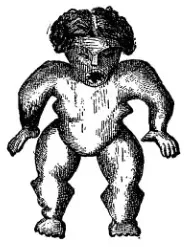
The 1888 volume identifies the engraving as Kalaipahoa on printed page 43. The plate shows how the volume represented the figure.
The Legends and Myths of Hawaii, Charles L. Webster & Company, 1888. Library scan crop. · Image source ↗ · Public Domain
Kalaipāhoa in Hawaiian Legends of Ghosts and Ghost-Gods by William Drake Westervelt
In Hawaiian Legends of Ghosts and Ghost-Gods, William Drake Westervelt follows several images through chiefly households. He identifies a squat wooden figure at Bishop Museum as Kamehameha’s Kalaipāhoa and traces how objects were kept or concealed by their custodians. [1]
When the name refers to a particular carving
Daggett’s introduction moves from the deity to one carving. Westervelt names several related poison gods and discusses separate wooden figures. The 1888 engraving gives its figure the name Kalaipāhoa. Its caption provides no history of the individual object. [4][5][1]
Read further in the library
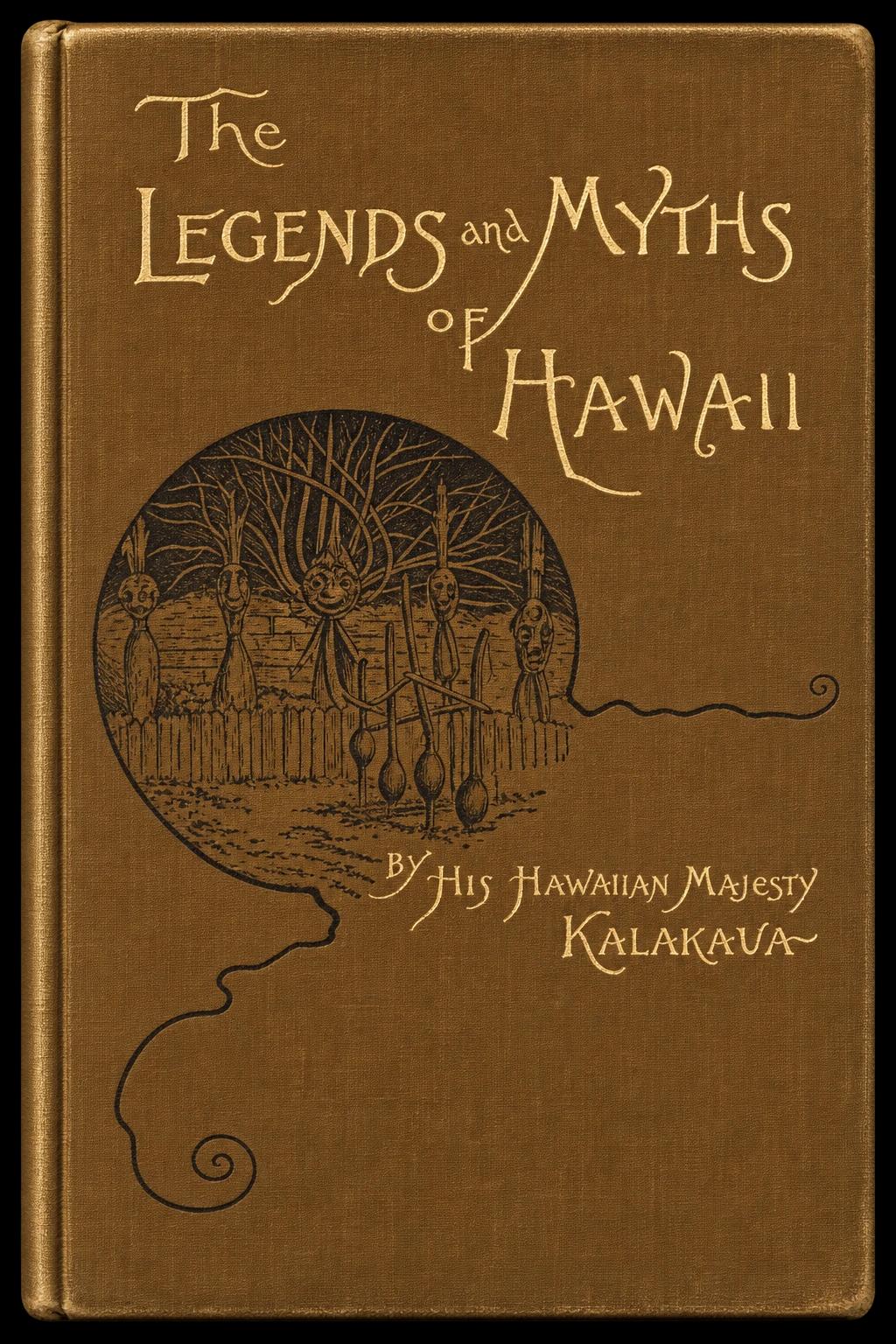
The Legends and Myths of Hawaii
Reading note
The separately titled account draws on exact passages in the consulted Library edition.
Sources
See references (6)
- Hawaiian Legends of Ghosts and Ghost-Gods, chapter XIV, printed pp. 108–115 ↗William Drake Westervelt, Hawaiian Legends of Ghosts and Ghost-Gods, 1916, chapter XIV, “Kalai-pahoa, the Poison-God.”Return to text ↑
- Kālaipāhoa in the Hawaiian Dictionary ↗Mary Kawena Pukui and Samuel H. Elbert, Hawaiian Dictionary, 1986, via Wehewehe Wikiwiki.Return to text ↑
- Kalaipahoa, 1888 engraving ↗The Legends and Myths of Hawaii, Charles L. Webster & Company, 1888. Library scan crop.
- The Legends and Myths of Hawaii, printed p. 43, Reader page 44David Kalākaua, The Legends and Myths of Hawaii, edited with an introduction by Rollin Mallory Daggett, Charles L. Webster & Company, 1888. Exact Library edition IMJ-0646-E001. When the introduction or a signed editorial passage is used, its author is identified in the article.Read this page in The Legends and Myths of Hawaii ↗Return to text ↑
- The Legends and Myths of Hawaii, Reader page 45David Kalākaua, The Legends and Myths of Hawaii, edited with an introduction by Rollin Mallory Daggett, Charles L. Webster & Company, 1888. Exact Library edition IMJ-0646-E001. When the introduction or a signed editorial passage is used, its author is identified in the article.Read this page in The Legends and Myths of Hawaii ↗Return to text ↑
- The Legends and Myths of Hawaii, Reader page 203David Kalākaua, The Legends and Myths of Hawaii, edited with an introduction by Rollin Mallory Daggett, Charles L. Webster & Company, 1888. Exact Library edition IMJ-0646-E001. When the introduction or a signed editorial passage is used, its author is identified in the article.Read this page in The Legends and Myths of Hawaii ↗Return to text ↑