Kahoaka
Kahoaka is the 1888 volume’s term for a visible disembodied spirit of a living person. Explore its relation to shadows and reflections.
In this article
The visible spirit of a living person
Kahoaka is the spelling used in The Legends and Myths of Hawaii for the visible spirit of a living person. In the book, an appearance associated with sleep or trance can be seen by someone even while the living person is elsewhere. [3][4]
The related word aka can mean a shadow, likeness or reflection. In the story of Kahalaopuna, people treat a reflection as a likeness through which someone’s spirit might be recognised and seized. [1][5][6]
The Legends and Myths of Hawaii by David Kalākaua
In his introduction to David Kalākaua’s volume, Rollin Mallory Daggett distinguishes the visible spirit of a living person from the spirit of someone who has died. The story of Naula in the Hua chapter describes a living person’s spirit becoming visible elsewhere during sleep or trance as an appearance a priest could see. [3][4]
In the Kahalaopuna story, Kaea tries to learn whether the young woman and her companions are physically present. After a test with broad ʻape leaves, he looks for spirit faces in a calabash of water. Akaaka sees Kaea’s own reflection in the water and seizes it. [5][6]
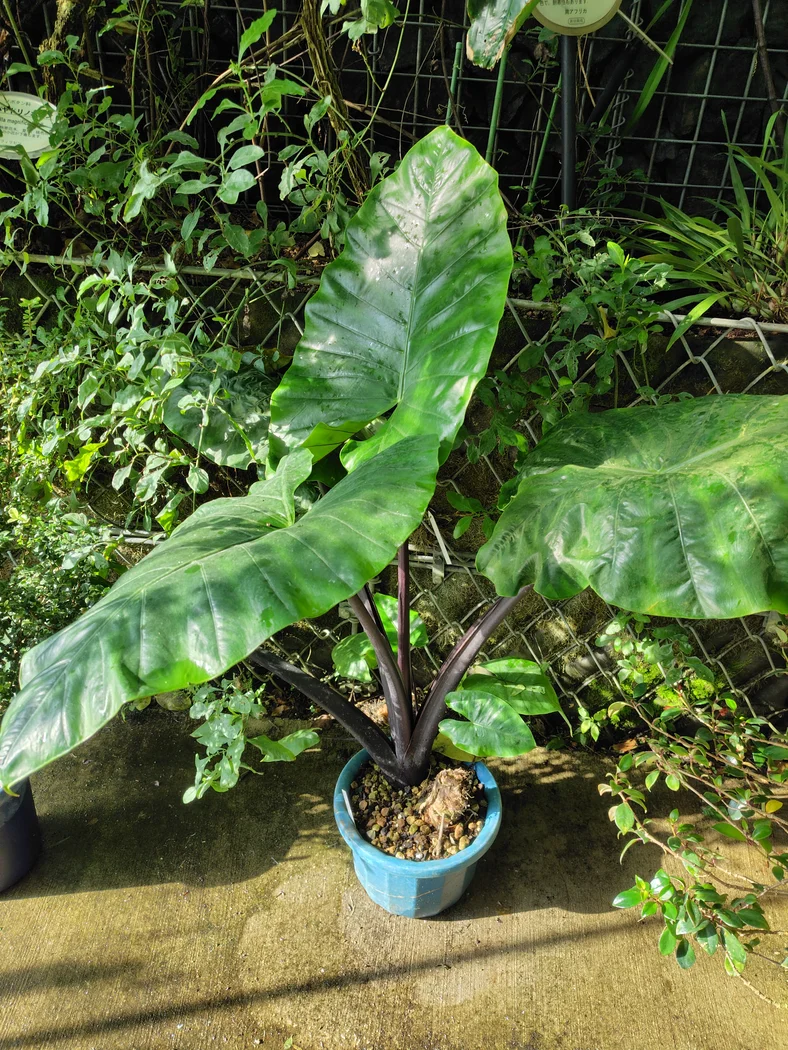
The broad leaves of ʻape. In the Kahalaopuna story, the leaves are laid down to see whether her weight will tear them.
さつまやまいもすけ, Wikimedia Commons. · Image source ↗ · CC0
What the reflection reveals in Kahalaopuna’s story
Mary Kawena Pukui and Samuel H. Elbert’s dictionary records shadow and reflection among the meanings of aka. In the Kahalaopuna story, the image in the water has a further power: catching it affects the seer whose face it shows. [3][6][1]
Read further in the library
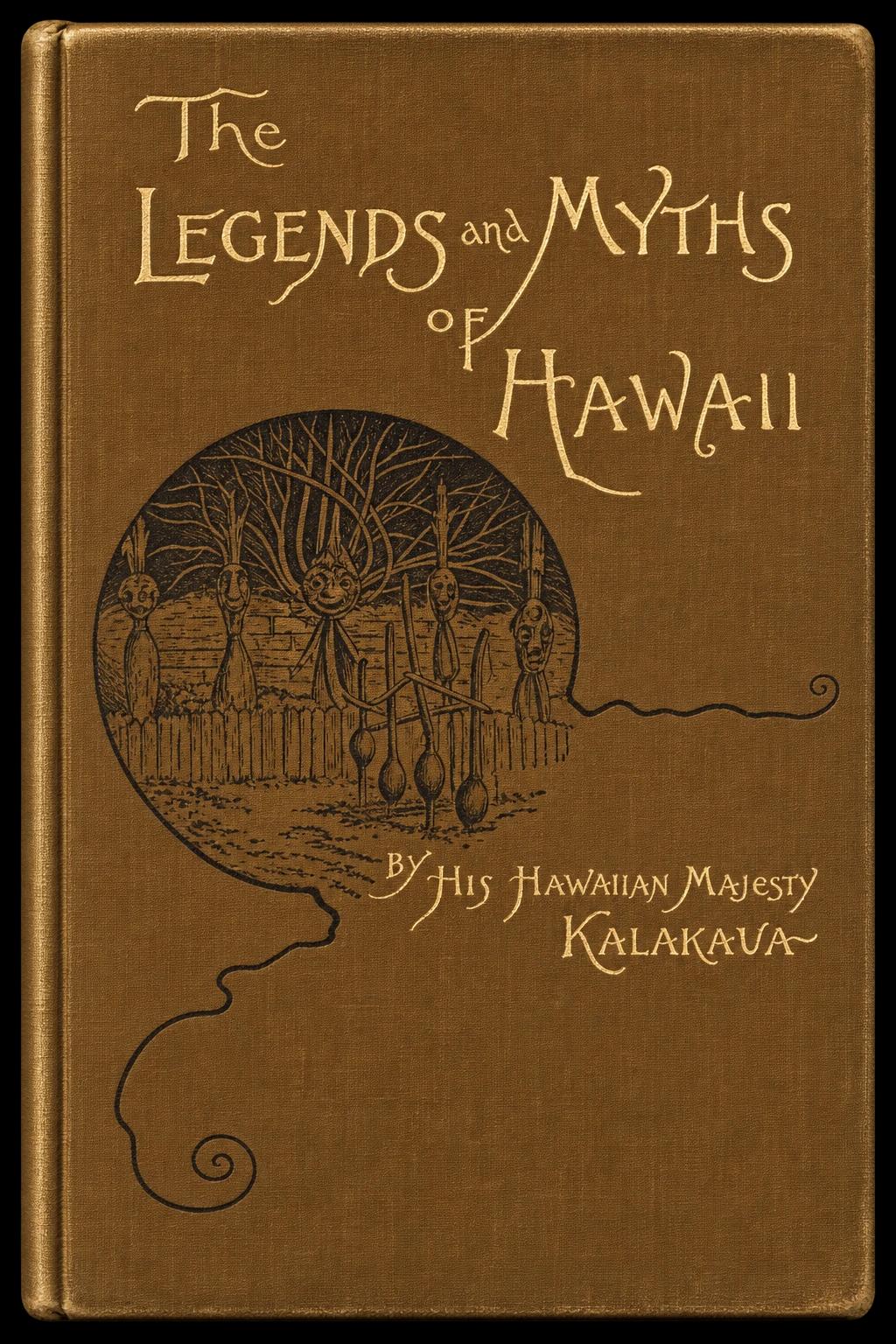
The Legends and Myths of Hawaii
Reading note
The separately titled account draws on exact passages in the consulted Library edition.
Sources
See references (6)
- Aka in the Hawaiian Dictionary ↗Mary Kawena Pukui and Samuel H. Elbert, Hawaiian Dictionary, revised edition, 1986, via Wehewehe Wikiwiki.Return to text ↑
- Leaves of Alocasia macrorrhizos ↗さつまやまいもすけ, Wikimedia Commons.
- The Legends and Myths of Hawaii, Reader page 43David Kalākaua, The Legends and Myths of Hawaii, edited with an introduction by Rollin Mallory Daggett, Charles L. Webster & Company, 1888. Exact Library edition IMJ-0646-E001. When the introduction or a signed editorial passage is used, its author is identified in the article.Read this page in The Legends and Myths of Hawaii ↗Return to text ↑
- The Legends and Myths of Hawaii, Reader page 175David Kalākaua, The Legends and Myths of Hawaii, edited with an introduction by Rollin Mallory Daggett, Charles L. Webster & Company, 1888. Exact Library edition IMJ-0646-E001. When the introduction or a signed editorial passage is used, its author is identified in the article.Read this page in The Legends and Myths of Hawaii ↗Return to text ↑
- The Legends and Myths of Hawaii, Reader page 523David Kalākaua, The Legends and Myths of Hawaii, edited with an introduction by Rollin Mallory Daggett, Charles L. Webster & Company, 1888. Exact Library edition IMJ-0646-E001. When the introduction or a signed editorial passage is used, its author is identified in the article.Read this page in The Legends and Myths of Hawaii ↗Return to text ↑
- The Legends and Myths of Hawaii, Reader page 524David Kalākaua, The Legends and Myths of Hawaii, edited with an introduction by Rollin Mallory Daggett, Charles L. Webster & Company, 1888. Exact Library edition IMJ-0646-E001. When the introduction or a signed editorial passage is used, its author is identified in the article.Read this page in The Legends and Myths of Hawaii ↗Return to text ↑