The Jade Emperor
The Jade Emperor is a ruler of Heaven in Chinese religion and Daoism. His court hears petitions, appoints officials and tries to rein in the Monkey King.
In this article
Who is the Jade Emperor?
The Jade Emperor, or Yuhuang Dadi, is a ruler of Heaven in Chinese popular religion and Daoism. In stories his authority takes the form of a court. Officials hear complaints, carry orders and watch over particular parts of the world. [1][2][3][4][5]
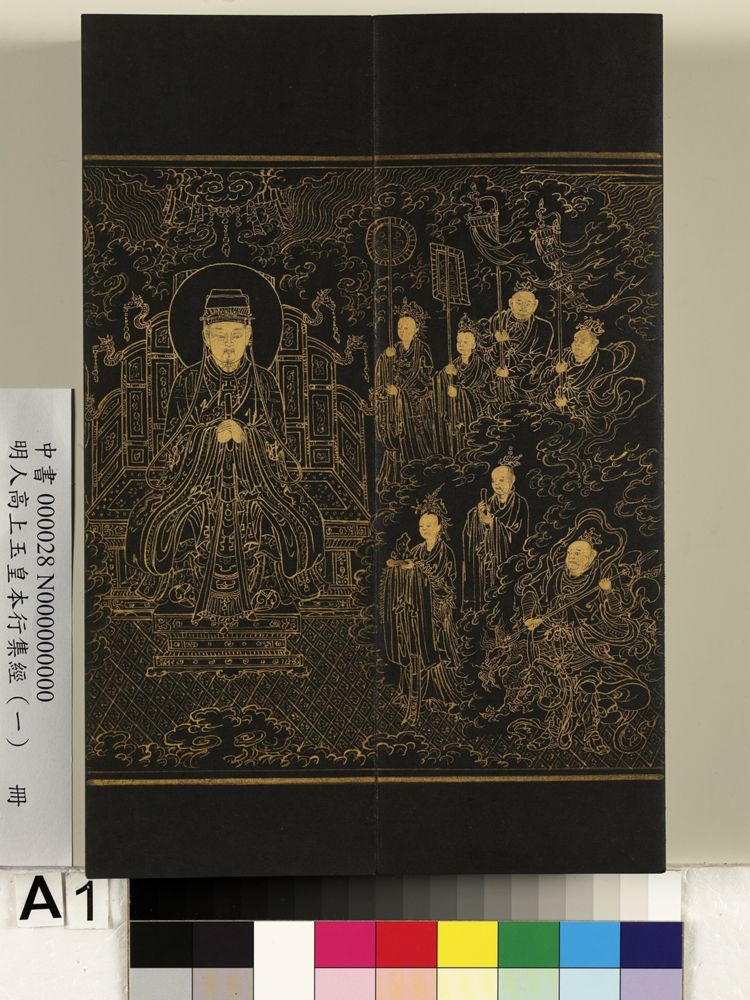
The opening illustrated leaf of a 1465 copy of the Jade Emperor Sutra shows a heavenly audience.
Unidentified Ming calligrapher. The Jade Emperor Sutra: One. 1465. The National Palace Museum, Taipei. The National Palace Museum, Taipei, CC BY 4.0 @ www.npm.gov.tw. CC BY 4.0. · Image source ↗ · CC BY 4.0
In The Chinese Fairy Book
In Richard Wilhelm’s The Chinese Fairy Book, translated by Frederick H. Martens, the Five Ancients establish the world and ask the Prince of the Jasper Castle to rule it. He becomes the White Jade Ruler. Among his attendants are gods connected to thunder, the Great Bear and the lunar stations. A note in the story of the Monk of the Yangtze-Kiang identifies the Highest Lord as Yu Huang. [3][6]
When complaints about Sun Wukong reach Heaven, the Evening Star persuades the ruler to give him an office. The Monkey King leaves when he discovers how low his rank is. He makes a banner declaring himself Heaven’s equal. Li Jing and Nezha are among those sent to deal with him. [4][5]
The ruler of Heaven and the Three Purities
A Daoist priest’s robe discussed by the Art Institute of Chicago depicts a court with the Three Purities in its upper register. The museum describes the Jade Emperor as the more active ruler of the gods who deal with earthly affairs. This helps explain how the tales can make him the central executive figure and still give the Three Purities distinctive standing. [1][7]
The opening of a Ming copy of the Jade Emperor Sutra shows an audience in the clouds. The figure on the throne and the attendants around him give the heavenly court the arrangement of a court on earth. [2][3]
In the library
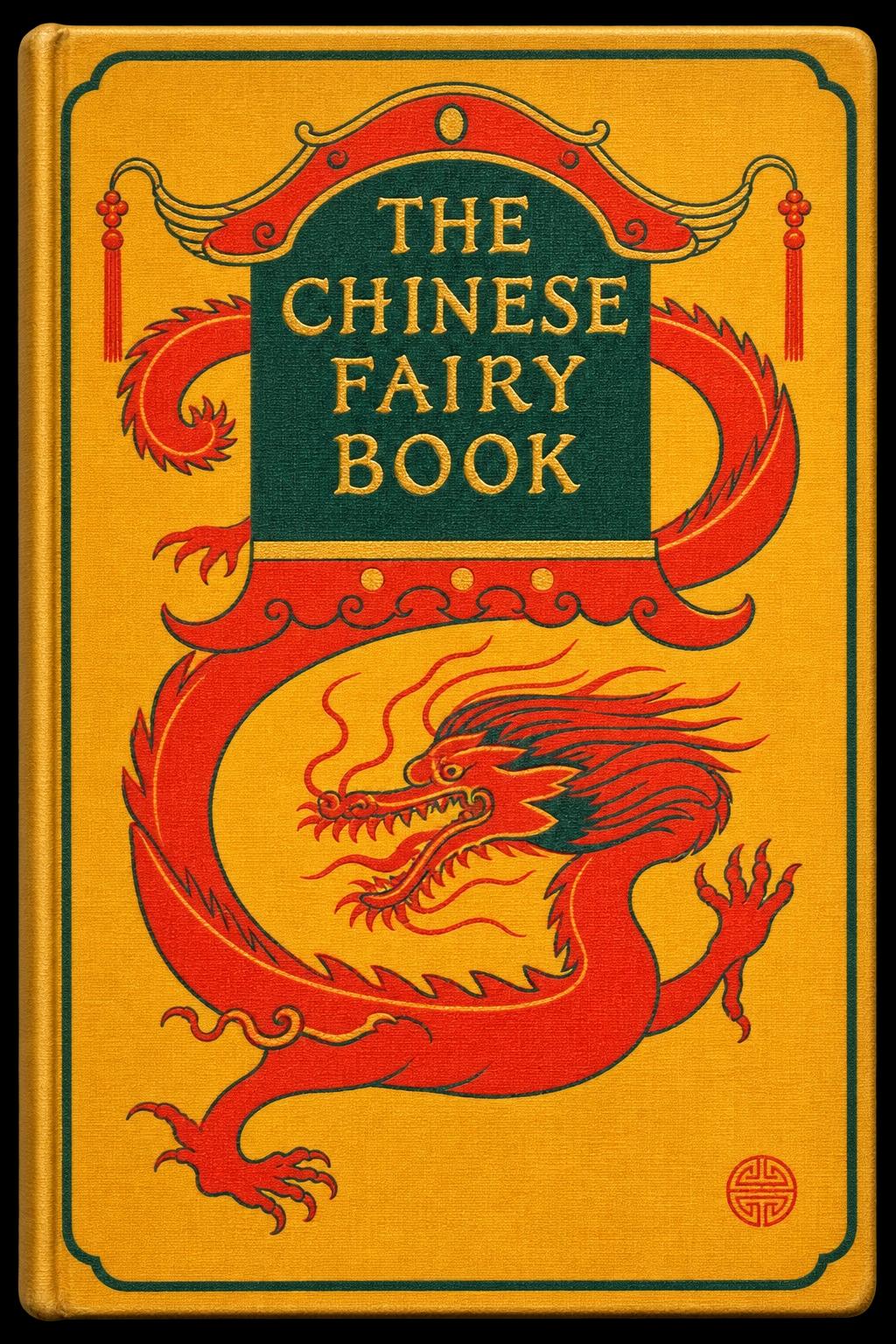
The Chinese Fairy Book
Reading note
Compare the naming of the White Jade Ruler with Heaven’s attempt to find the Monkey King a place in the court.
Sources
See references (7)
- Taoism and the Arts of China, Priest’s Robe ↗Art Institute of Chicago
- The Jade Emperor Sutra: One ↗Unidentified Ming calligrapher. The Jade Emperor Sutra: One. 1465. The National Palace Museum, Taipei. The National Palace Museum, Taipei, CC BY 4.0 @ www.npm.gov.tw. CC BY 4.0.
- The Chinese Fairy Book, Library Reader page 48Richard Wilhelm, editor. Frederick H. Martens, translator. The Chinese Fairy Book. Frederick A. Stokes Company, New York, 1921. Lumitheca Library edition IMJ-0478-E002.Read this page in The Chinese Fairy Book ↗
- The Chinese Fairy Book, Library Reader page 333Richard Wilhelm, editor. Frederick H. Martens, translator. The Chinese Fairy Book. Frederick A. Stokes Company, New York, 1921. Lumitheca Library edition IMJ-0478-E002.Read this page in The Chinese Fairy Book ↗
- The Chinese Fairy Book, Library Reader page 336Richard Wilhelm, editor. Frederick H. Martens, translator. The Chinese Fairy Book. Frederick A. Stokes Company, New York, 1921. Lumitheca Library edition IMJ-0478-E002.Read this page in The Chinese Fairy Book ↗
- The Chinese Fairy Book, Library Reader page 273Richard Wilhelm, editor. Frederick H. Martens, translator. The Chinese Fairy Book. Frederick A. Stokes Company, New York, 1921. Lumitheca Library edition IMJ-0478-E002.Read this page in The Chinese Fairy Book ↗
- The Chinese Fairy Book, Library Reader page 338Richard Wilhelm, editor. Frederick H. Martens, translator. The Chinese Fairy Book. Frederick A. Stokes Company, New York, 1921. Lumitheca Library edition IMJ-0478-E002.Read this page in The Chinese Fairy Book ↗