Babbitt’s Invisible Colour Octaves
Babbitt compared colours to musical notes and proposed invisible colour octaves. See how his analogy differs from the physics of sound and light.
In this article
Why Babbitt called them octaves
In music an octave spans a doubling of frequency. Edwin D. Babbitt borrowed that interval to imagine repeated scales of colour beyond ordinary sight. The analogy joins two ways of describing frequency, one for sound and one for light. [4][5][2][3]
The Principles of Light and Color by Edwin D. Babbitt
In The Principles of Light and Color, Edwin D. Babbitt pairs the seven notes of a musical scale with the conventional divisions of the visible spectrum. He gives the low note C to red and uses the return to C at a higher pitch as a model for a second scale above violet. [4][5]
Babbitt discusses experiments that detect radiation beyond violet through fluorescence or photography. He puts those results into a wider scheme of repeated colour scales and treats reports of odic and psychic colours as signs that some people could see into finer ranges. [6][7][8]
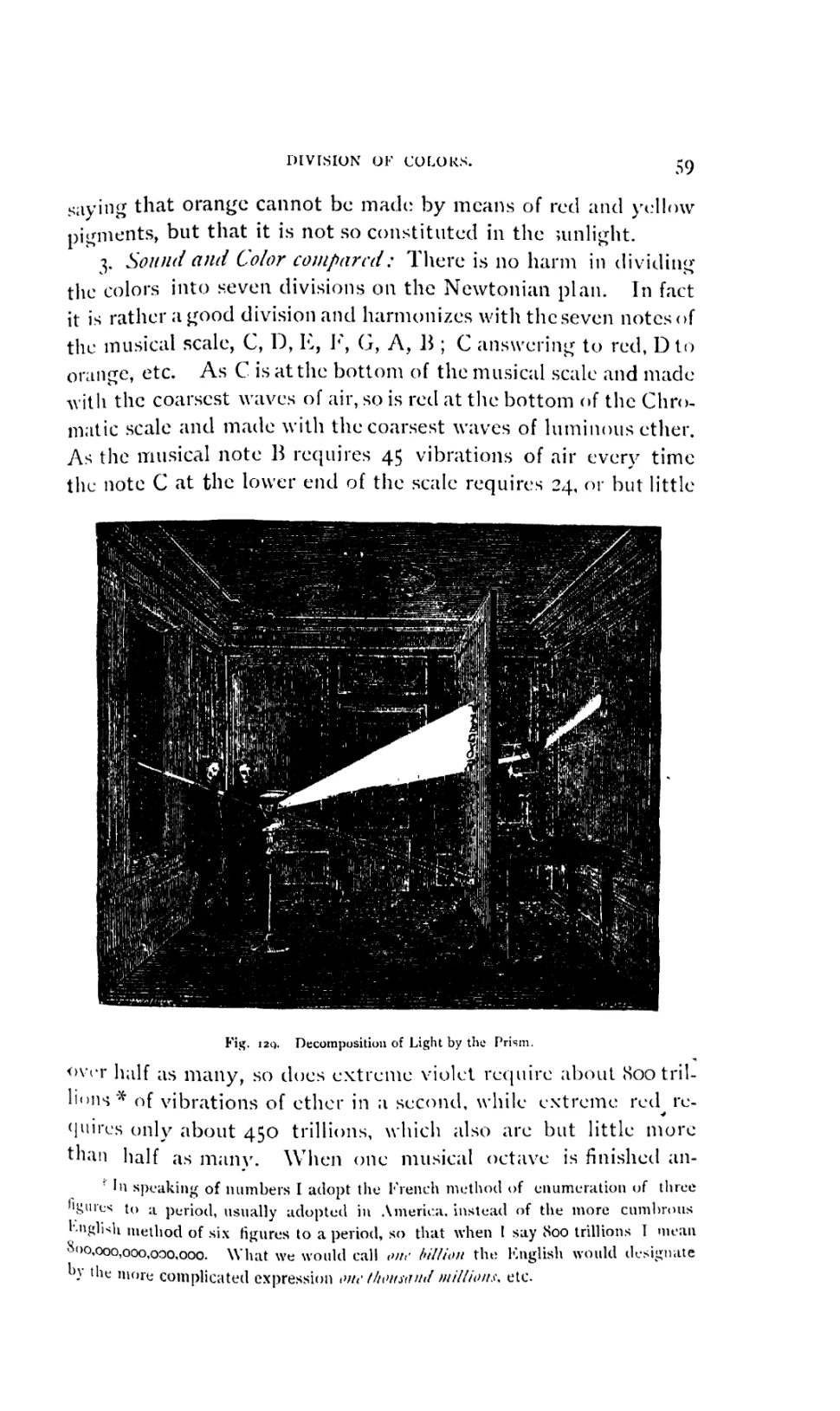
Figure 129 shows the visible band produced by a prism. Babbitt uses this familiar spectrum as the starting point for his proposed further octaves.
Edwin D. Babbitt, The Principles of Light and Color, second edition, 1896. Lumitheca Library facsimile. · Image source ↗ · Public Domain
See references (5)
- The Principles of Light and Color, printed p. 59, Reader page 66
- The Principles of Light and Color, printed p. 60, Reader page 67
- The Principles of Light and Color, printed p. 271, Reader page 278
- The Principles of Light and Color, printed p. 272, Reader page 279
- The Principles of Light and Color, printed p. 274, Reader page 281
Where the musical analogy ends
A musical octave has a fixed ratio. Ultraviolet and infrared likewise have measurable frequencies beyond the visible band. A screen or photographic plate can register radiation there. The presence of that radiation leaves Babbitt’s ideas about repeated colour scales and psychic sight as separate claims. [5][6][8][2][3]
See references (5)
- Intro to Music Concepts, Pitch
- Basics of Space Flight, chapter 6, Electromagnetic Spectrum and Waves or Particles?
- The Principles of Light and Color, printed p. 60, Reader page 67
- The Principles of Light and Color, printed p. 271, Reader page 278
- The Principles of Light and Color, printed p. 274, Reader page 281
In the library
The Principles of Light and Color
Reading note
Separately attributed primary Library account, cited on exact verified Reader leaves.
Sources
See references (8)
- Figure 129, Decomposition of Light by the Prism, printed p. 59, Reader page 66Edwin D. Babbitt, The Principles of Light and Color, second edition, 1896. Lumitheca Library facsimile.Read this page in The Principles of Light and Color ↗
- Intro to Music Concepts, Pitch ↗Carnegie Mellon University, computer music course readings.
- Basics of Space Flight, chapter 6, Electromagnetic Spectrum and Waves or Particles? ↗NASA Science.
- The Principles of Light and Color, printed p. 59, Reader page 66Edwin D. Babbitt, The Principles of Light and Color, second edition, College of Fine Forces, East Orange, New Jersey, 1896. Lumitheca Library edition IMJ-0607-E001.Read this page in The Principles of Light and Color ↗
- The Principles of Light and Color, printed p. 60, Reader page 67Edwin D. Babbitt, The Principles of Light and Color, second edition, College of Fine Forces, East Orange, New Jersey, 1896. Lumitheca Library edition IMJ-0607-E001.Read this page in The Principles of Light and Color ↗
- The Principles of Light and Color, printed p. 271, Reader page 278Edwin D. Babbitt, The Principles of Light and Color, second edition, College of Fine Forces, East Orange, New Jersey, 1896. Lumitheca Library edition IMJ-0607-E001.Read this page in The Principles of Light and Color ↗
- The Principles of Light and Color, printed p. 272, Reader page 279Edwin D. Babbitt, The Principles of Light and Color, second edition, College of Fine Forces, East Orange, New Jersey, 1896. Lumitheca Library edition IMJ-0607-E001.Read this page in The Principles of Light and Color ↗
- The Principles of Light and Color, printed p. 274, Reader page 281Edwin D. Babbitt, The Principles of Light and Color, second edition, College of Fine Forces, East Orange, New Jersey, 1896. Lumitheca Library edition IMJ-0607-E001.Read this page in The Principles of Light and Color ↗