Holy wells
Holy wells are springs visited for devotion. Explore the medieval chapel at Holywell, the ruins at Madron and the healing stories tied to each site.
In this article
What is a holy well?
A holy well is a spring or other water source treated as sacred. In British Christian tradition, people have visited wells linked to saints to pray, bathe or collect water. Some sites acquired chapels and became places of pilgrimage. [2][4][5][6][7][8][9]
Holywell and Madron
Pilgrimage to St Winefride’s Well at Holywell is recorded from at least 1115. The present late-medieval chapel encloses a shaped basin fed by the spring. Water passes from it towards an outdoor pool. [1]
At Madron in Cornwall, a channel once carried water from the well into a trough inside the chapel. The ruined building retains its altar and benches. Its layout shows how the spring and the chapel were used together. [2][14]
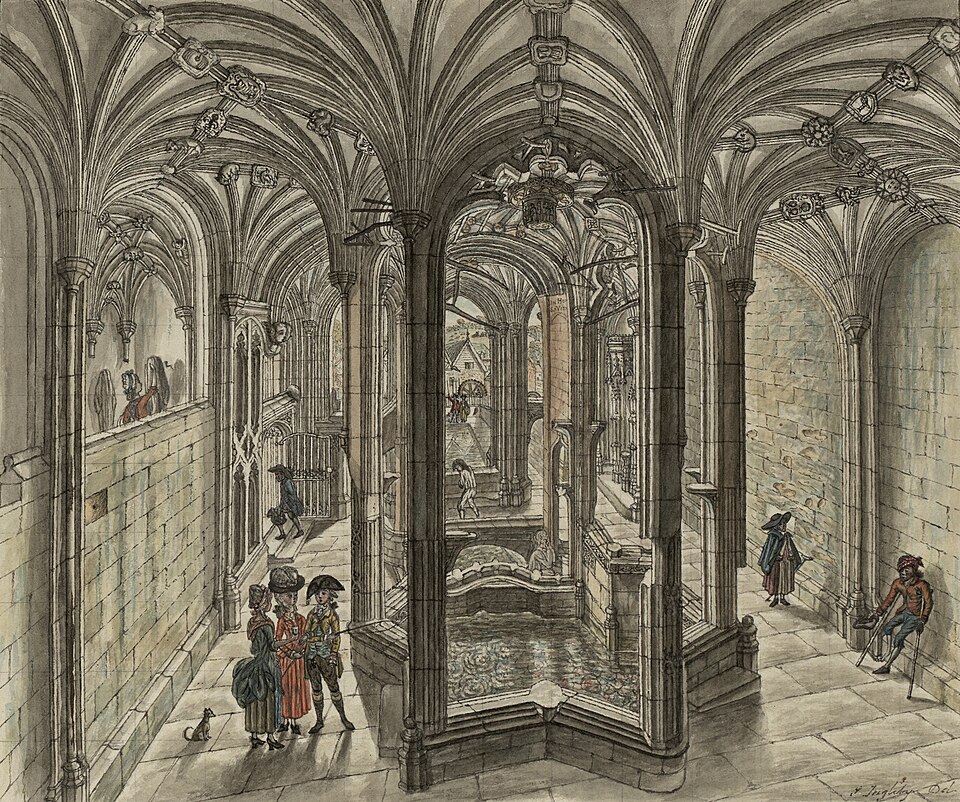
St Winifred’s Well, a historic view attributed to J. Ingleby in Thomas Pennant’s extra-illustrated A tour in Wales. Visitors, water and vaulted architecture appear together. The drawing provides a view of the shrine, rather than a depiction of a particular reported cure.
J. Ingleby, from the Pennant collection, National Library of Wales, via Wikimedia Commons. Public Domain Mark. Artwork date not established here. · Image source ↗ · Public Domain
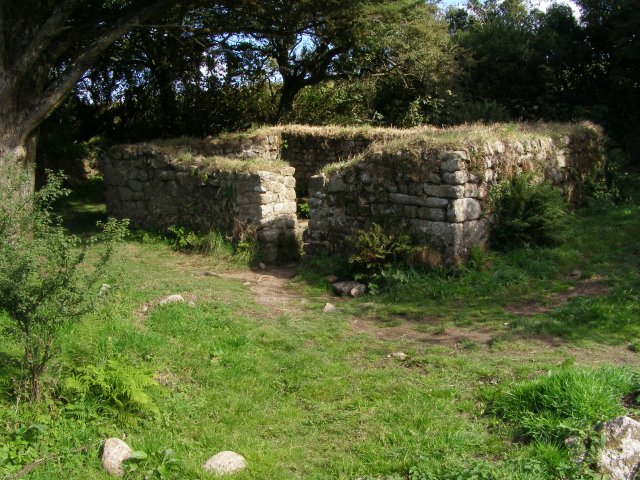
The roofless chapel at Madron in 2006. A channel brought water from the well to a trough inside.
Jim Champion / Geograph, CC BY-SA 2.0 · Image source ↗ · CC BY-SA 2.0
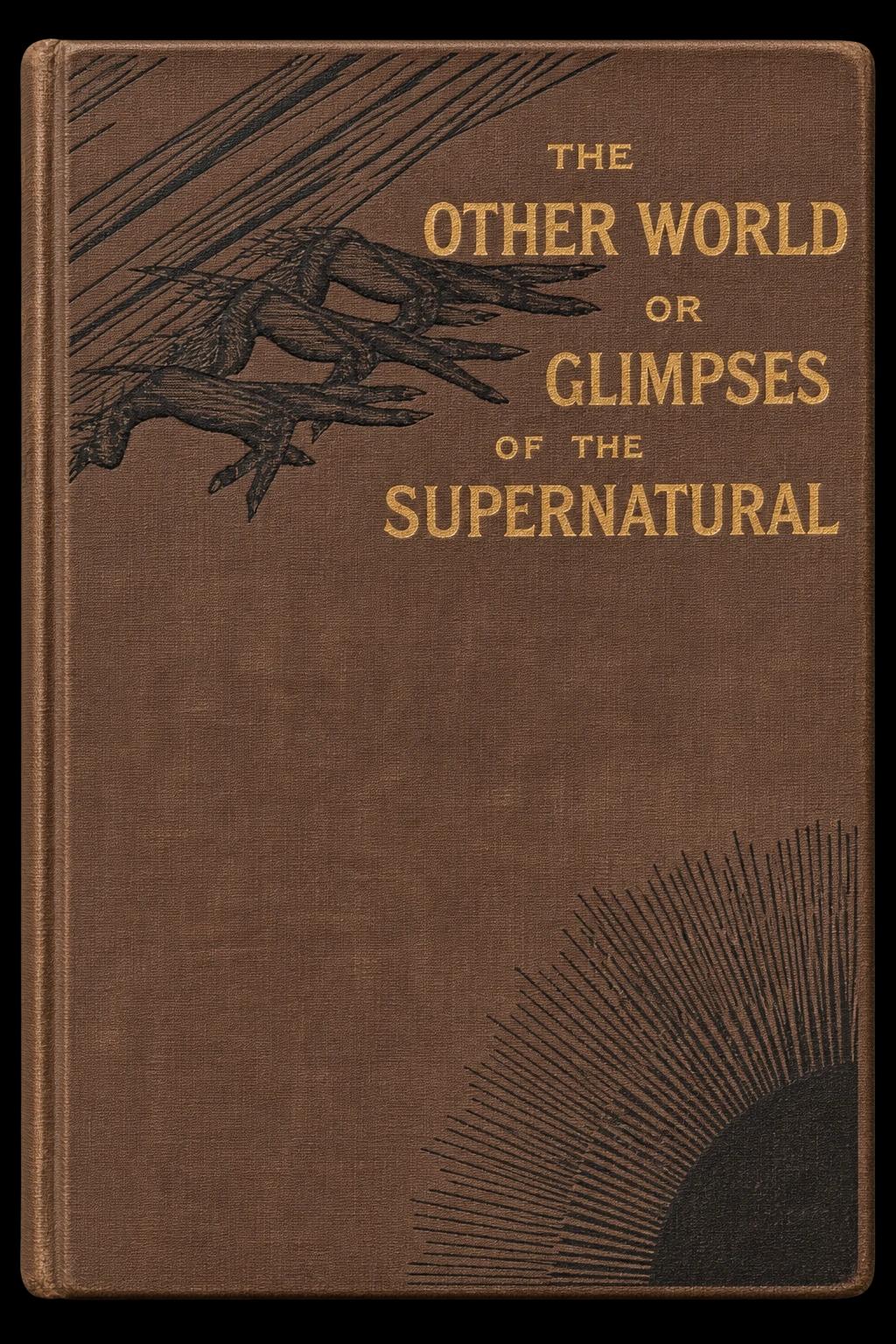
The Other World, edited by Frederick George Lee
Frederick George Lee’s The Other World reproduces an account of Mary Wood praying for St Winifred’s intercession and using moss brought from the well on her injured arm. The letter says she could use her arm the next morning. [4][5][6]
In a separate account, Bishop John Milner describes Winifred White carrying out devotions and bathing at Holywell in June 1805. He reports a sudden recovery and says he questioned witnesses from several places and religious backgrounds. [6][7][4][5]
For Madron, Lee quotes Bishop Joseph Hall’s account of John Trelille, who had reportedly been unable to walk for years. Three dreams told him to wash at the well. Hall recalled seeing Trelille walking afterwards and interpreted the change as angelic assistance. [8][9]
A Wanderer in the Spirit Lands: Franchezzo, transcribed by A. Farnese
In A Wanderer in the Spirit Lands, attributed to Franchezzo and transcribed by A. Farnese, a rescued party washes away foul mud in a spring. Later a guardian refreshes the narrator at a fountain and directs him to a Home of Rest. Water marks two stages of recovery in the book’s spirit landscape. [10][11][12][13]
Distinctions and comparisons
In Lee’s accounts, a shrine can be visited in person or reached through something carried from it. In Franchezzo’s narrative, the springs are part of the journey itself. Washing and refreshment mark changes in the travellers’ condition. [4][5][6][7][8][9][10][11][12][13]
See references (10)
- The Other World, Reader page 121
- The Other World, Reader page 122
- The Other World, Reader page 123
- The Other World, Reader page 124
- The Other World, Reader page 529
- The Other World, Reader page 530
- A Wanderer in the Spirit Lands, printed p. 167, Reader page 176
- A Wanderer in the Spirit Lands, printed p. 168, Reader page 177
- A Wanderer in the Spirit Lands, printed p. 245, Reader page 254
- A Wanderer in the Spirit Lands, printed p. 246, Reader page 255
Read further in the library
The Other World
Reading note
The separately titled account draws on exact passages in the consulted Library edition.

A Wanderer in the Spirit Lands
Reading note
Separately attributed comparison with exact previously researched Library passages.
Sources
See references (14)
- Cadw: St Winefride’s Chapel and Well ↗Welsh historic-environment service, own site description. Consulted for the physical monument and documented pilgrimage history, not as authentication of a narrated cure.Return to text ↑
- Historic England: Madron Well Chapel, National Heritage List entry 1006728 ↗Official monument record, including the chapel, its water channel and historical traditions. Its record of a healing tradition is not a modern clinical assessment.Return to text ↑
- St Winifreds Well by J Ingleby, National Library of Wales, via Wikimedia Commons ↗Historic drawing from the extra-illustrated A tour in Wales compiled for Thomas Pennant’s library. National Library of Wales digital contribution; Commons identifies Public Domain Mark. Exact artwork date not established here; the 2015 digital metadata date is not used as its creation date.
- The Other World, Reader page 121Frederick George Lee, editor, The Other World; or, Glimpses of the Supernatural, two volumes, Henry S. King and Co., London, 1875. Exact consulted Library edition IMJ-0657-E001. Narratives and embedded quotations are attributed to this compilation; an original author is not represented as independently consulted merely because Lee quotes them. Reader positions are verified separately from printed pagination.Read this page in The Other World ↗Return to text ↑
- The Other World, Reader page 122Frederick George Lee, editor, The Other World; or, Glimpses of the Supernatural, two volumes, Henry S. King and Co., London, 1875. Exact consulted Library edition IMJ-0657-E001. Narratives and embedded quotations are attributed to this compilation; an original author is not represented as independently consulted merely because Lee quotes them. Reader positions are verified separately from printed pagination.Read this page in The Other World ↗Return to text ↑
- The Other World, Reader page 123Frederick George Lee, editor, The Other World; or, Glimpses of the Supernatural, two volumes, Henry S. King and Co., London, 1875. Exact consulted Library edition IMJ-0657-E001. Narratives and embedded quotations are attributed to this compilation; an original author is not represented as independently consulted merely because Lee quotes them. Reader positions are verified separately from printed pagination.Read this page in The Other World ↗Return to text ↑
- The Other World, Reader page 124Frederick George Lee, editor, The Other World; or, Glimpses of the Supernatural, two volumes, Henry S. King and Co., London, 1875. Exact consulted Library edition IMJ-0657-E001. Narratives and embedded quotations are attributed to this compilation; an original author is not represented as independently consulted merely because Lee quotes them. Reader positions are verified separately from printed pagination.Read this page in The Other World ↗Return to text ↑
- The Other World, Reader page 529Frederick George Lee, editor, The Other World; or, Glimpses of the Supernatural, two volumes, Henry S. King and Co., London, 1875. Exact consulted Library edition IMJ-0657-E001. Narratives and embedded quotations are attributed to this compilation; an original author is not represented as independently consulted merely because Lee quotes them. Reader positions are verified separately from printed pagination.Read this page in The Other World ↗Return to text ↑
- The Other World, Reader page 530Frederick George Lee, editor, The Other World; or, Glimpses of the Supernatural, two volumes, Henry S. King and Co., London, 1875. Exact consulted Library edition IMJ-0657-E001. Narratives and embedded quotations are attributed to this compilation; an original author is not represented as independently consulted merely because Lee quotes them. Reader positions are verified separately from printed pagination.Read this page in The Other World ↗Return to text ↑
- A Wanderer in the Spirit Lands, printed p. 167, Reader page 176A Wanderer in the Spirit Lands, attributed to the spirit Franchezzo and transcribed by A. Farnese. W. J. Sinkins, London. Title page undated; preface dated 1896. The narrator’s experiences and the guides’ explanations are reported claims, not independently established observations.Read this page in A Wanderer in the Spirit Lands ↗Return to text ↑
- A Wanderer in the Spirit Lands, printed p. 168, Reader page 177A Wanderer in the Spirit Lands, attributed to the spirit Franchezzo and transcribed by A. Farnese. W. J. Sinkins, London. Title page undated; preface dated 1896. The narrator’s experiences and the guides’ explanations are reported claims, not independently established observations.Read this page in A Wanderer in the Spirit Lands ↗Return to text ↑
- A Wanderer in the Spirit Lands, printed p. 245, Reader page 254A Wanderer in the Spirit Lands, attributed to the spirit Franchezzo and transcribed by A. Farnese. W. J. Sinkins, London. Title page undated; preface dated 1896. The narrator’s experiences and the guides’ explanations are reported claims, not independently established observations.Read this page in A Wanderer in the Spirit Lands ↗Return to text ↑
- A Wanderer in the Spirit Lands, printed p. 246, Reader page 255A Wanderer in the Spirit Lands, attributed to the spirit Franchezzo and transcribed by A. Farnese. W. J. Sinkins, London. Title page undated; preface dated 1896. The narrator’s experiences and the guides’ explanations are reported claims, not independently established observations.Read this page in A Wanderer in the Spirit Lands ↗Return to text ↑
- Madron Well chapel, photographed 29 August 2006 ↗Jim Champion / Geograph, CC BY-SA 2.0Return to text ↑