Hive Devas
What is a hive deva? Geoffrey Hodson links a guardian of bees with a hive’s group soul, its queen and the development of larvae.
In this article
A guardian for a colony
A hive deva is a guardian intelligence that Geoffrey Hodson associates with a bee colony. He gives the colony a shared life, which he calls a group soul. The guardian is said to guide its development, with the queen as a centre of activity within the hive. [3][4][5][6]
The Kingdom of the Gods by Geoffrey Hodson
In The Kingdom of the Gods, Geoffrey Hodson distinguishes guardians of particular hives from a broader angelic order associated with bees. He reports sensing a guardian with yellow, gold and brown in its aura, colours he connects with the bees themselves. [4][5][6]
Hodson describes the queen as a centre through which forces pass to the group soul. He gives the angel a special role in protecting the larvae, and interprets the queen, workers and drones as expressions of different aspects of mind and creativity. [6][7]
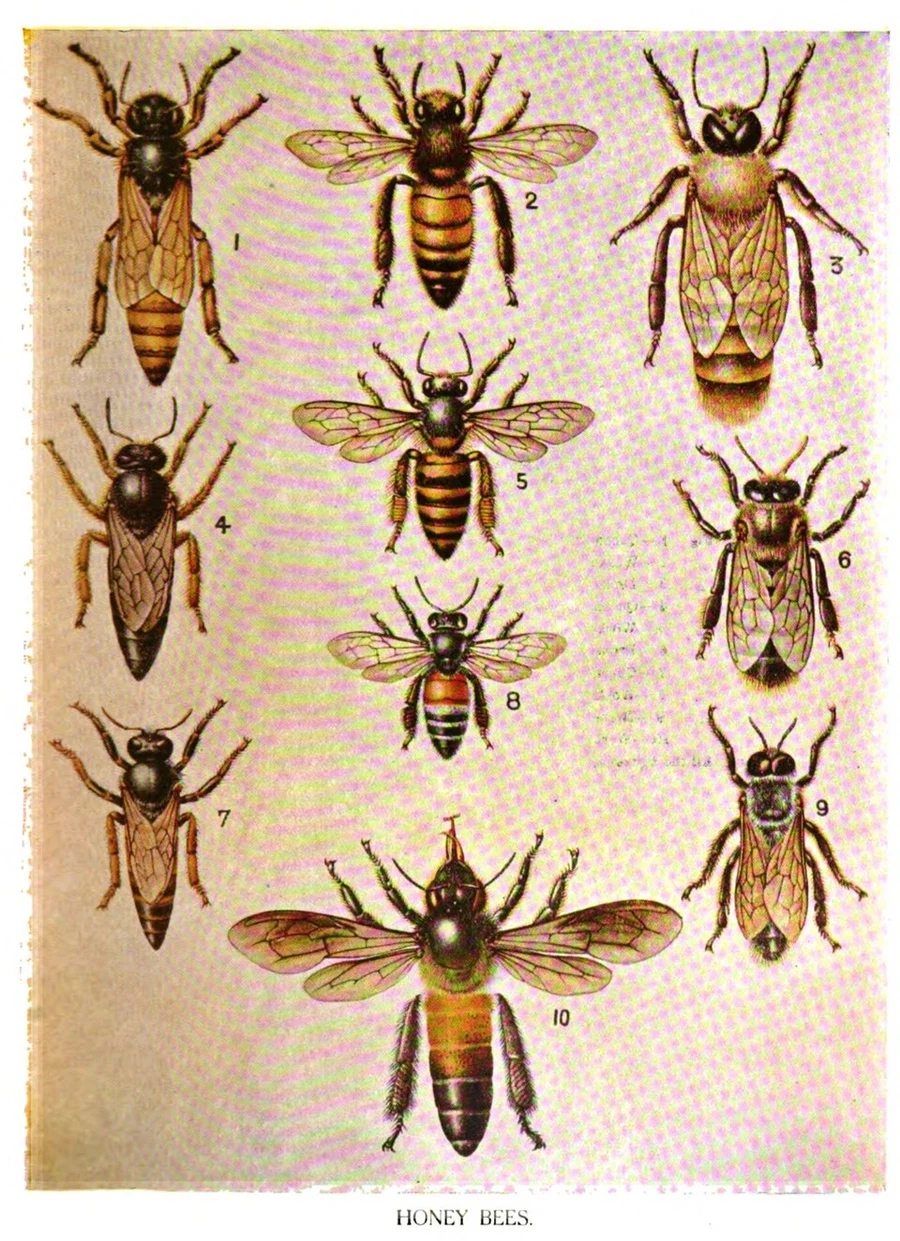
An illustration of honey bees from the Agricultural Journal of India, 1917. Hodson interprets the work of the colony through a proposed guardian and group soul.
The Agricultural Journal of India, vol. 12, 1917. Illustrator unrecorded. Public Domain Mark via Wikimedia Commons. · Image source ↗ · Public Domain
Langstroth on the Hive and the Honey-Bee
In Langstroth on the Hive and the Honey-Bee, L. L. Langstroth distinguishes the queen, drones and workers. He describes the queen laying eggs and the workers raising the brood and carrying out the ordinary work of the hive. [2]
Colony work and its symbolic reading
Langstroth describes how the colony maintains its brood. Hodson takes the same activities into his account of a guardian intelligence. The different roles of queen, workers and drones give his interpretation a structure already visible in the colony. [6][7][2]
In the library
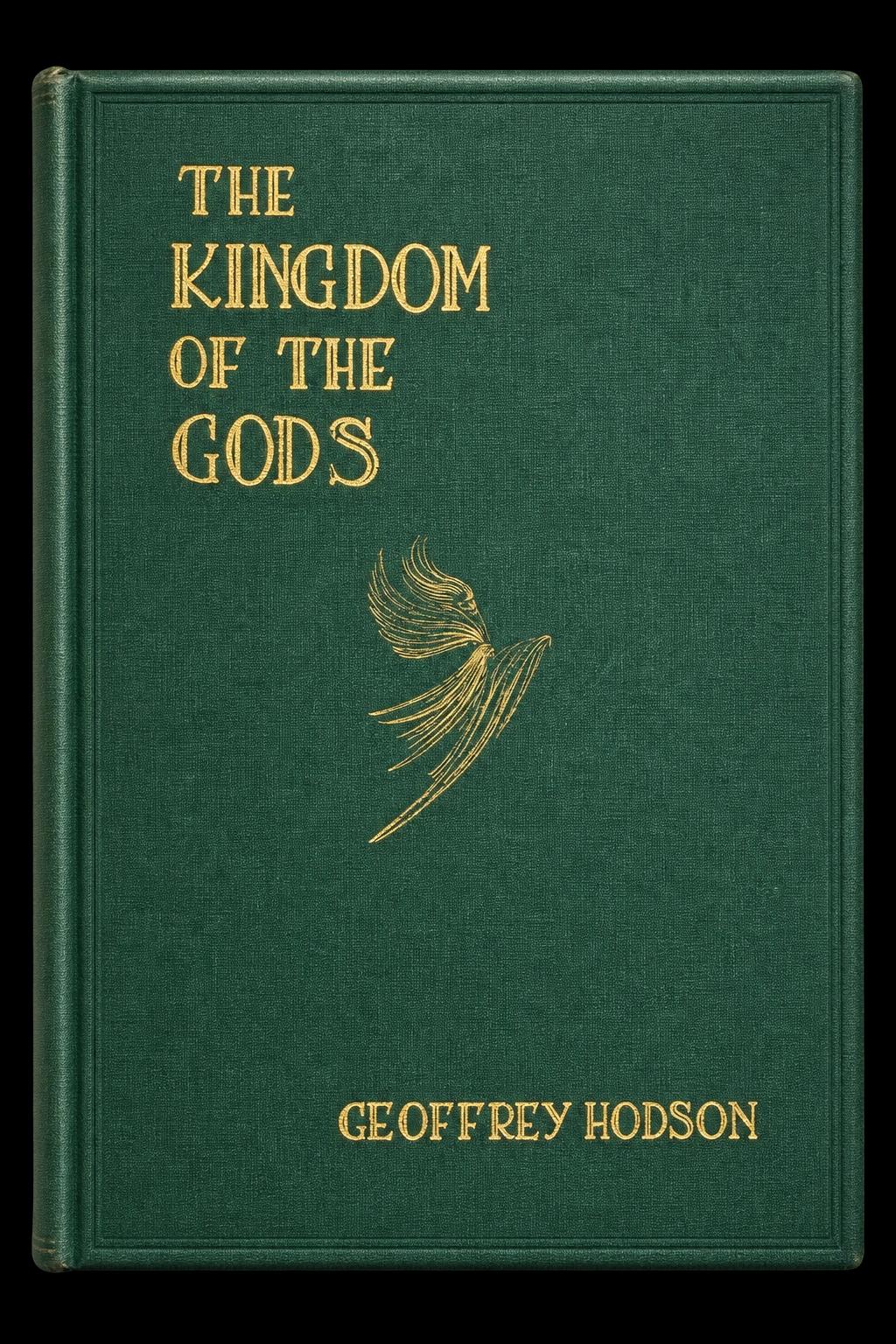
The Kingdom of the Gods
Reading note
The separately titled account draws on exact passages in the consulted Library edition.
Sources
See references (7)
- Honey bees from The Agricultural Journal of India, volume 12 (1917) ↗The Agricultural Journal of India, vol. 12, 1917. Illustrator unrecorded. Public Domain Mark via Wikimedia Commons.
- Langstroth on the Hive and the Honey-Bee, chapter III: The Queen or Mother-Bee, the Drones, and the Workers ↗L. L. Langstroth, Langstroth on the Hive and the Honey-Bee, Northampton, 1853, chapter III. Project Gutenberg transcription.
- The Kingdom of the Gods, Reader page 72Geoffrey Hodson, The Kingdom of the Gods, Theosophical Publishing House, first published 1952, thirteenth reprint 2007. Lumitheca Library edition IMJ-0606-E001.Read this page in The Kingdom of the Gods ↗
- The Kingdom of the Gods, Reader page 73Geoffrey Hodson, The Kingdom of the Gods, Theosophical Publishing House, first published 1952, thirteenth reprint 2007. Lumitheca Library edition IMJ-0606-E001.Read this page in The Kingdom of the Gods ↗
- The Kingdom of the Gods, Reader page 74Geoffrey Hodson, The Kingdom of the Gods, Theosophical Publishing House, first published 1952, thirteenth reprint 2007. Lumitheca Library edition IMJ-0606-E001.Read this page in The Kingdom of the Gods ↗
- The Kingdom of the Gods, Reader page 75Geoffrey Hodson, The Kingdom of the Gods, Theosophical Publishing House, first published 1952, thirteenth reprint 2007. Lumitheca Library edition IMJ-0606-E001.Read this page in The Kingdom of the Gods ↗
- The Kingdom of the Gods, Reader page 76Geoffrey Hodson, The Kingdom of the Gods, Theosophical Publishing House, first published 1952, thirteenth reprint 2007. Lumitheca Library edition IMJ-0606-E001.Read this page in The Kingdom of the Gods ↗