Hitodama
A hitodama is a light understood as a human soul in Japanese folklore, often seen as a floating ball of fire.
In this article
What is a hitodama?
A hitodama is a light associated with a human soul in Japanese folklore. It may look like a ball of fire and appear near the time of a death or in a story about the dead. Sometimes the light alone marks the soul’s presence. In other stories it moves alongside a figure. [1]
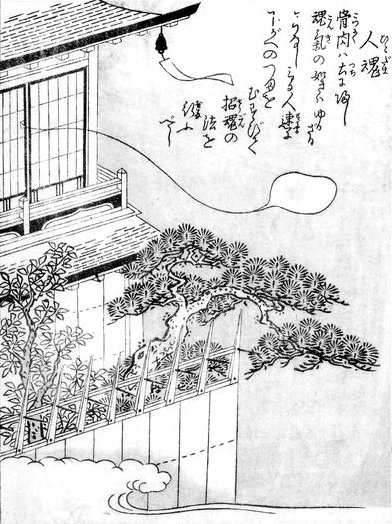
Toriyama Sekien gives the soul light a tapering tail as it drifts away from a house.
Toriyama Sekien, Hitodama, from Konjaku Gazu Zoku Hyakki, 1779. Wikimedia Commons. Public domain. · Image source ↗ · Public Domain
In Ancient Tales and Folk-lore of Japan
In Richard Gordon Smith’s A Haunted Temple in Inaba Province, a priest named Jōgen sees a figure near an image of the Buddha. A light Smith calls a shito dama circles the figure. The ghost vanishes, apparently taking the light’s form, and the light shoots away. [2][3][4]
In Legends Told by a Fisherman, a Lake Biwa storyteller calls the vengeful fireball the Spider Fire of the Spirit of the Dead Akechi. It leads boats off course in bad weather. The setting changes what the light does. At the temple it accompanies a ghost, while on the lake it is the danger itself. [5][6]
See references (5)
- Ancient Tales and Folklore of Japan, printed p. 36, Reader page 58
- Ancient Tales and Folklore of Japan, printed p. 41, Reader page 65
- Ancient Tales and Folklore of Japan, printed p. 42, Reader page 66
- Ancient Tales and Folklore of Japan, printed p. 48, Reader page 74
- Ancient Tales and Folklore of Japan, printed p. 49, Reader page 77
How accounts of a soul light differ
A Fujiyoshida account published in 1983 records someone hearing that a hitodama had appeared before a death. The same record describes a personal sighting of a round light that looked blue or red. In these accounts a light can foreshadow a death as well as take part in a haunting. [3][4][6][1]
In the library
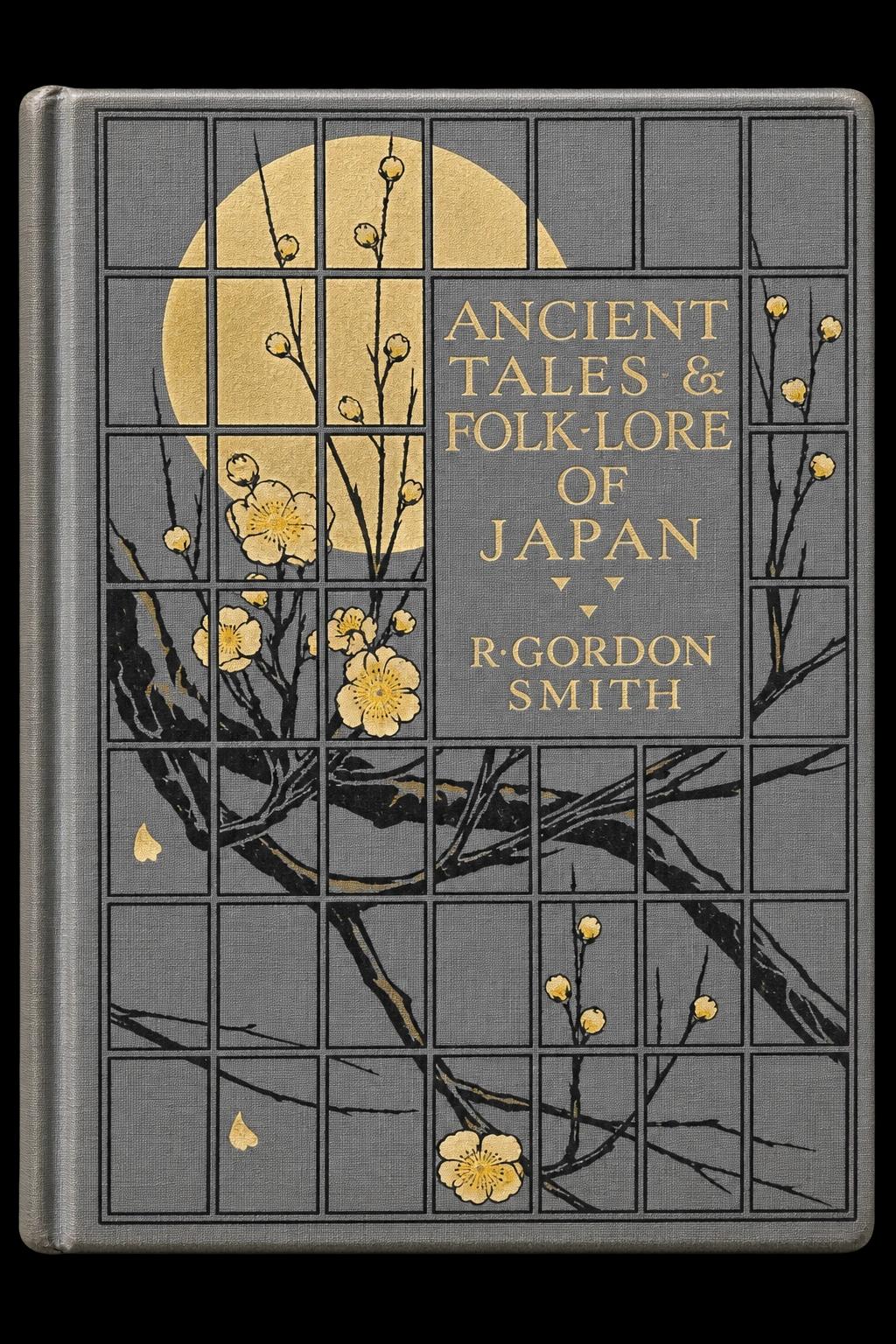
Ancient Tales and Folk-lore of Japan
Reading note
Read Richard Gordon Smith’s account in the verified 1908 Library edition.
Sources
See references (7)
- Hitodama, Fujiyoshida folklore record 1310181 ↗International Research Center for Japanese Studies
- Ancient Tales and Folklore of Japan, printed p. 36, Reader page 58Richard Gordon Smith, Ancient Tales and Folklore of Japan. A. & C. Black, London, 1908. Lumitheca Library edition IMJ-0588-E001.Read this page in Ancient Tales and Folk-lore of Japan ↗
- Ancient Tales and Folklore of Japan, printed p. 41, Reader page 65Richard Gordon Smith, Ancient Tales and Folklore of Japan. A. & C. Black, London, 1908. Lumitheca Library edition IMJ-0588-E001.Read this page in Ancient Tales and Folk-lore of Japan ↗
- Ancient Tales and Folklore of Japan, printed p. 42, Reader page 66Richard Gordon Smith, Ancient Tales and Folklore of Japan. A. & C. Black, London, 1908. Lumitheca Library edition IMJ-0588-E001.Read this page in Ancient Tales and Folk-lore of Japan ↗
- Ancient Tales and Folklore of Japan, printed p. 48, Reader page 74Richard Gordon Smith, Ancient Tales and Folklore of Japan. A. & C. Black, London, 1908. Lumitheca Library edition IMJ-0588-E001.Read this page in Ancient Tales and Folk-lore of Japan ↗
- Ancient Tales and Folklore of Japan, printed p. 49, Reader page 77Richard Gordon Smith, Ancient Tales and Folklore of Japan. A. & C. Black, London, 1908. Lumitheca Library edition IMJ-0588-E001.Read this page in Ancient Tales and Folk-lore of Japan ↗
- Hitodama, from Konjaku Gazu Zoku Hyakki ↗Toriyama Sekien, Hitodama, from Konjaku Gazu Zoku Hyakki, 1779. Wikimedia Commons. Public domain.