L. Newton Hayes, The Chinese Dragon
The dragon staircase and the spirit way
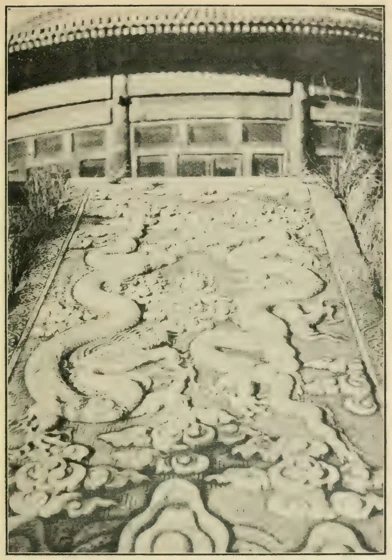
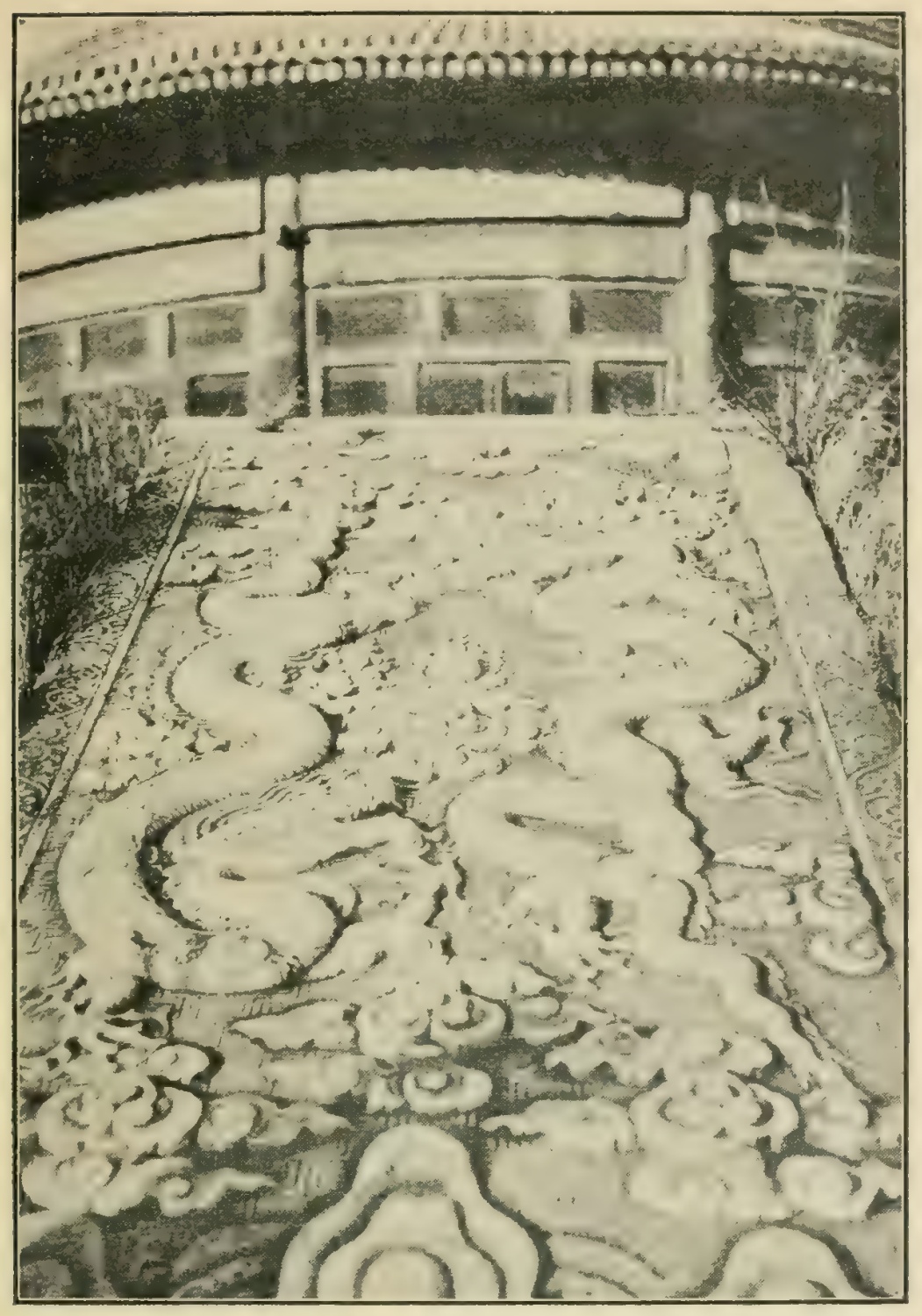
The photograph shows an inclined carved slab occupying the central route up a staircase. Hayes calls the route a spirit way and associates the pictured stone with the Temple of Heaven at Peking. He explains its ceremonial purpose through the belief that the spirit being honoured travels along it during worship. The image makes a distinction between the steps used by people and the carved central passage described in the caption.
Loading your archive…
In the sources
The central carved passage
DocumentedHayes places the photographed dragon monolith at the Temple of Heaven and describes its ceremonial route.
A route for the honoured spirit
InterpretationThe caption presents the spirit’s passage as a ritual belief attached to the architecture.
Context & interpretation
The illustration and accompanying passage on the cited page of The Chinese Dragon.
Original passages
Source 1
The Chinese Dragon
The Dragon StaircaseOpen this page in the book
Passage & edition details
Location recorded at citation review: Illustration and accompanying passage
Quotation and accompanying passage individually checked against the exact original page image. Line breaks and line-end hyphenation normalised. Caption small capitals normalised to title case.
- Edition
- IMJ-0474-E001
- Reader page
- IMJ-0474-E001-P0029
- Original scan leaf
- 33
- Recorded leaf number
- 33
- Current Reader position
- 24
- Reader verification
- Matches the reviewed Reader