Hachiman
Hachiman is a Japanese kami invoked as a protector, associated with the Minamoto clan, and honoured by the Buddhist title Great Bodhisattva.
In this article
Who is Hachiman?
Hachiman is a Japanese kami worshipped for protection, especially associated with warriors and the Minamoto clan. He also received the Buddhist title Hachiman Daibosatsu, or Great Bodhisattva. His worship developed in both Shintō and Buddhist settings. [6]
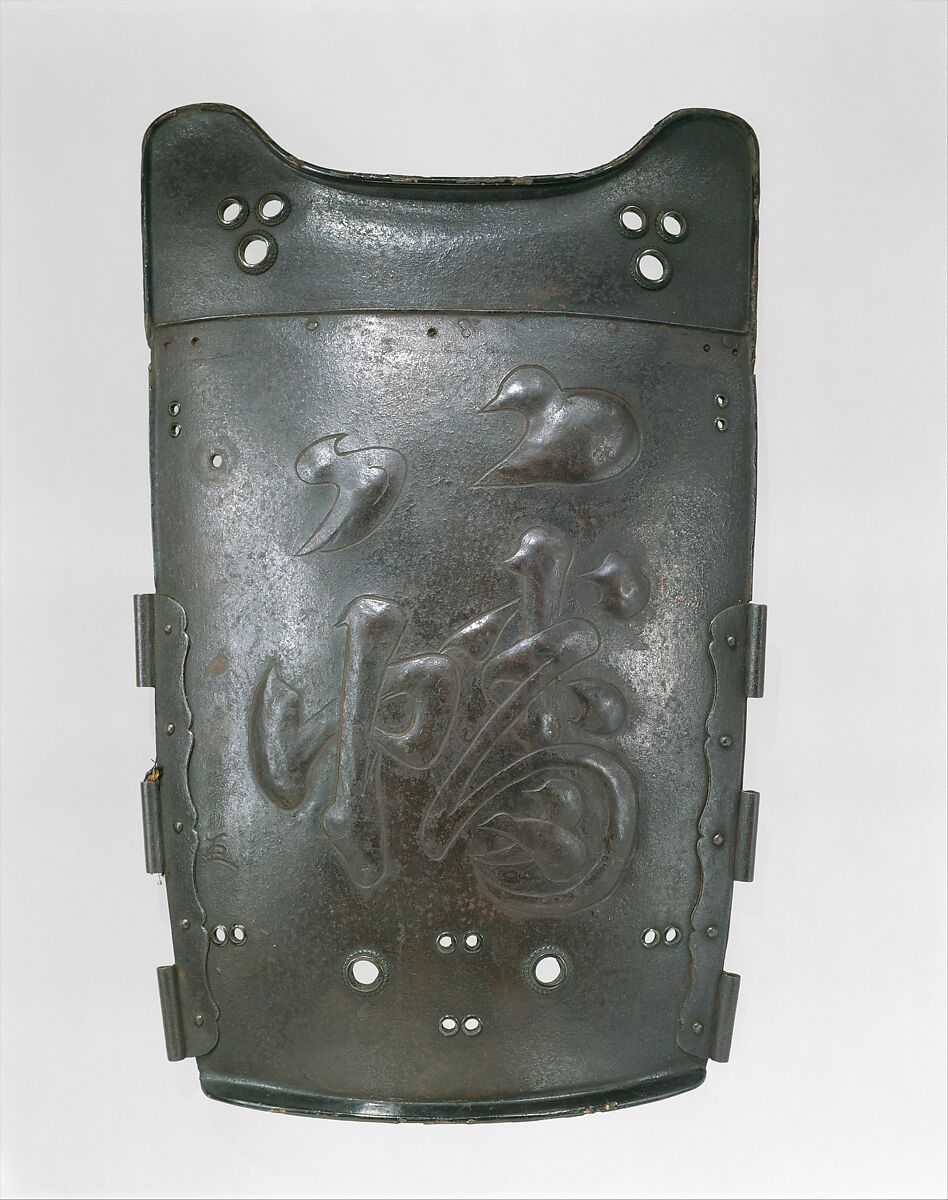
The embossed characters invoke Hachiman by name. The armour offers an example of devotional protection in a martial setting.
Myōchin Morisuke and Myōchin Munesuke, Breastplate bearing the characters for Hachiman, 18th century. The Metropolitan Museum of Art. Public domain. · Image source ↗ · Public Domain
In Ancient Tales and Folk-lore of Japan
In Richard Gordon Smith’s A Life Saved by a Spider and Two Doves, Minamoto no Yoritomo hides inside a hollow tree. Kagetoki points to an undisturbed spiderweb. When two white doves fly out, the pursuing commander takes them as further evidence that nobody is inside. [2][3][4]
Smith connects the rescue with the Hachiman shrine at Kamakura and calls the doves the god’s messengers. He also offers a conjecture about the shrine name Shirahata. The doves belong to his reading of the rescue. [4][5]
Why are doves associated with Hachiman?
Tsurugaoka Hachimangū describes doves as messengers in its account of a dove-shaped charm. On the Edo breastplate shown here, two embossed characters invoke Hachiman by name. The tale, charm and armour give three forms to the same appeal for protection. [3][4][1][6]
In the library
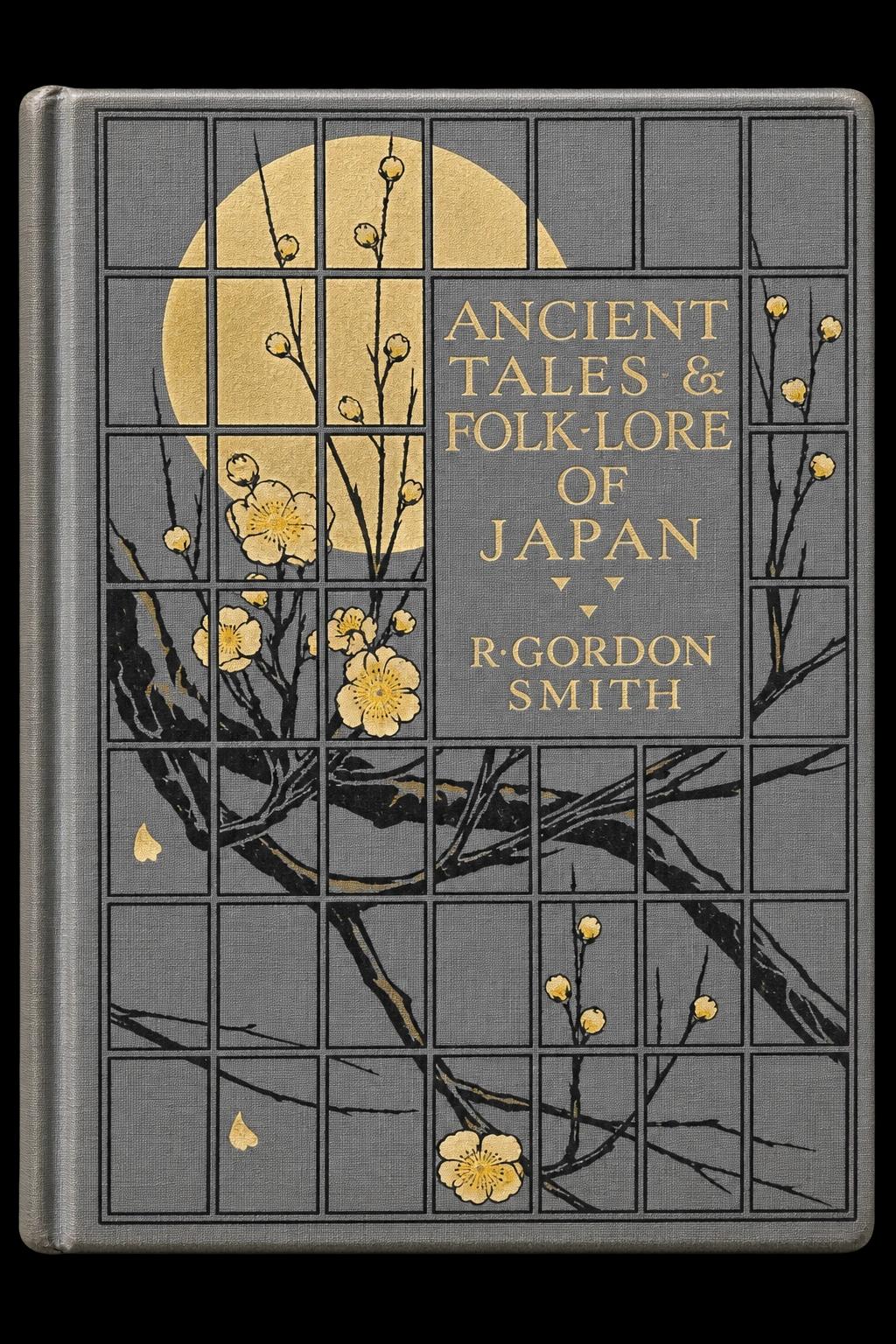
Ancient Tales and Folk-lore of Japan
Reading note
Read Richard Gordon Smith’s account in the verified 1908 Library edition.
Sources
See references (6)
- Prayers and Amulets, Dove Bell Charm ↗Tsurugaoka Hachimangū
- Ancient Tales and Folklore of Japan, printed p. 92, Reader page 138Richard Gordon Smith, Ancient Tales and Folklore of Japan. A. & C. Black, London, 1908. Lumitheca Library edition IMJ-0588-E001.Read this page in Ancient Tales and Folk-lore of Japan ↗
- Ancient Tales and Folklore of Japan, printed p. 93, Reader page 141Richard Gordon Smith, Ancient Tales and Folklore of Japan. A. & C. Black, London, 1908. Lumitheca Library edition IMJ-0588-E001.Read this page in Ancient Tales and Folk-lore of Japan ↗
- Ancient Tales and Folklore of Japan, printed p. 94, Reader page 142Richard Gordon Smith, Ancient Tales and Folklore of Japan. A. & C. Black, London, 1908. Lumitheca Library edition IMJ-0588-E001.Read this page in Ancient Tales and Folk-lore of Japan ↗
- Ancient Tales and Folklore of Japan, printed p. 95, Reader page 143Richard Gordon Smith, Ancient Tales and Folklore of Japan. A. & C. Black, London, 1908. Lumitheca Library edition IMJ-0588-E001.Read this page in Ancient Tales and Folk-lore of Japan ↗
- Breastplate bearing the characters for Hachiman ↗Myōchin Morisuke and Myōchin Munesuke, Breastplate bearing the characters for Hachiman, 18th century. The Metropolitan Museum of Art. Public domain.