All 78 Rider–Waite–Smith Tarot Cards
The Rider–Waite–Smith tarot has 78 cards: 22 Major Arcana and 56 Minor Arcana. The Minor Arcana are divided into Wands, Cups, Swords and Pentacles. Each suit has an Ace, nine numbered cards and four court cards. Browse the complete deck and open any image to compare Pamela Colman Smith’s design with its original page.
The complete illustrated deck
78 results
Major Arcana
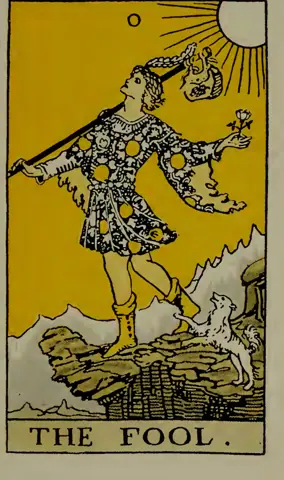 0 · Major Arcana
The Fool
The Tarot traveler poised between innocence, freedom, and uncertainty.
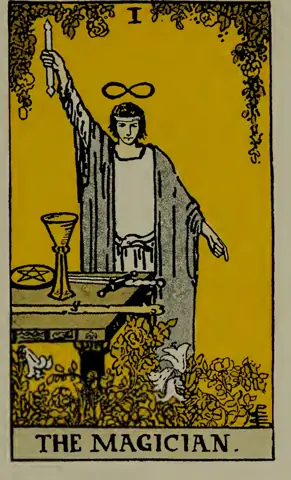 1 · Major Arcana
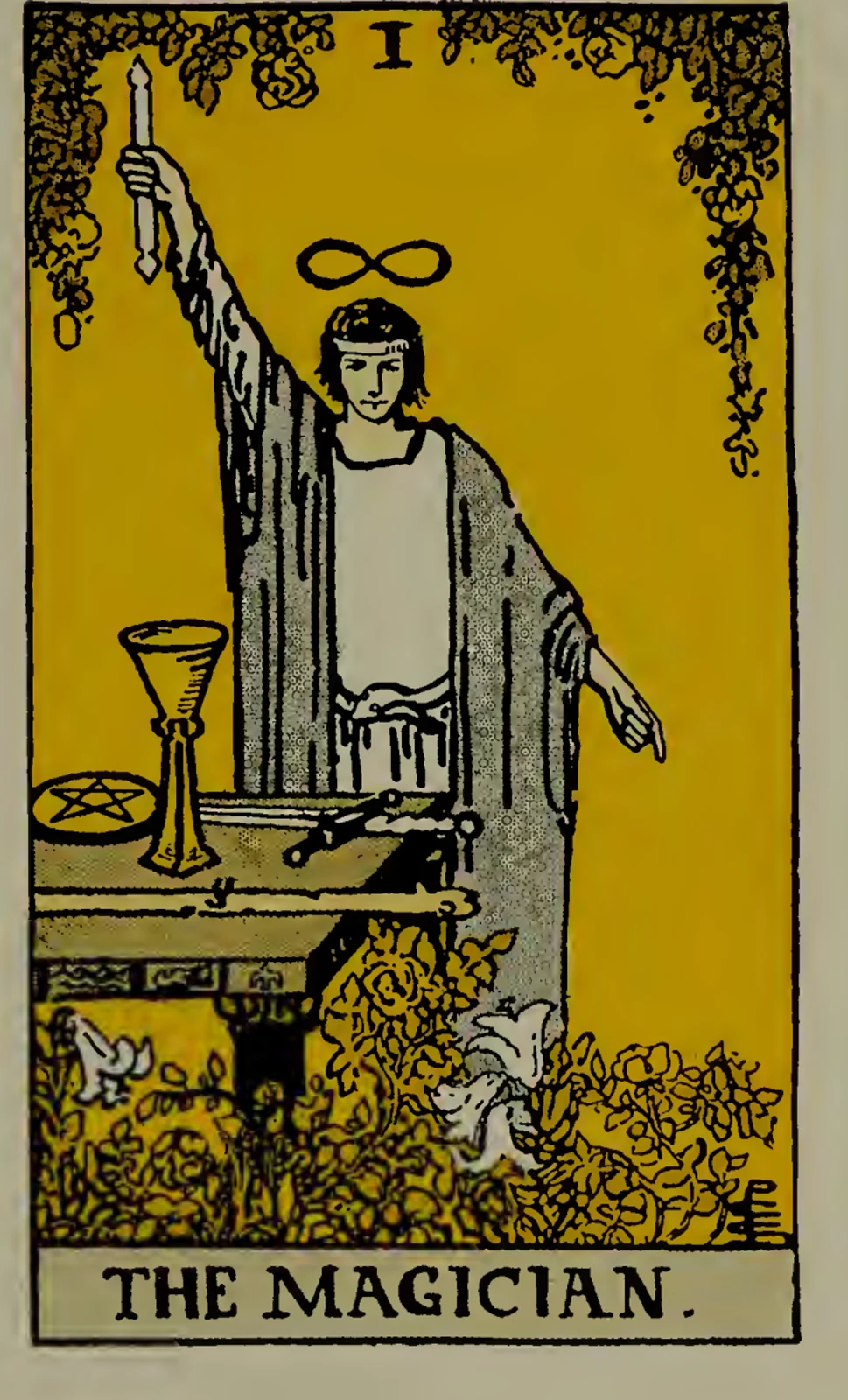
The Magician
A raised wand and downward hand connect intention with manifestation.
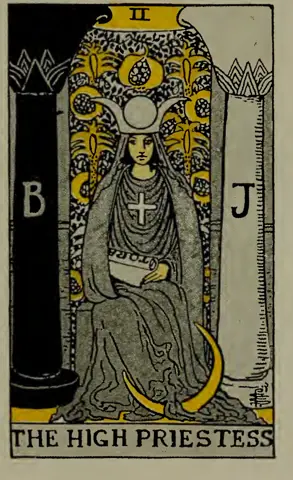 2 · Major Arcana
The High Priestess
Keeper of a partly concealed law between contrasting temple pillars.
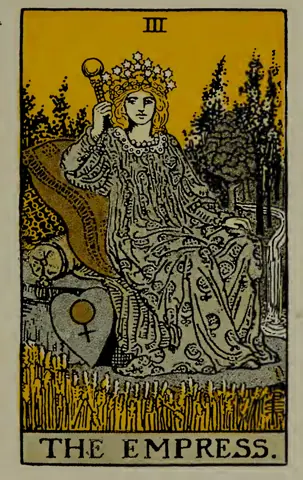 3 · Major Arcana
The Empress
Fruitful earthly life represented through stars, grain, water, and Venus.
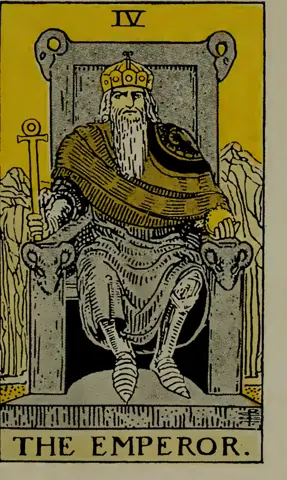 4 · Major Arcana
The Emperor
Seated sovereignty as executive power, reason, and realization.
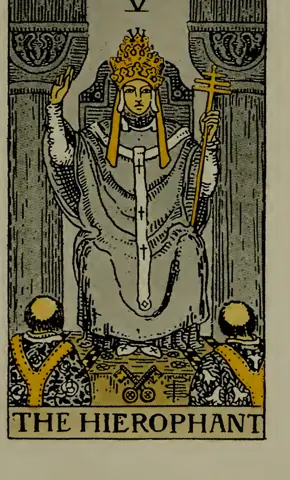 5 · Major Arcana
The Hierophant
The public transmission of sacred order through an established institution.
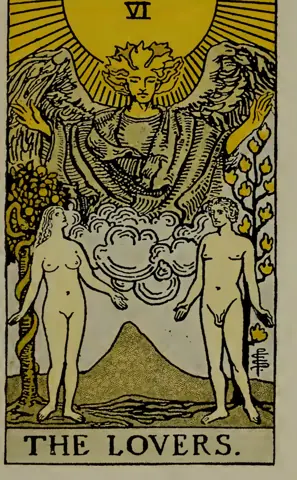 6 · Major Arcana
The Lovers
Human love shown beneath an angel within a scene of Eden.
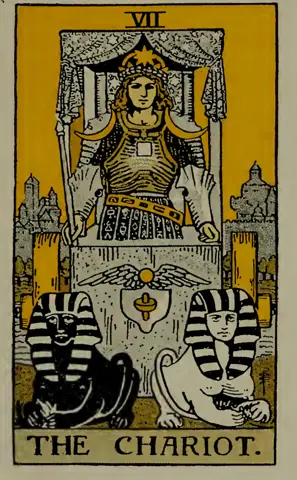 7 · Major Arcana
The Chariot
Triumph and directed power whose external victories have limits.
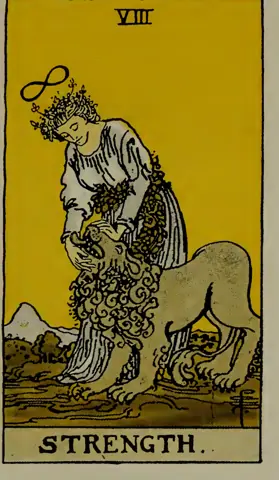 8 · Major Arcana
Strength
A woman’s gentle mastery of the lion rather than a contest of force.
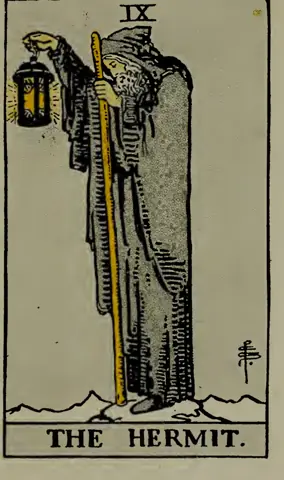 9 · Major Arcana
The Hermit
A lantern held aloft as an invitation from attained knowledge.
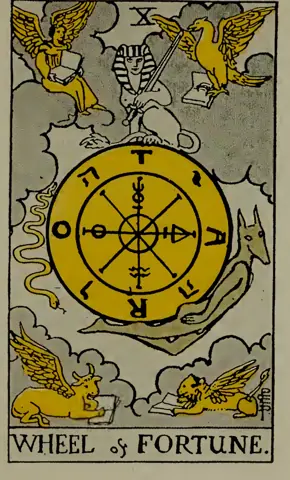 10 · Major Arcana
Wheel of Fortune
Movement held against equilibrium within a changing universe.
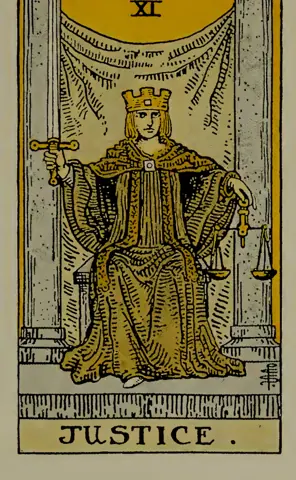 11 · Major Arcana
Justice
Accountability according to deeds, distinguished from spiritual election.
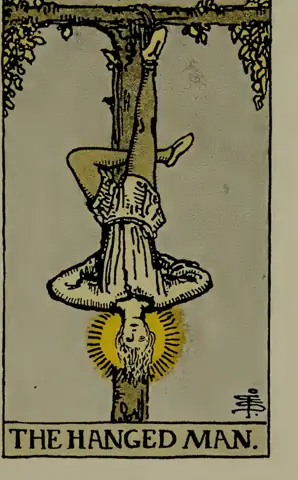 12 · Major Arcana
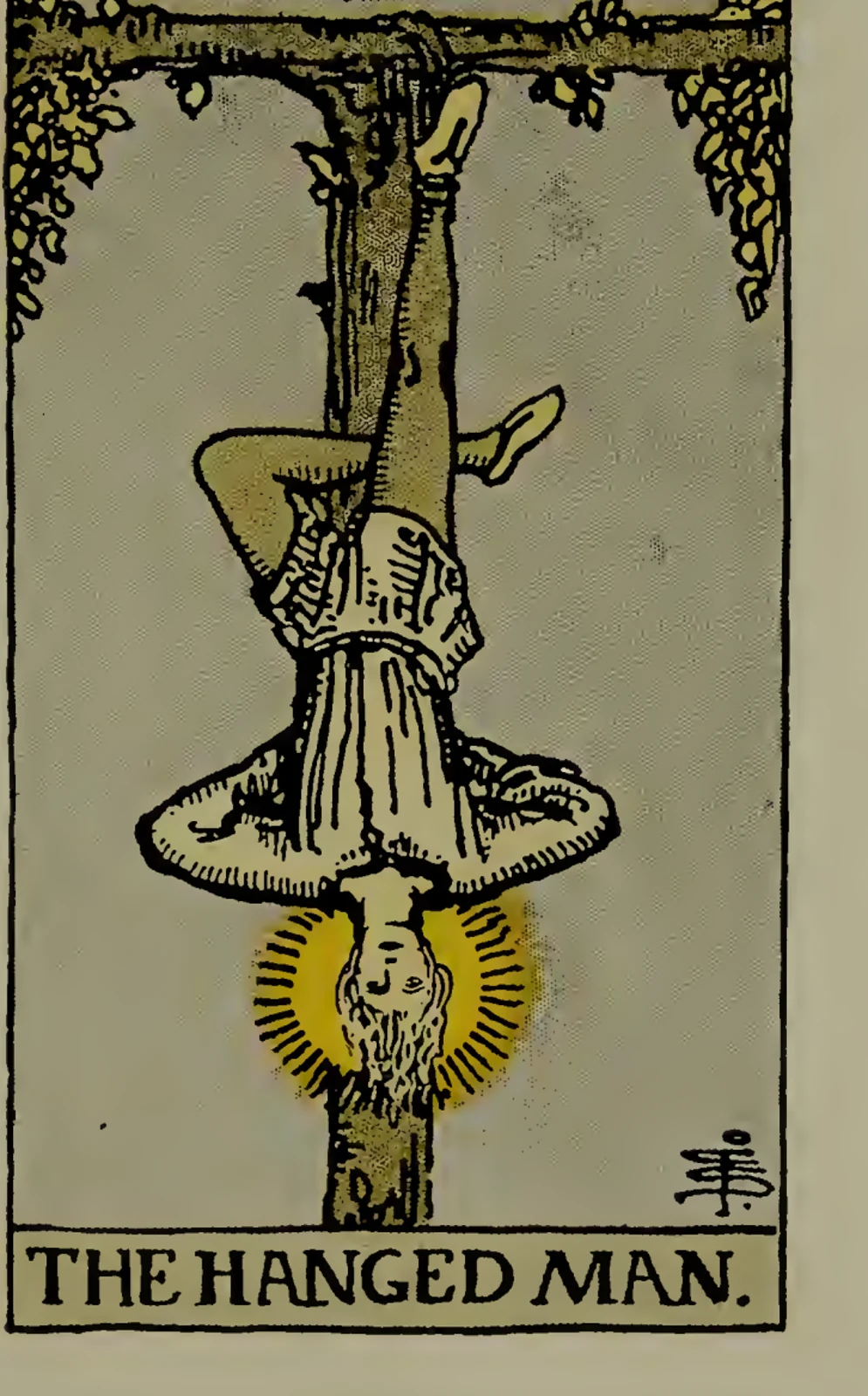
The Hanged Man
A man hangs by one foot from a branching wooden support, with the free leg bent across the suspended body.
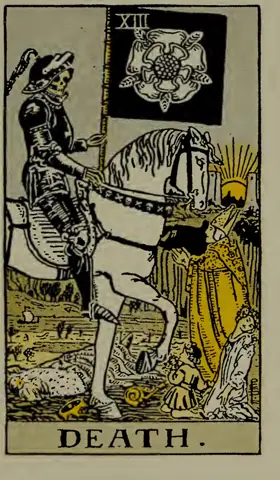 13 · Major Arcana
Death
A rider whose passage joins mortality with transformation.
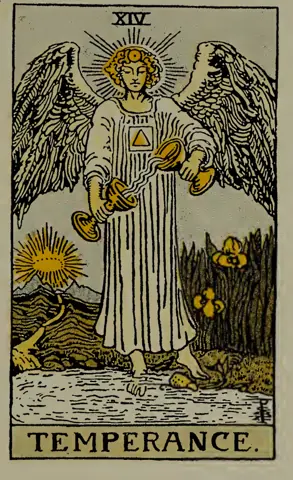 14 · Major Arcana
Temperance
The blending of life’s essences between earth and water.
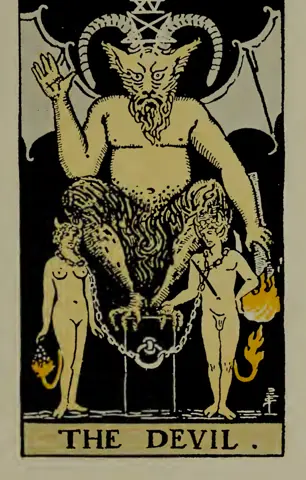 15 · Major Arcana
The Devil
Material bondage depicted through a horned figure and chained pair.
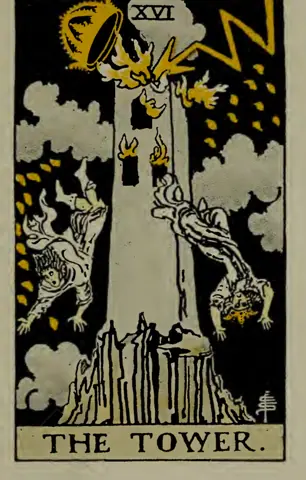 16 · Major Arcana
The Tower
Collapse interpreted as the breaking of a false house of thought.
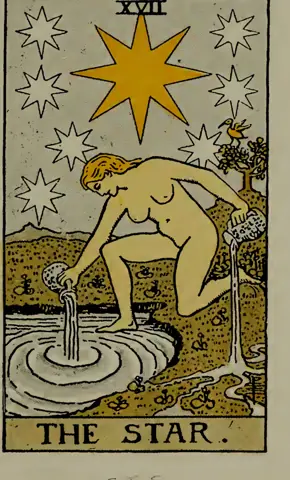 17 · Major Arcana
The Star
A figure pours the water of life beneath one great and seven lesser stars.
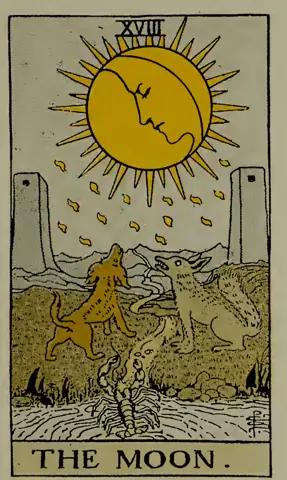 18 · Major Arcana
The Moon
A path into uncertainty lit by reflection and shadowed by fear.
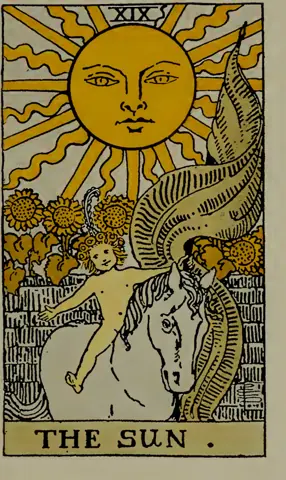 19 · Major Arcana
The Sun
Childlike directness and renewed consciousness under a bright sun.
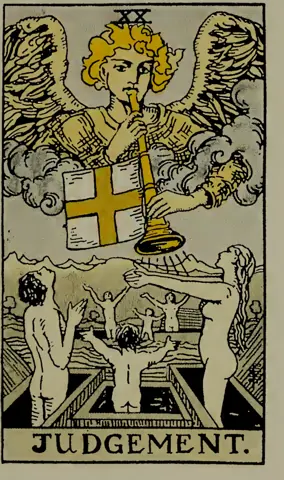 20 · Major Arcana
Judgement
A trumpet’s summons calls the figures from their tombs.
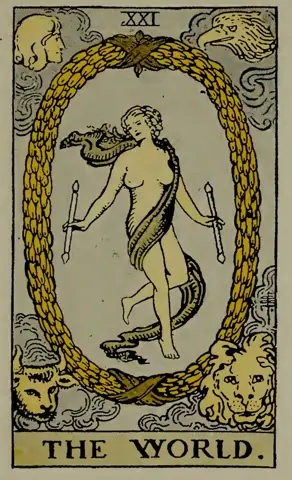 21 · Major Arcana
The World
The final trump as fulfillment, cosmic harmony, and conscious completion.
Wands
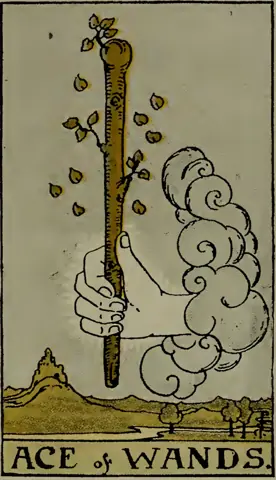
 Wands
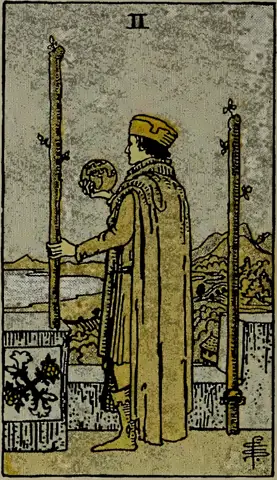
Two of Wands
A globe and two staves place a solitary figure above a battlemented outlook.
 Wands
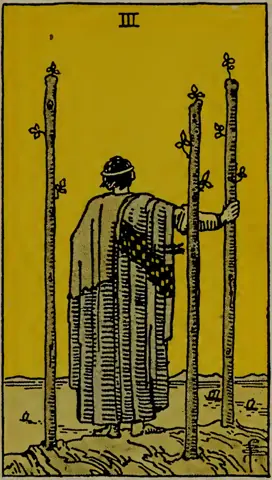
Three of Wands
A figure among three planted staves watches ships from a cliff.
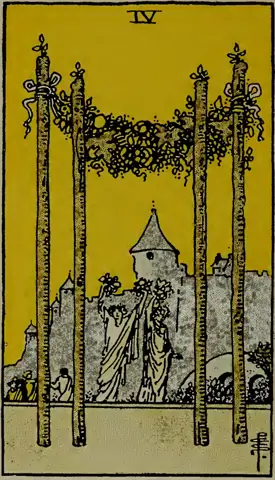 Wands
Four of Wands
A garland joins four foreground staves beside a bridge and a house.
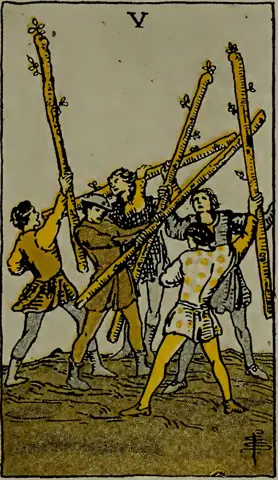 Wands
Five of Wands
Five youths brandish staves in a scene described as mock combat.
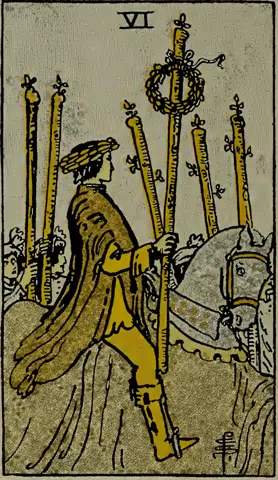 Wands
Six of Wands
Laurel crowns a mounted bearer whose companions also carry staves.
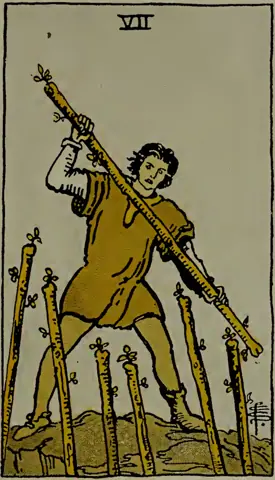 Wands
Seven of Wands
A figure above six raised staves holds the seventh from a higher position.
 Wands
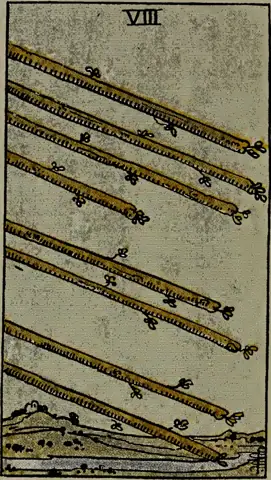
Eight of Wands
Flying wands carry the numbered suit into an image of swift motion.
 Wands
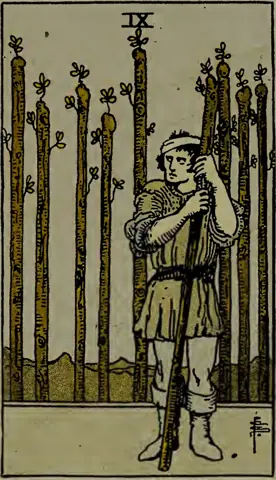
Nine of Wands
Eight upright staves stand behind a watchful figure leaning on a ninth.
 Wands
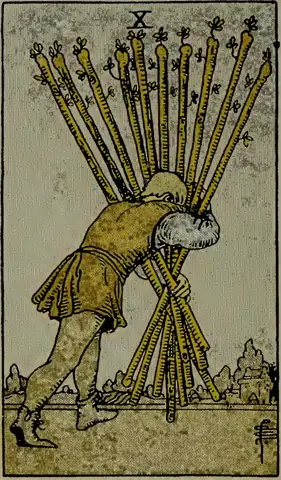
Ten of Wands
A bearer weighed down by ten staves gives the card its image of burden.
 Wands
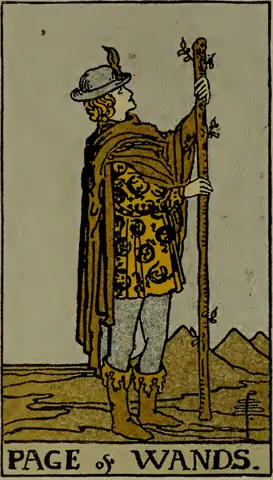
Page of Wands
A standing messenger turns the suit's wand into an emblem of proclamation.
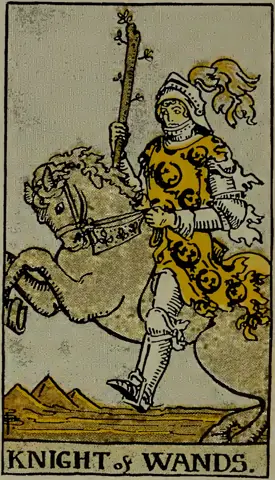 Wands
Knight of Wands
A moving horse makes travel and haste central to this court card's description.
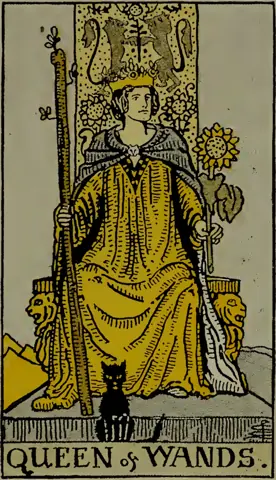 Wands
Queen of Wands
Leaf-bearing wands connect this queen's symbolism with life and animation.
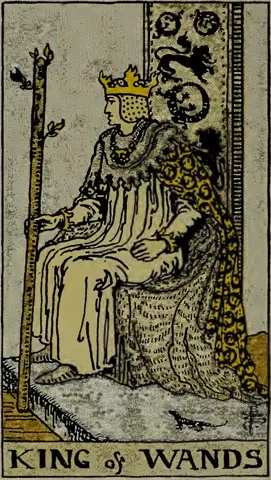 Wands
King of Wands
A flowering staff and lion throne place this court figure within the animated Wands suit.
Cups
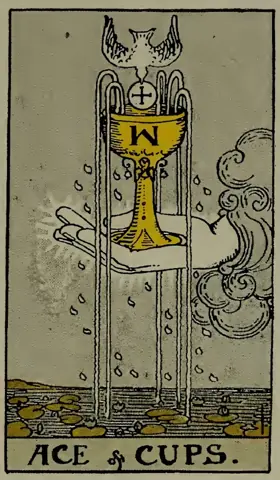 Cups
Ace of Cups
A cloud-borne cup, water and a descending sacramental emblem give this Ace several symbolic layers.
 Cups
Two of Cups
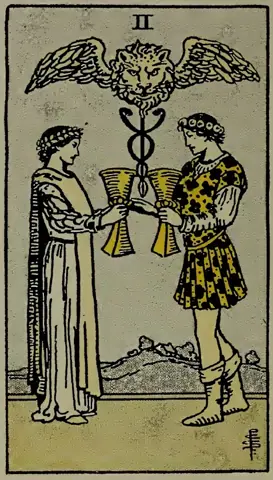
Two figures pledging cups are joined by a caduceus and a winged lion-head emblem.
 Cups
Three of Cups
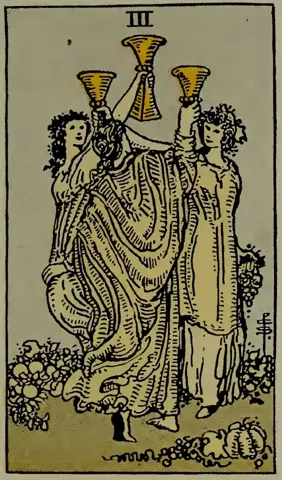
A shared raising of cups gives the source an image of completion and merriment.
 Cups
Four of Cups
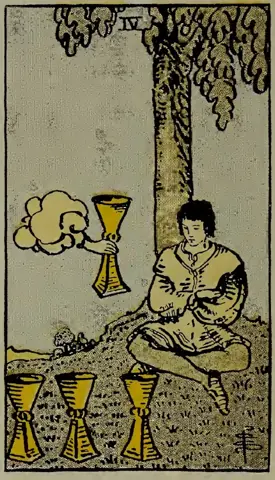
An offered fourth cup meets a seated figure's dissatisfaction with the three already present.
 Cups
Five of Cups
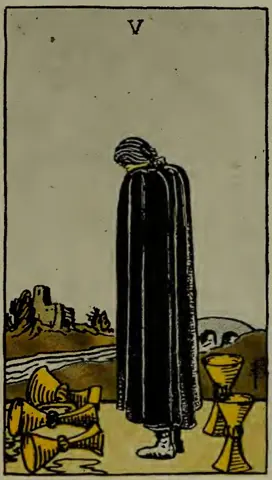
Three fallen cups and two remaining upright make loss and remainder part of one composition.
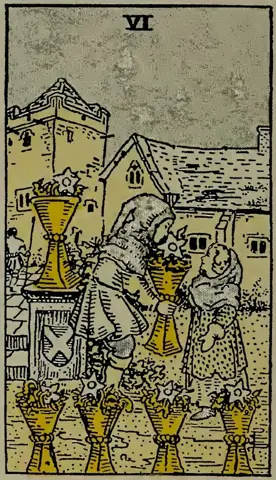 Cups
Six of Cups
Children and flower-filled cups support competing readings of memory and unfamiliar surroundings.
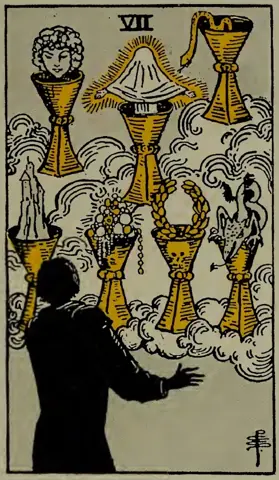 Cups
Seven of Cups
Visionary cups place imagination and impermanent attainment at the centre of the card account.
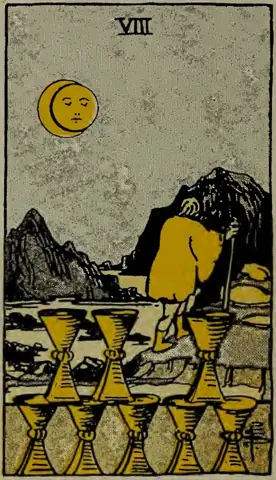 Cups
Eight of Cups
A departing figure gives the Eight an image of leaving an earlier concern behind.
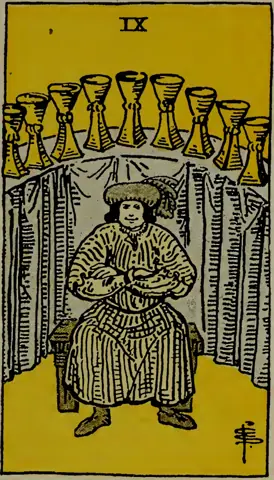 Cups
Nine of Cups
A satisfied seated figure appears before an arched counter stocked with cups.
 Cups
Ten of Cups
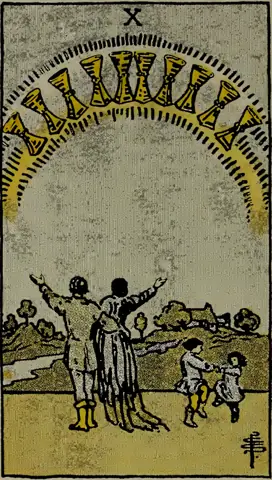
Ten cups arc above a household scene watched by two adults while children dance nearby.
 Cups
Page of Cups
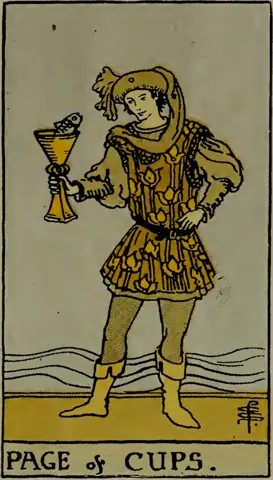
A fish emerging from a cup turns the Page's contemplation into an image of thoughts taking form.
 Cups
Knight of Cups
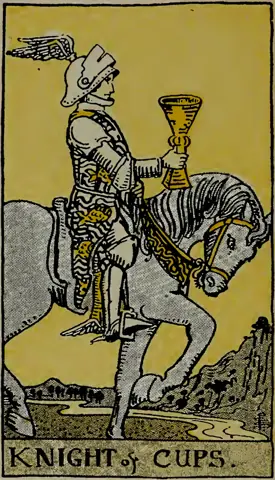
A quietly riding knight carries the cup suit into a scene of approach and invitation.
 Cups
Queen of Cups
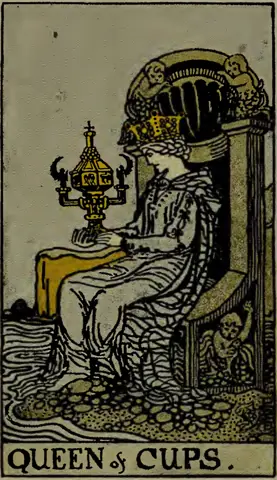
This queen's description joins visionary contemplation with purposeful action.
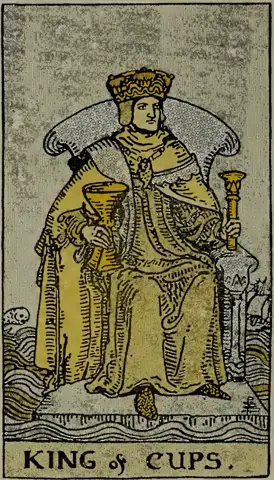 Cups
King of Cups
A cup-bearing king sits amid sea imagery, with a ship and a leaping dolphin.
Swords
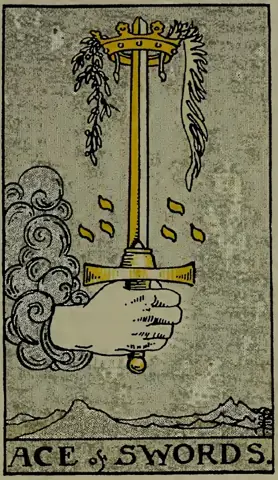 Swords
Ace of Swords
A crowned sword represents force whose outcome is not uniformly favourable.
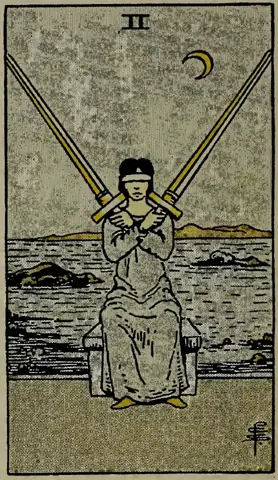 Swords
Two of Swords
Balanced swords accompany an explicitly qualified account of concord.
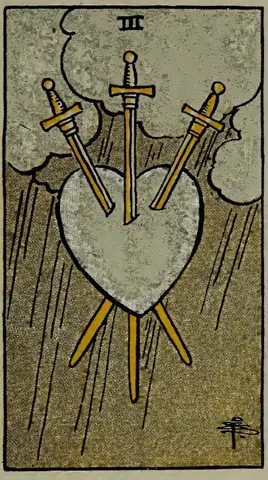 Swords
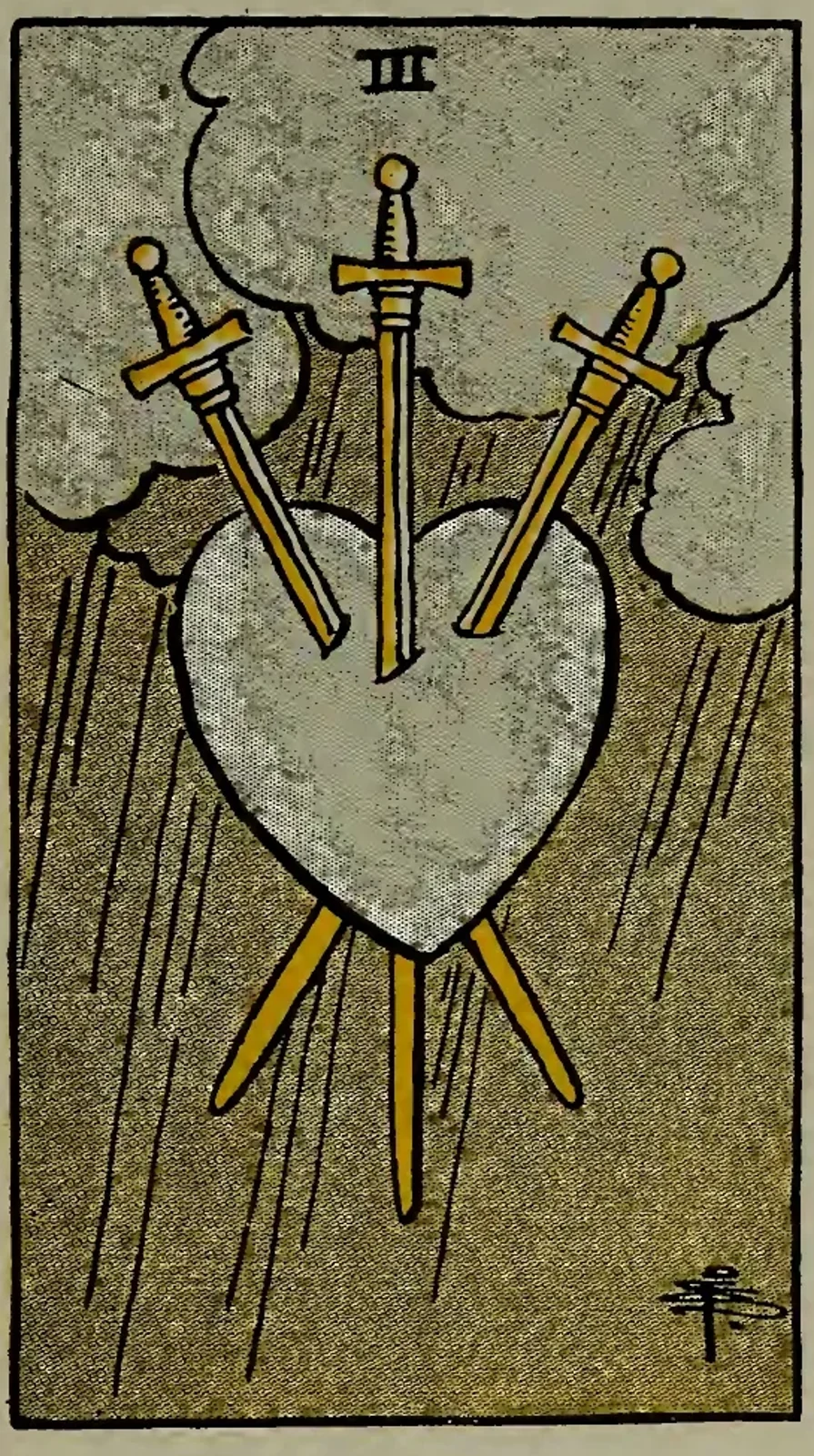
Three of Swords
A pierced heart with cloud and rain makes division central to the brief description.
 Swords
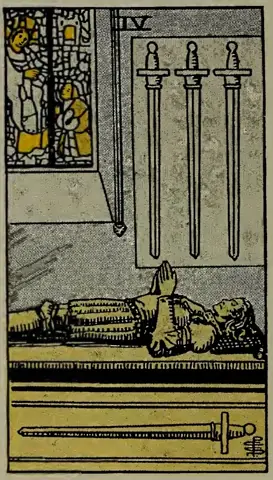
Four of Swords
A knight's tomb effigy is described in prayer, linking repose with memorial imagery.
 Swords
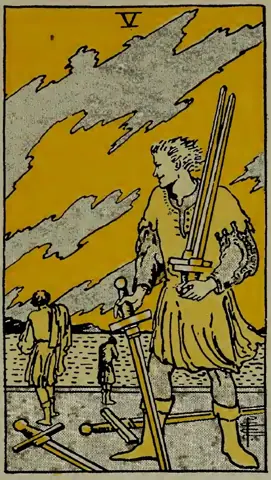
Five of Swords
A figure controlling the field watches two others retreat while their swords remain on the ground.
 Swords
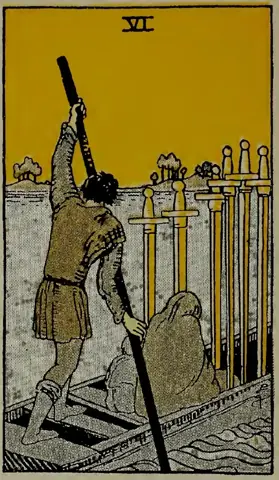
Six of Swords
A ferryman's manageable passage supplies a relatively calm image within the Swords suit.
 Swords
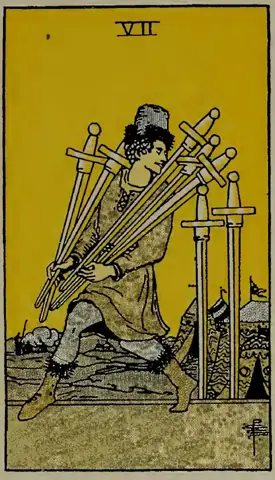
Seven of Swords
Five carried swords and two left behind accompany the source's admission of uncertain meaning.
 Swords
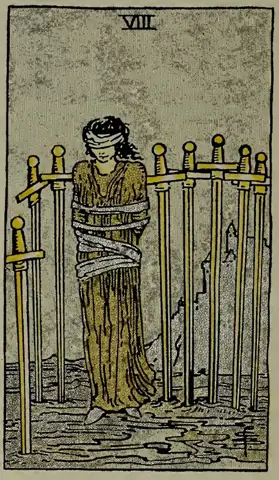
Eight of Swords
A bound figure surrounded by swords is expressly described as temporarily confined.
 Swords
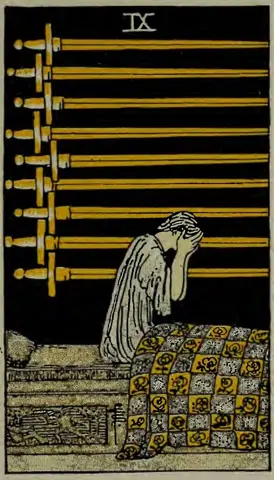
Nine of Swords
A lamenting figure beneath swords gives the card an image of desolation.
 Swords
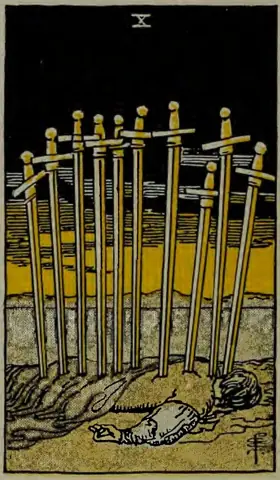
Ten of Swords
A pierced prostrate figure receives an explicit qualification against a simple violent-death reading.
 Swords
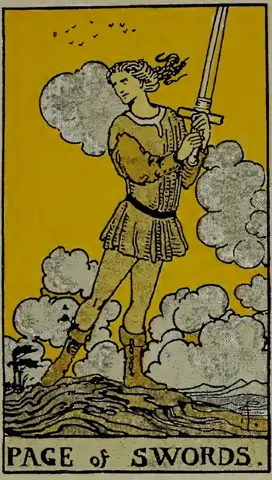
Page of Swords
An alert figure and disturbed clouds place vigilance at the centre of this Page's description.
 Swords
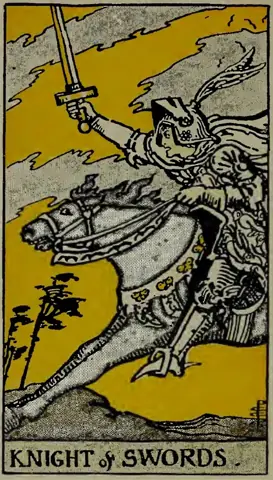
Knight of Swords
A rider in full course is compared with the ideal hero of romantic chivalry.
 Swords
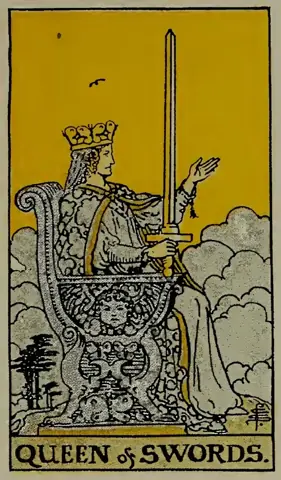
Queen of Swords
An upright sword and extended hand accompany the Queen's described familiarity with sorrow.
 Swords
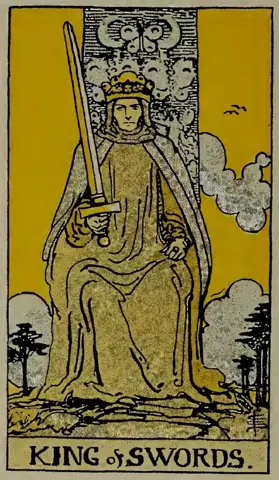
King of Swords
A judging king holds the unsheathed sword as an emblem of authority and office.
Pentacles
 Pentacles
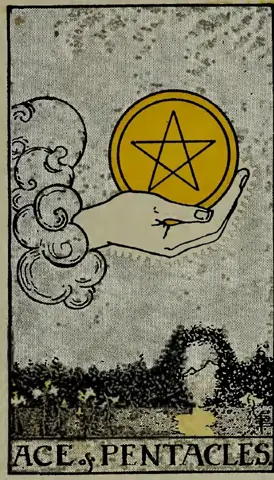
Ace of Pentacles
A cloud-borne pentacle raises a distinction between material prosperity and its benefit.
 Pentacles
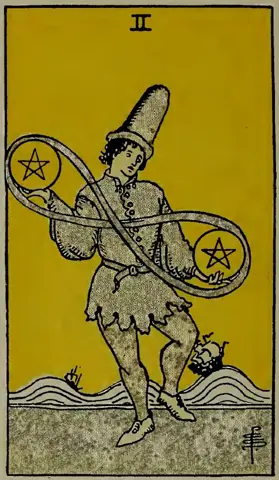
Two of Pentacles
Dancing and an endless cord coexist with a less cheerful list of messages and troubles.
 Pentacles
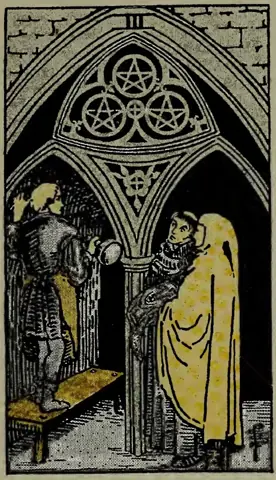
Three of Pentacles
A monastery sculptor is explicitly compared with the Eight's earlier stage of work.
 Pentacles
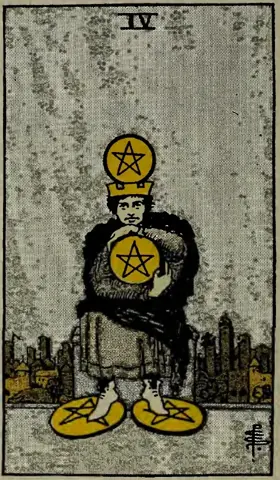
Four of Pentacles
A figure holding several pentacles gives possession a concrete visual arrangement.
 Pentacles
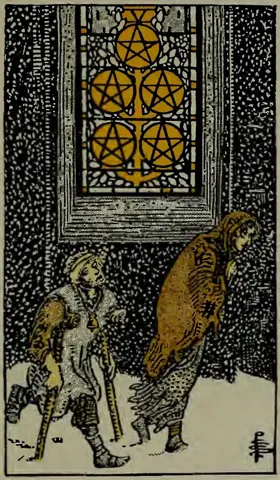
Five of Pentacles
Two figures passing a lit window receive explicitly incompatible interpretations.
 Pentacles
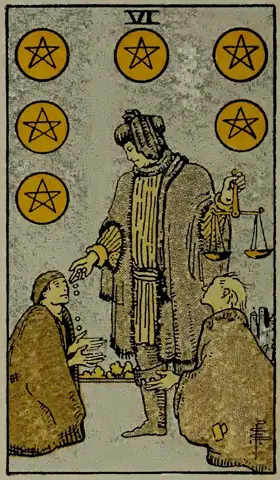
Six of Pentacles
Weighed and distributed money supports a gift image alongside a cautionary supplementary reading.
 Pentacles
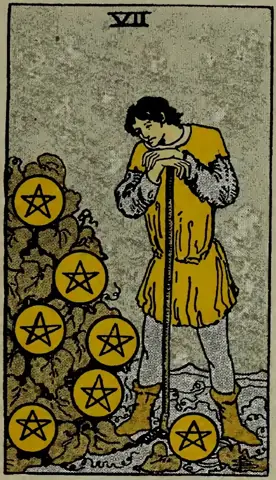
Seven of Pentacles
A figure contemplating pentacles is paired with the source's frank admission of contradictory meanings.
 Pentacles
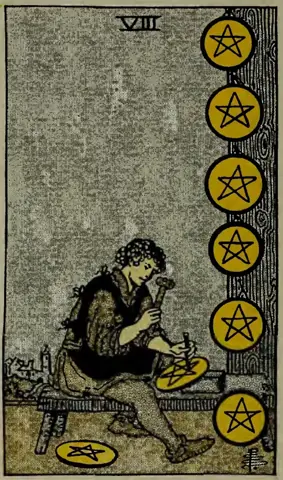
Eight of Pentacles
Stone work supplies an image of craft that can be preparatory rather than complete.
 Pentacles
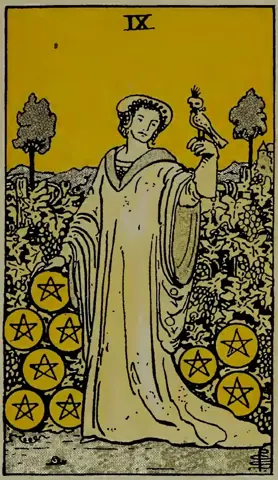
Nine of Pentacles
A garden and a wrist-borne bird accompany a deliberately tentative claim about ownership.
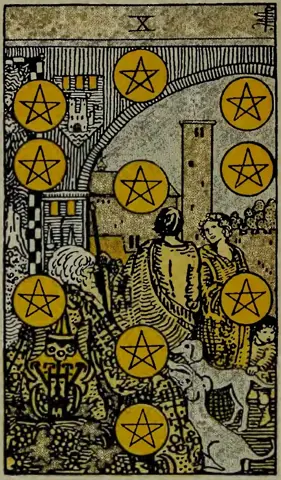 Pentacles
Ten of Pentacles
A household scene combines an archway, generations and dogs with family and archival meanings.
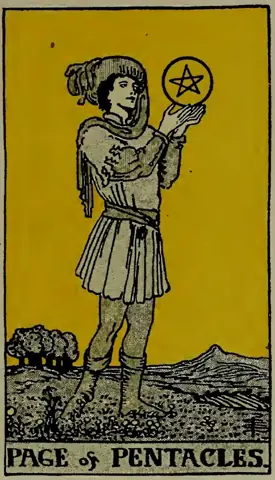 Pentacles
Page of Pentacles
An absorbed Page studies a hovering pentacle while moving slowly.
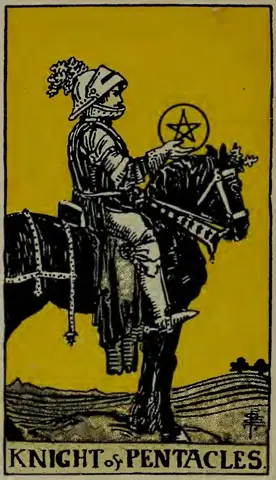 Pentacles
Knight of Pentacles
A slow horse and an exhibited pentacle give the Knight an image of steady external service.
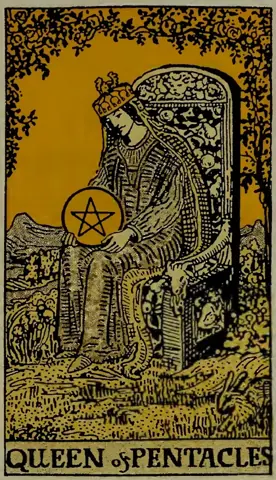 Pentacles
Queen of Pentacles
The Queen's contemplation of her symbol is described as an expression of intelligence and generosity.
 Pentacles
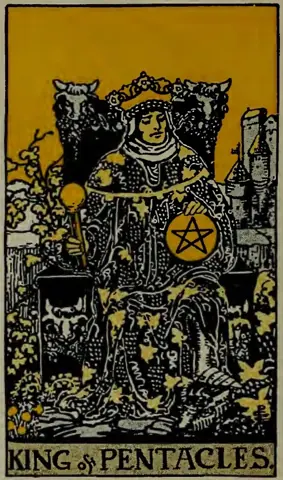
King of Pentacles
Bull-head throne symbols accompany a pentacle interpreted through the elements.
Why the deck carries three names
William Rider & Son published the deck in London in 1909. Arthur Edward Waite set out his interpretation of the designs in The Pictorial Key to the Tarot. Pamela Colman Smith made the pictures. The way she turns a numeral and a suit into a scene is essential to identifying cards: five cups are a number, but a cloaked figure with three spilled cups and two upright ones is recognisable as her Five of Cups.
The illustrated catalogue uses the historical colour reproductions in L. W. de Laurence’s 1916 Illustrated Key to the Tarot. The Reader links therefore go to de Laurence’s plates. Waite’s own Pictorial Key is linked separately so you can compare his account with the pictures without attributing the Library edition to him.
The V&A’s playing-card collections give a longer perspective. Tarot had a life as a card game before the later occult and divinatory uses that inform Waite’s book. An older deck may share the same structure while arranging court figures differently or showing numbered suit cards with repeated emblems and very little scenery.
Major Arcana order, including the Fool
The Fool is shown as 0 at the head of this modern lookup order. Waite discusses it near the end of the Greater Arcana, between Judgement and The World. His numbering gives VIII to Strength and XI to Justice. If a card from another deck reverses those two, compare both title and number before settling on an identification.
Names vary with the book or printing. The title Judgement is printed on the card, while Judgment is another widely used spelling. The Papess and Pope are older names readers may encounter for the High Priestess and Hierophant. Similar names can mask changes in the picture, so compare the actual cards when looking across decks.
Try The Tower and The Star side by side. In Smith’s sequence the Tower falls under lightning, while the Star gives much of its space to still water and the kneeling figure. The pictures establish a contrast in scale and movement. Waite’s account then adds an interpretive layer that can be read separately from the inventory of visible details.
The Fool
The Tarot traveler poised between innocence, freedom, and uncertainty.
Strength
A woman’s gentle mastery of the lion rather than a contest of force.
Justice
Accountability according to deeds, distinguished from spiritual election.
The Tower
Collapse interpreted as the breaking of a false house of thought.
The Star
A figure pours the water of life beneath one great and seven lesser stars.
Read a Smith illustration beside Waite’s account
In The Hanged Man, follow the straight leg up to the crossbeam, then trace the bend of the free leg. Smith gives the inverted head a halo and leaves foliage on the wood. These details complicate a first impression of punishment.
Waite directs attention to the living tree and the figure’s absorbed expression. His reading of the scene as suspended life follows from visible choices anyone can check in the plate. Start by recording those details, then compare his interpretation with a deck that uses a different expression or setting.
How to identify a Minor Arcana card
Start with the object that repeats: staff, cup, blade or pentacle. Then look for the rank at the edge of the card. On the court cards the title supplies the rank, from Page to King. Some details appear across suits, so the staff, cup, sword or pentacle is usually a better clue than the presence of a horse, a crown or a throne.
Compare the Eight of Wands, where the staves themselves form the motion of the picture, with the Eight of Pentacles, where a seated worker makes the repeated discs. The shared number gives you a way to hold one variable constant while seeing what Smith chose to do with each suit.
The Three of Swords is especially easy to recognise from its heart, rain and three blades. The Seven of Cups instead distributes attention across seven cups containing different visions. Begin with a detail you can point to in the image, then consult Waite’s card discussion to see which aspects he emphasises. His separate divinatory lists can add terms that the picture alone would never suggest.
Suit of Wands
Tarot’s staff-bearing suit, with images of enterprise and contested achievement.
Suit of Cups
Vessels of nourishment, relationship, and emotional exchange.
Suit of Swords
A suit of force, discernment, tension, and qualified harmony.
Suit of Pentacles
The coin-like Tarot suit, distinct from ceremonial pentacle talismans.