Ghosts Without Shadows
In the Chinese tale “Rose of Evening,” Aduan walks and speaks like a living man. The absence of a shadow shows the Dragon Prince what he really is.
In this article
What does a ghost’s missing shadow mean?
A missing shadow can reveal a ghost whose face, voice and movements seem ordinary. In the Chinese tale “Rose of Evening,” Aduan returns to his mother’s home and rejoins the household. Later he makes use of the one sign that gives him away. [2][3][4]
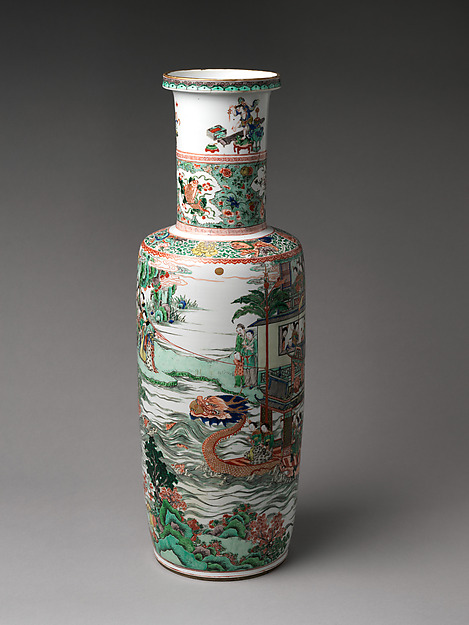
A Qing vase shows the Dragon Boat Festival, the occasion on the Yangtze that opens “Rose of Evening.”
Vase with Scene from the Dragon Boat Festival. late 17th–early 18th century. The Metropolitan Museum of Art. Bequest of Benjamin Altman, 1913. Public Domain. · Image source ↗ · Public Domain
In The Chinese Fairy Book
In The Chinese Fairy Book, edited by Richard Wilhelm and translated by Frederick H. Martens, Aduan rises through the surface of a river and returns to find Rose of Evening with his mother. His mother looks into his grave and finds his bones still there. Until then he has not understood that he is a departed spirit. Rose of Evening explains that the dragon palace’s clothing gives spirits a form that can pass for a living person. [2][3]
The Dragon Prince later threatens to take Rose of Evening away. Aduan tells him that they are both departed spirits. On examination Aduan casts no shadow, and his statement is accepted. The sign verifies his claim at precisely the moment when he needs it, even though earlier in the story he feared what his family might think if they knew. [3][4]
How the tale makes identity visible
The story gives Aduan’s mother one sign and the Dragon Prince another. She finds bones in a grave. He looks at the man standing before him and sees no shadow. In “The Bird with Nine Heads,” matching pieces of a hairpin prove the rescuer’s identity in much the same way, by giving a witness something to check. [3][4][5]
The tale opens during the Dragon Junk festival on the Yangtze. A Qing porcelain vase depicts a dragon boat at the festival. That setting matters because the river enters the tale as a place of public celebration before it becomes the route between a household and the dragon palace. [6][1][2]
In the library
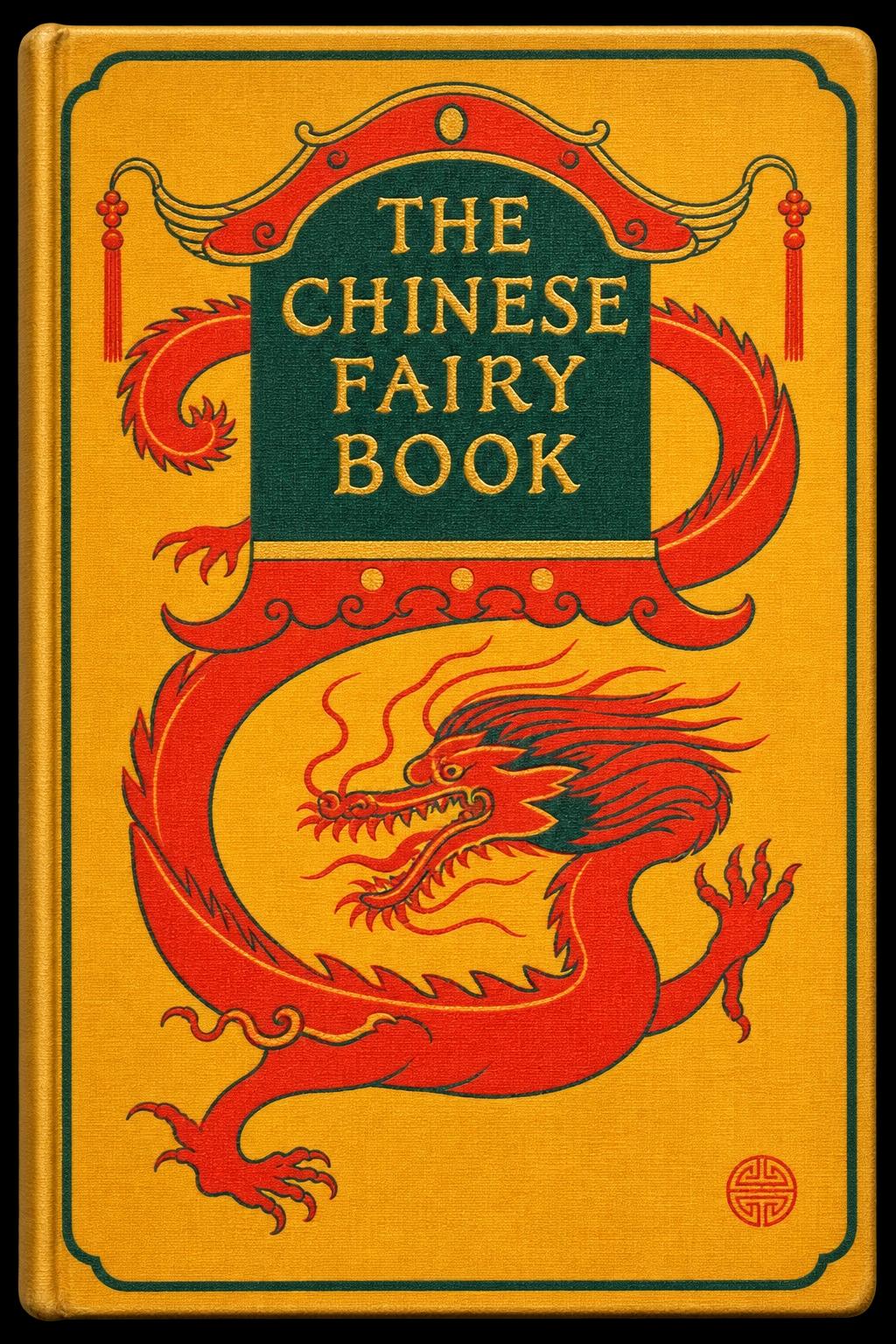
The Chinese Fairy Book
Reading note
Read Aduan’s return from the river and the encounter where the absence of a shadow helps him.
Sources
See references (6)
- Vase with Scene from the Dragon Boat Festival ↗Vase with Scene from the Dragon Boat Festival. late 17th–early 18th century. The Metropolitan Museum of Art. Bequest of Benjamin Altman, 1913. Public Domain.
- The Chinese Fairy Book, Library Reader page 312Richard Wilhelm, editor. Frederick H. Martens, translator. The Chinese Fairy Book. Frederick A. Stokes Company, New York, 1921. Lumitheca Library edition IMJ-0478-E002.Read this page in The Chinese Fairy Book ↗
- The Chinese Fairy Book, Library Reader page 313Richard Wilhelm, editor. Frederick H. Martens, translator. The Chinese Fairy Book. Frederick A. Stokes Company, New York, 1921. Lumitheca Library edition IMJ-0478-E002.Read this page in The Chinese Fairy Book ↗
- The Chinese Fairy Book, Library Reader page 314Richard Wilhelm, editor. Frederick H. Martens, translator. The Chinese Fairy Book. Frederick A. Stokes Company, New York, 1921. Lumitheca Library edition IMJ-0478-E002.Read this page in The Chinese Fairy Book ↗
- The Chinese Fairy Book, Library Reader page 29Richard Wilhelm, editor. Frederick H. Martens, translator. The Chinese Fairy Book. Frederick A. Stokes Company, New York, 1921. Lumitheca Library edition IMJ-0478-E002.Read this page in The Chinese Fairy Book ↗
- The Chinese Fairy Book, Library Reader page 306Richard Wilhelm, editor. Frederick H. Martens, translator. The Chinese Fairy Book. Frederick A. Stokes Company, New York, 1921. Lumitheca Library edition IMJ-0478-E002.Read this page in The Chinese Fairy Book ↗