Robert Fludd’s Universal Anatomy
How did Robert Fludd put the cosmos into a human diagram? Explore his early modern imagery and how Manly P. Hall read the head, chest and abdomen.
In this article
The greater world in the smaller
Robert Fludd’s universal anatomy uses the human body to picture the order of the cosmos. The smaller world of the person is the microcosm. The greater world is the macrocosm. A diagram can place them in view at once. [2][3][4]
The 1617 frontispiece
The title page of Fludd’s 1617 history labels the greater and smaller worlds in concentric circles around a person. It presents their relationship at a glance. The other figure reproduced by Hall lets him follow specific regions of the body. [2][3][4][6]
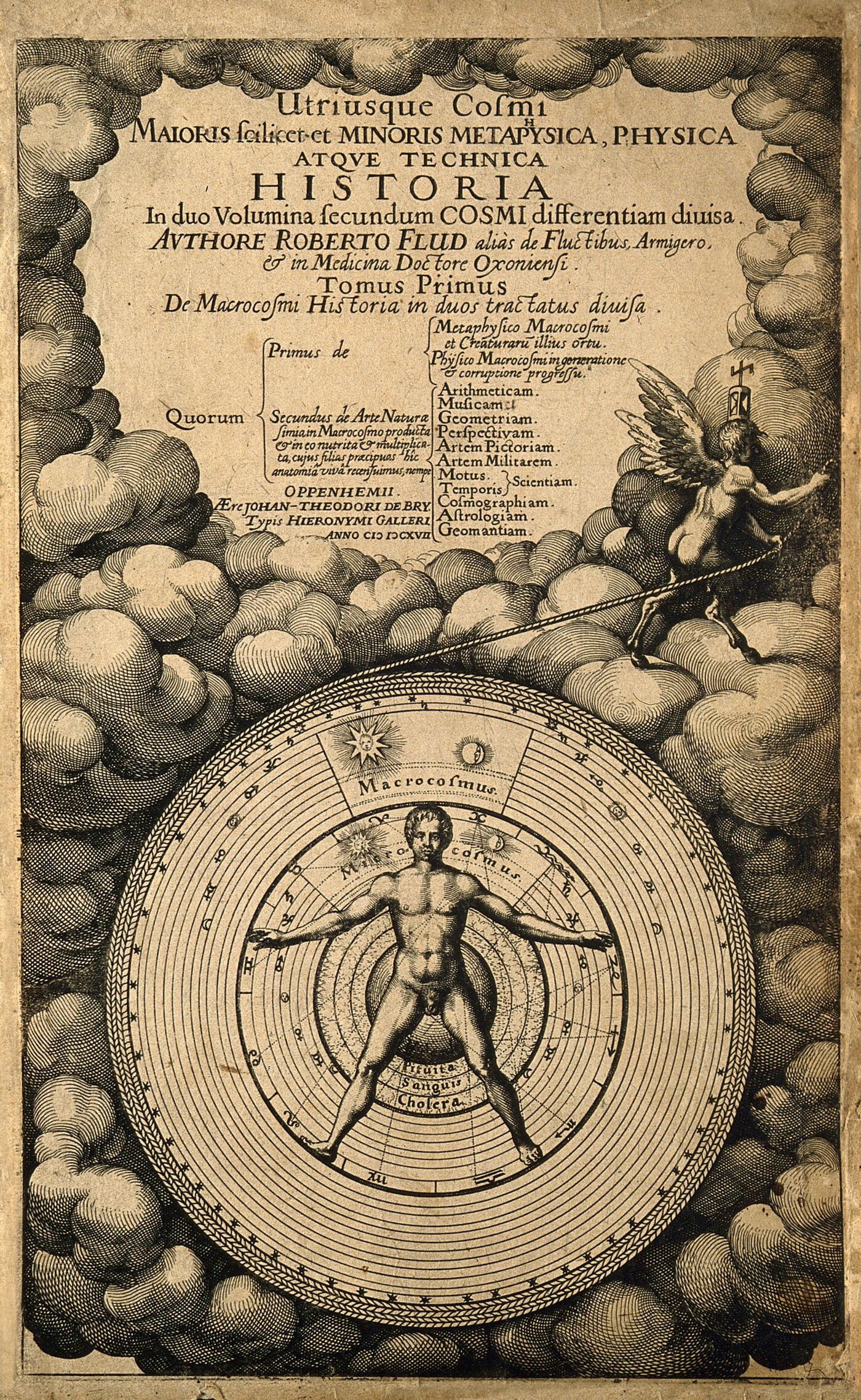
Fludd’s 1617 title-page engraving sets the person inside concentric circles representing the lesser and greater worlds.
Wellcome Collection, 2989i. Public Domain Mark. · Image source ↗ · Public Domain
Man the Grand Symbol of the Mysteries by Manly P. Hall
In Man the Grand Symbol of the Mysteries, Manly P. Hall reproduces a figure from Fludd and calls it a key to universal anatomy. He reads the head as a counterpart to the upper world, the chest as the sphere of life and the lower region as the elemental world. [5][3][4][6][7]
Hall links the position of the heart with the sphere of life in the chest. The same diagram places organs and worlds in relation, so one arrangement helps him explain the other. [4][6]
See references (5)
- Man the Grand Symbol of the Mysteries, printed p. 79, Reader page 78
- Man the Grand Symbol of the Mysteries, printed p. 80, Reader page 79
- Man the Grand Symbol of the Mysteries, printed p. 77, Reader page 76
- Man the Grand Symbol of the Mysteries, printed p. 81, Reader page 80
- Man the Grand Symbol of the Mysteries, printed p. 83, Reader page 82
In the library
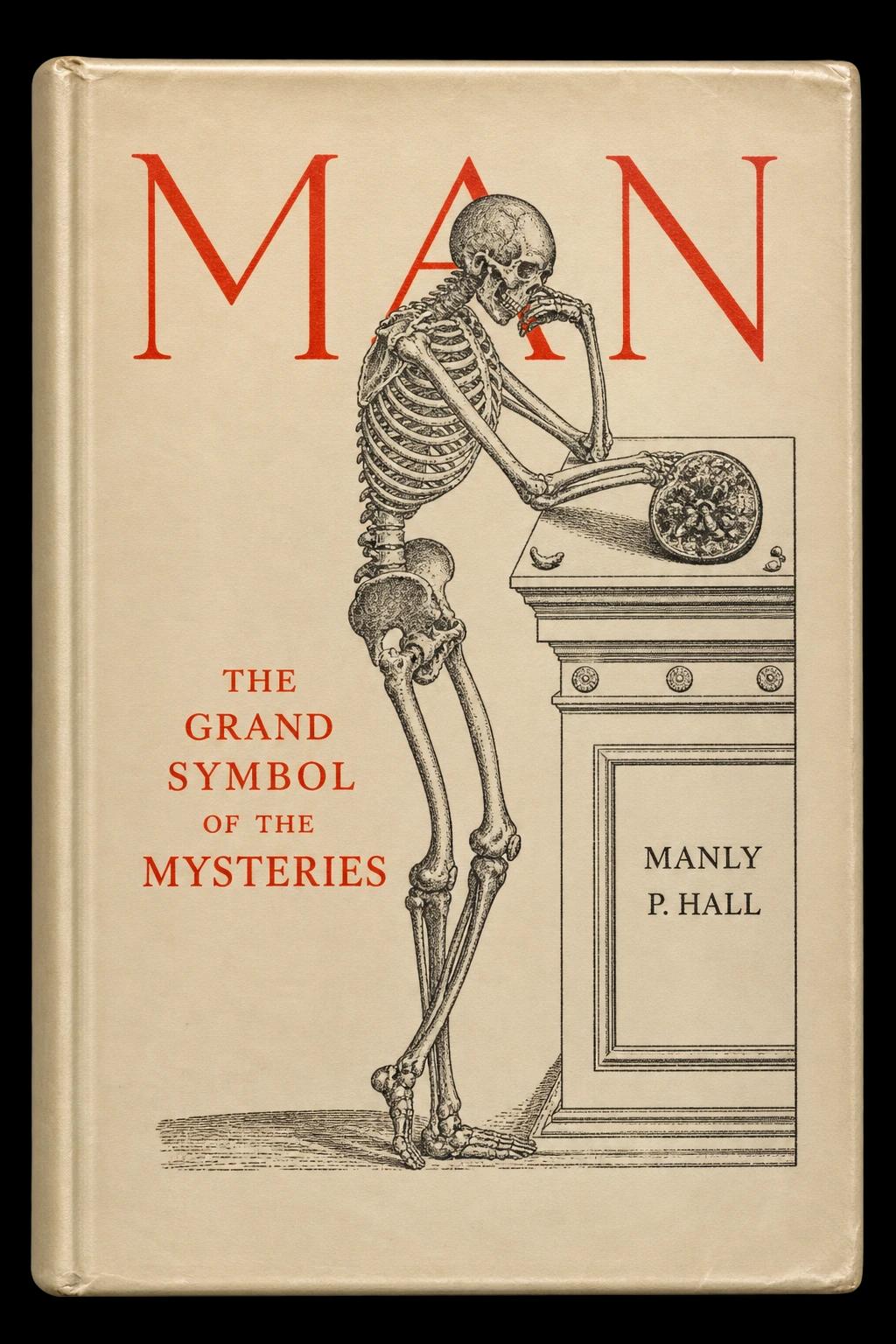
Man the Grand Symbol of the Mysteries
Reading note
The separately titled account draws on exact passages in the consulted Library edition.
Sources
See references (7)
- The microcosm (man) and the macrocosm (the world), 1617: Wellcome Collection 2989i ↗Wellcome Collection, 2989i. Engraving credited to T. de Bry, 1617; associated with Robert Fludd. Public Domain Mark.
- Utriusque cosmi historia, title-page engraving, 1617 ↗Robert Fludd, Utriusque cosmi historia, volume I. Title-page engraving by Theodor de Bry, 1617. Wellcome Collection 2989i.
- Man the Grand Symbol of the Mysteries, printed p. 79, Reader page 78Manly P. Hall, Man the Grand Symbol of the Mysteries, Fourth Edition, The Philosophers Press, Los Angeles, 1937. Lumitheca Library edition IMJ-0603-E001.Read this page in Man the Grand Symbol of the Mysteries ↗
- Man the Grand Symbol of the Mysteries, printed p. 80, Reader page 79Manly P. Hall, Man the Grand Symbol of the Mysteries, Fourth Edition, The Philosophers Press, Los Angeles, 1937. Lumitheca Library edition IMJ-0603-E001.Read this page in Man the Grand Symbol of the Mysteries ↗
- Man the Grand Symbol of the Mysteries, printed p. 77, Reader page 76Manly P. Hall, Man the Grand Symbol of the Mysteries, Fourth Edition, The Philosophers Press, Los Angeles, 1937. Lumitheca Library edition IMJ-0603-E001.Read this page in Man the Grand Symbol of the Mysteries ↗
- Man the Grand Symbol of the Mysteries, printed p. 81, Reader page 80Manly P. Hall, Man the Grand Symbol of the Mysteries, Fourth Edition, The Philosophers Press, Los Angeles, 1937. Lumitheca Library edition IMJ-0603-E001.Read this page in Man the Grand Symbol of the Mysteries ↗
- Man the Grand Symbol of the Mysteries, printed p. 83, Reader page 82Manly P. Hall, Man the Grand Symbol of the Mysteries, Fourth Edition, The Philosophers Press, Los Angeles, 1937. Lumitheca Library edition IMJ-0603-E001.Read this page in Man the Grand Symbol of the Mysteries ↗