Exorcism
Exorcism is a rite intended to expel an evil spirit. Explore Christian beliefs about authority, historical accounts and how churches approach alleged possession.
In this article
What is exorcism?
Exorcism is a religious act intended to expel or resist an evil spirit. The Christian accounts here understand the authority to act as coming from God through Christ. Prayers can concern a person believed to be possessed or protection from a threatening presence. [4][5][6][7][8]
A historical account can describe what the person experienced, how a minister understood it and what the minister then did. The intended effect of the rite and the cause of any reported change are separate questions. [9][10][11][12][7][8]
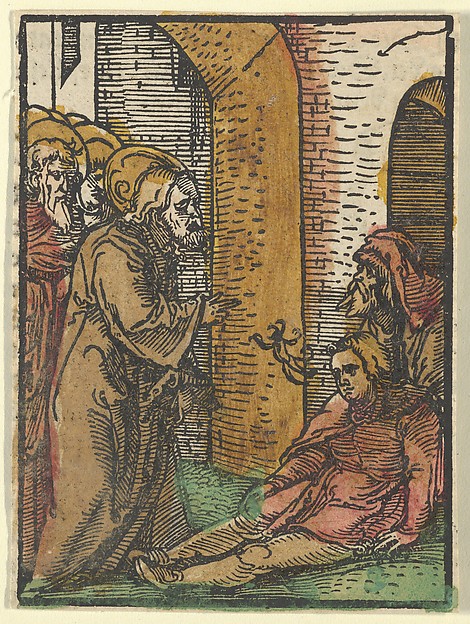
Hans Schäufelein, Christ Healing the Possessed, 1517. A small departing creature gives the scriptural account of deliverance a visible form.
Hans Schäufelein; published by Adam Petri. The Metropolitan Museum of Art, Gift of Harry G. Friedman, 1961; 61.663.347. Public Domain. · Image source ↗ · Public Domain
How churches approach exorcism today
The USCCB distinguishes minor rites used in Christian initiation from major exorcism, which requires special authorisation. Its account calls for medical, psychological and psychiatric examination when a case of alleged possession is being considered. [1]
The Church of England places deliverance within pastoral care by specialists authorised by a diocesan bishop. Its guidance describes continuing support and collaboration with healthcare professionals. [2]
These later institutional descriptions should not be read back into Lee’s cases as if his contributors had followed the same procedures. They provide another dated context for the distinction his collection repeatedly raises: a belief about spiritual authority, a decision to act and the evidence for a reported result. [6][9][11][12][15][2]
See references (7)
- United States Conference of Catholic Bishops, Exorcism: questions and answers
- House of Bishops’ pastoral guidance on deliverance ministry in the Church of England: summary, updated 7 October 2026
- The Other World, Reader page 64
- The Other World, Reader page 86
- The Other World, Reader page 88
- The Other World, Reader page 89
- The Other World, Reader page 171
The Other World, edited by Frederick George Lee
Frederick George Lee’s The Other World begins with Gospel examples of Christ casting out unclean spirits and delegating authority to his followers. He uses them to argue that the Church retains spiritual powers. His account therefore concerns continuity of religious authority as much as individual extraordinary events. [4][5][6]
Lee invokes the historical office of exorcist and the written forms kept by churches. He treats these as evidence that the Church understood its authority to continue after the Gospel episodes. [6]
An appendix translates a form attributed to the Roman Ritual. Its prayers present the afflicted person as made in God’s image and seek deliverance through divine mercy. The ending asks that the threatening power not return and that goodness and peace take its place. This gives the rite a religious purpose extending beyond the spectacle of confrontation. [7][8][13]
Lee’s appendix records the words and hopes of a historical rite. His case narratives record what particular ministers reported. Reading them together brings out the difference between an act as prescribed and a result a witness attributed to it. [7][8][13]
Lee’s scattered notes also preserve differences of practice and permission. He describes a form in the Greek Euchologion and discusses efforts to add an exorcism form to the English Book of Common Prayer. His account says the latter did not happen, and invokes the 1604 canon requiring episcopal licence. The book’s Christian examples therefore do not amount to one rite used identically by every church. [14][15]
Lee also discusses a wider lay role when an ordained exorcist is unavailable. That view belongs to a nineteenth-century debate over who could say which prayers and under whose authority. [9][15]
His unnamed clergyman’s personal narrative shows the movement from interpretation to action. The minister consults another clergyman, accepts a man’s experiences as possession and later prays over him using a form. He reports subsequent sleep, an end to the fits and disappearance of the disturbing figure. The narrative records his conviction and reported follow-up, while withholding the identities and full clinical history needed to assess the episode independently. [9][10][11][12]
See references (12)
- The Other World, Reader page 60
- The Other World, Reader page 61
- The Other World, Reader page 64
- The Other World, Reader page 145
- The Other World, Reader page 146
- The Other World, Reader page 86
- The Other World, Reader page 87
- The Other World, Reader page 88
- The Other World, Reader page 89
- The Other World, Reader page 155
- The Other World, Reader page 169
- The Other World, Reader page 171
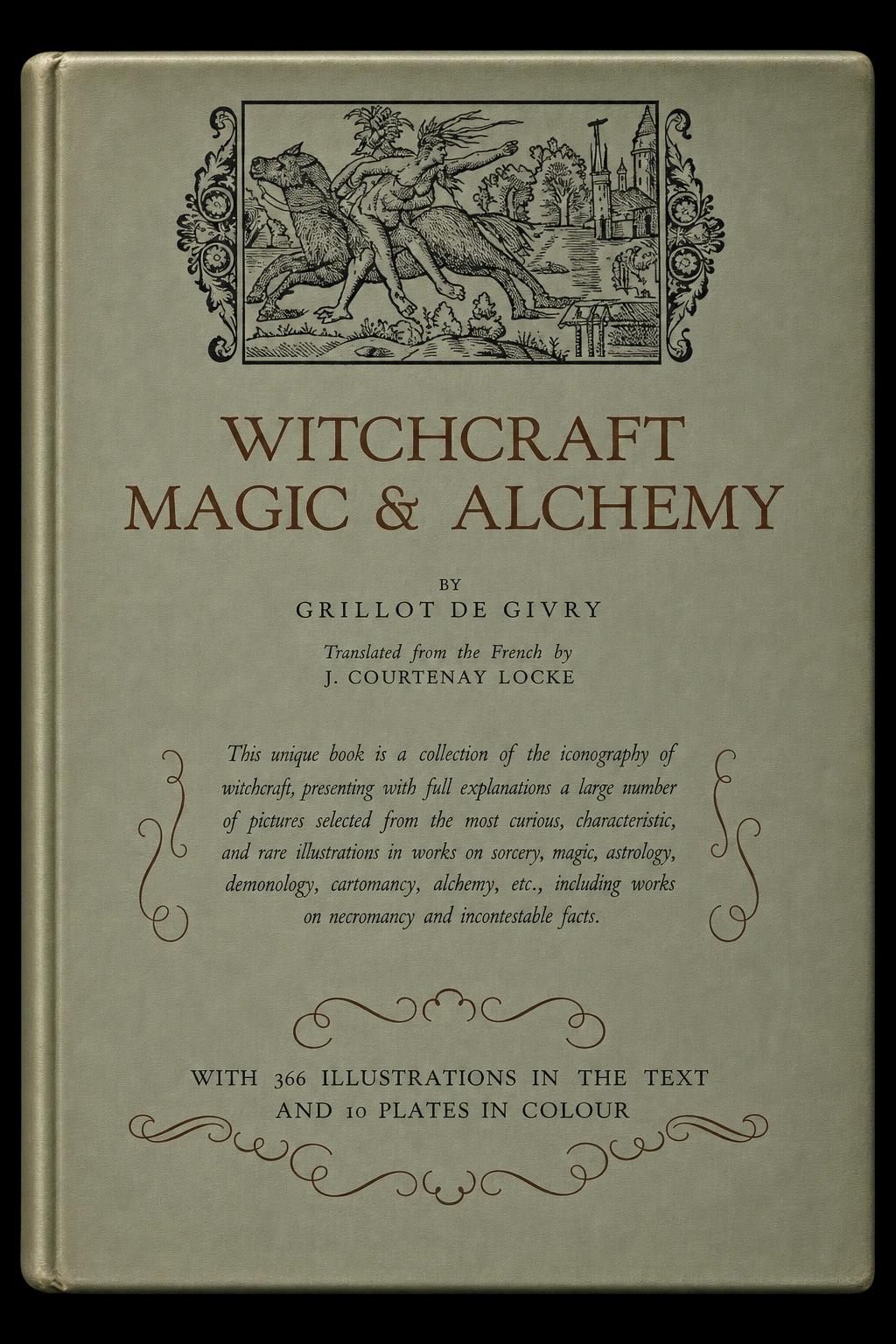
Witchcraft Magic & Alchemy by Grillot de Givry
Grillot de Givry moves from accounts of alleged possession to the prayers and offices intended to address it. He mentions the historical place of the exorcist among the minor orders and turns to books of liturgy. His Venetian example, an Ordo baptizandi dated 1575, gives prayers associated with baptism alongside other forms of exorcism. The volume lets him discuss several settings in which exorcistic language was used. [20]
In the engraving by Jacques Callot after Andrea Boscoli, a priest reads while attendants hold the afflicted woman. A choirboy and a gathering of witnesses are visible, and an altar stands behind them. De Givry treats the print as a relatively sober treatment of the scene. His description keeps the ritual actions and the arrangements of the church in the same picture. [21]
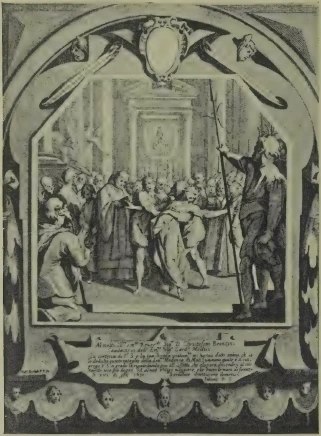
Jacques Callot’s engraving after Andrea Boscoli, reproduced by De Givry as figure 137. The attendants and onlookers share the church interior with the priest.
Jacques Callot after Andrea Boscoli, The Possessed One, engraving. Reproduced by De Givry. · Image source ↗ · Public Domain
Ritual and witnesses in de Givry
The liturgical examples show how a compiler classifies prayers. The engraving makes different information visible: who stands near the person, who reads and who watches. Those details help a reader understand why a public portrayal can convey more about a social setting than a catalogue of formulas does. [20][21][19]
Lee uses the Gospel material to argue for a continuity of authority. De Givry is concerned with the distribution of exorcistic prayers and their representation in art. The claim that a Church holds authority and the historian’s description of where forms of exorcism appear can illuminate each other while addressing different questions. [4][5][6][20][21]
Gone West: J. S. M. Ward
In J. S. M. Ward’s Gone West, the contributor identified as W. A. describes helping a former enemy avoid a financial fraud. After the intervention, his guide announces that he has won release, and an evil spirit that has haunted him is seen being swept away. The resolution is connected with a change in his relation to someone he once resented. The narrative gives liberation an ethical sequence, rather than describing an earthly minister reciting an exorcism over a living person. [18]
What do the accounts describe?
Exorcism and ghost-laying can overlap in historical accounts without being synonyms. A rite directed at a supposed intruder in a living person addresses a different situation from a story about quieting a place-associated ghost. The claimed being, the person receiving help and the intended result should remain identifiable. [7][8][13][16][17]
A change after a ritual is part of a case’s chronology. Establishing what produced the change is a further task. Lee’s clergyman interprets the improvement through divine action, but the account does not supply an independent assessment that isolates the rite from the other circumstances or resolves the diagnosis centuries later. [11][12]
Lee’s rite seeks release through divine authority expressed in prayer, and his clergyman reports a change after performing a form. Ward’s contributor reaches release after an act directed towards a former enemy’s welfare. Both assign spiritual meaning to liberation, but the receiver, setting and narrated conditions differ. Their common language of release should not erase those differences or make one story an explanation of the other. [18][11][12][7][8][13]
In the library
The Other World
Reading note
The separately titled account draws on exact passages in the consulted Library edition.
Gone West
Reading note
Separately attributed comparison with exact previously researched Library passages.
Witchcraft Magic and Alchemy
Reading note
The separately titled account draws on exact passages in the consulted Library edition.
Sources
See references (21)
- United States Conference of Catholic Bishops, Exorcism: questions and answers ↗USCCB Committee on Divine Worship’s own explanatory document. Consulted for Catholic classifications, authorisation and the role of medical, psychological and psychiatric assessment.
- House of Bishops’ pastoral guidance on deliverance ministry in the Church of England: summary, updated 7 October 2026 ↗Church of England’s own pastoral guidance, directly consulted. Describes authorised ministry, continuing pastoral care and collaboration with healthcare. This is a contemporary institutional account, not evidence authenticating a historical possession claim.
- Hans Schäufelein, Christ Healing the Possessed, from Das Plenarium, 1517, The Met 61.663.347 ↗The Metropolitan Museum of Art, Gift of Harry G. Friedman, 1961. Hand-coloured woodcut, published by Adam Petri. Own object record and API confirm public-domain status.
- The Other World, Reader page 60Frederick George Lee, editor, The Other World; or, Glimpses of the Supernatural, two volumes, Henry S. King and Co., London, 1875. Exact consulted Library edition IMJ-0657-E001. Narratives and embedded quotations are attributed to this compilation; an original author is not represented as independently consulted merely because Lee quotes them. Reader positions are verified separately from printed pagination.Read this page in The Other World ↗
- The Other World, Reader page 61Frederick George Lee, editor, The Other World; or, Glimpses of the Supernatural, two volumes, Henry S. King and Co., London, 1875. Exact consulted Library edition IMJ-0657-E001. Narratives and embedded quotations are attributed to this compilation; an original author is not represented as independently consulted merely because Lee quotes them. Reader positions are verified separately from printed pagination.Read this page in The Other World ↗
- The Other World, Reader page 64Frederick George Lee, editor, The Other World; or, Glimpses of the Supernatural, two volumes, Henry S. King and Co., London, 1875. Exact consulted Library edition IMJ-0657-E001. Narratives and embedded quotations are attributed to this compilation; an original author is not represented as independently consulted merely because Lee quotes them. Reader positions are verified separately from printed pagination.Read this page in The Other World ↗
- The Other World, Reader page 145Frederick George Lee, editor, The Other World; or, Glimpses of the Supernatural, two volumes, Henry S. King and Co., London, 1875. Exact consulted Library edition IMJ-0657-E001. Narratives and embedded quotations are attributed to this compilation; an original author is not represented as independently consulted merely because Lee quotes them. Reader positions are verified separately from printed pagination.Read this page in The Other World ↗
- The Other World, Reader page 146Frederick George Lee, editor, The Other World; or, Glimpses of the Supernatural, two volumes, Henry S. King and Co., London, 1875. Exact consulted Library edition IMJ-0657-E001. Narratives and embedded quotations are attributed to this compilation; an original author is not represented as independently consulted merely because Lee quotes them. Reader positions are verified separately from printed pagination.Read this page in The Other World ↗
- The Other World, Reader page 86Frederick George Lee, editor, The Other World; or, Glimpses of the Supernatural, two volumes, Henry S. King and Co., London, 1875. Exact consulted Library edition IMJ-0657-E001. Narratives and embedded quotations are attributed to this compilation; an original author is not represented as independently consulted merely because Lee quotes them. Reader positions are verified separately from printed pagination.Read this page in The Other World ↗
- The Other World, Reader page 87Frederick George Lee, editor, The Other World; or, Glimpses of the Supernatural, two volumes, Henry S. King and Co., London, 1875. Exact consulted Library edition IMJ-0657-E001. Narratives and embedded quotations are attributed to this compilation; an original author is not represented as independently consulted merely because Lee quotes them. Reader positions are verified separately from printed pagination.Read this page in The Other World ↗
- The Other World, Reader page 88Frederick George Lee, editor, The Other World; or, Glimpses of the Supernatural, two volumes, Henry S. King and Co., London, 1875. Exact consulted Library edition IMJ-0657-E001. Narratives and embedded quotations are attributed to this compilation; an original author is not represented as independently consulted merely because Lee quotes them. Reader positions are verified separately from printed pagination.Read this page in The Other World ↗
- The Other World, Reader page 89Frederick George Lee, editor, The Other World; or, Glimpses of the Supernatural, two volumes, Henry S. King and Co., London, 1875. Exact consulted Library edition IMJ-0657-E001. Narratives and embedded quotations are attributed to this compilation; an original author is not represented as independently consulted merely because Lee quotes them. Reader positions are verified separately from printed pagination.Read this page in The Other World ↗
- The Other World, Reader page 155Frederick George Lee, editor, The Other World; or, Glimpses of the Supernatural, two volumes, Henry S. King and Co., London, 1875. Exact consulted Library edition IMJ-0657-E001. Narratives and embedded quotations are attributed to this compilation; an original author is not represented as independently consulted merely because Lee quotes them. Reader positions are verified separately from printed pagination.Read this page in The Other World ↗
- The Other World, Reader page 169Frederick George Lee, editor, The Other World; or, Glimpses of the Supernatural, two volumes, Henry S. King and Co., London, 1875. Exact consulted Library edition IMJ-0657-E001. Narratives and embedded quotations are attributed to this compilation; an original author is not represented as independently consulted merely because Lee quotes them. Reader positions are verified separately from printed pagination.Read this page in The Other World ↗
- The Other World, Reader page 171Frederick George Lee, editor, The Other World; or, Glimpses of the Supernatural, two volumes, Henry S. King and Co., London, 1875. Exact consulted Library edition IMJ-0657-E001. Narratives and embedded quotations are attributed to this compilation; an original author is not represented as independently consulted merely because Lee quotes them. Reader positions are verified separately from printed pagination.Read this page in The Other World ↗
- The Other World, Reader page 398Frederick George Lee, editor, The Other World; or, Glimpses of the Supernatural, two volumes, Henry S. King and Co., London, 1875. Exact consulted Library edition IMJ-0657-E001. Narratives and embedded quotations are attributed to this compilation; an original author is not represented as independently consulted merely because Lee quotes them. Reader positions are verified separately from printed pagination.Read this page in The Other World ↗
- The Other World, Reader page 399Frederick George Lee, editor, The Other World; or, Glimpses of the Supernatural, two volumes, Henry S. King and Co., London, 1875. Exact consulted Library edition IMJ-0657-E001. Narratives and embedded quotations are attributed to this compilation; an original author is not represented as independently consulted merely because Lee quotes them. Reader positions are verified separately from printed pagination.Read this page in The Other World ↗
- Gone West, printed p. 172, Reader page 185J. S. M. Ward, Gone West, 1920 third impression in the 2009 Geoff Cutler digital transcription.Read this page in Gone West ↗
- The Possessed One ↗Jacques Callot after Andrea Boscoli. Princeton University Art Museum.
- Witchcraft Magic & Alchemy, printed p. 157, Reader page 149Grillot de Givry, Witchcraft Magic & Alchemy, translated by J. Courtenay Locke. Boston and New York, Houghton Mifflin Company, 1931.Read this page in Witchcraft Magic and Alchemy ↗
- Witchcraft Magic & Alchemy, printed p. 160, Reader page 152Grillot de Givry, Witchcraft Magic & Alchemy, translated by J. Courtenay Locke. Boston and New York, Houghton Mifflin Company, 1931.Read this page in Witchcraft Magic and Alchemy ↗